
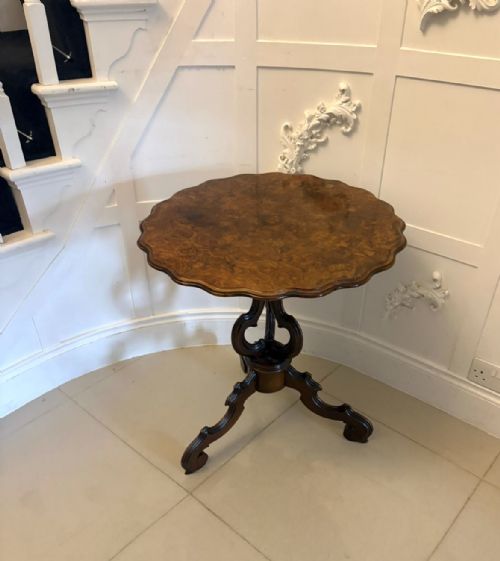
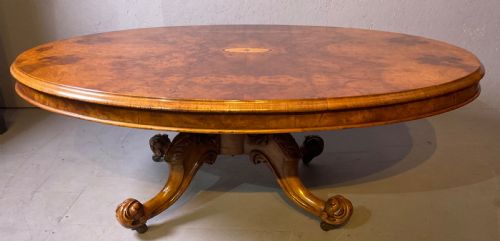


Burr Wood Tilt Top Table
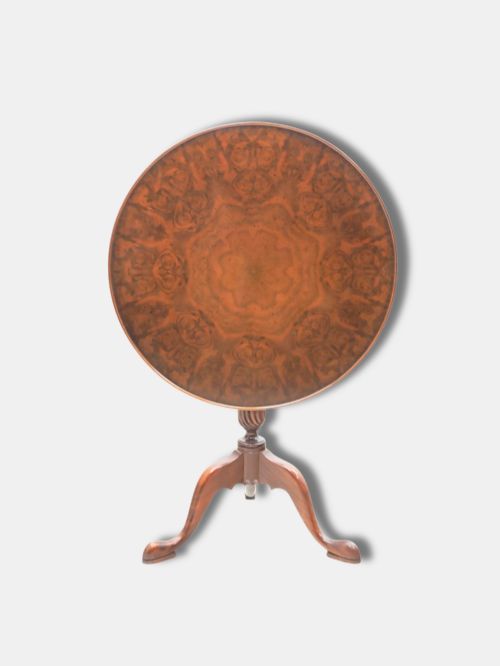
A burr wood tilt top table offers intense grain patterns and a clever mechanism that saves floor space when not in use.
Burr Wood Tilt Top Table
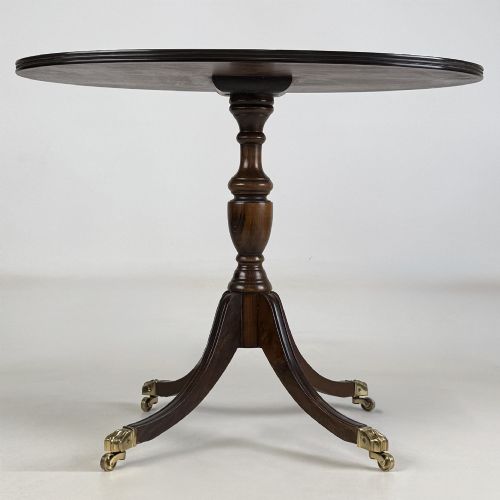
A burr wood tilt top table combines a figured wooden top with a central pillar and tripod or pedestal base, designed so the surface pivots vertically. When you search for a burr wood tilt top table, you meet pieces ranging from compact occasional designs to large loo tables.
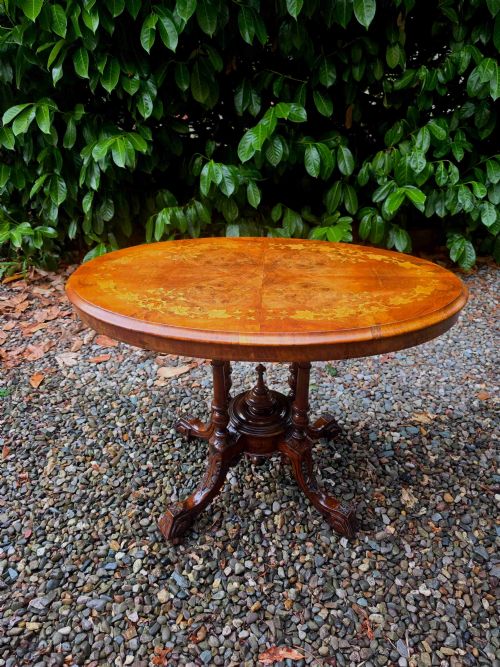
The selection on this page spans several distinct eras, with Victorian and 19th-century examples appearing alongside Georgian and Edwardian pieces. Formats vary from round lamp tables to oval occasional tables and large breakfast or dining tables.
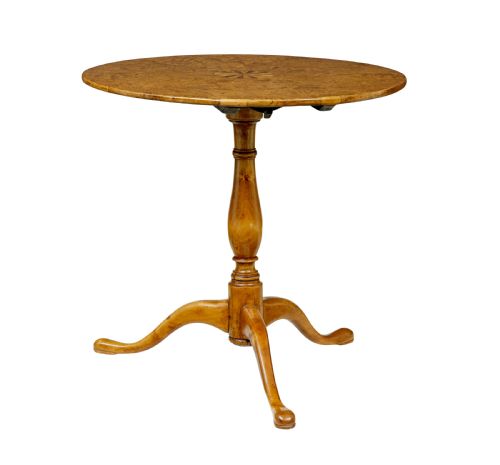
Origins include English workshops and Swedish pieces employing local timbers like birch and alder root. Walnut and elm dominate the English examples, while Swedish makers frequently utilise burr birch.
Materials and construction
Cabinetmakers selected burr timbers, formed from tree growths where the grain swirls in complex patterns, to create highly decorative veneer surfaces. Walnut, elm, birch, oak, and yew feature prominently across the tops, often supported by solid timber pillars and tripod legs of mahogany or walnut.
The tilting mechanism relies on a brass or iron catch beneath the top, allowing the surface to fold flat against the pedestal for storage or display. Marquetry and stringing lines frequently decorate the borders of the tabletops.
Card players kept these surfaces upright between hands of loo, accidentally inventing the ultimate space-saving Victorian furniture trick.
Assessing quality and craftsmanship
Quality rests primarily in the choice and matching of the burr veneer, where symmetrical grain patterns and rich natural colour create a striking visual impact. Finer examples display meticulous marquetry inlay and robust, well-proportioned pedestal bases with crisp carving.
The smoothness of the tilt mechanism and the stability of the central column dictate how well the table functions in daily use. Superior pieces maintain tight joints and substantial timber thickness in both the top and the supporting legs.
The Burr Wood Tilt Top Table Glossary
- Burr wood
- A timber cut from a tree growth or burl, yielding swirling, knotty grain patterns prized for decorative veneer. Cabinetmakers applied these thin slices to tabletops to create striking visual movement.
- Tilt top
- A table design featuring a hinged top that pivots from horizontal to vertical. This mechanism allowed furniture to stand flat against a wall when not in use.
- Tripod table
- A small freestanding table supported by a single central pillar resting on three legs. These versatile pieces served as lamp, occasional, or wine tables.
- Loo table
- A large Victorian pedestal table designed for the popular card game loo. They typically feature substantial circular or oval tilt tops.
- Marquetry
- The art of applying pieces of veneer to a structure to form decorative patterns or pictures. Craftsmen used contrasting woods to frame the central burr panels.
Burr Wood Tilt Top Table: Frequently Asked Questions
What is a tilt top table used for?
These tables served various functions in historic homes, acting as breakfast tables, lamp stands, or occasional surfaces for drinks and books. The pivoting mechanism allowed them to be folded away against a wall to clear space in a room.
Today, they function well as decorative centrepieces or side tables in living spaces and hallways.
How do I identify the wood on my table?
Burr walnut displays deep brown tones with swirling knots, while burr birch and elm present lighter, golden honey hues. Examining the grain pattern helps distinguish between native English timbers and continental European woods.
Inlaid lines and secondary woods beneath the top offer further clues to the origin and period of the piece.
Are these tables sturdy when upright?
The brass or iron catch beneath the surface locks the tabletop securely in place when lowered for use. When tilted, the mechanism relies on a balanced pedestal base to keep the folded top stable.
Well-maintained fittings ensure the table pivots smoothly without excessive wobble in the central column.
How do I date a burr wood table?
Stylistic details such as the shape of the tripod legs, the presence of marquetry, and the construction methods help determine the era. Georgian pieces often show restrained classical proportions, whereas Victorian examples tend to be heavier with elaborate turning.
Swedish pieces from the mid-19th century frequently showcase distinct pale birch and alder root veneers.