
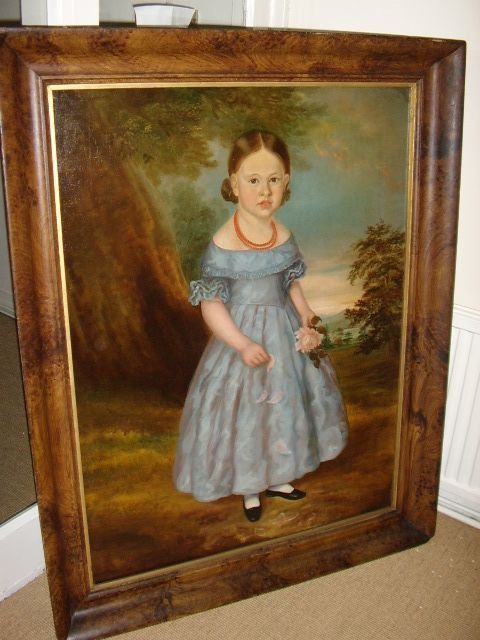


Burr Wood Framed Artwork
Burr wood framed artwork brings together warm, textured timber surrounds and historic paintings, watercolours, and prints.
Burr Wood Framed Artwork
When you search for burr wood framed artwork, you encounter pieces set within distinctively figured wooden borders. These items span periods from the Georgian and Regency eras through to the twentieth century, bringing together diverse visual subjects and timber surrounds.
The objects on this page primarily consist of paintings, watercolours, sketches, and prints housed within frames made from timber varieties such as burr maple and burr wood. Portrait miniatures, landscape scenes, and marine art frequently appear in these characteristic frames.
Originating across British, French, and Dutch traditions, these framed works combine historic imagery with the natural, swirling grain patterns characteristic of burr timber. Buyers find both individual wall art pieces and paired works within this selection.
How they were made
Makers utilised timber with intricate, swirling growth knots to construct these frames, slicing the wood to display dense grain patterns. This figured wood was then shaped and polished to surround paper, panel, and canvas works.
The artworks contained within these frames employ traditional media including oil paint, watercolour, pencil, and ink. Engravings and prints on paper also appear, often protected behind glass alongside the timber surrounds.
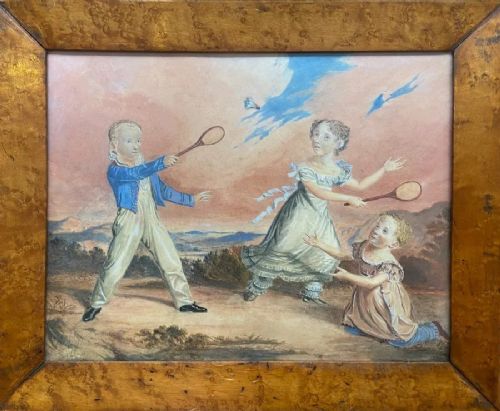
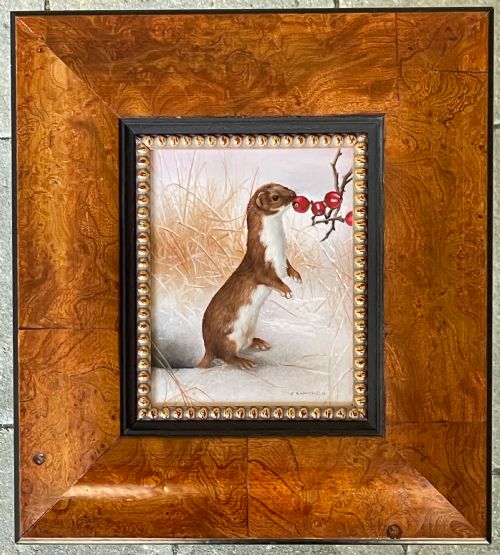
A game of battledore and shuttlecock meets a weasel and a pheasant in this eclectic gathering of historic framed scenes.
What varies in quality
The depth and complexity of the timber's grain pattern dictate the visual impact of the frame. Richly figured burr wood displays more intricate figuring than plainer timber sections.
The skill of the original execution in the painting, drawing, or engraving shapes the overall merit of the piece. Works attributed to named artists or specific schools command distinct attention compared to anonymous items.
Samuel Dixon·Carl Whitfield·Joseph Paul·C de Falens
The Burr Wood Framed Artwork Glossary
- Burr wood
- Timber harvested from a tree growth where the grain has grown in a deformed, swirling manner. This produces highly decorative patterns highly valued for decorative framing.
- Watercolour
- A painting method where the paints are made of pigments suspended in a water-based solution. These works are typically executed on paper and mounted under glass.
- Portrait miniature
- A small-scale painted portrait, highly detailed and popular in historic periods. They frequently appear within compact frames.
- Basso-rilievo
- A low-relief sculptural technique where the figures project only slightly from the background plane. Samuel Dixon utilised this method in period picture making.
Burr Wood Framed Artwork: Frequently Asked Questions
What periods do these pieces date from?
The selection spans multiple centuries, including Georgian, Regency, and Victorian eras, alongside early twentieth-century examples.
Individual pieces also date specifically to years such as eighteen-hundred-and-four and nineteen-hundred-and-seventeen.
What types of artwork are included?
Listings feature oil paintings on canvas and panel, watercolours of cattle and military scenes, pencil sketches, and engraved views of the River Thames.
Portrait miniatures and basso-rilievo pheasant pictures also form part of the available styles.
How do I identify burr wood frames?
Burr wood frames display distinctive, swirling growth patterns and knots across the timber surface. They often utilise burr maple or similar figured woods.
These surrounds complement the historic prints, watercolours, and paintings they enclose.
Where do these artworks originate?
The pieces originate from various European traditions, including British schools and Dutch Golden Age styles. French engravings and Regency views of Brighton also feature.
This geographic spread reflects diverse historic artistic practices.