

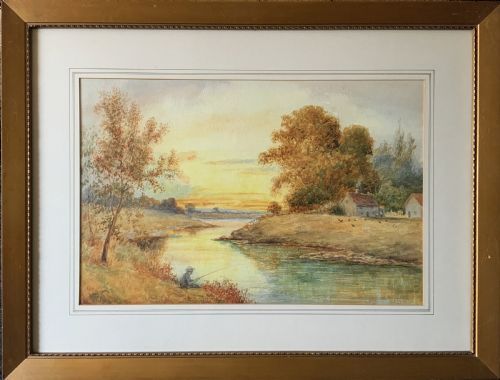


Traditional Pastoral Watercolour
These traditional pastoral watercolour paintings capture quiet rural scenes across Britain, offering a window into historic countryside life through delicate pigments.
Traditional Pastoral Watercolour
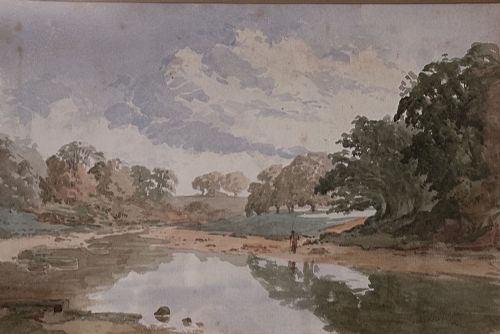
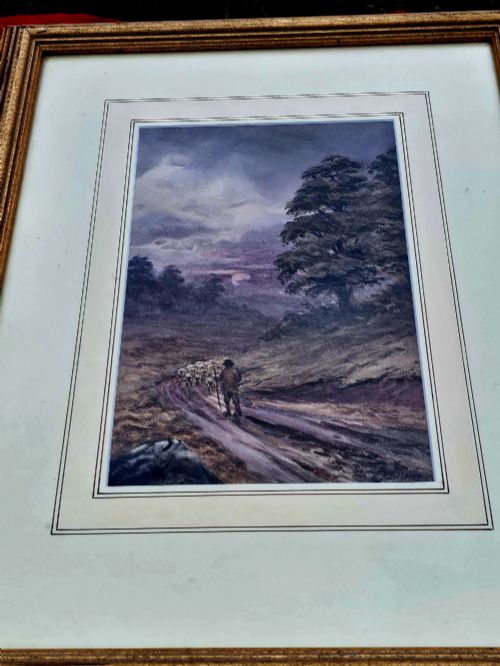
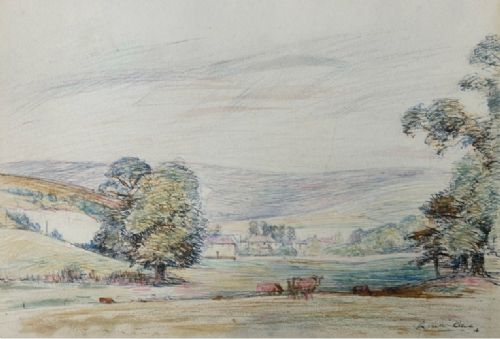
A traditional pastoral watercolour depicts scenes of rural life, agricultural work, and tranquil countryside landscapes across Britain. These works frequently feature figures herding sheep, harvesting hay, or tending to cattle in settings ranging from riverside water meadows to open downland. Buyers seek these pieces to bring a sense of historic rural calm and established English landscape traditions into an interior.
The versions met most frequently on this page span the Victorian era through the early twentieth century, encompassing periods such as the Edwardian years and the 1900s. Formats typically include framed artwork presented behind glass, utilising paper supports for the pigment. Works range from intimate rural studies to extensive landscape paintings executed by named British artists.
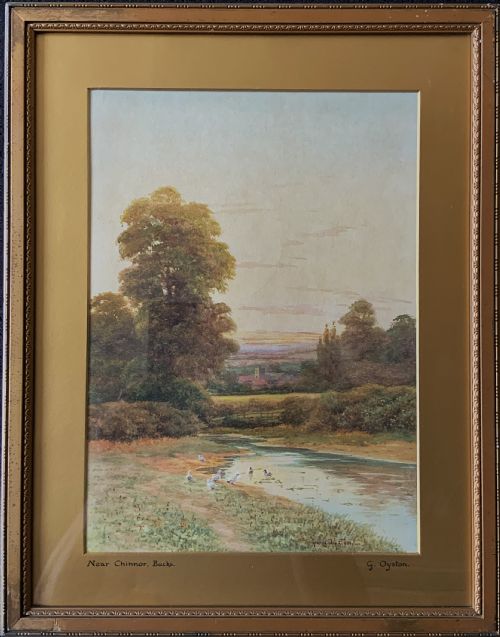
Categorised under traditional British fine art and English school paintings, these watercolours often bear signatures and specific regional titles identifying locales from Dorset to Yorkshire. They represent a focused window into historical rural topography combined with academic watercolour technique. Collectors encounter both single framed paintings and occasional paired sets depicting complementary countryside views.
How They Were Made
Artists executed these works using watercolour pigment applied to paper supports, frequently finished within period wooden frames under protective glass. Selected pieces incorporate subtle highlights of gold leaf or gilt details within the framing to enhance the presentation of the pastoral scene.
The physical construction relies on traditional framing materials, including burr wood or moulded wood surrounds that house the glazed paper artwork. Pigments were brushed onto paper to achieve translucent washes for skies and water alongside denser applications for foliage, figures, and livestock.
Listings feature paper supports, watercolour pigment, gilt framing, and gold leaf spanning the Victorian period through the 1930s.
What Varies In Quality
Quality rests upon the artist's ability to capture atmospheric light and detailed motion within the natural landscape, distinguishing highly skilled compositions from formulaic topographical sketches. The handling of watercolour pigment to create convincing depth in skies, water, and distant hills separates master practitioners from lesser hands.
The integrity of the original framing, often comprising period wood mouldings and protective glass, contributes significantly to the sustained presentation of the piece. Works that retain their original signed attributions and clear provenance annotations regarding specific British locations hold a distinct character compared to anonymous examples.
Percy Lancaster·George Oyston·Henry Charles Fox·Henry John Kinnaird·James Orrock·James Hardy Junior·John Atkinson·Thomas James Lloyd·John R K Duff·Henry Birtles·Thomas Nicholson Tyndale·Frederick J Knowles·Charles James Adams·Sir Ernest Albert Waterlow·James Stephen Gresley·Arthur Willett·Edmund George Warren·Alfred Rimmer·George Graham·David Heward·Yeend King·Jessie Hall·Robert Thorne Waite
The Traditional Pastoral Watercolour Glossary
- Watercolour pigment
- The finely ground colour medium mixed with a water-soluble binder used on paper supports. This medium allows for transparent washes that create luminous skies and soft atmospheric effects.
- Edwardian Pastoral
- A stylistic classification reflecting rural landscape subjects produced during the reign of Edward VII and the immediate early twentieth century. These works often emphasise peaceful country pursuits and bright daylight.
- English School
- A broad historical term denoting artists trained or working within the British artistic tradition, particularly in landscape painting. It links individual practitioners to shared national methods of observation and medium handling.
- Framed art
- A finished pictorial work presented within a protective border enclosure, frequently incorporating wood and glass. This housing preserves fragile paper watercolours from environmental moisture and physical damage.
Traditional Pastoral Watercolour: Frequently Asked Questions
What periods do these watercolours date from?
The works span the Victorian era, the 1900s, and the early twentieth century up to the 1930s. Artists captured rural British life across these changing decades using traditional painting methods.
Most pieces reflect the aesthetic preferences of late nineteenth and Edwardian art markets, focusing on idyllic countryside views and agricultural labour.
How should I display a watercolour painting?
Watercolours require protection from direct sunlight to prevent the pigments from fading over time. Hanging them away from bright windows ensures the delicate washes retain their original tone.
Keeping the original glass and wooden frame intact also shields the paper support from atmospheric dust and household moisture.
What subjects appear in traditional pastoral art?
Common subjects include shepherds tending flocks, cattle grazing in fields, haymaking, and rural cottages nestled near rivers. These scenes document traditional agricultural practices across various English counties.
Artists frequently inscribed specific locations on the work, identifying regions such as Dorset, Hampshire, and Yorkshire.
Are these paintings signed by the artists?
Many examples bear the original signature of the painter, often positioned subtly in a lower corner of the paper. Signed works provide a direct link to named practitioners of the English school.
Some pieces also include exhibition labels or handwritten notes on the reverse detailing the title and the artist's active dates.