


Brown Sepia Watercolour Artwork
Brown sepia watercolour artwork gathers expressive works on paper created using monochrome pigment and ink across the Georgian, Victorian, and twentieth-century periods.
Brown Sepia Watercolour Artwork
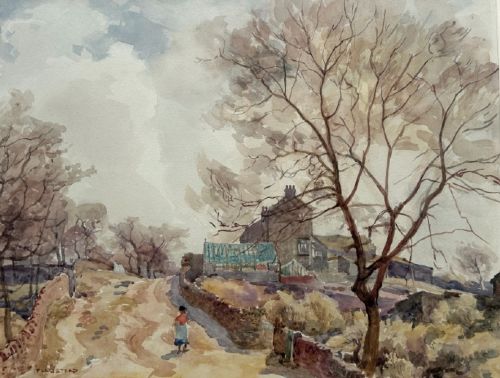
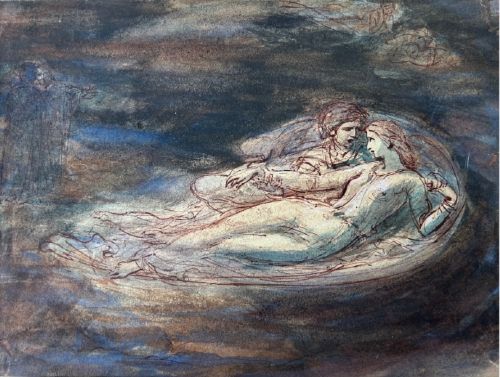
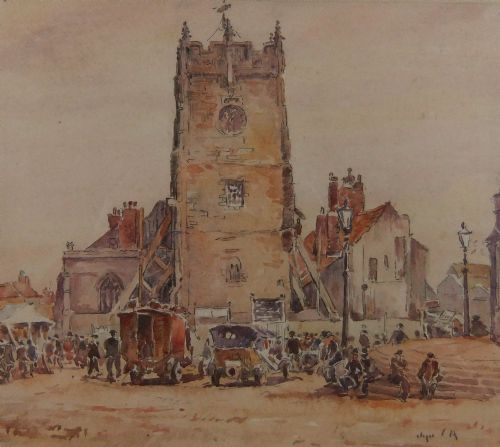
Brown sepia watercolour artwork comprises original paintings, drawings, and sketches executed on paper using watercolour pigment, sepia ink, and wash. These pieces encompass landscapes, maritime scenes, townscapes, and figurative studies spanning from the Georgian era through to the 1940s.
The selection here includes works by named artists alongside pieces from the English and French schools. Subjects range from Yorkshire and Norfolk views to historical military and literary scenes.
Buyers will encounter framed watercolours housed behind glass, often retaining period wood frames such as burr wood surrounds. These works capture specific topographical details and atmospheric moments through fluid wash techniques.
Materials and Technique
Artists create brown sepia watercolour artwork by applying water-soluble pigments and sepia ink onto paper supports. Ink and wash provide the foundational linework and tonal depth, while watercolour pigments build up subtle gradients.
Several watercolours capture everyday moments, including washing day and timber loading.
Assessing Quality
Quality in brown sepia watercolour artwork depends on the confidence of the brushwork and the precision of the ink linework. Strong compositions and effective tonal contrast elevate a piece beyond standard topographical recording.
The reputation of the artist and the clarity of provenance influence the standing of an individual work. Preservation of the paper support and the retention of original framing materials also contribute to the integrity of the piece.
John Smith Atherton·Richard Harry Carter·J F Marie Huet Villiers·John Augustus Atkinson·George Arthur Fripp·Frederick William Booty·Leslie Rackham·William Wyld·Henry Barlow Carter·Frank W Scarborough·George Graham·Arthur Netherwood·Tom Dudley·Fred Lawson·George Cattermole·John Thurtle·Thomas Lound
The Brown Sepia Watercolour Artwork Glossary
- Sepia ink
- A brown pigment traditionally derived from the ink sac of the cuttlefish. It provides rich monochrome tones utilised for historical washes and sketches.
- Wash
- A thin, fluid layer of watercolour paint or diluted ink applied across paper. This technique creates smooth backgrounds and atmospheric tonal gradients.
- Watercolour pigment
- Colouring matter ground with a water-soluble binder for painting on paper. It allows for transparent layers that reveal the paper support underneath.
- Framed artwork
- A piece enclosed in a protective border and glass covering. This mounting method preserves delicate works on paper from environmental degradation.
Brown Sepia Watercolour Artwork: Frequently Asked Questions
What periods do these watercolours span?
The available watercolours span from the Georgian period through the nineteenth century, Victorian era, and Edwardian times, extending into the early twentieth century up to the 1940s.
This broad chronological range encompasses diverse artistic movements including British Impressionism and Pre-Raphaelite works.
How should I display watercolour artwork safely?
Display works on paper away from direct, strong sunlight to prevent the fading of watercolour pigments and sepia inks over time.
Keeping them behind glass in stable indoor environments protects the paper support from humidity and airborne pollutants.
What subjects appear in these historical watercolours?
Common subjects include detailed British landscapes, maritime scenes featuring trawling luggers, and urban townscapes from locations such as York, London, and Yorkshire.
Figurative studies, architectural views like Kew Gardens, and historical narrative scenes also feature prominently across the collection.
How do I identify the date of a piece?
Dating relies on visible artist signatures, inscribed dates on the mount or reverse, and stylistic indicators typical of Georgian, Victorian, or twentieth-century movements.
Framing materials and paper characteristics can also provide contextual clues regarding the period of execution.