
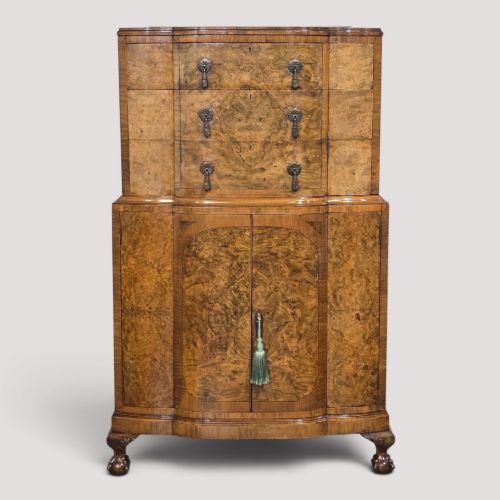
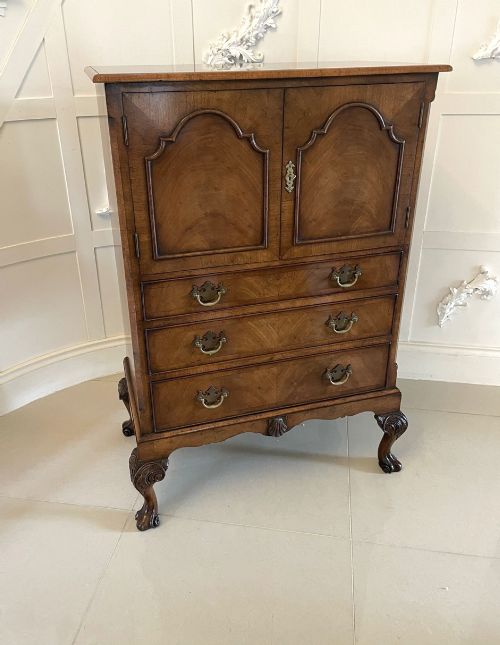
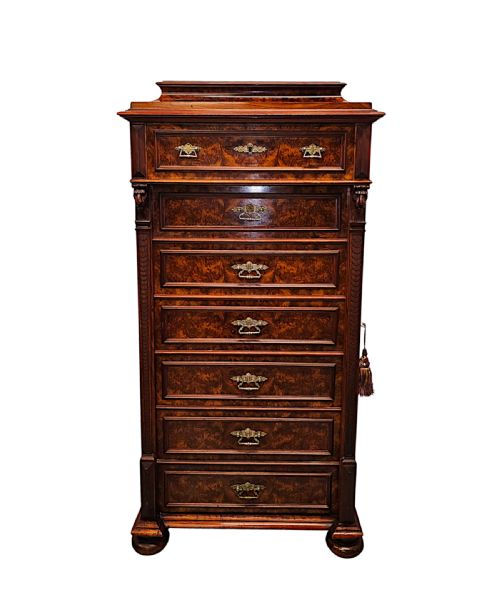
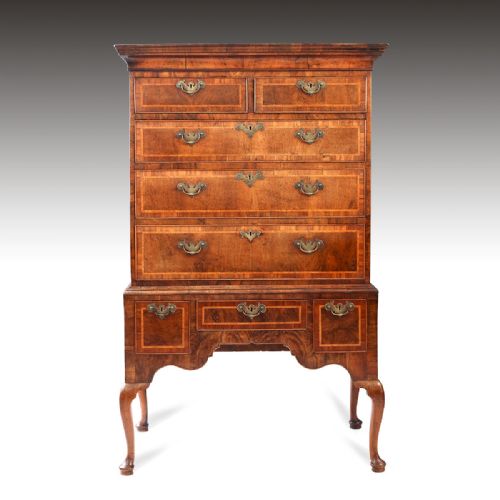
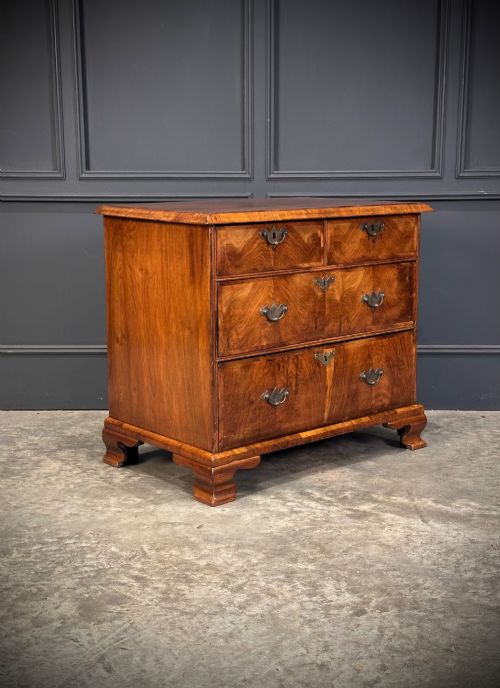
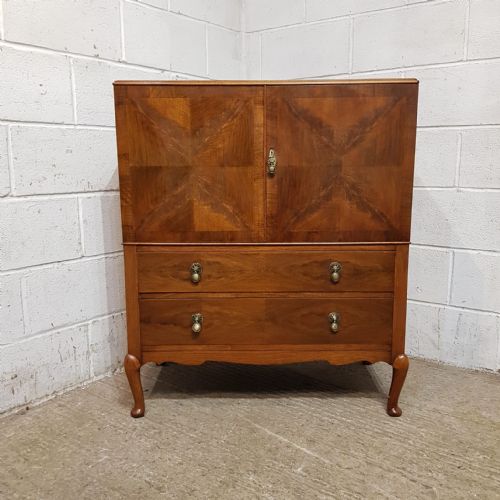
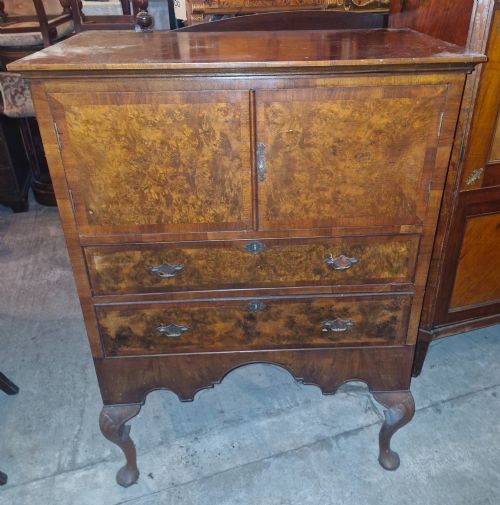
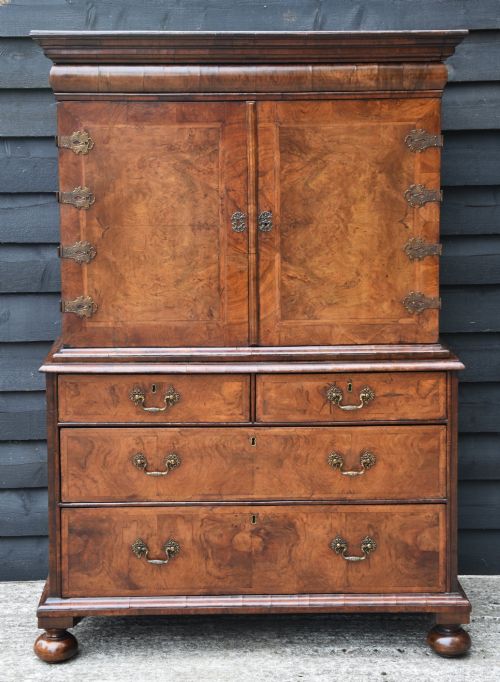
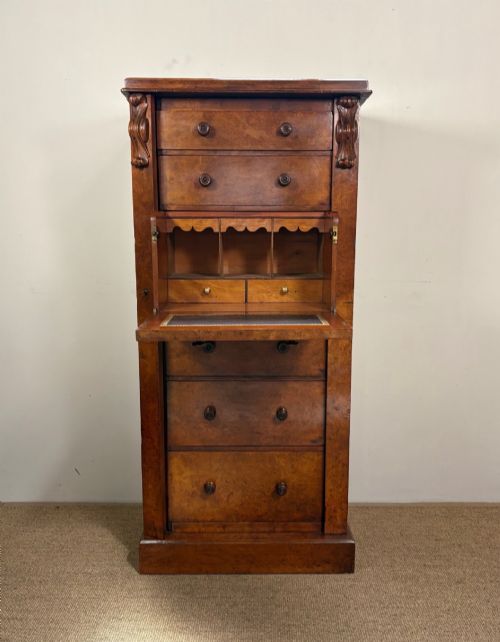
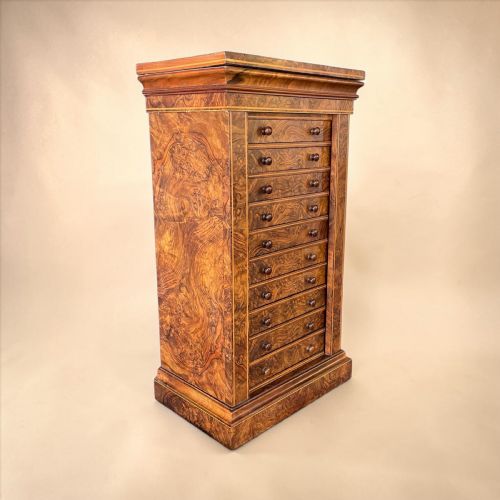
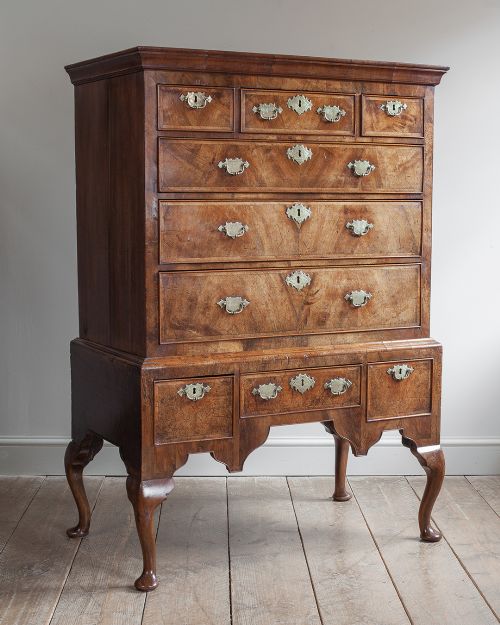
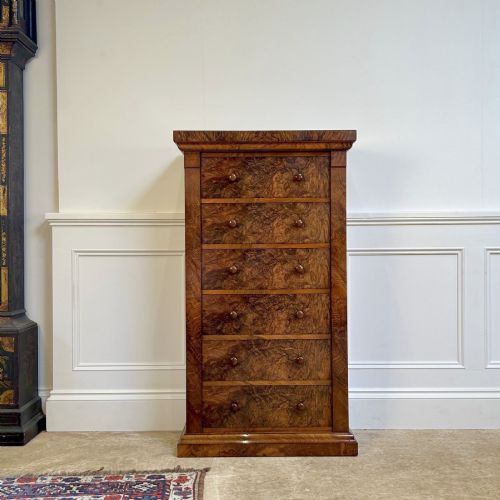
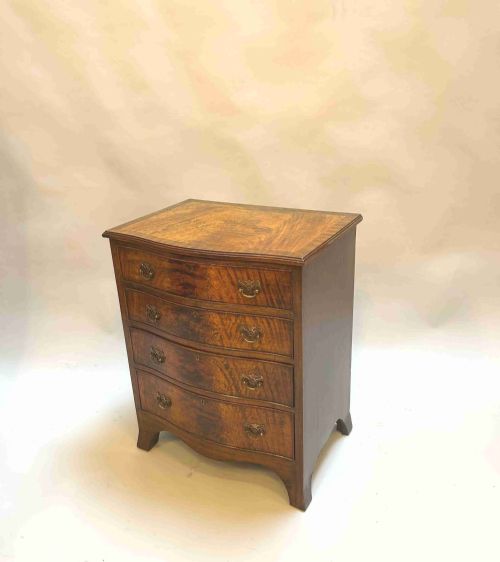
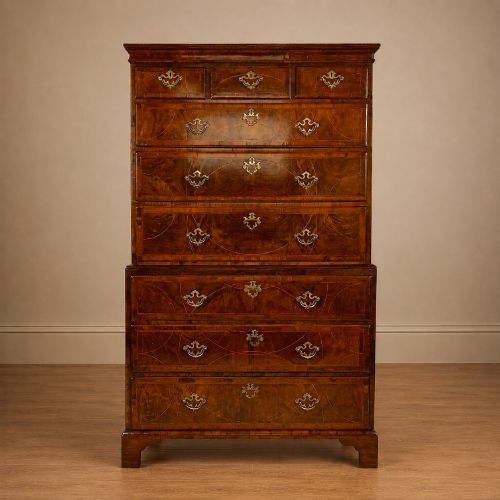
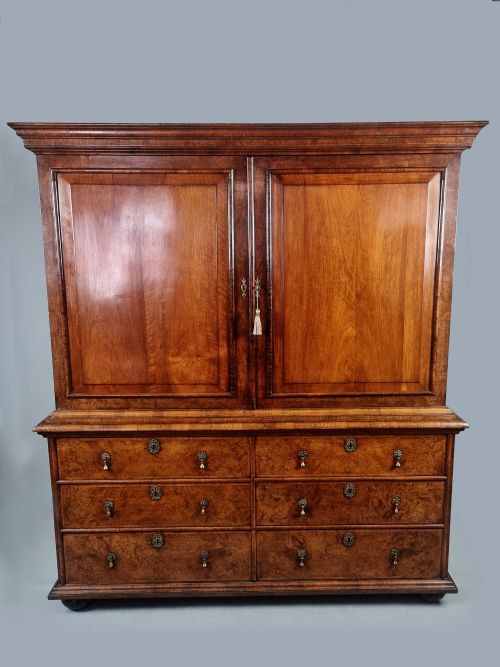
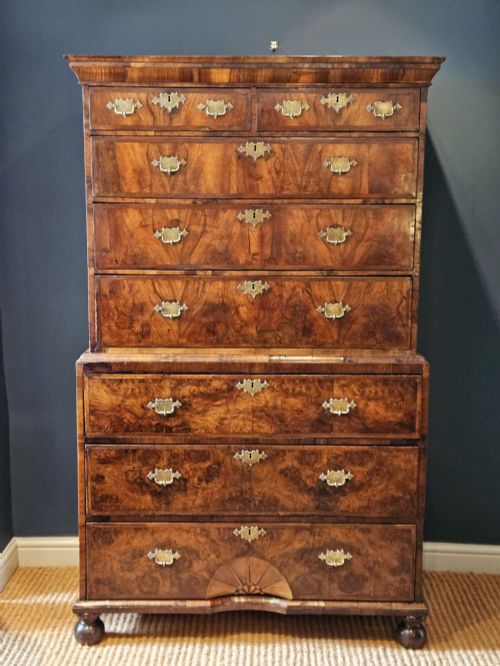
Burr Walnut Tallboy Cabinet
A burr walnut tallboy cabinet brings rich figured grain and considerable height into a room.
Burr Walnut Tallboy Cabinet
A burr walnut tallboy cabinet combines vertical storage with the highly figured grain of walnut timber, presenting as a tall chest on chest, a cabinet on chest, or a dedicated tallboy form. These pieces emerge across periods spanning the 17th century through the Georgian era, alongside substantial revivals and interpretations from the 1920s, 1930s, and 1940s.
The versions most commonly met on this page date from the 1920s and 1930s, often executed in the Art Deco style or as revival pieces reflecting earlier Queen Anne and Georgian proportions. Alongside these, authentic 18th-century examples appear in forms such as chests on stands, press cupboards, and bureau bookcases.
Forming tall storage solutions, these cabinets utilise stacked sections or deep vertical carcases to maximise drawer and cupboard space without occupying an excessive footprint on the floor. The integration of stands, bracket feet, or stepped cornices defines the architectural presence of each piece.
How They Were Made
Cabinet makers applied thin veneers of burr walnut over stable secondary timbers such as oak or pine, arranging the swirling grain patterns symmetrically across drawer fronts and cupboard doors. This veneering technique allowed craftsmen to display rich, knotty growths of wood that solid planks could not provide.
Brass hardware, including drop handles, backplates, and escutcheons, was fitted to secure doors and draw out deep drawers. Secondary woods and framing relied on traditional joinery to support the heavy stacked carcases of tallboys and cabinets on chests.
Some tallboys hide secret drawers behind carved cornices where owners once tucked away velvet-lined fortunes.
What Varies in Quality
The sophistication of the burr walnut figuring and the symmetry of its book-matching across drawer fronts distinguishes standard production from finer cabinet work. Superior pieces display carefully chosen veneers that flow visually across the entire elevation of the cabinet.
Proportion and architectural integrity separate accomplished cabinet making from simpler utility furniture. The crispness of corner mouldings, the integration of matching stands or cornices, and the weight of the brass fittings dictate the standing of the piece.
Gillows·Holland & Sons
The Burr Walnut Tallboy Cabinet Glossary
- Tallboy
- A tall chest of drawers, often constructed as one chest stacked on top of another or built as a single tall vertical carcase. This form provides substantial drawer capacity while maintaining a compact floor plan.
- Burr Walnut
- Timber taken from a tree growth or burr, yielding intricate swirling patterns and knots used extensively for decorative veneering. It creates a highly textured surface across furniture facades.
- Chest on Chest
- A tall storage unit formed by a smaller upper chest of drawers resting directly upon a wider lower chest of drawers. This format originated in the late 17th century and continued through the Georgian period.
- Cabinet on Stand
- An enclosed cabinet storage section raised upon a distinct framework or stand with legs. Early examples frequently date from the William and Mary and Queen Anne periods.
- Veneer
- A thin layer of figured wood applied to a solid secondary timber carcase. This technique permitted the economical display of expensive decorative grains.
Burr Walnut Tallboy Cabinet: Frequently Asked Questions
What is a burr walnut tallboy cabinet?
A burr walnut tallboy cabinet is a tall vertical storage item featuring drawers or cupboards veneered in decorative burr walnut timber. These pieces combine height with figured wood grain to serve as focal storage furniture.
They appear in various historic styles, from early 18th-century forms to 1930s Art Deco designs, offering deep compartments and stacked drawer configurations.
How do I distinguish an 18th-century piece from a 1920s revival?
Eighteenth-century examples display construction methods using native secondary woods like oak, hand-cut dovetails, and patinated surfaces developed over centuries of use. Revival pieces from the 1920s and 1930s often utilise machine-cut elements and distinct twentieth-century backing timbers.
Examining the internal drawer linings, carcase construction, and handling marks helps identify the manufacturing period and distinguishes original antique furniture from later interpretations.
Where were tallboy cabinets used in a home?
Tallboy cabinets served primarily in bedrooms and dressing rooms to store linens, folded garments, and personal attire. Their vertical capacity made them practical for rooms with limited floor space.
Some variations incorporating desks or specialised compartments functioned in private studies or dressing chambers for document storage and grooming items.
How should I care for burr walnut veneer?
Burr walnut veneer requires protection from direct sunlight and excessive changes in temperature or humidity to prevent the thin timber from drying or lifting. Maintaining stable indoor conditions preserves the integrity of the glue and the finish.
Routine dusting with a dry cloth and occasional application of appropriate furniture wax keeps the polished surface nourished without moisture damage.