
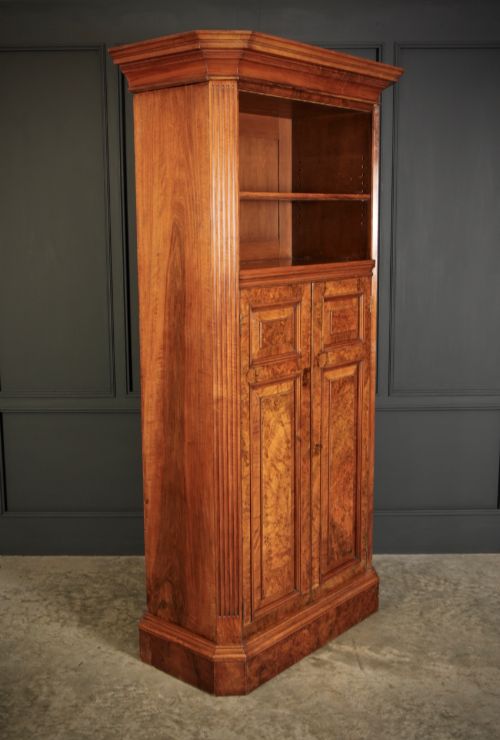
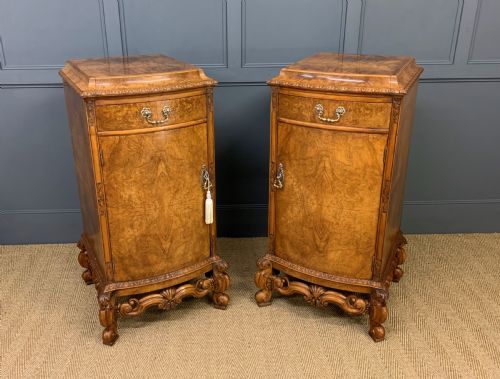
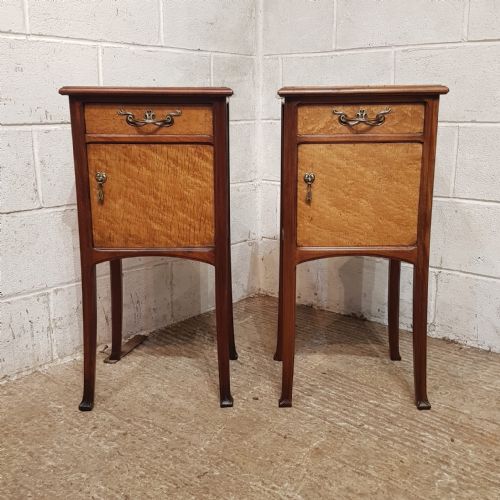
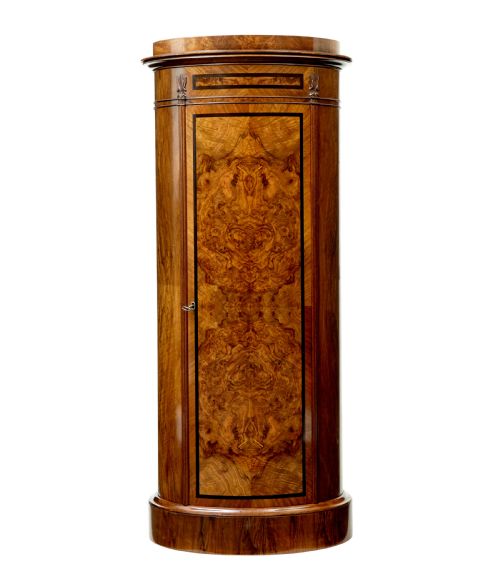
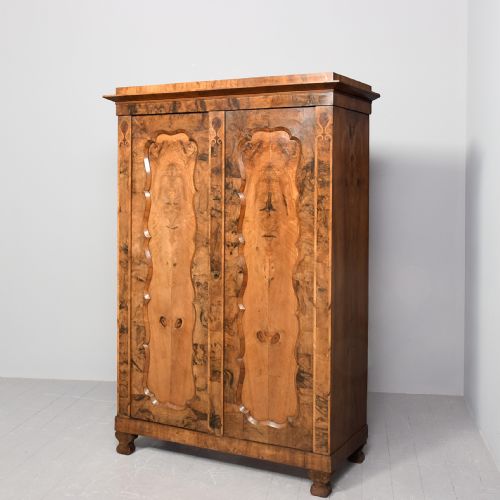

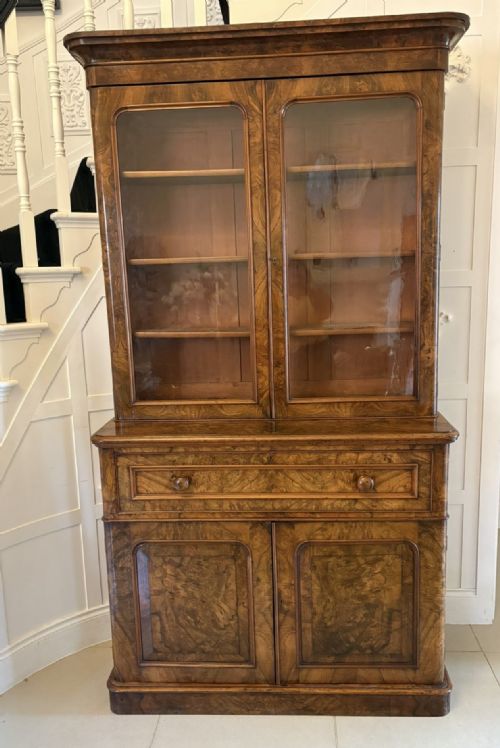


Burr Walnut Tall Cabinet
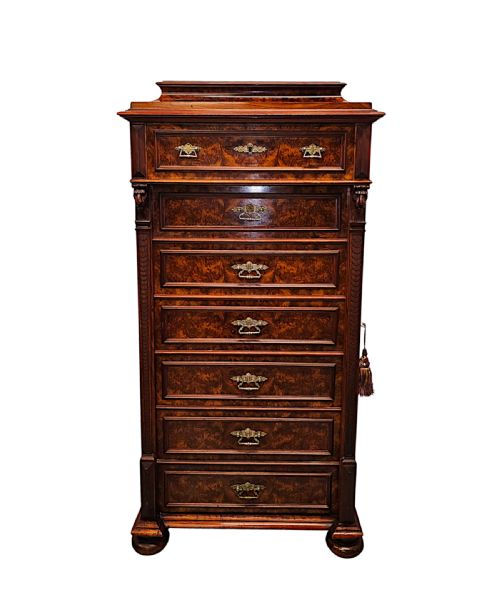
A burr walnut tall cabinet provides vertical storage while displaying the distinct swirling grain patterns of the timber.
Burr Walnut Tall Cabinet
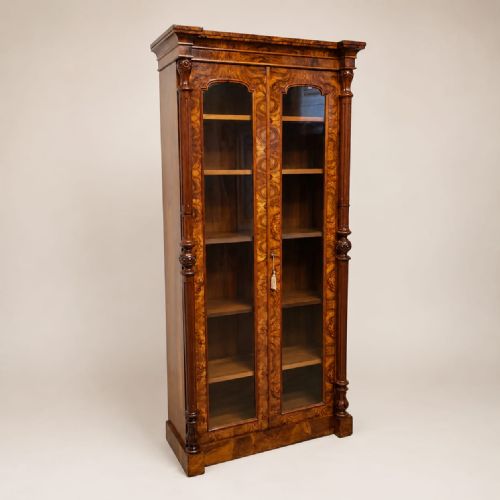
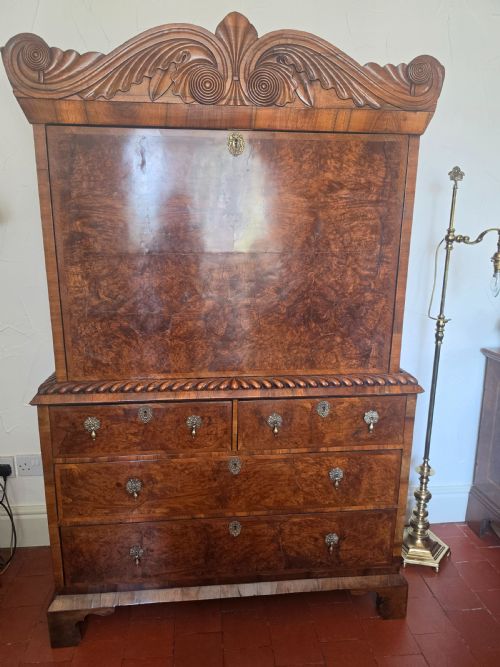
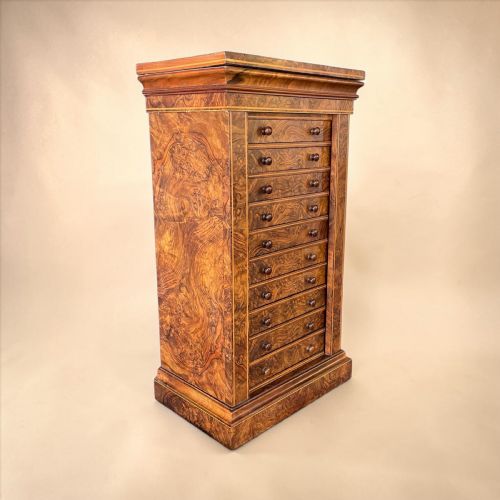
A burr walnut tall cabinet encompasses vertical furniture pieces designed for storage, including tallboys, secretaire chests, bookcases, and Wellington chests.
The selections span from the 18th century through the Victorian era and into the Art Deco period of the 1920s and 1930s, reflecting diverse regional styles such as Queen Anne Revival and Continental designs.
Buyers encountering this phrase will find tall chests of drawers, pedestal cupboards, and narrow display cabinets utilising the prominent grain of burr walnut timber.
Materials and Construction
Craftsmen applied burr walnut veneer over secondary timbers like oak or general hardwood to create striking decorative patterns on vertical surfaces.
Hardware elements such as solid brass handles and locks complemented the timber, whilst glass panels featured in tall bookcases and display vitrines.
Secret locking bars on narrow Wellington chests originally kept private correspondence safe from wandering eyes.
Judging Quality
The visual impact depends on the selection and matching of the burr walnut veneer across the tall facades and drawer fronts.
Superior construction is evident in the integration of secondary woods like oak, the precise execution of drawer linings, and the crisp definition of period details such as cross-banding and marquetry.
Holland & Sons·S & H Jewells
The Burr Walnut Tall Cabinet Glossary
- Burr walnut
- A figured wood grain derived from the growths or burrs on walnut trees, prized for its complex swirling patterns. Cabinetmakers sliced this wood into thin veneers to cover large drawer fronts and doors.
- Tallboy
- A tall chest of drawers, often constructed in two sections with a smaller chest sitting atop a larger base. This form maximised vertical storage floor space.
- Wellington chest
- A tall, narrow chest of drawers secured by a hinged vertical locking bar on one side. The design originated in the 19th century.
- Escritoire
- A writing cabinet featuring a fall-front desk section combined with drawers or pigeonholes. These pieces date back to the early 18th century.
- Veneer
- A thin slice of decorative wood adhered to a structural timber base. This technique allowed makers to utilise expensive burr timber efficiently.
Burr Walnut Tall Cabinet: Frequently Asked Questions
What is a burr walnut tall cabinet?
A burr walnut tall cabinet is a vertical storage piece featuring decorative wood veneers derived from walnut tree growths. These items include tallboys, chests of drawers, and bookcases.
They combine practical vertical storage capacity with decorative grain patterns developed across different historical periods.
How do I date a tall cabinet?
Dating relies on architectural proportions, handle styles, construction methods, and period characteristics such as Queen Anne curves or Art Deco geometry. Earlier 18th-century examples often feature solid timber carcases and distinct internal drawer construction.
Victorian and 20th-century iterations introduce different locking mechanisms and veneering techniques that help determine the exact era.
Where were these cabinets placed?
These cabinets served utilitarian storage roles in bedrooms, libraries, and hallways where floor space was limited. Tall configurations allowed households to store linens, books, or writing materials without occupying a large footprint.
In reception rooms, glass-fronted versions displayed collections of books or decorative objects.
How do I care for walnut veneer?
Walnut veneer requires stable indoor humidity and protection from direct sunlight to prevent the timber from drying out or fading. Gentle dusting with a dry cloth maintains the surface finish.
Avoid placing these items near direct heat sources which can cause the underlying veneer to lift or crack.