


Narrow Walnut Display Cabinet
A narrow walnut display cabinet brings warmth and height to a room, showing off porcelain or books behind glass.
Narrow Walnut Display Cabinet
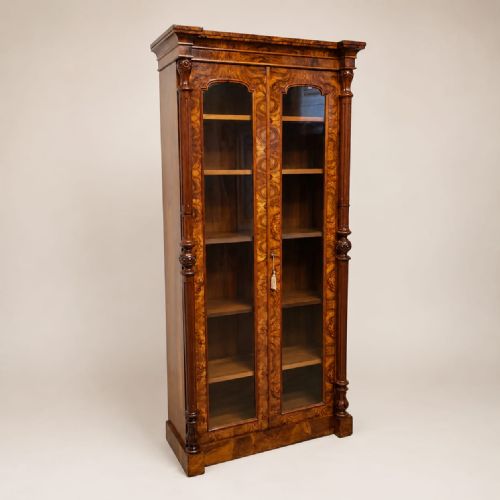
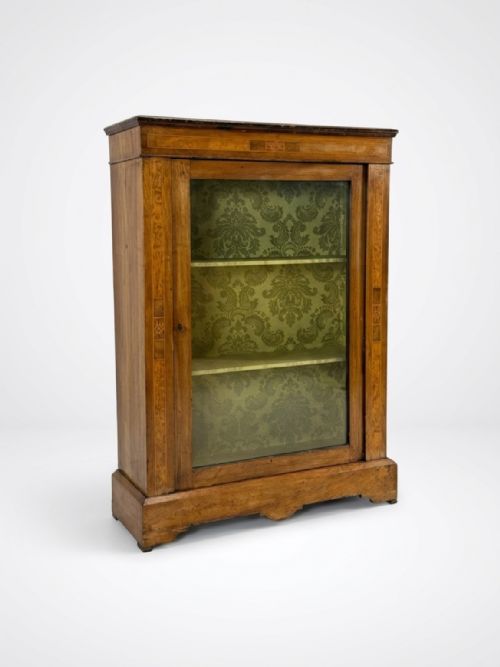
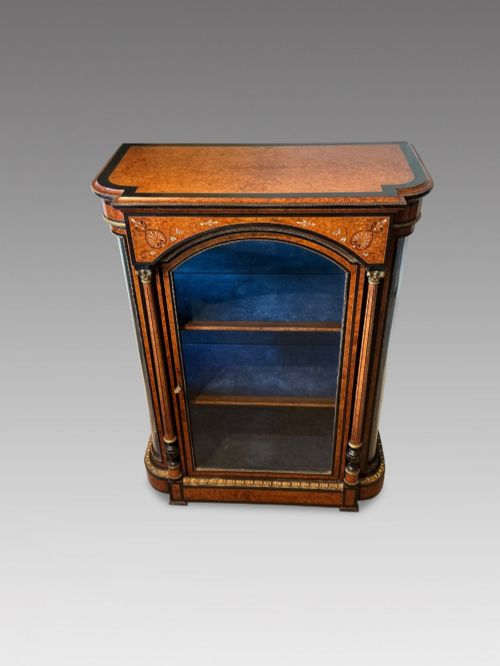
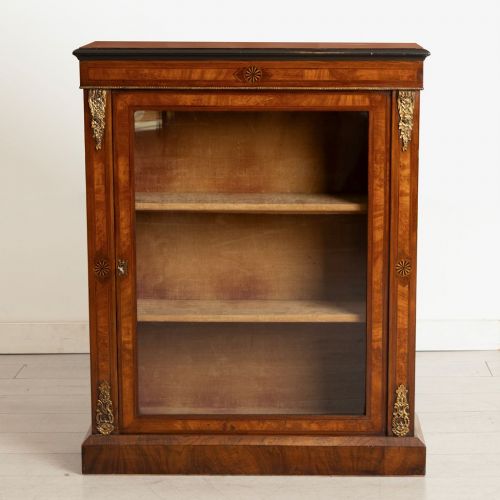
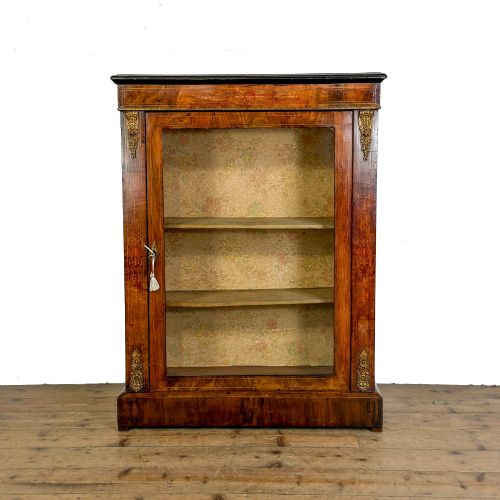
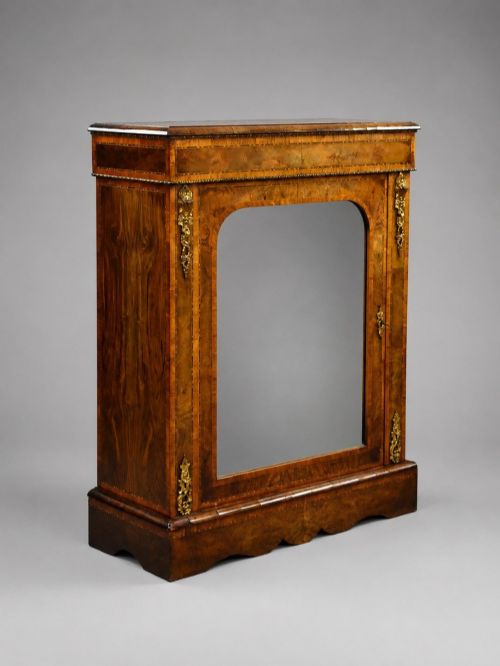
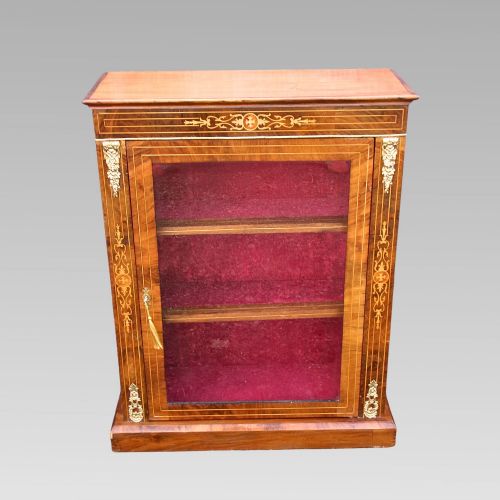
A narrow walnut display cabinet is typically encountered on this page as a Victorian pier cabinet or a tall, slender bookcase dating from the nineteenth century. These upright pieces combine timber with glazed doors, offering a compact footprint for smaller spaces.
Makers and manufacturers during the Victorian era and the nineteen-twenties produced these cabinets in various forms, including French Provincial and Queen Anne Revival styles. Buyers frequently select these vertical display units to house collections without dominating a floor plan.
Materials and construction
Construction relies heavily on walnut timber, often enhanced by burr walnut veneers that introduce rich grain patterns to the surface. Cabinet makers incorporated glass panels to create viewing areas for contents.
Decoration frequently includes brass, ormolu, and detailed wood inlay or marquetry featuring satinwood and ebony. Fabric or velvet linings sometimes appear within the interior compartments.
Ebony and satinwood slips hide inside marquetry panels, giving walnut cabinets a secret depth.
Assessing craftsmanship and finish
Quality separates pieces through the complexity of the wood veneers and the precision of the marquetry inlay. Simpler timber surfaces contrast with elaborate burr walnut figures and polished brass mounts.
The refinement of the glazed doors and the subtlety of the applied ormolu or gilt bronze details distinguish standard utility from superior cabinet work.
The Narrow Walnut Display Cabinet Glossary
- Pier cabinet
- A low or tall cabinet designed to stand against the wall space between windows. These pieces often feature glazed doors and flat tops.
- Burr walnut
- A specialised cut of timber showing swirling, knotty grain patterns. This wood was prized by nineteenth-century cabinet makers for decorative veneer work.
- Marquetry
- The art of applying decorative pieces of veneer to a structure to form intricate pictures or patterns. It frequently incorporates contrasting woods like satinwood and ebony.
- Ormolu
- Gilded bronze used for decorative mounts and furniture trim. This technique originated in France and adds metallic highlights to timber surfaces.
- Astragal glazed
- A window or cabinet door divided into smaller glass panes by narrow wooden bars. This framing method is common on bookcases and display units.
Narrow Walnut Display Cabinet: Frequently Asked Questions
Where should I place a narrow walnut display cabinet?
These vertical pieces suit tighter wall spaces, hallways, or corners where a standard wide sideboard cannot fit. Their height draws the eye upward while keeping a minimal footprint on the floor.
They work well in reception rooms and studies for storing books, ceramics, or small collections behind glass protection.
How do I date a Victorian walnut cabinet?
Dating relies on observing construction methods, timber choices, and decorative motifs such as marquetry inlay or ormolu mounts. Mid-nineteenth-century examples often exhibit rich burr walnut veneers and hand-cut dovetails.
Later revival pieces from the early twentieth century adopt styles like Queen Anne while utilising machinery-cut timber elements and different internal fixings.
Are these cabinets suitable for storing books?
Many examples on this page function as narrow bookcases or combination bookcase cabinets with glazed upper doors. Shelving depth and vertical clearance determine book size compatibility.
Adjustable or fixed wooden shelves protect volumes from dust while displaying spines behind glass.