



Burr Walnut Table Chairs
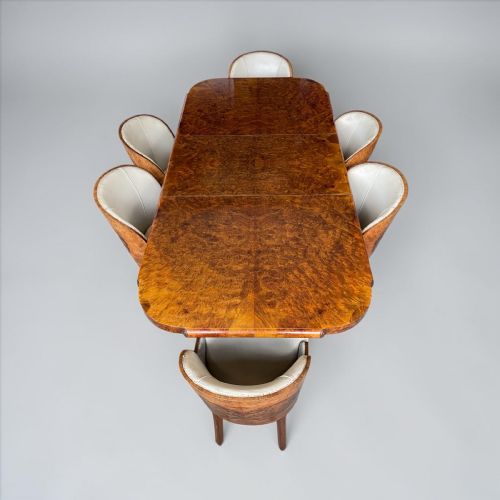
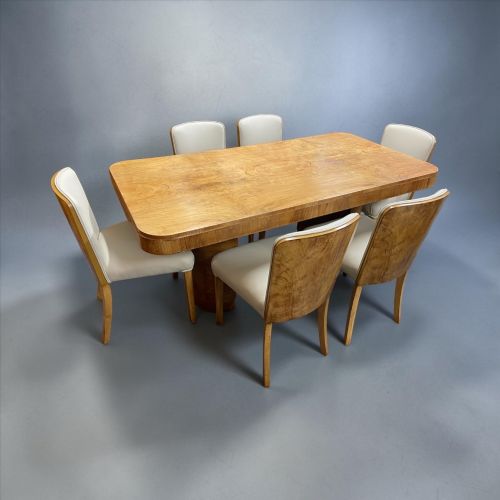
Burr walnut table chairs bring striking grain patterns and period distinction to the dining room, combining seating and tables into matching suites.
Burr Walnut Table Chairs
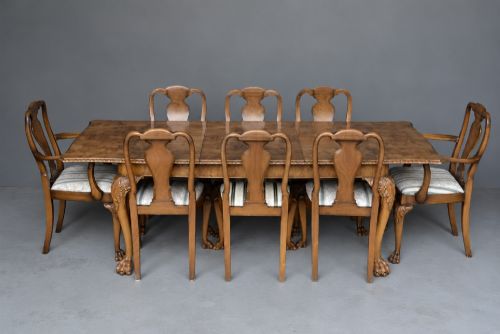
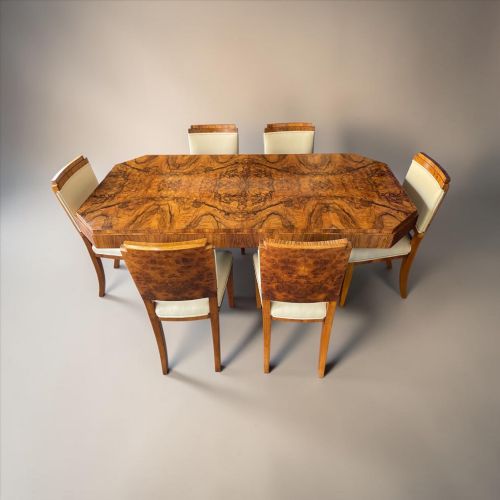
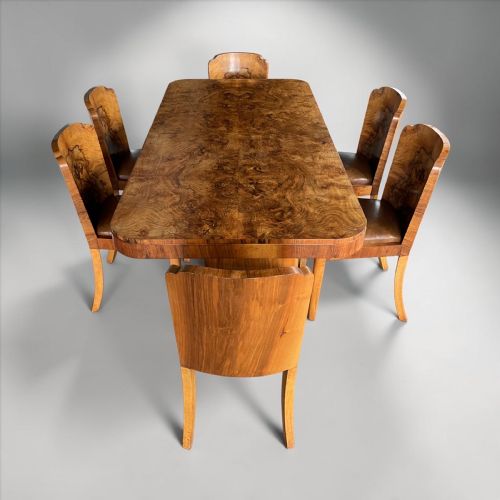
When buyers search for burr walnut table chairs, they encounter complete dining suites comprising a central table accompanied by sets of matching chairs.
The versions most commonly met on this page date from the 1920s and 1930s, alongside Edwardian examples.
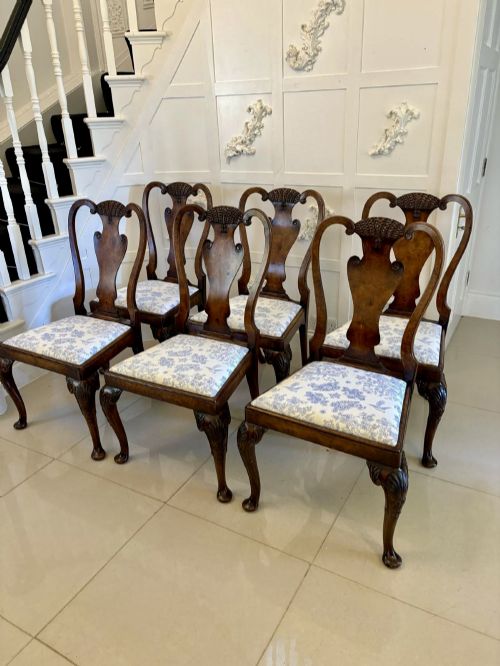
These groupings appear primarily in Art Deco and Queen Anne Revival styles, frequently taking the form of large dining sets designed to seat six, eight, or more guests.
How they were made
Cabinet makers utilised burr walnut veneer applied over secondary timbers, hardwoods, and solid walnut frames to create deeply figured table tops and chair backs.
Seating components incorporate upholstered elements using leather and fabric pads fixed to wooden frames.
Construction techniques include wind-out extending mechanisms for tables alongside shaped and cloud back designs for chairs.
Burr Walnut Table Chairs Retail Price Guide 2026
Typical asking prices for burr walnut table chairs among the pieces listed under this phrase on Sellingantiques today, from the lower quarter to the upper quarter. They describe what is for sale here now, not the wider market.
Current listings feature dining sets from the 1920s, 1930s, and Edwardian periods, constructed using burr walnut veneer, solid walnut, leather, and fabric.
What varies in quality
The visual impact of the burr walnut veneer distinguishes exceptional suites, depending on the density and symmetry of the swirling grain patterns across large surfaces.
Maker attribution influences desirability, with documented workshops commanding significant attention for their mastery of Art Deco forms.
The cohesion of the suite, particularly how well the chairs match the table in timber tone and period styling, determines the overall standard.
Maurice Adams·Harry and Lou Epstein·Hille London·Charles Walker of Harrogate
The Burr Walnut Table Chairs Glossary
- Burr walnut
- A figured wood grain obtained from the growths or burrs of walnut trees, prized for swirling patterns. This veneer defines the aesthetic of these dining suites.
- Art Deco
- A design style from the 1920s and 1930s characterised by sleek geometric forms and streamlined curves. Pieces from this period often feature cloud back chairs.
- Queen Anne Revival
- A traditional furniture style reviving early eighteenth-century motifs, seen in dining suites on this page. These pieces often feature cabriole legs and shaped backs.
- Wind-out table
- An extending dining table operated via a mechanical winder inserted into the side to separate the leaves. This allows extra insertion leaves to drop into the centre.
Burr Walnut Table Chairs: Frequently Asked Questions
What periods do these dining suites date from?
The listings span the Edwardian era through to the 1920s and 1930s.
Art Deco and Queen Anne Revival represent the primary stylistic periods found within the inventory.
How many chairs typically accompany the tables?
Sets frequently include six or eight chairs designed to match the central table.
Larger configurations seating ten or twelve guests also appear in the historical and current records.
What is a cloud back chair?
Cloud back chairs feature an upholstered backrest with undulating, rounded contours typical of Art Deco design.
These chairs pair with matching burr walnut dining tables to form cohesive dining suites.
How do wind-out tables function?
Wind-out tables use an internal wooden screw mechanism operated by a detachable handle.
Turning the handle draws the table halves apart to insert additional leaves.