
Burr Walnut Table Cabinet
When you seek a burr walnut table cabinet, you are looking at compact Victorian and twentieth-century storage pieces wrapped in richly patterned timber.

Burr Walnut Table Cabinet
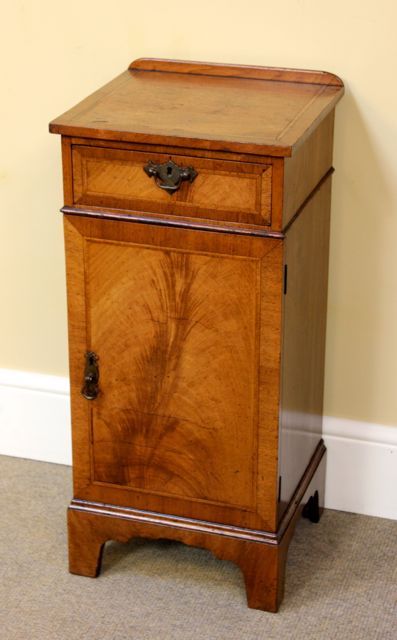
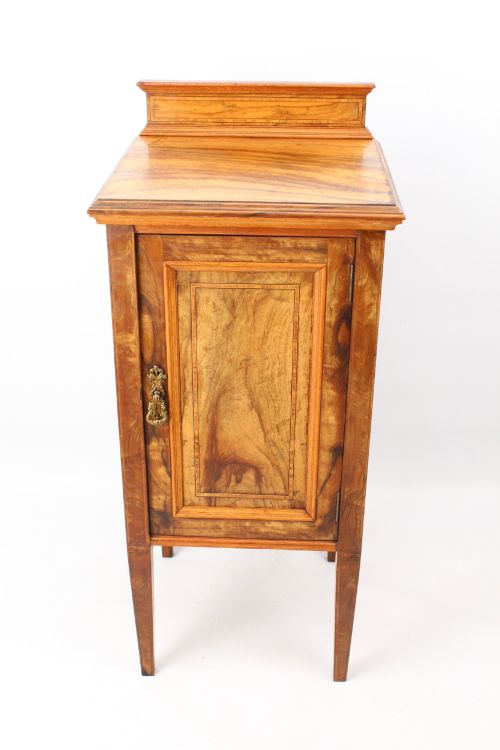
A burr walnut table cabinet brings together functional tabletop storage and the decorative swirling grain patterns of walnut excrescences. These pieces span from Victorian incarnations through Edwardian designs to streamlined Art Deco forms.
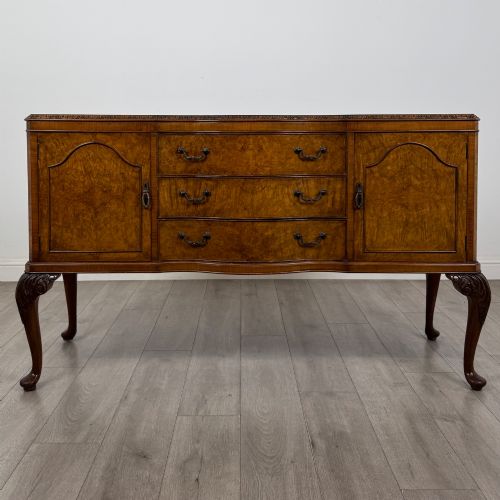
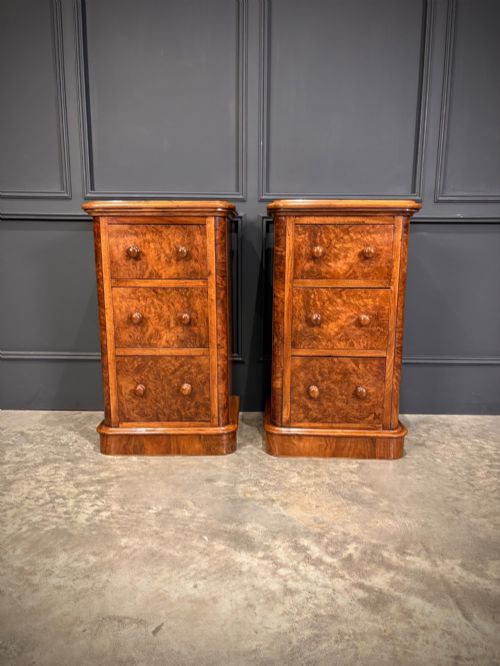
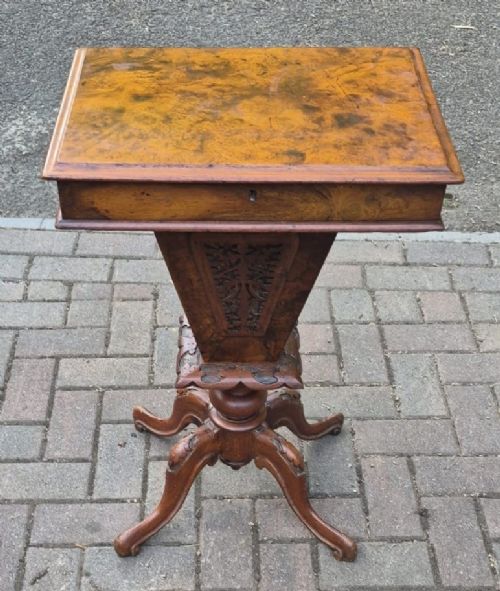
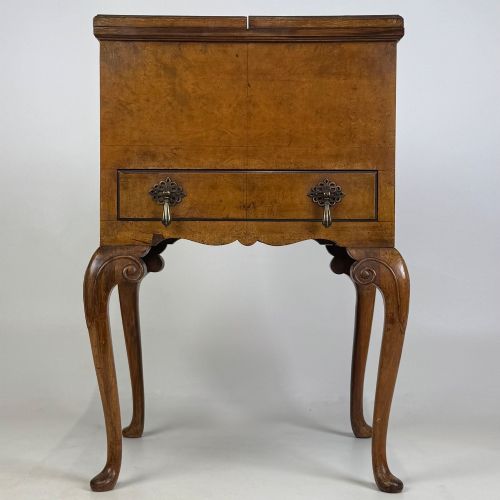
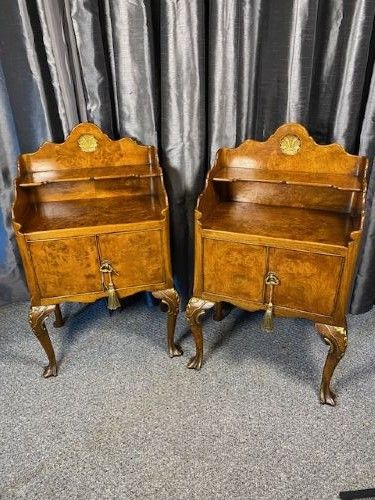
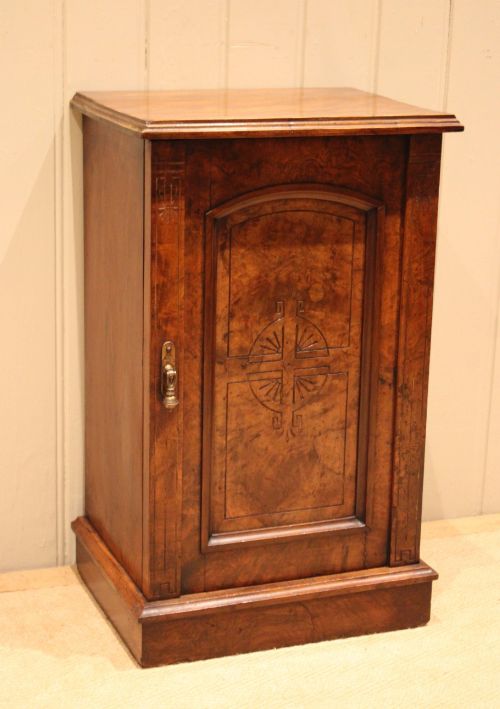
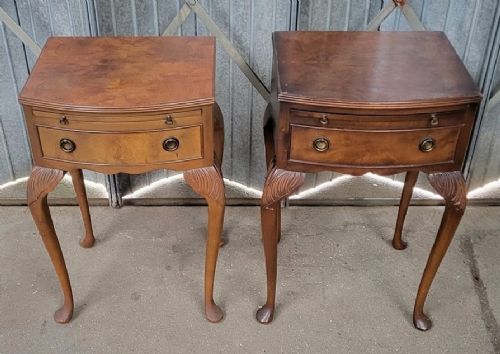
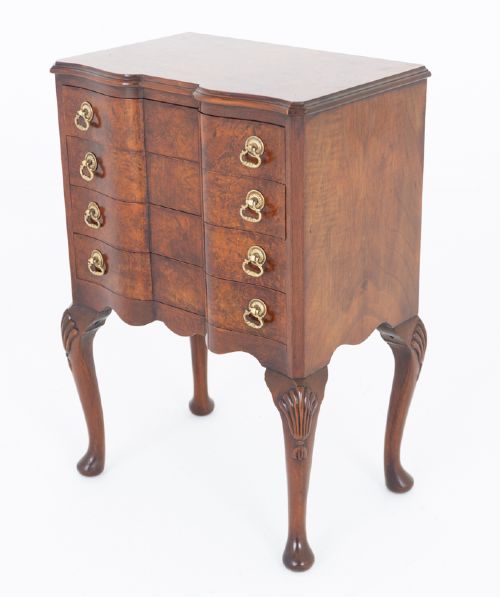
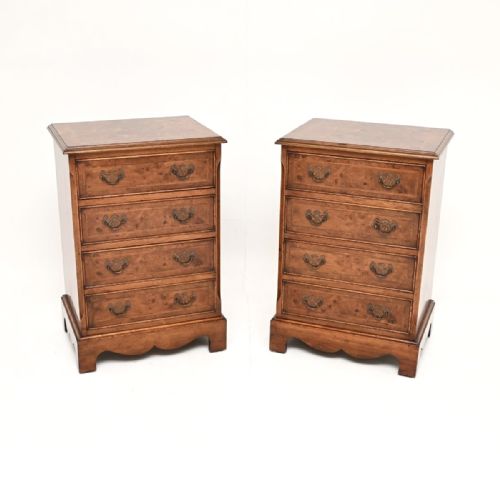
The inventory shows these items fulfilling roles as compact tabletop chests for jewellery, cigars, or stationery, alongside larger bedside tables and side cabinets. Victorian examples frequently display carved details and serpentine fronts, while twentieth-century versions lean towards clean lines.
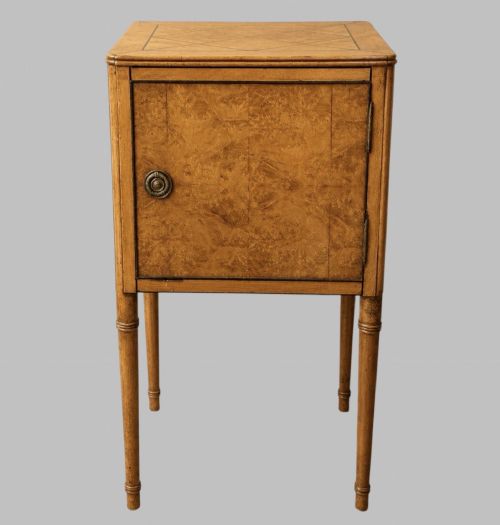
Buyers meet variations ranging from diminutive nineteenth-century table-top lockers to sturdy bedside cupboards and sideboards. The phrase bridges small portable repositories and bedroom furniture designed to sit beside a bed.
How They Were Made
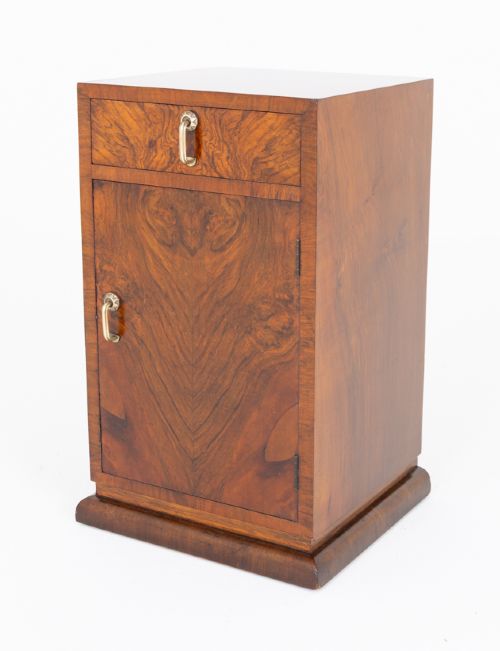
Craftsmen utilised thin sheets of burr walnut veneer applied over stable secondary timbers to create swirling, highly figured exterior surfaces. This technique allowed workshops to display symmetrical grain patterns across small door panels and drawer fronts.
Construction frequently incorporated brass hardware, glass panels, and ebonised wood accents to frame the rich brown tones of the walnut. Victorian makers added hand-carved flourishes, whereas later twentieth-century pieces relied on the natural grain movement for visual impact.
Materials recorded alongside burr walnut include solid walnut, brass hardware, ebonised wood, glass, and marble tops.
What Varies in Quality
The visual success of a burr walnut table cabinet rests upon how carefully the veneer was matched and laid across the surfaces. Superior examples display balanced, mirrored grain patterns that flow seamlessly from drawer to drawer or across double doors.
Construction integrity separates standard utility pieces from exceptional workshop output. Finer items feature solid secondary woods, crisp carving where present, and original brass fittings that operate smoothly within well-fitted housings.
Maple and Co·Walter Carter Harrods·Waring and Gillow·Epstein
The Burr Walnut Table Cabinet Glossary
- Table cabinet
- A small enclosed storage unit designed to rest upon a table or chest rather than stand directly on the floor. These pieces often secure precious items like jewellery or documents.
- Serpentine
- A furniture front curved with a convex centre flanked by concave ends. This undulating shape requires high skill to veneer accurately.
- Canterbury
- A low multi-partitioned stand originally designed for sheet music or books. Victorian makers often incorporated these with work tops and drawer compartments.
Burr Walnut Table Cabinet: Frequently Asked Questions
What is a burr walnut table cabinet used for?
These compact units were traditionally manufactured to store precious items such as stationery, jewellery, cigars, or small collectables on top of larger pieces of furniture. Their enclosed compartments kept delicate objects protected from dust and light.
Today, buyers utilise them on desks, side tables, or tabletops as decorative focal points that continue to offer practical concealed storage for modern accessories.
How do I date a burr walnut cabinet?
Dating relies on observing structural characteristics, hardware styles, and overall design motifs. Victorian examples from the nineteenth century often feature carved ornamentation, serpentine shapes, and darker patination.
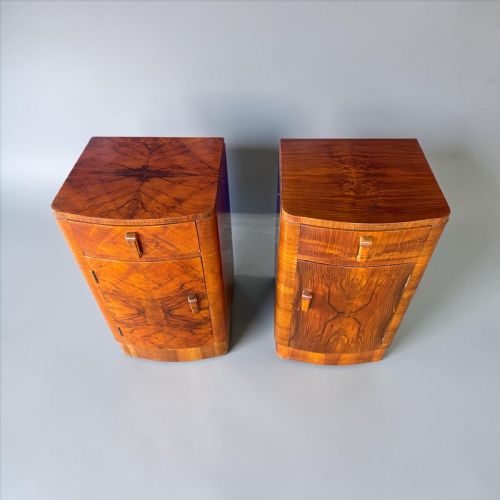
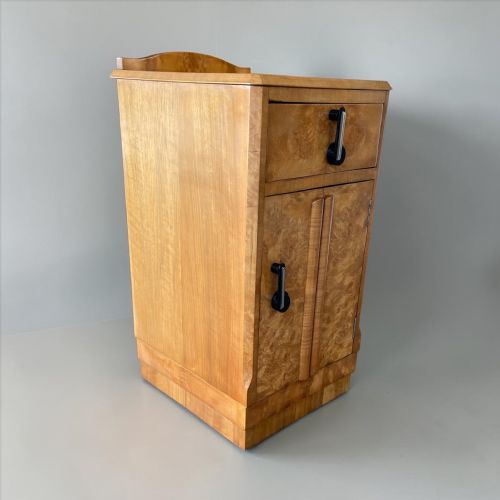
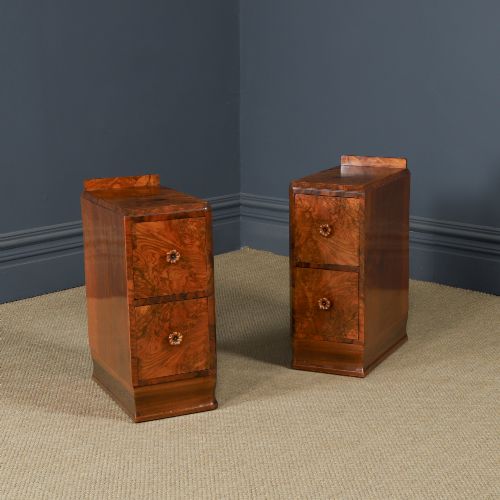
Twentieth-century pieces, particularly those from the Art Deco period or the nineteen-thirties, typically present cleaner geometric lines, streamlined handles, and lighter, highly figured walnut veneers without heavy carving.
Are these cabinets sturdy enough for daily use?
Constructed with solid internal timbers and durable walnut veneers, these cabinets were built to endure regular handling. The inclusion of brass locks and robust hinges means doors and drawers remain functional for everyday storage.
Careful placement away from direct heat sources and strong sunlight preserves both the structural integrity of the timber and the delicate decorative surfaces over time.
How do Victorian and Art Deco styles differ?
Victorian versions lean towards ornate craftsmanship, featuring hand-carved elements, shaped mouldings, and rich, dark finishes. They often double as miniature chests with multiple small internal drawers for specialised collections.
Art Deco variations focus on minimalist geometry and the unadorned beauty of the wood grain. They utilise smooth curves, polished surfaces, and understated hardware to achieve a modern aesthetic.