

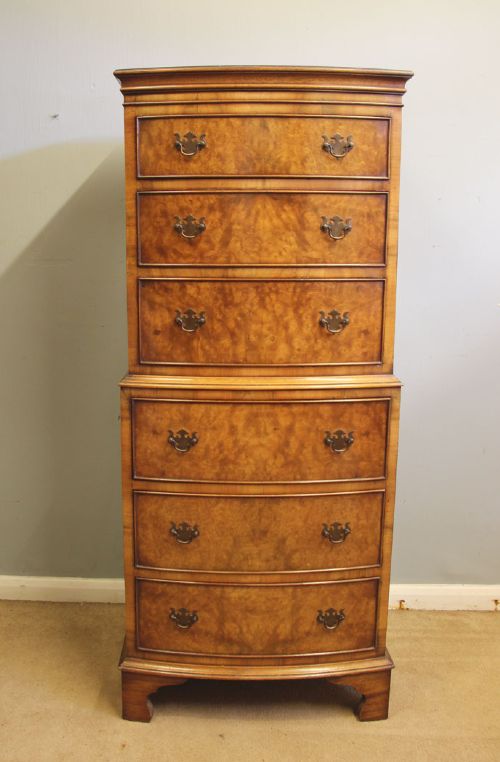
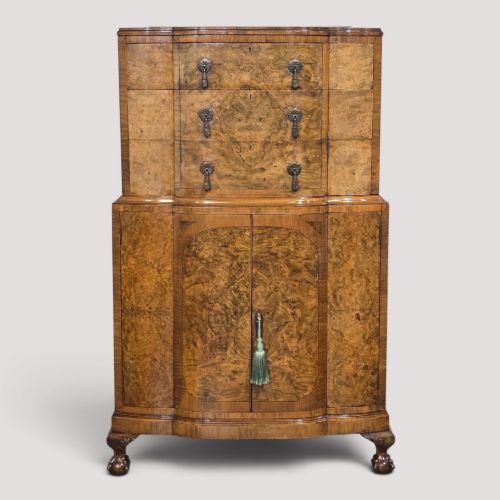
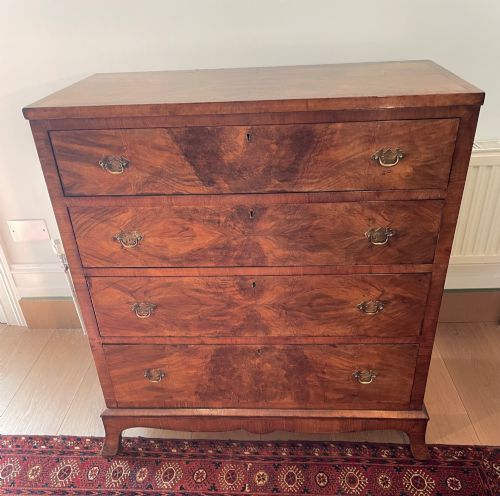
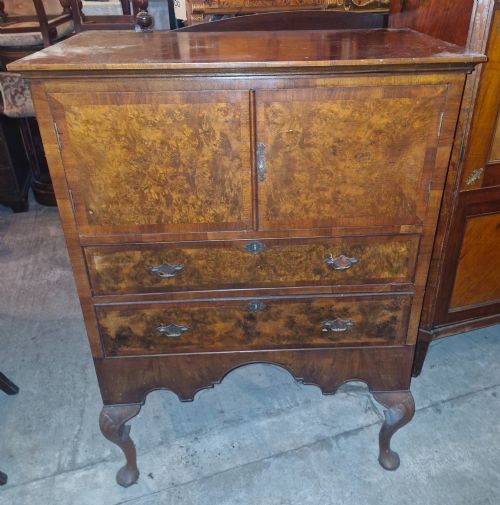
Burr Walnut Style Chest
A burr walnut style chest brings deep, swirling grain and rich warmth into a room, offering practical storage disguised as high ornament.
Burr Walnut Style Chest
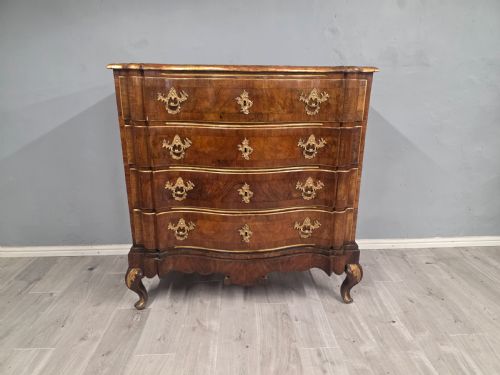
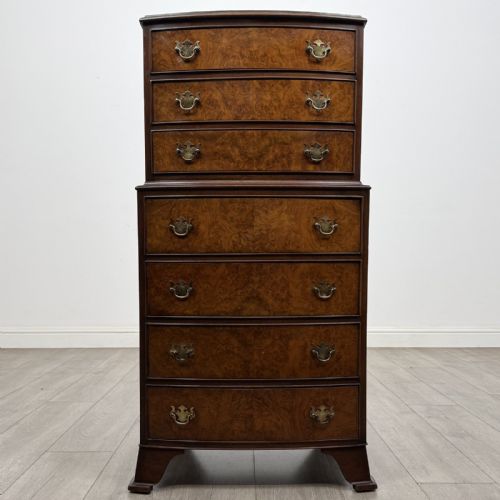
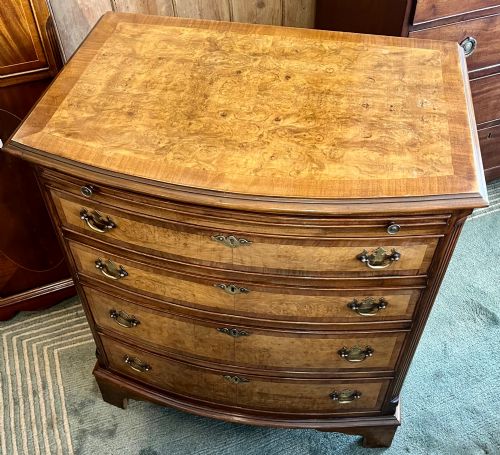
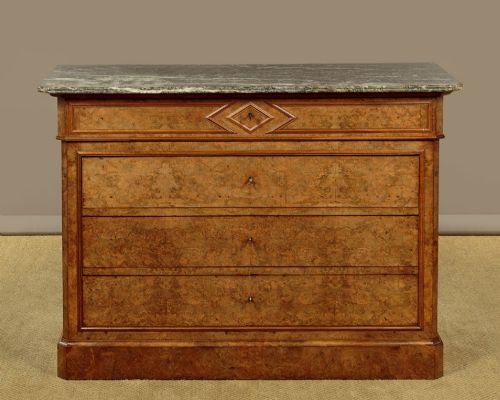
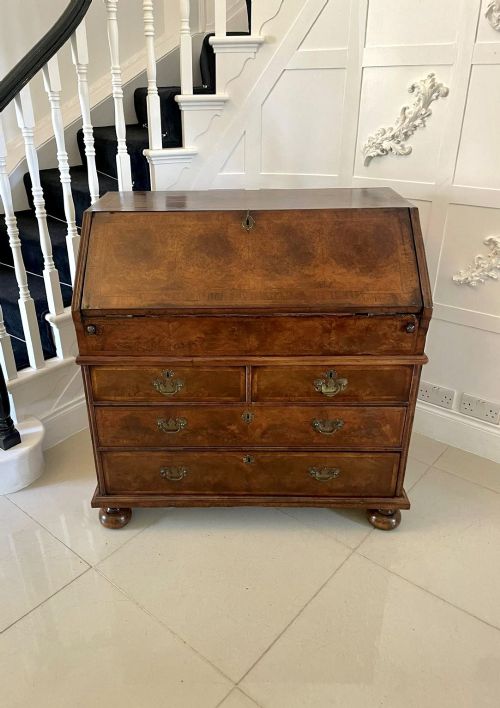
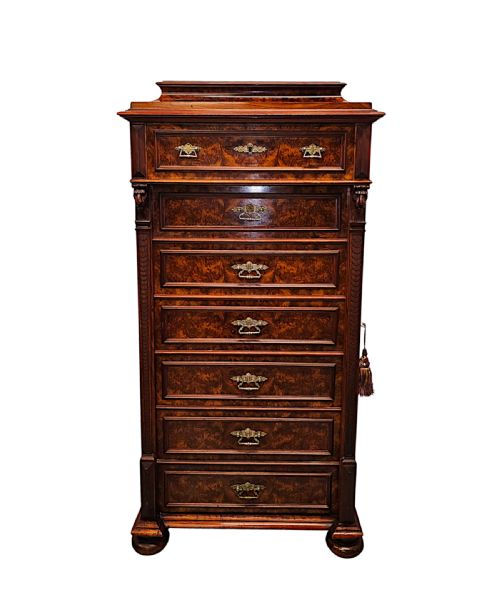
A burr walnut style chest typically presents as a chest of drawers, tallboy, or commode originating from the nineteenth and early twentieth centuries. These pieces often draw upon earlier Georgian and Queen Anne design traditions, showing proportions built for domestic storage.
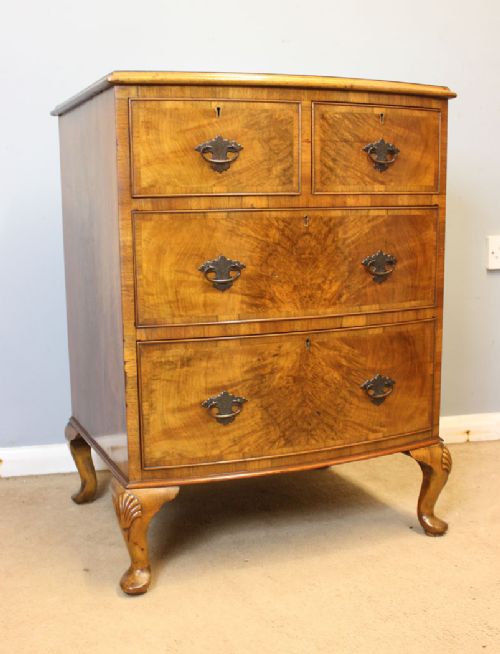
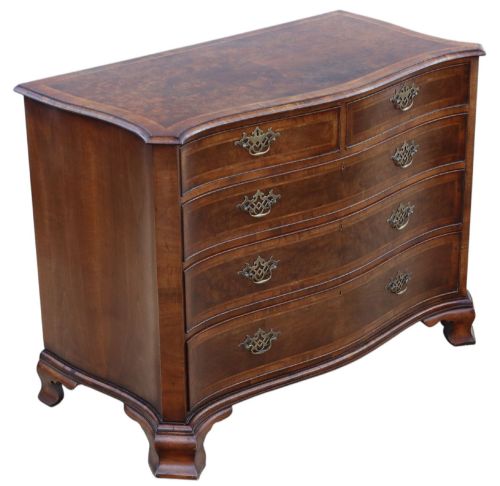
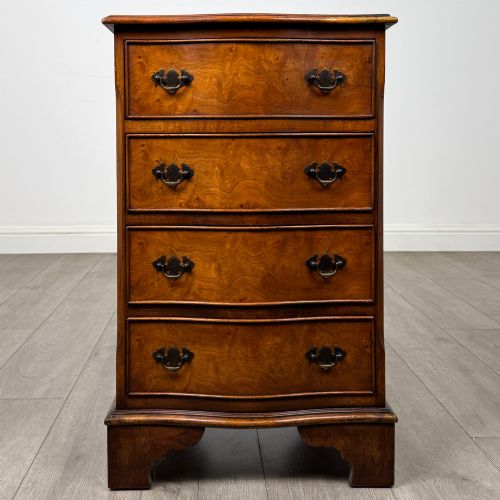
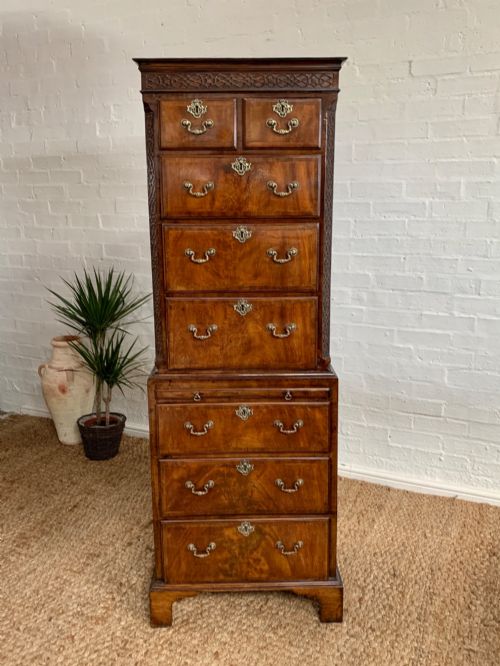
The most common examples on this page date from the interwar decades and the Victorian era, utilising revival styles that favour serpentine, bow-front, or block silhouettes. Buyers meet compact bedside chests alongside substantial tallboys and chests on chests.
Origins stretch across British workshops as well as continental makers, incorporating regional cabinet-making traits such as brass hardware and oak drawer linings. The overriding aesthetic relies on the dramatic figuring of the timber to command attention in a hallway or bedroom.
Materials and Construction
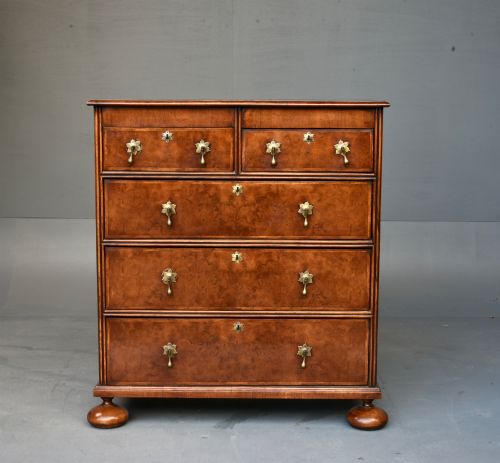
Cabinet-makers constructed these pieces by applying thin veneers of burr walnut and figured walnut over secondary woods like oak, pine, or standard walnut. This technique allowed workshops to display intricate grain patterns across wide drawer fronts and top surfaces without warping solid timber.
Master artisans utilised crossbanding and herringbone inlay to frame the burr panels, contrasting the swirling knotwood against straight-grained borders. Drawer construction commonly employed dovetail joints, paired with cast brass drop handles or bail pulls.
Burr Walnut Style Chest Retail Price Guide 2026
Typical asking prices for burr walnut style chest among the pieces listed under this phrase on Sellingantiques today, from the lower quarter to the upper quarter. They describe what is for sale here now, not the wider market.
Listings feature burr walnut style chests spanning from the nineteenth century through the interwar Edwardian and 1930s revival periods.
Distinctions in Execution
Quality rests primarily in the selection and matching of the burr walnut veneer across the front drawers, where symmetrical grain alignment separates standard production from superior work. Workshops that took care to mirror the knot patterns achieved a cohesive, harmonious façade.
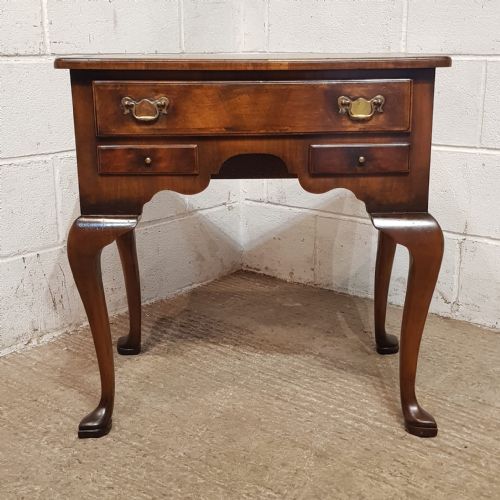
The crispness of the carving on cabriole legs, mouldings, or apron details indicates the level of skill invested by the cabinet-maker. Heavier, clumsier mouldings contrast with sharp, deliberate profiling that respects historical Georgian and Queen Anne precedents.
Gillows·Shoolbred and Co
The Burr Walnut Style Chest Glossary
- Burr walnut
- A prized timber harvested from the wart-like growths on walnut trees, yielding turbulent, knotty grain patterns filled with complex rings and eyes. It is sliced into thin veneers for decorative furniture surfaces.
- Serpentine
- A furniture front curved in a wave shape, concave in the centre and convex at the sides, requiring considerable skill from the cabinet-maker to veneer accurately.
- Tallboy
- A tall chest of drawers made in two stacked sections, often combining a chest of drawers base with a similar chest or cabinet on top.
- Crossbanding
- A narrow strip of veneer laid around the border of a panel so that its grain runs at right angles to the central grain, creating a neat framing effect.
- Lowboy
- A small oak, walnut, or mahogany table with drawers, resembling a low chest of drawers or a dressing table without the mirror.
Burr Walnut Style Chest: Frequently Asked Questions
How do I care for burr walnut veneer?
Keep the wood away from direct sunlight and excessive heat sources to prevent the thin veneer from drying out or lifting at the edges.
Polish the surface sparingly with a quality beeswax, buffing gently along the direction of the grain.
What is the difference between a commode and a chest of drawers?
In this context, a commode usually denotes a decorative continental or revival cabinet with drawers or doors, often featuring a marble top.
Standard chests of drawers focus strictly on stacked timber drawers intended for general clothing storage.
How do I date a Queen Anne style walnut piece?
Examine the secondary woods inside the drawers, such as oak or pine, alongside the type of construction and hardware used.
Many pieces exhibiting Queen Anne styles were actually produced during later revival periods in the nineteenth and early twentieth centuries rather than the original reign.