

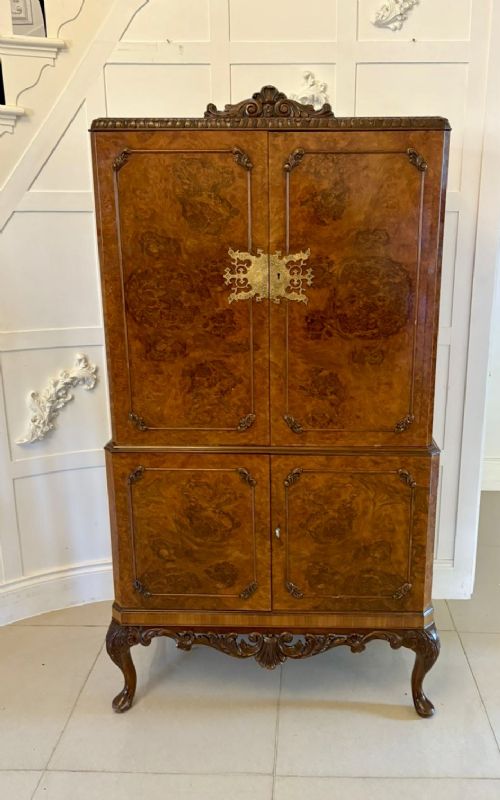

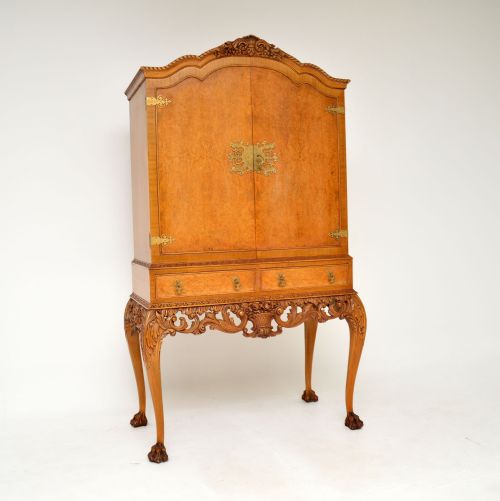


Burr Walnut Standing Bar
Burr walnut standing bar pieces are cocktail and drinks cabinets offering figured grain and period character for entertaining.
Burr Walnut Standing Bar
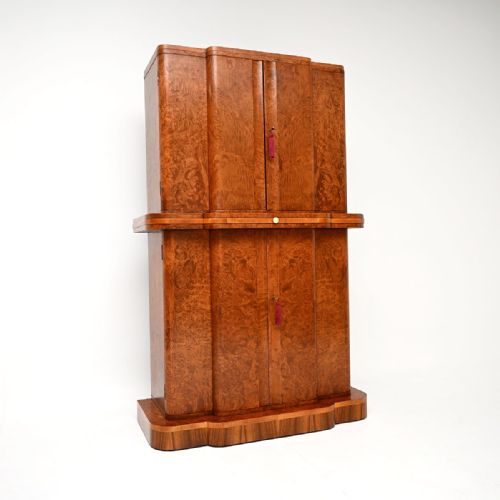
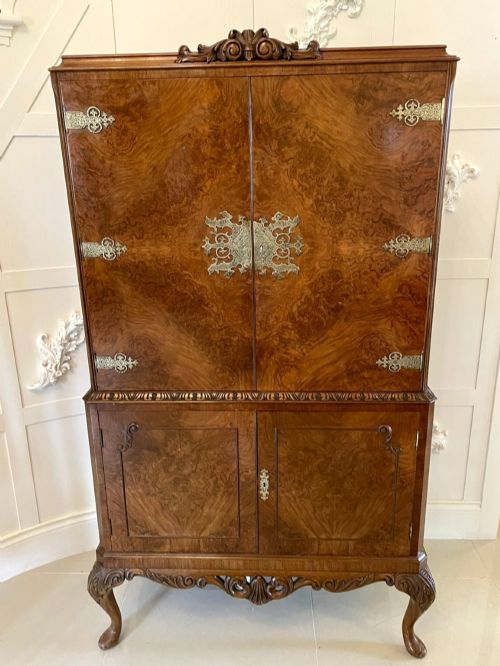
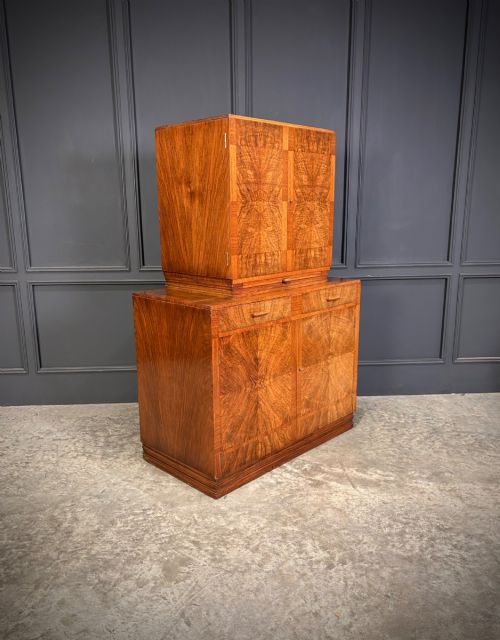
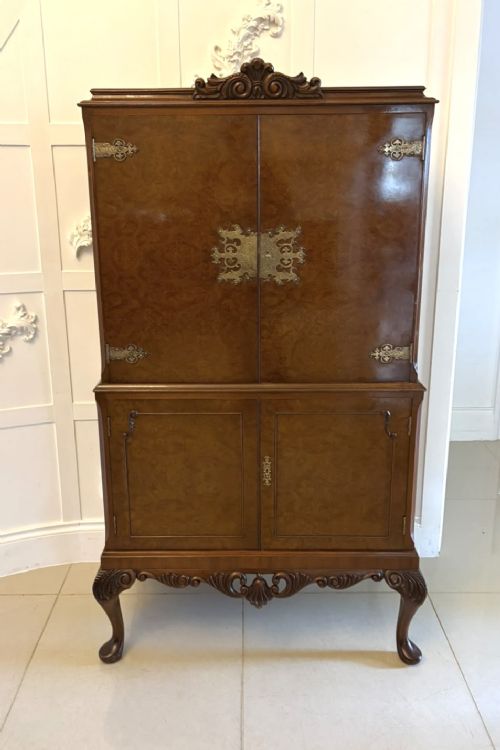
A burr walnut standing bar on this page generally takes the form of a cocktail cabinet, drinks cabinet, or side cabinet designed to hold glassware and bottles. These tall standing pieces serve as striking focal points in a room, combining practical storage with decorative presence.
The selections span the Victorian period, 1920, and 1930, bringing together diverse aesthetic movements including Queen Anne Revival, Queen Anne Style, William & Mary Style, and Art Deco. Buyers will encounter double bow front shapes and configurations featuring sliding shelves.
Originating from cabinet makers and notable firms, these standing bars reflect the shifting tastes of the early twentieth century alongside earlier Victorian traditions. Each piece provides a dedicated station for social hosting while showcasing rich cabinet-making heritage.
How they were made
Makers utilised burr walnut and walnut veneer applied over solid timber carcases to achieve swirling, highly decorative grain patterns across the exterior surfaces. This technique allowed craftsmen to wrap curved forms, such as double bow fronts, in continuous figured wood.
Metal and brass hardware, including hinges, locks, and handles, provide structural support and functional contrast to the warm timber tones. Internal sliding shelves and specialised compartment fittings were constructed to secure bottles and glassware efficiently.
Burr Walnut Standing Bar Retail Price Guide 2026
Typical asking prices for burr walnut standing bar among the pieces listed under this phrase on Sellingantiques today, from the lower quarter to the upper quarter. They describe what is for sale here now, not the wider market.
Some cabinets hide their inner party tricks so well that guests might mistake them for modest library cupboards until the doors swing open.
What varies in quality
The selection of the walnut veneer determines much of the visual appeal, with tightly knotted burr patterns commanding greater attention than plain timber surfaces. Matching and book-matching the grain across doors and drawer fronts indicate higher standards of craftsmanship.
Attribution to documented makers such as Hille, Epstein and Co Furniture, or Liberty's of London elevates a piece above standard production items. The integration of specialised internal fittings and proportioned period styling further distinguishes finer examples.
Hille·Epstein and Co Furniture·Liberty's of London
The Burr Walnut Standing Bar Glossary
- Burr walnut
- A specialised timber harvested from the growth excrescences on walnut trees, prized for its swirling, knotted grain patterns. It is typically sliced into veneers for decorative furniture surfaces.
- Veneer
- A thin layer of choice wood applied over a base of secondary timber to provide a decorative exterior without using solid expensive wood throughout. This method permits complex grain matching.
- Art Deco
- A design style emerging in the interwar period, characterised by sleek lines, geometric forms, and streamlined elegance. It appears in several cabinets from the nineteen-thirties.
- Queen Anne Revival
- A style looking back to early eighteenth-century English furniture forms, often featuring cabriole legs and traditional proportions. Pieces on this page blend these classic shapes with cocktail storage.
- Double bow front
- A cabinet facade featuring two outward-curving convex sections. This shape enhances the display of figured walnut veneer across the front doors.
Burr Walnut Standing Bar: Frequently Asked Questions
What is a burr walnut standing bar?
A burr walnut standing bar is typically a cocktail or drinks cabinet designed for storing and serving beverages. These tall standing pieces use figured walnut veneer to create a decorative exterior.
They function as both practical storage units and statement furniture items for living and dining spaces. The form accommodates glassware, bottles, and preparation surfaces within a compact footprint.
How do I date a cabinet?
Dating these cabinets involves examining the stylistic details, construction methods, and materials recorded in the specific piece history. Items span the Victorian era, the 1920s, and the 1930s.
Stylistic cues such as Art Deco geometry or Queen Anne Revival elements help narrow down the period of manufacture. Maker stamps or labels can also provide specific chronological markers.
Where were these cabinets placed?
These cabinets were designed for entertaining spaces within the home, such as drawing rooms, reception rooms, or dedicated cocktail lounges. Their standing format allowed them to sit against walls while keeping drinks accessible.
Interior fittings like sliding shelves helped users organise glassware and bottles close to hand. They served as central hubs for social gatherings during the interwar period and earlier.
What is walnut veneer?
Walnut veneer consists of thin sheets of walnut timber applied over a solid underlying carcase. This technique allows craftsmen to utilise highly decorative burr sections that would be unstable if used as solid wood.
Using veneer also permits book-matching, where grain patterns are mirrored across cabinet doors to create symmetrical designs. It represents a standard method in high-grade cabinet making.
How do styles differ?
Styles range from traditional revival forms to modern interwar designs. Queen Anne and William and Mary styles bring classical proportions and curved wooden elements.
Art Deco examples favor streamlined silhouettes and geometric symmetry. These aesthetic differences influence the overall shape and handle design of each cabinet.