

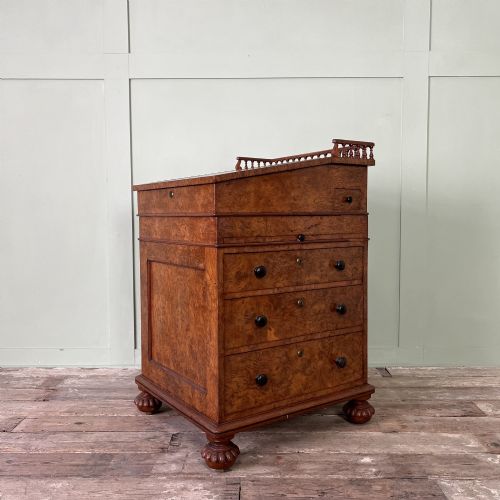


Burr Walnut Slope
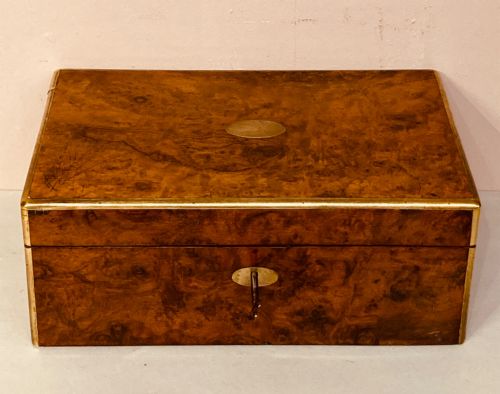
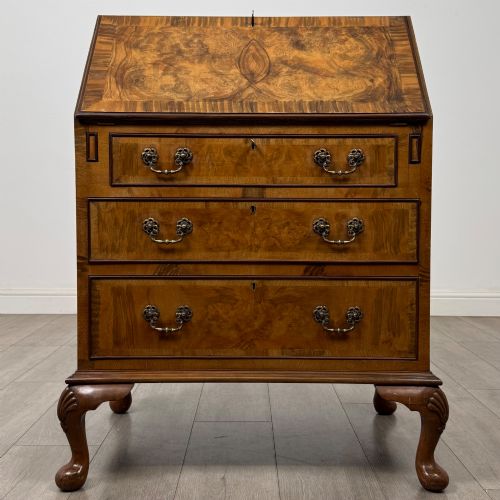
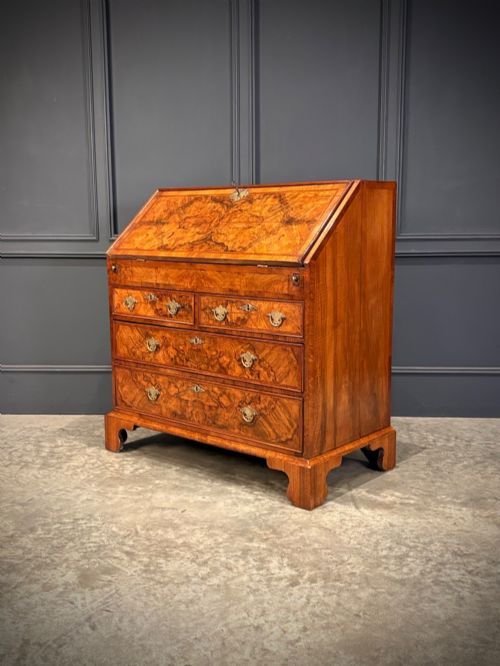
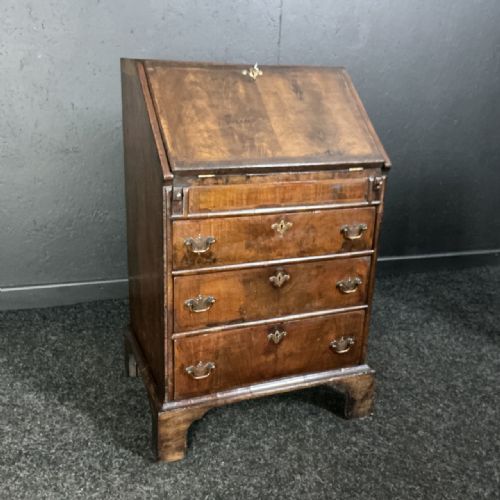
A burr walnut slope offers a compact, highly figured writing surface designed for portable correspondence or stationary use.
Burr Walnut Slope
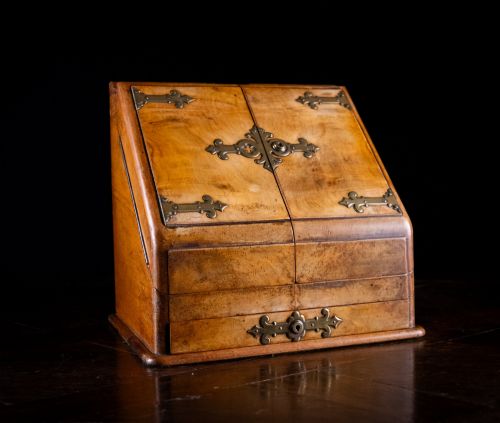
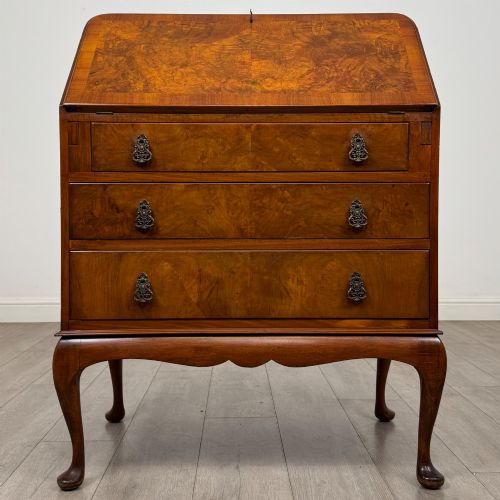
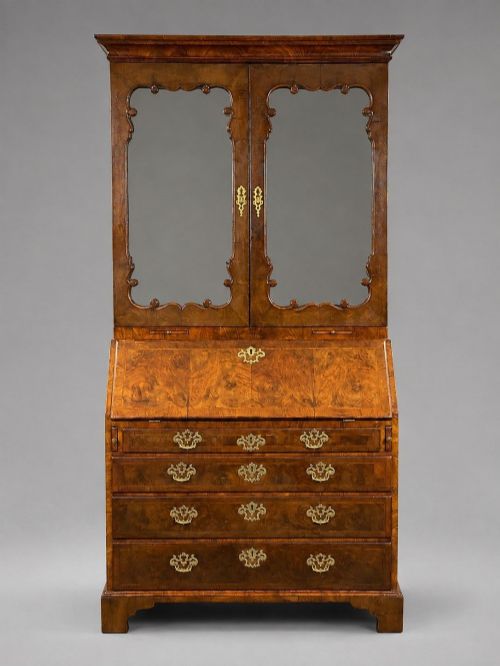
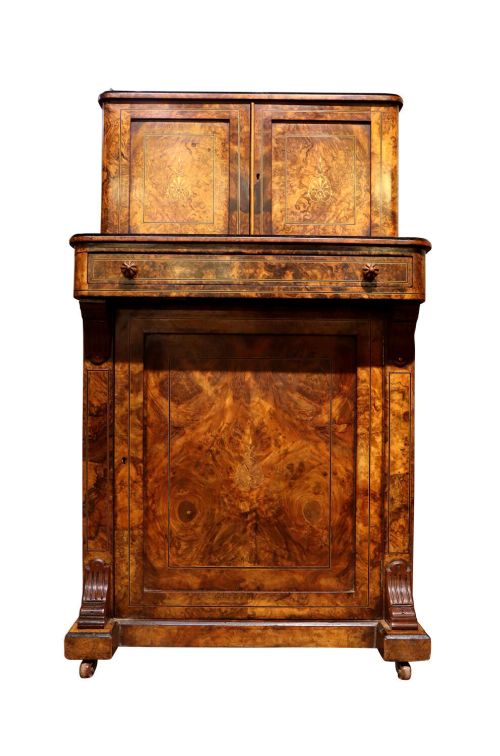
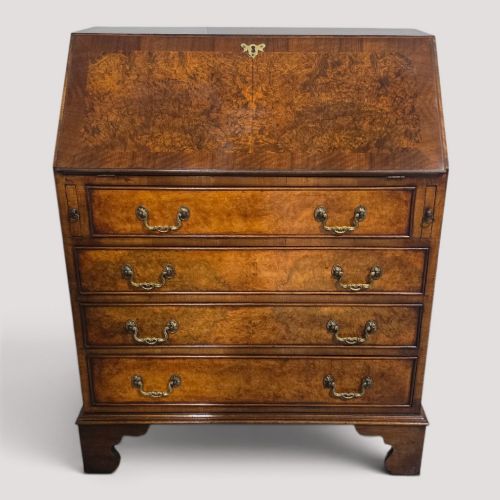
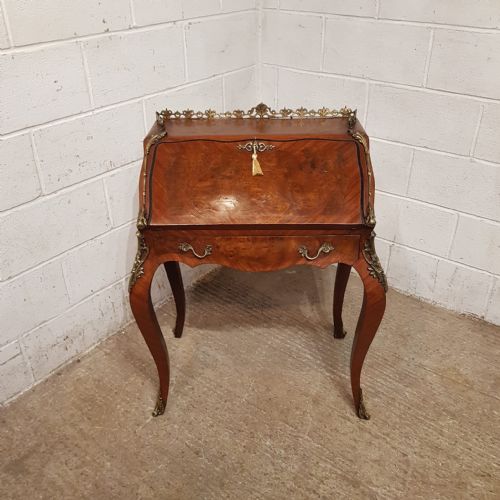
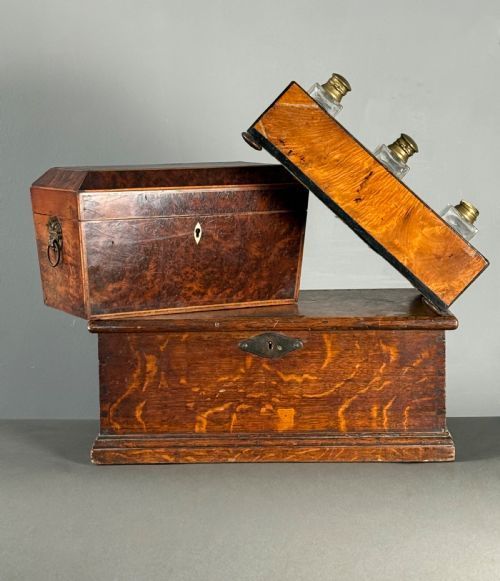
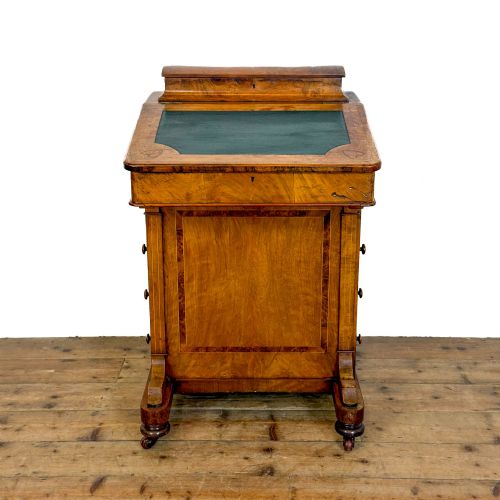
Forms range from brass-bound wooden boxes that unfold on a tabletop to freestanding Davenport desks and bureau bookcases. These objects served as private writing desks and storage repositories for letters, ink, and personal documents.
Origins include English workshops, French ateliers, and Dutch cabinet makers, utilising timber selected for its swirling grain patterns. Buyers select these items for their intricate woodwork and functional compartments designed for historical correspondence.
Materials and construction
Cabinets and portable boxes rely on thin veneers of burr walnut applied over secondary woods such as oak or solid walnut. The distinctive swirling patterns arise from tree growths and burls, sliced and matched across the exterior surfaces.
Construction incorporates brass banding, boxwood inlay, ebonised wood details, and fitted interiors lined with leather. Secret drawers and specialised locking mechanisms, including Bramah locks, conceal private compartments within the writing surfaces.
Listings feature burr walnut pieces spanning from the 18th Century through the Victorian era to the 1920s.
Factors of quality
The density and symmetry of the burr walnut grain dictate the visual impact of the exterior surfaces, with continuous matching across lid panels marking superior examples. Precision in the brass inlay and the tightness of mitred joints reflect the skill of the original cabinet maker.
Internal fittings, such as secret drawers operating smoothly, satinwood pigeonholes, and integrated leather writing surfaces, separate utilitarian boxes from high-status pieces. The presence of original brass hardware, working locks, and structural integrity across hinges and folding desks determines the standing of each piece.
Gillow & Co·Sampson Mordan & Co
The Burr Walnut Slope Glossary
- Burr walnut
- A veneer taken from the wart-like growths on walnut trees, prized for its complex, swirling grain patterns. It creates highly decorative surfaces on furniture and writing boxes.
- Writing slope
- A portable box with a hinged sloping lid that opens to reveal a writing surface and compartments for stationery. These pieces were designed for travel or desktop use.
- Davenport
- A compact desk featuring a sloping writing top with drawers opening to the side. They often incorporate stationery compartments and pop-up superstructures.
- Bramah lock
- A high-security cylindrical lock patented in the late eighteenth century. They frequently secure fine nineteenth-century writing boxes and slope lids.
- Crossbanding
- A narrow strip of veneer applied around the border of a panel with the grain running perpendicular to the centre. This technique frames the burr walnut surfaces.
Burr Walnut Slope: Frequently Asked Questions
What is inside a writing slope?
Writing slopes typically contain a sloping leather-lined writing surface that folds open to reveal storage compartments for pens, inkwells, and paper. Many examples feature hidden secret drawers accessed by removing specific interior partitions.
Additional fittings often include removable trays, stamp compartments, and small ledges to hold writing instruments securely during correspondence.
How do I date a burr walnut slope?
Dating relies on examining construction techniques, hardware, and secondary woods used in the interior. Victorian pieces frequently feature brass banding and specific lock types, while earlier Georgian or Queen Anne examples show different carcass proportions and leg designs.
Stylistic cues such as ebonising, boxwood inlay, and the presence of Davenport configurations help narrow the period of manufacture across the eighteenth and nineteenth centuries.
Were these desks used for travel?
Portable writing slopes were built specifically for travel, allowing users to pack writing materials securely inside a locking wooden box. Brass binding and robust handles protected the corners and edges during transport across homes or journeys.
Larger variations like Davenport desks and stationary cabinets remained stationary on tables, serving as permanent writing stations rather than portable luggage.
How do I care for burr walnut veneer?
Burr walnut veneer requires stable indoor humidity levels and protection from direct sunlight to prevent timber drying and veneer lifting. Regular dusting with a soft, dry cloth preserves the polished surface without stripping historic finishes.
Leather writing surfaces benefit from minimal moisture and occasional specialised conditioning to maintain flexibility across the folding sections.