
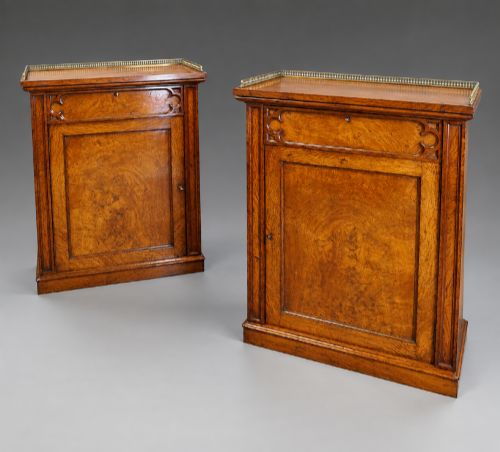
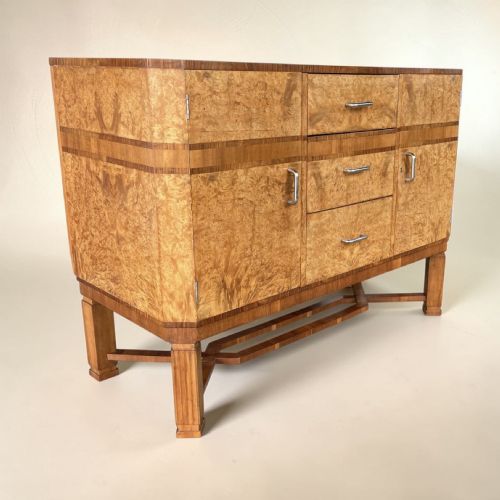
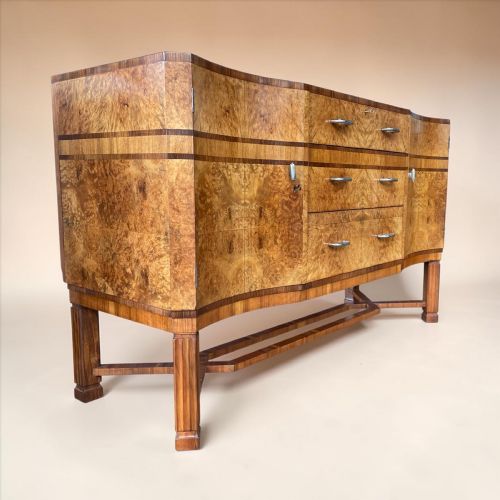
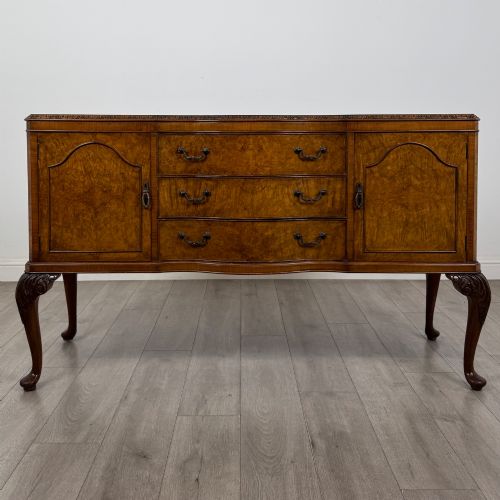
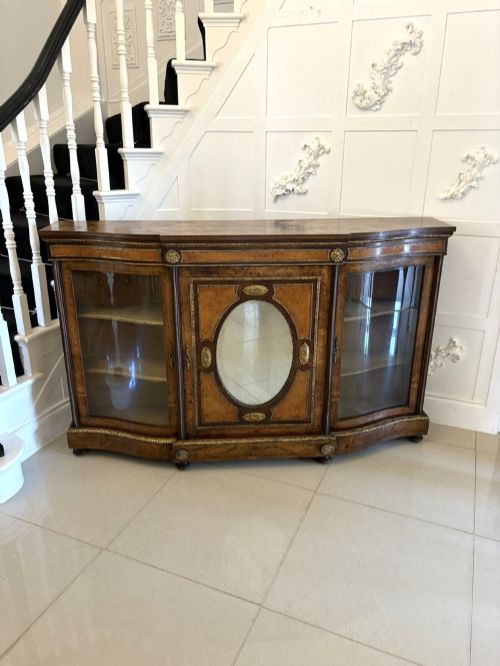
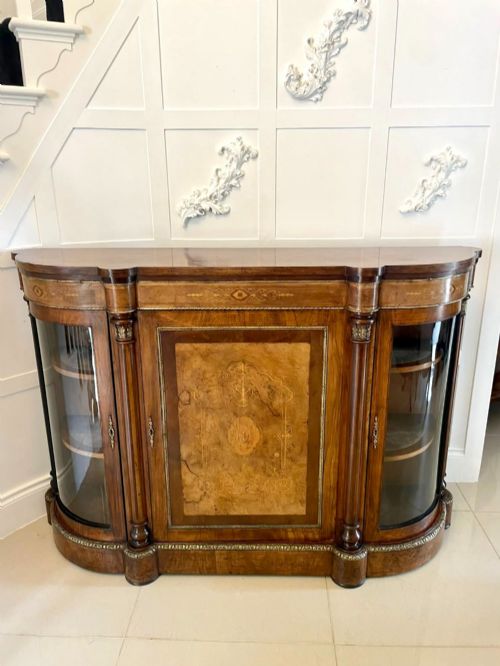
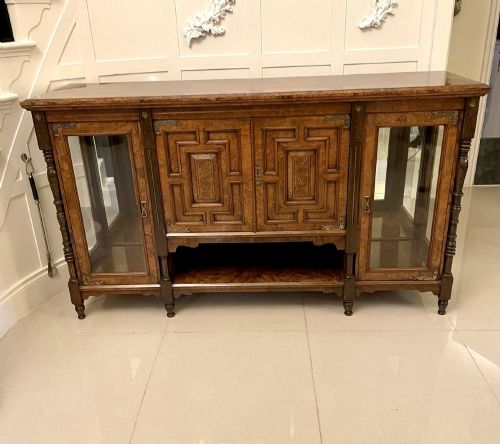
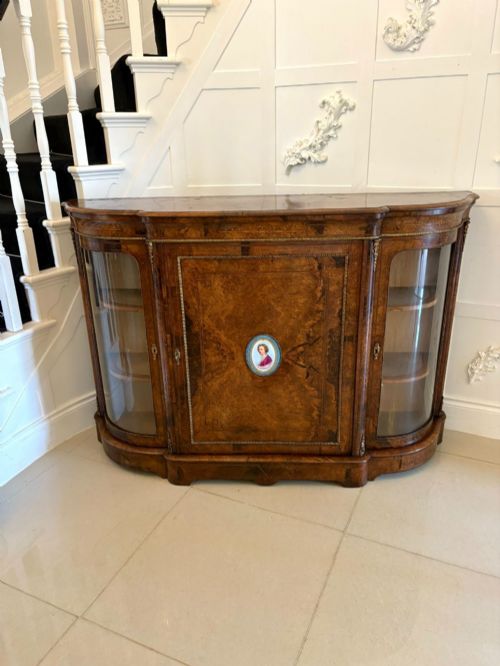
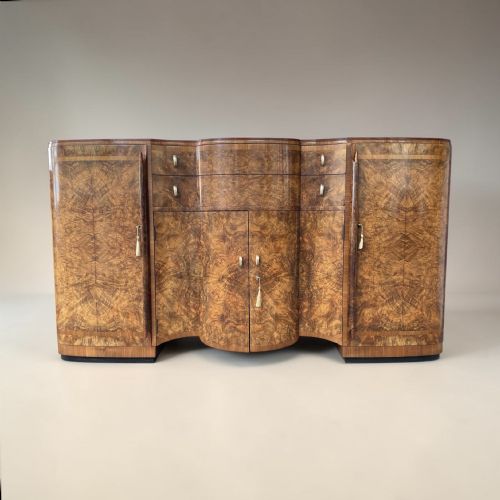


Burr Walnut Sideboard Cabinet
A burr walnut sideboard cabinet brings distinctive swirling timber figures and generous storage to a dining room or salon.
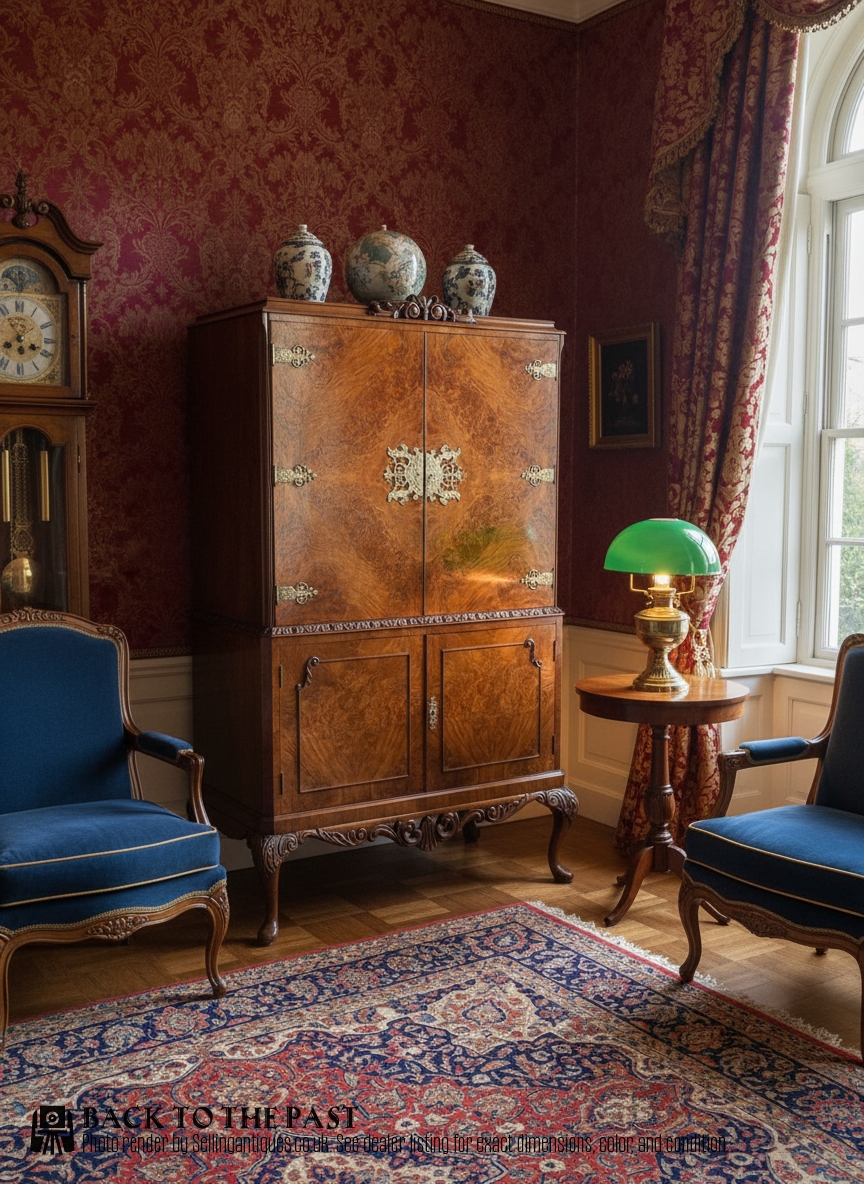
Burr Walnut Sideboard Cabinet
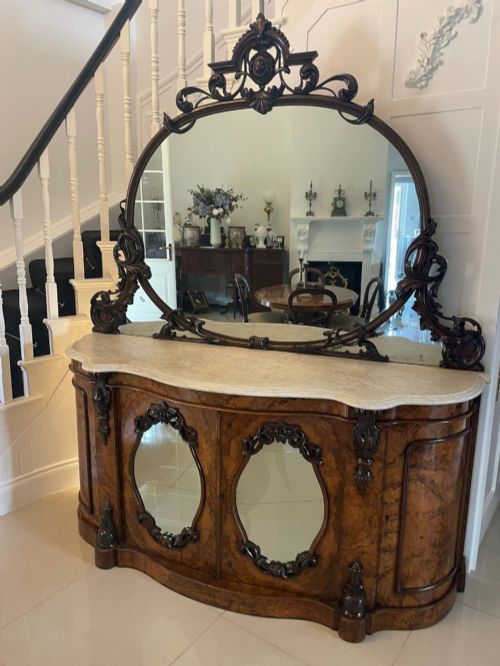
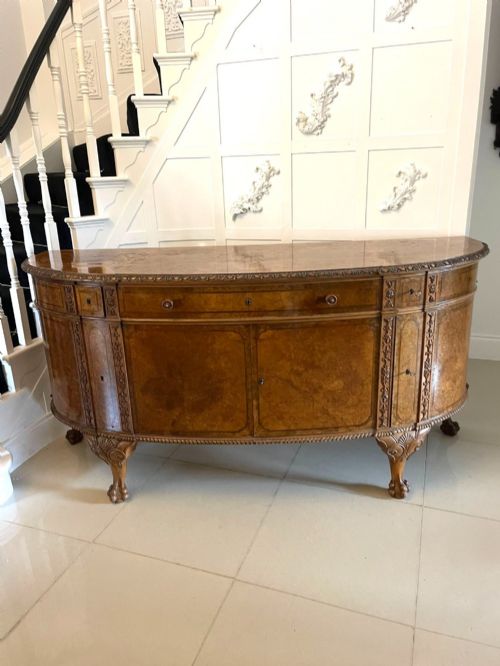
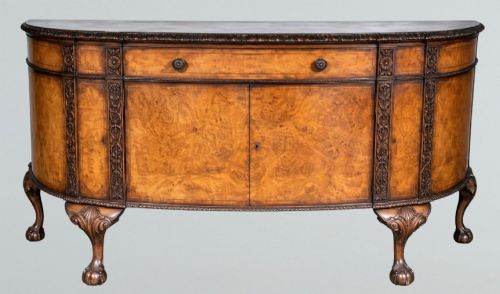
A burr walnut sideboard cabinet is a substantial serving and display piece defined by its richly figured wooden veneer. When searching for a burr walnut sideboard cabinet, buyers encounter diverse forms ranging from mid-nineteenth century Victorian credenzas to streamlined 1930s Art Deco serving units.
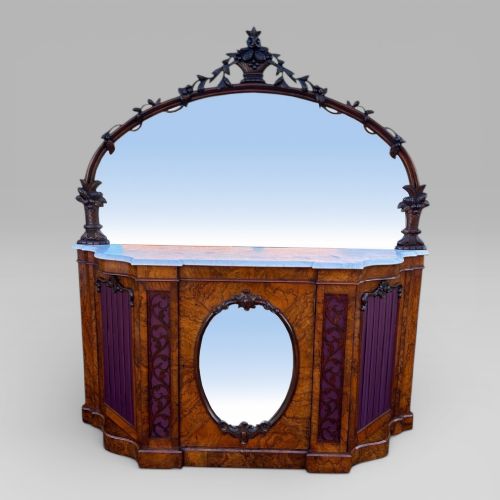
The pieces listed on this page span several key eras, predominantly the Victorian period and the 1930s, alongside nineteenth-century examples and Edwardian revivals. Common formats include low credenzas, bow-fronted servers, serpentine cabinets, and pier cabinets designed for formal reception rooms.
Cabinet makers utilised specific styles across these eras, incorporating Queen Anne revival shapes, Aesthetic Movement details, and Louis XV influences. The integration of display glass, mirrored backs, and marble tops distinguishes many of the surviving examples found in these listings.
Materials and Construction Methods
The distinctive surface pattern of a burr walnut sideboard cabinet relies on veneer sliced from the knotty outgrowths of walnut trees. This highly figured timber is applied over solid secondary woods like oak or pine, often enhanced by boxwood inlay, ebonised detailing, and marquetry scrolls.
Many nineteenth-century examples incorporate cast or chased ormolu mounts and inset porcelain plaques to accent the walnut surfaces. Later Art Deco iterations favour contrasting veneers such as sycamore or satin birch, paired with clean geometric lines and specialised hardware.
Materials recorded in these pieces include solid walnut, burr walnut veneers, marble, mirror glass, ormolu, and boxwood inlay.
Markers of Superior Craftsmanship
The distinction between standard production and top-tier execution lies in the selection and bookmatching of the walnut burr veneer. Master cabinet makers carefully aligned the swirling grain patterns across doors and drawer fronts to create symmetrical visual harmony.
Structural integrity and secondary timber selection separate finer workshops from mass manufacturing. Finely fitted internal shelving, original brass locks, and substantial marble tops indicate higher standards of period production.
Maurice Adams·Harry and Lou Epstein·Gillows·Hille·Leemings of Halifax
The Burr Walnut Sideboard Cabinet Glossary
- Burr Walnut
- Wood cut from a tree growth where the grain has grown in a deformed, swirling manner. This produces highly decorative patterns prized by cabinet makers.
- Credenza
- A low dining room or parlour cabinet, typically featuring central cupboard doors flanked by curved glass display sections. Victorian examples often sit upon a plinth base.
- Ormolu
- Gilt bronze mounts applied to furniture for decorative effect. These metal ornaments are frequently found on nineteenth-century pieces.
- Marquetry
- The art of applying pieces of veneer to a structure to form decorative patterns and pictures. Floral motifs are common on mid-Victorian examples.
- Serpentine Front
- A furniture front curved in a wave shape with a convex centre flanked by concave ends. This contour requires expert woodworking skill to execute properly.
Burr Walnut Sideboard Cabinet: Frequently Asked Questions
What is a burr walnut sideboard cabinet used for?
These versatile pieces serve primarily for dining room storage, housing cutlery, linen, and glassware. They also function as display surfaces for decorative objects and lamps.
In reception rooms, lower credenzas provide a decorative focal point while keeping household items out of sight behind wooden or glass doors.
How do I date a burr walnut sideboard cabinet?
Dating relies on identifying stylistic markers, construction methods, and secondary timbers used in the carcass. Victorian pieces frequently feature elaborate marquetry, ormolu mounts, and mirrored backs.
Art Deco examples from the 1930s display streamlined shapes, contrasting light woods like sycamore, and minimal ornamentation compared to their nineteenth-century predecessors.
Where should I place this cabinet at home?
A sideboard cabinet suits a formal dining room, a spacious hallway, or a living area where the figured timber can be appreciated. Ensure the room has stable humidity levels to protect the delicate walnut veneer.
Keep the piece away from direct sunlight and heat sources to prevent the wood from drying out or fading over time.
How do I care for burr walnut veneer?
Maintain the surface by dusting regularly with a soft, dry cloth and avoiding modern chemical polishes. Applying a quality beeswax occasionally helps nourish the antique timber.
Protect marble tops from acidic spills and use coasters under glasses or vases to prevent water rings on the polished wood finish.