



Burr Walnut Gaming Table
Burr walnut gaming tables are clever folding surfaces defined by swirling veneers and Victorian craftsmanship, bringing tactile history and practical charm to any room.
Burr Walnut Gaming Table
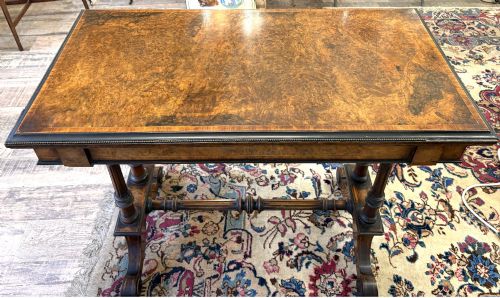
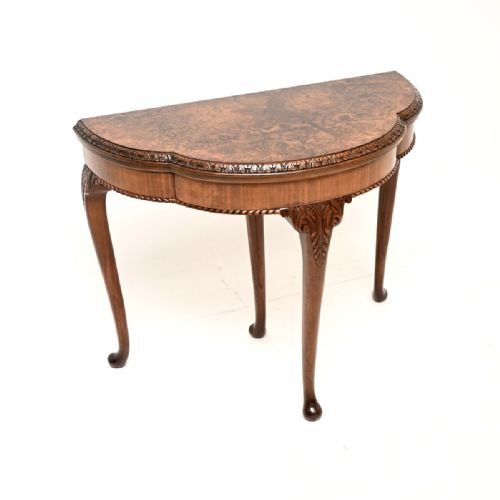
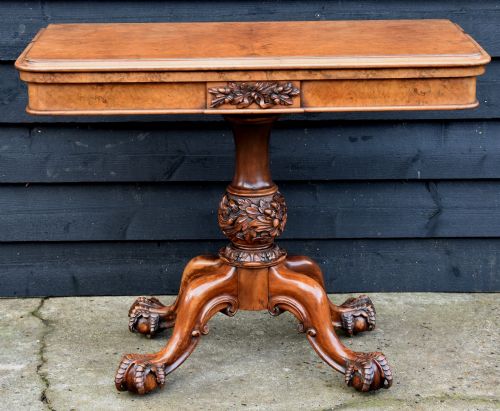
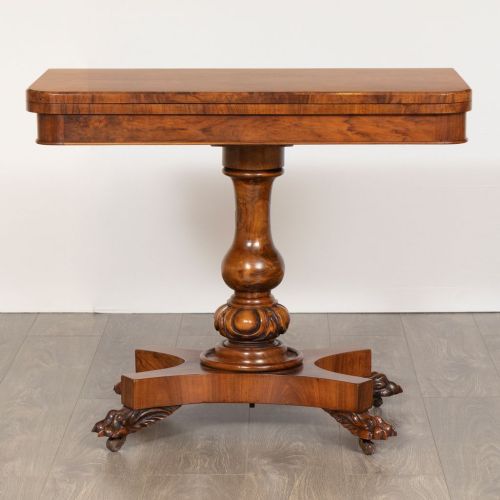
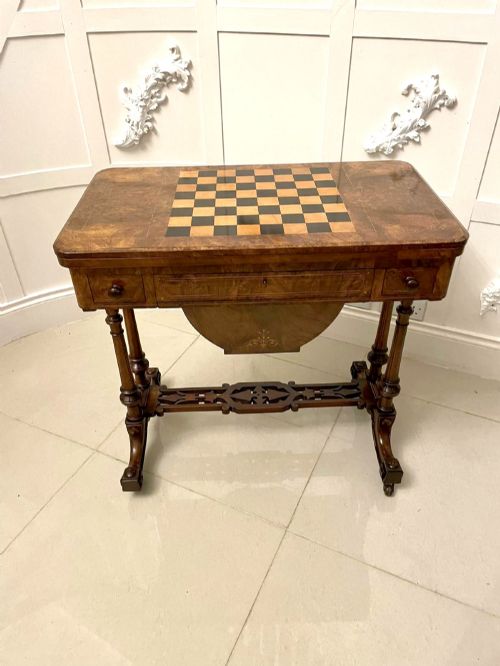
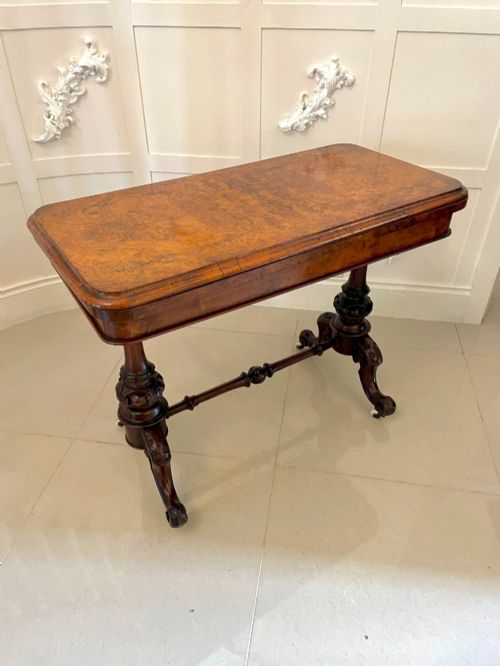
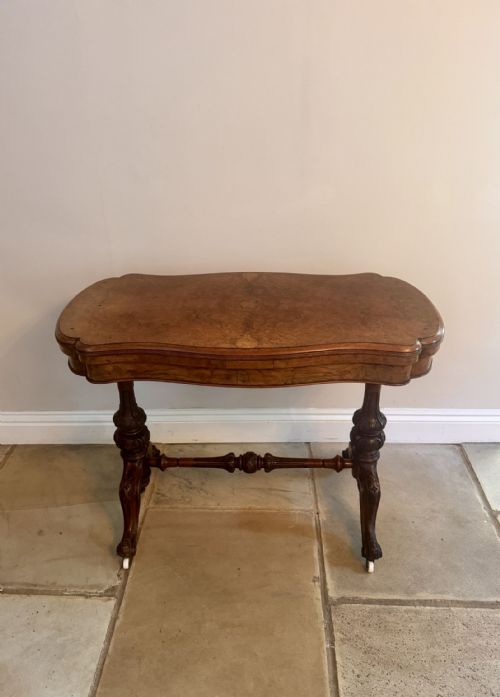
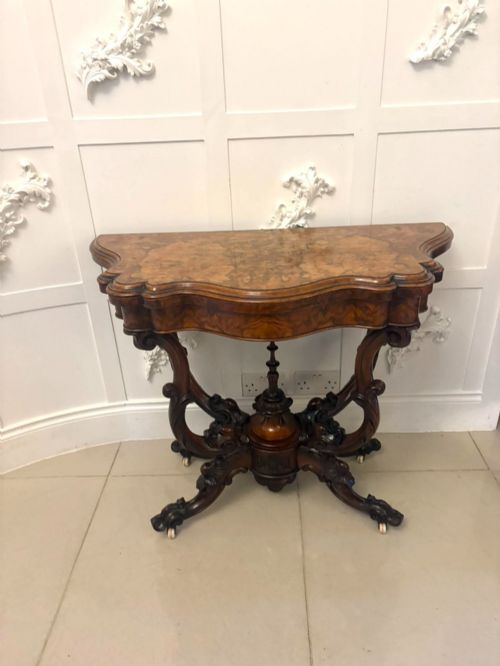
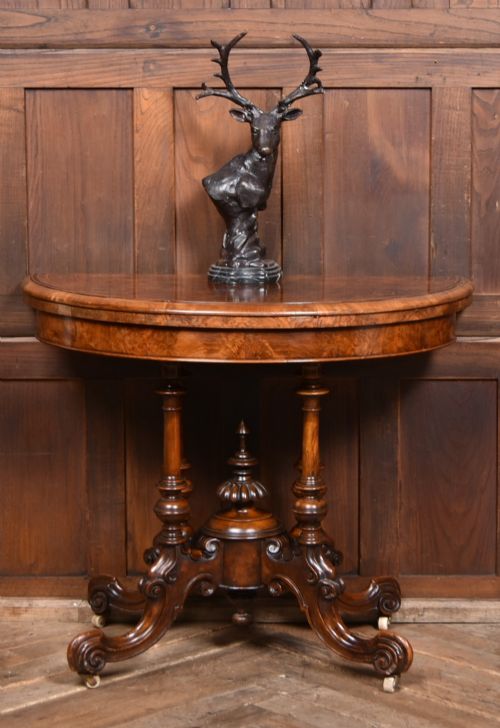
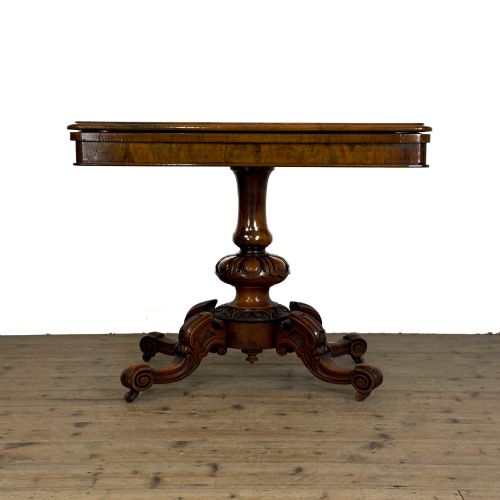
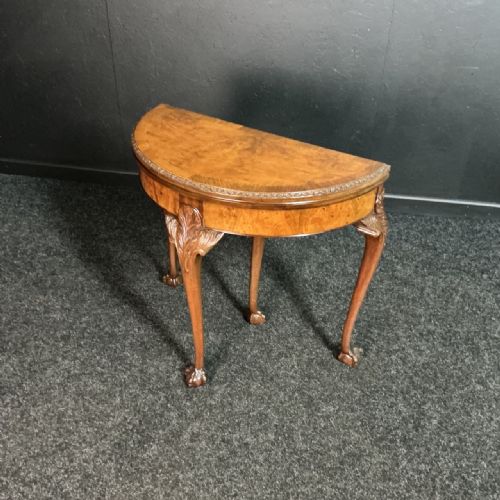
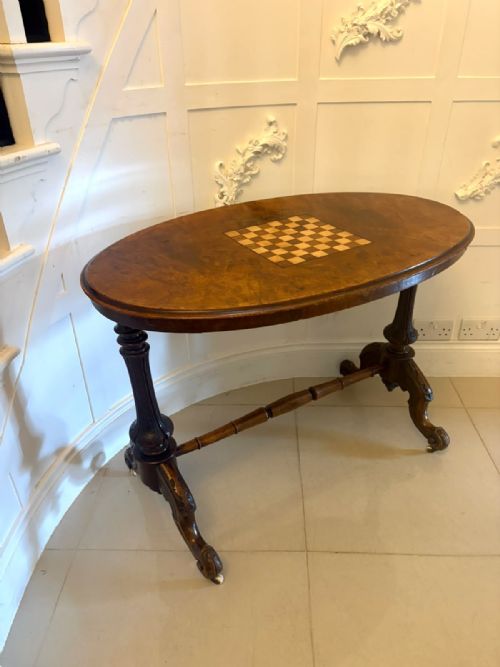
A burr walnut gaming table is primarily a Victorian creation, spanning card tables, games tables, console tables, and occasional tables designed with foldover tops for entertainment. You will most frequently meet nineteenth-century examples that combine rich wood grains with clever internal compartments for cards, chess, or sewing.
The selection ranges from mid-nineteenth-century Victorian and French Louis XV style pieces to later twentieth-century Queen Anne style and Epstein and Co productions. These versatile items often double as console or side tables when closed, adapting easily to modern living spaces.
Materials and technique
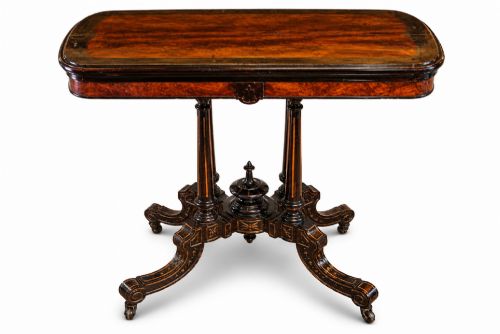
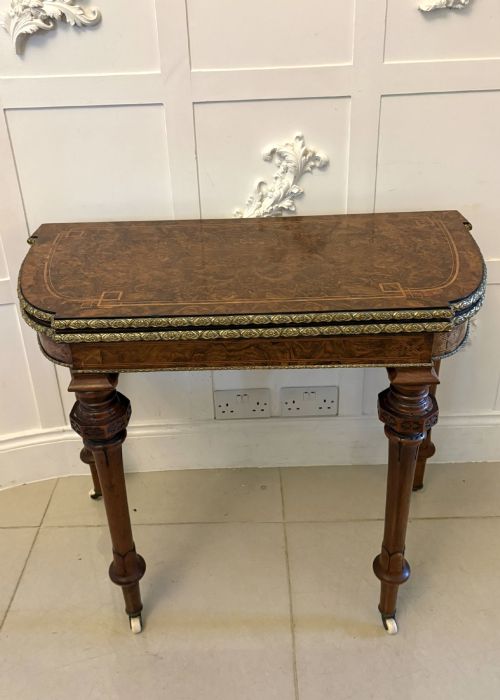
Craftsmen utilised burr walnut and plain walnut veneers to create swirling, highly figured surfaces on the primary tabletops, often enhanced by delicate wood inlay, floral marquetry, and ebonised wood details. The underlying construction frequently relied on sturdy timber frames to support the heavy foldover tops and pivoting mechanisms.
Many examples incorporate decorative metalwork such as brass fittings and ormolu mounts, alongside ceramic components and carved wooden basket bases or supports. These varied elements required precise cabinetmaking to ensure the folding and pivoting mechanisms operated smoothly.
Burr Walnut Gaming Table Retail Price Guide 2026
Typical asking prices for burr walnut gaming table among the pieces listed under this phrase on Sellingantiques today, from the lower quarter to the upper quarter. They describe what is for sale here now, not the wider market.
Several tables hide built-in chessboards and sewing wells, proving Victorians loved multitasking long before modern desks.
Distinctions in craftsmanship
The distinction between ordinary and exceptional pieces rests on the richness of the burr walnut veneer and the crispness of the marquetry inlay. Tables featuring detailed floral marquetry, finely carved basket bases, or gilt ormolu mounts demonstrate superior workshop execution.
Structural integrity and the precision of the foldover mechanism also set finer examples apart. Tables bearing attribution to noted makers like Edwards and Roberts or Epstein and Co often display superior joinery and more ambitious stylistic detailing.
Edwards and Roberts·Epstein and Co
The Burr Walnut Gaming Table Glossary
- Burr walnut
- A specialised timber cut from the abnormal growth or burl of a walnut tree, prized for its swirling, highly figured grain patterns.
- Foldover top
- A hinged tabletop design that doubles the surface area when opened, commonly utilised in card and games tables.
- Marquetry
- Decorative veneer work arranged in pictorial or floral patterns using various tinted woods.
- Ormolu
- Gilt bronze mounts applied to furniture for decorative enrichment, popular in French revival and high-end Victorian pieces.
- Ebonised wood
- Timber treated to imitate ebony, providing a dark, contrasting border or structural accent against the lighter walnut.
Burr Walnut Gaming Table: Frequently Asked Questions
What is a burr walnut gaming table?
It is a specialised piece of antique furniture, typically Victorian, featuring a decorative burr walnut veneer and a hinged top that opens for card games or chess.
When closed, the table functions as a console or side table, making it a versatile addition to a modern room.
How do these folding mechanisms work?
The top leaf rotates on a pivot or hinges open on a knuckle joint, supported by the swing of the rear framework or leg.
This clever design provides a stable surface for play without placing strain on the hinges.
Can I use one as a regular desk?
While the surface area is generally suitable for writing, the presence of internal games compartments or shallow sewing wells might limit traditional legroom.
They are best utilised as occasional display surfaces or for their original entertaining purpose.
How do I identify a Victorian piece?
Look for characteristic construction methods, such as solid secondary timbers, hand-cut dovetails, and period-specific styling like Rococo Revival or Aesthetic Movement details.
Dates cluster heavily around the mid to late nineteenth century, often indicated by the depth of the walnut figuring and brass hardware.