



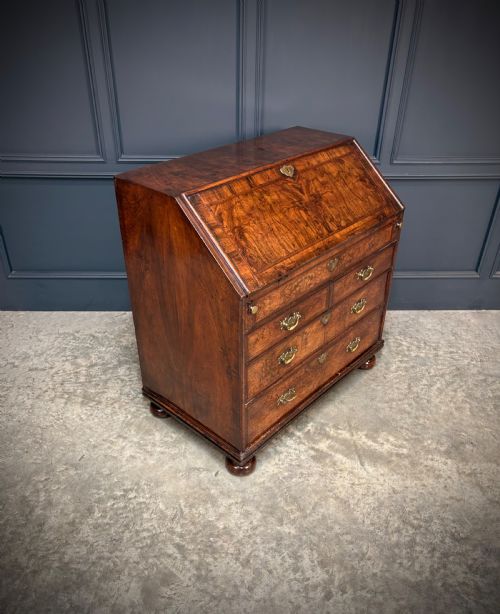


Burr Walnut Drop Front Desk
A burr walnut drop front desk combines a sloping writing flap with highly figured timber surfaces for domestic utility.
Burr Walnut Drop Front Desk
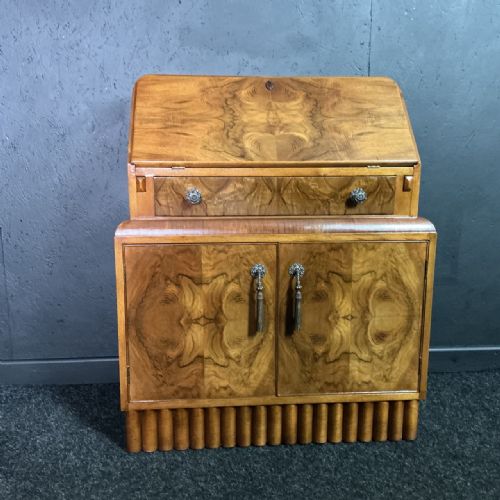
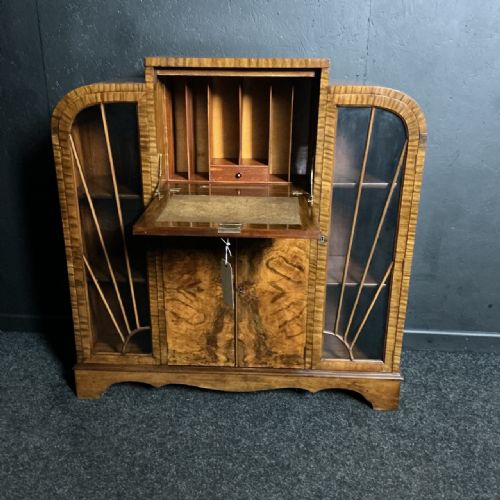
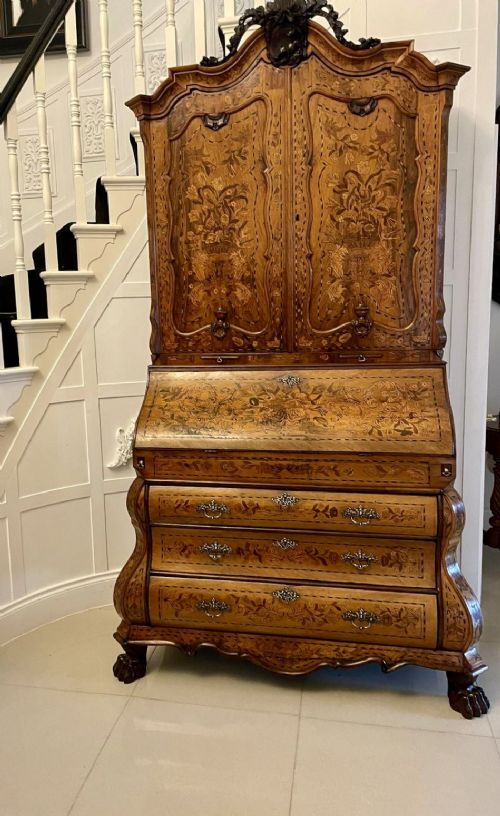
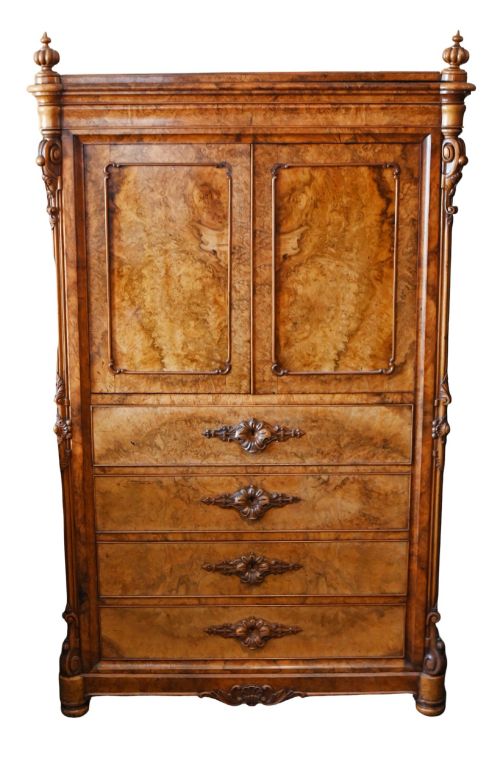
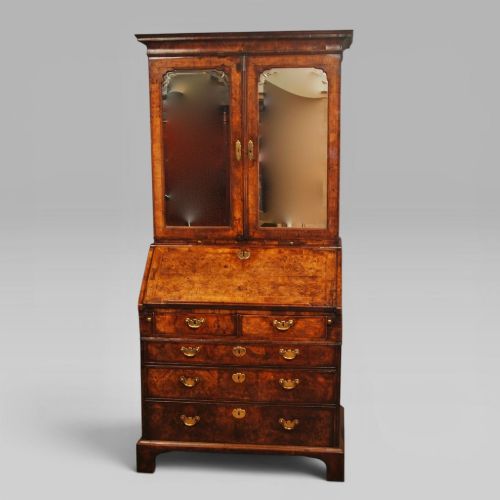
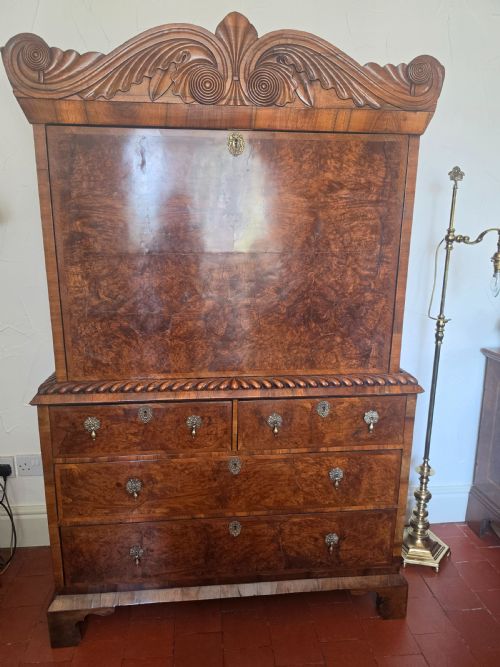
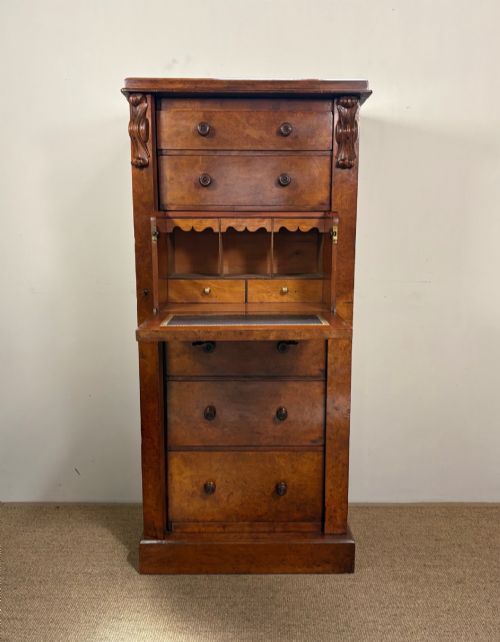
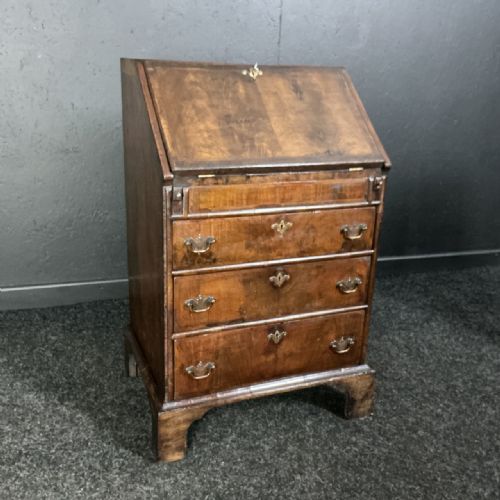
A burr walnut drop front desk is a writing cabinet featuring a hinged flap that opens to reveal internal drawers and pigeonholes. These pieces span the 17th century through to the 20th century, encompassing styles from William and Mary, Queen Anne, and George I periods up to later revivals and art deco examples. The forms listed include standard bureaux, bureau bookcases with upper glazed or panelled sections, and escritoires.
Buyers will encounter various formats on this page, ranging from compact early 18th-century English specimens to larger bureau bookcases and revival pieces from the Victorian and early 20th-century eras. The internal arrangements typically provide small compartments for correspondence and ledgers beneath the sloping fall front, supported by bracket feet or bun feet.
How they were made
Construction relies on applying thin layers of burr walnut veneer over secondary timbers such as oak or pine, which stabilises the intricate, swirling grain patterns of the walnut burl against warping. Cabinetmakers also utilised solid walnut, burr elm, and marquetry inlay techniques, incorporating brass hardware for escutcheons and drop handles.
Secondary materials such as leather or baize frequently line the interior writing surfaces of the fall front. Structural integrity depends on dovetail joints used in the construction of internal and external drawer boxes, alongside pegged mortise and tenon joints for the main carcase.
Burr Walnut Drop Front Desk Retail Price Guide 2026
Typical asking prices for burr walnut drop front desk among the pieces listed under this phrase on Sellingantiques today, from the lower quarter to the upper quarter. They describe what is for sale here now, not the wider market.
Listings feature walnut, burr walnut veneer, oak, glass, leather, and baize across 18th-century, Victorian, and 1930s periods.
What varies in quality
The visual impact of the burr walnut veneer dictates much of the distinction between pieces, with deeply figured, symmetrical grain patterns commanding greater attention than plain timber surfaces. The crispness of internal drawer configuration, pigeonhole shaping, and overall proportion also define the standard of execution.
Originality of surface finish and the preservation of period brassware contribute significantly to the character of each cabinet. Pieces that retain their early patination and untouched internal fittings demonstrate higher levels of authentic craftsmanship compared to heavily restored or altered examples.
Waring & Gillow
The Burr Walnut Drop Front Desk Glossary
- Burr walnut
- A veneer sliced from the warted excrescence of a walnut tree, displaying complex, swirling grain patterns. It was favoured by cabinetmakers for decorative exterior surfaces on high-status furniture.
- Escritoire
- A writing cabinet featuring a drop-down front that provides a desk surface when opened. This form often incorporates multiple internal drawers and compartments.
- Fall front
- A hinged panel on a cabinet or desk that swings down to a horizontal position for writing. It conceals the internal pigeonholes and small drawers.
- Bureau bookcase
- A writing bureau combined with an upper shelving or cabinet section enclosed by doors. The upper doors are frequently glazed or fitted with mirrors.
- Marquetry
- Decorative inlay work using various coloured woods and other materials to create pictorial or geometric patterns on furniture surfaces.
Burr Walnut Drop Front Desk: Frequently Asked Questions
What is a burr walnut drop front desk?
A burr walnut drop front desk is a piece of antique furniture equipped with a hinged writing flap that opens forward. Inside, users find an arrangement of small drawers and pigeonholes for storing papers.
These cabinets combine decorative wood veneers with practical writing surfaces, appearing across various historical periods including the Georgian and Victorian eras.
How do I date a walnut bureau?
Dating a walnut bureau involves examining construction methods, timber choices, and hardware styles. Early 18th-century examples often feature feather banding, oak drawer linings, and original brasses.
Later revival pieces from the 19th and 20th centuries generally display different secondary timbers, machine-cut dovetails, or stylistic traits borrowed from Queen Anne and George I designs.
How were these desks used historically?
These desks served as private workstations for writing letters, managing household accounts, and storing important documents. The interior compartments kept stationery and ledgers organised.
When the day's writing concluded, the fall front closed and locked to secure private correspondence and maintain a tidy room.