




Burr Walnut Corner Cabinet
A burr walnut corner cabinet brings remarkable grain and clever spatial economy to a room, fitting neatly into domestic architecture while offering striking visual depth.
Burr Walnut Corner Cabinet
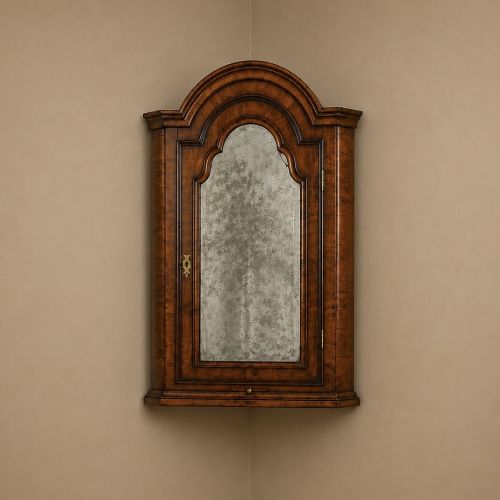
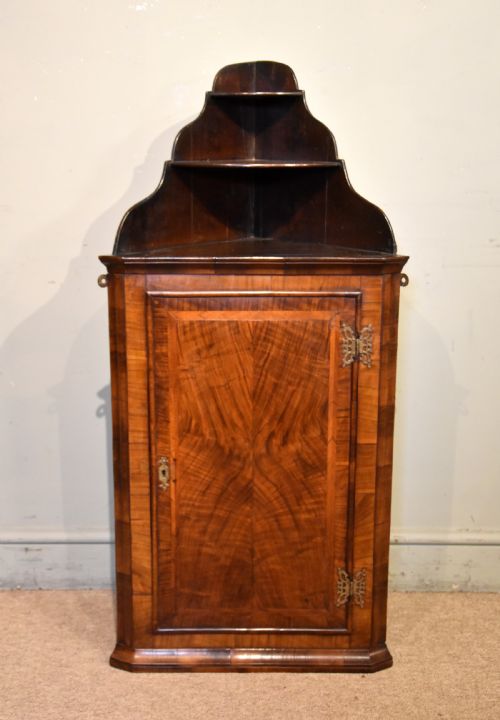
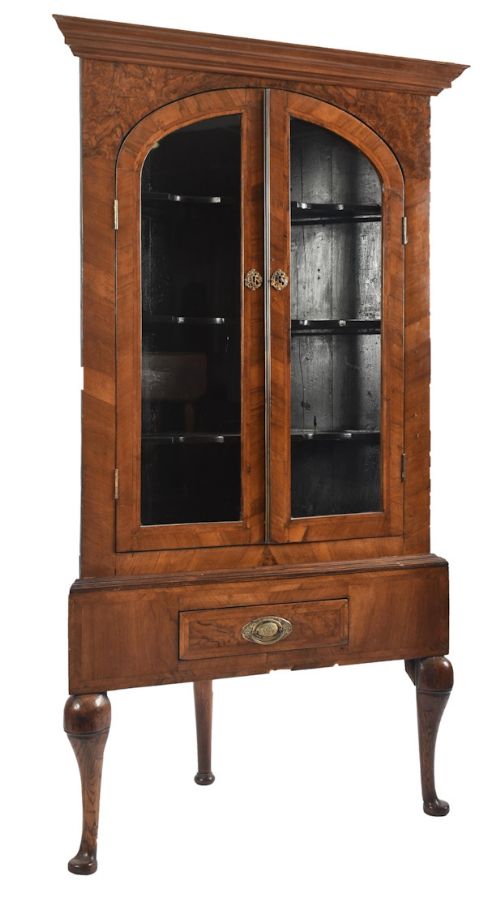
A burr walnut corner cabinet combines utilitarian storage with decorative presence, designed specifically to occupy the awkward intersection of two walls. These pieces emerge in formats ranging from hanging wall cupboards to substantial floor-standing drinks and display cabinets.
The aesthetic relies heavily on figured timber, showcasing the mottled, swirling grain patterns characteristic of burr walnut growth. Examples span from early eighteenth-century Queen Anne and George I hanging pieces to later Victorian, Edwardian, and Art Deco iterations.
Makers adapted the corner footprint across different eras, producing glazed display units, cocktail cabinets with drop-down desks, and simple panelled cupboards. Buyers frequently encounter eighteenth-century designs alongside revival pieces from the twentieth century.
Materials and construction
Cabinet makers utilised walnut and burr walnut veneer applied over secondary timbers, often framing the swirling grain within cross-banded borders or intricate marquetry inlay. Brass fittings such as hinges, escutcheons, and handles provide structural contrast and functional security.
Glazing appears on display and drinks variants, utilising glass panels to showcase interior shelving. Selected pieces incorporate mirrors, fabric linings, marble surfaces, or candle slides to enhance utility and reflect light within the interior.
Burr Walnut Corner Cabinet Retail Price Guide 2026
Typical asking prices for burr walnut corner cabinet among the pieces listed under this phrase on Sellingantiques today, from the lower quarter to the upper quarter. They describe what is for sale here now, not the wider market.
Materials documented across the pieces include solid walnut, burr walnut veneer, brass, glass, marble, fabric, and inlay wood.
Assessing quality and craftsmanship
Quality rests significantly on the selection and matching of the burr walnut veneer, where symmetrical grain patterns across door panels indicate superior craftsmanship. The crispness of carved details, such as those found on Queen Anne or Georgian revival cornices, separates standard production from finer cabinet work.
Internal construction, including the survival of original mirror plates, candle slides, and fitted shelving, dictates the integrity of the piece. The stability of the door seating and the precision of brass hardware further distinguish master workshops from lesser regional output.
Maurice Adams·Waring and Gillow·Maple and Co
The Burr Walnut Corner Cabinet Glossary
- Burr walnut
- A specialised wood cut from the abnormal growth of a walnut tree, prized for its intricate, swirling grain patterns. It is typically sliced into thin veneers for cabinet doors.
- Corner cabinet
- A specialised storage unit designed to fit squarely into the intersection of two walls, maximising floor space in smaller rooms. These range from wall-hanging cupboards to tall display furniture.
- Marquetry
- The art of applying decorative pieces of wood veneer to a structure to form geometric or pictorial designs. It frequently graces the surfaces of Victorian and revival pieces.
- Candle slide
- A pull-out wooden ledge positioned beneath the doors of early cupboards, historically used to hold a light source while inspecting the interior. They are characteristic of eighteenth-century examples.
- Glazed
- Fitted with glass panels in the doors or sides to display interior contents. This treatment is common on eighteenth-century Dutch pieces and later display cabinets.
Burr Walnut Corner Cabinet: Frequently Asked Questions
How do I date a burr walnut corner cabinet?
Dating relies on examining construction methods, hardware, and stylistic traits such as cornices and feet. Eighteenth-century examples often feature hanging brackets and candle slides, whereas Victorian and Art Deco pieces display heavier proportions or streamlined geometry.
Secondary woods inside the cabinet provide further clues to age and origin. Comparing the internal carcass construction with known period examples helps clarify the timeline.
Where should I place a corner cabinet?
These cabinets suit dining rooms, living spaces, or hallways where unused wall intersections benefit from architectural interest. They draw the eye upward and utilise dead space effectively.
Ensure the wall angles match the ninety-degree or curved carcass of the unit to guarantee a flush fit. Freestanding floor models also require stable footing on level flooring.
What is the difference between a display and a cocktail cabinet?
Display cabinets feature glass doors designed to showcase porcelain, glassware, or books on interior shelves. Cocktail and drinks variants typically include mirrored interiors, glass holders, and drop-down surfaces for mixing beverages.
Art Deco and mid-nineteenth-century iterations frequently adopt the drinks cabinet format, while earlier Georgian pieces focus on enclosed shelving or display.
How do I care for burr walnut veneer?
Maintain burr walnut by keeping the wood away from direct sunlight and dramatic humidity shifts, which can cause veneer to lift or crack. Dust gently with a dry, soft cloth and avoid chemical polishes.
Occasional application of appropriate microcrystalline wax preserves the lustre of the timber. Ensuring stable indoor conditions protects the delicate grain patterns for the future.