


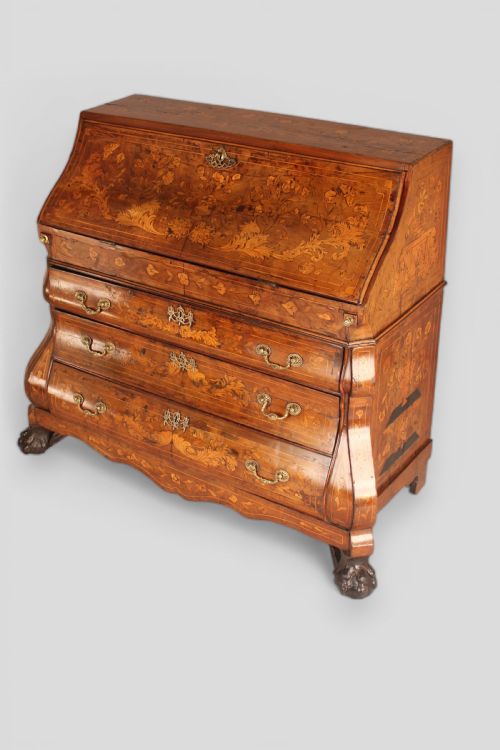


Burr Walnut Bombe Chest
A burr walnut bombe chest offers swelling curves and rich timber grain, bringing dramatic continental presence to any interior.
Burr Walnut Bombe Chest
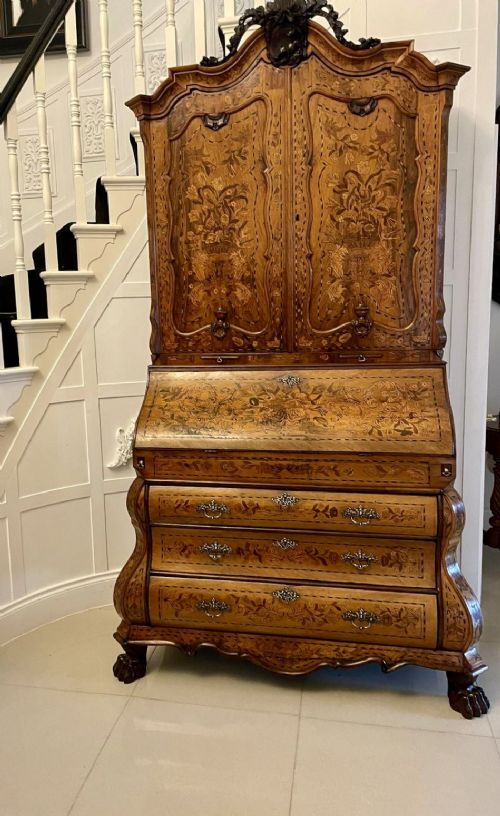
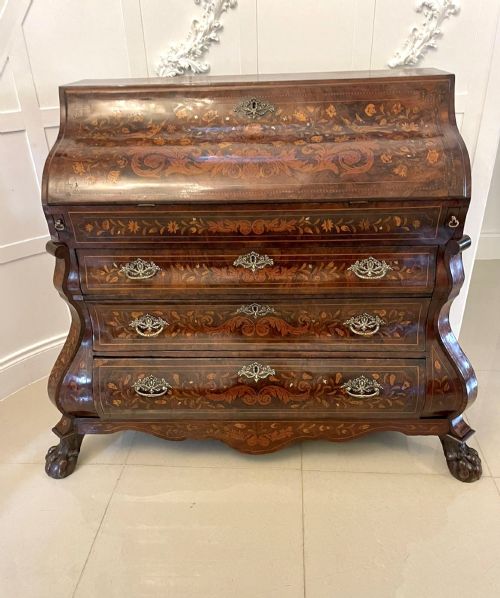
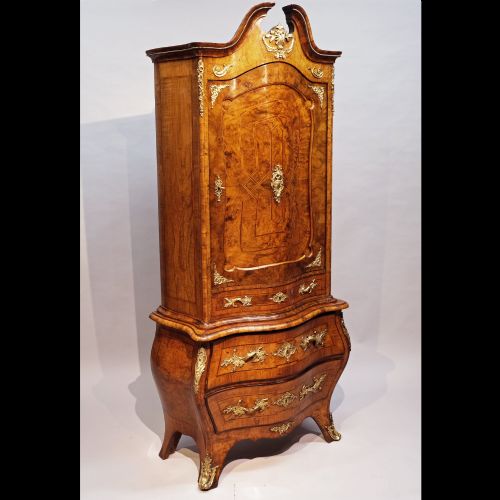
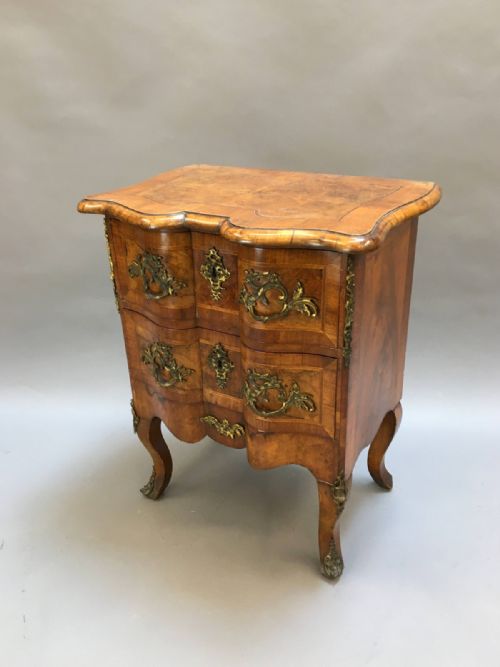
A burr walnut bombe chest presents a swelling, outwardly curved front and sides that demand exceptional cabinetmaking skill to construct. These striking items appear primarily as chests of drawers, commodes, and writing bureaux spanning the eighteenth and nineteenth centuries.
Dutch and French workshops dominate the origins of these pieces, often combining the signature convex silhouette with elaborate floral marquetry or floral inlay. Buyers frequently encounter examples finished in the Dutch Rococo, Louis XV, or Georgian styles.
The form also extends into smaller domestic pieces and desk furniture, including tea caddies, writing desks, and cabinets paired with a bombe base. Walnut and burr walnut provide the primary visual identity across nearly every listing.
How they were made
Cabinetmakers select highly figured burr walnut veneers, prized for their complex swirling grain patterns, and lay them meticulously over solid secondary timbers such as oak or fruitwood. This veneer work follows the sweeping contours of the bombe carcass without buckling or splitting.
Many examples incorporate delicate fruitwood marquetry to form floral and botanical motifs across the drawer fronts and surfaces. Brass handles, escutcheons, or gilt ormolu mounts complete the construction, occasionally complemented by marble tops on nineteenth-century commodes.
Burr Walnut Bombe Chest Retail Price Guide 2026
Typical asking prices for burr walnut bombe chest among the pieces listed under this phrase on Sellingantiques today, from the lower quarter to the upper quarter. They describe what is for sale here now, not the wider market.
One remarkably ambitious six-piece bedroom suite matches burr walnut and marquetry across an entire chamber.
What varies in quality
The sophistication of the timber selection dictates much of the visual merit, with dense, evenly matched burr figuring setting finer examples apart from plainer walnut surfaces. The rhythm and symmetry of the floral marquetry inlay further separate standard production from master craftsmanship.
Structural integrity depends on how successfully the timber accommodates seasonal movement along those compound curved surfaces. Crisp definition in the carved mouldings and the harmonious integration of brass or ormolu mounts indicate the maker's original ambition.
The Burr Walnut Bombe Chest Glossary
- Bombe
- A French term describing furniture with outward swelling curves on the front and sides. This bulging profile requires advanced joinery to maintain stability across the grain.
- Burr walnut
- Timber taken from the abnormal growth or burl of a walnut tree, yielding highly decorative swirling patterns. It is sliced into thin veneers for application onto carcass furniture.
- Marquetry
- The art of forming decorative patterns by fitting together small pieces of different coloured wood veneers. Floral motifs frequently adorn eighteenth-century Dutch panels.
- Ormolu
- Gilt bronze ornamentation applied to furniture as mounts, feet, or handles. Popularized during the French Rococo periods to accent rich wood tones.
- Commode
- A low chest of drawers, typically of French origin and proportions. These pieces often feature marble tops and ornate brass mounts.
Burr Walnut Bombe Chest: Frequently Asked Questions
How do I care for burr walnut?
Keep the timber away from direct sunlight and sudden temperature shifts to prevent the delicate burr veneer from drying out and lifting.
Apply a traditional beeswax polish sparingly and buff gently with a soft cloth to maintain the natural sheen without building up heavy residue.
Are these chests heavy to move?
Solid construction using dense timbers like oak and walnut makes these pieces remarkably heavy, especially when combined with marble tops or multiple drawers.
Enlist help and lift from the base frame rather than projecting mouldings or handles when repositioning the furniture within a room.
How do I distinguish eighteenth-century pieces?
Early examples often display hand-cut dovetails, distinct timber shrinkage patterns, and traditional candle-soot or old wax finishes inside the drawer linings.
Stylistic markers such as Dutch floral marquetry and specific Rococo proportions also point toward eighteenth-century workshops rather than later nineteenth-century revivals.
Where should I place a bombe chest?
The pronounced swelling profile requires adequate clearance so the sweeping silhouette remains unobstructed by narrow hallways or tight corners.
Position the piece against a principal wall where ambient light can catch the varied grain patterns of the burr walnut veneer.