

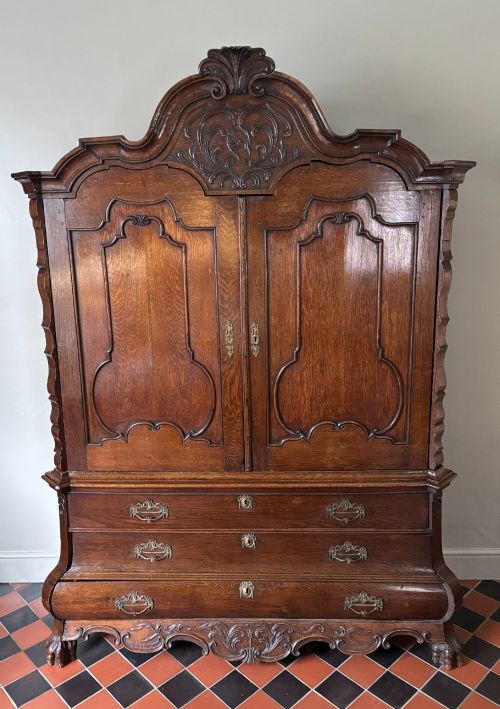
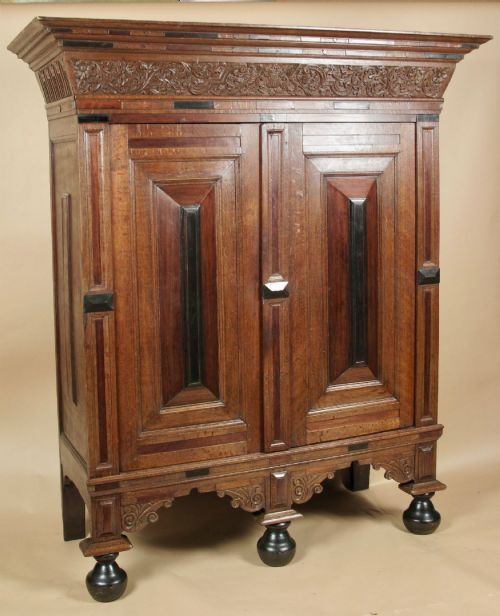

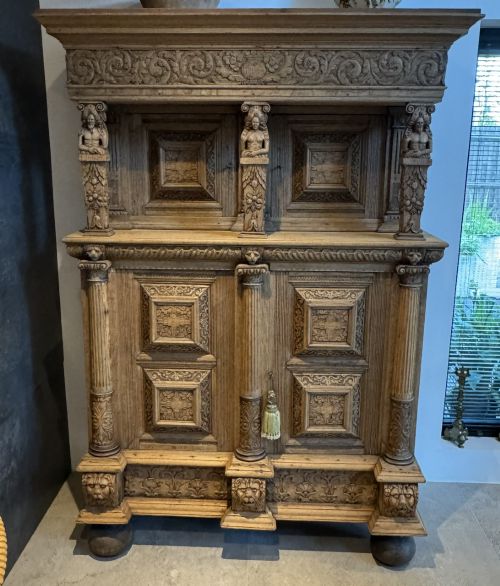


Dutch Baroque Press Cupboard
These dutch baroque press cupboard pieces offer grand scale and rich timber surfaces, built for storing linens and valuables in style.
Dutch Baroque Press Cupboard
A dutch baroque press cupboard provides substantial storage through deep upper and lower sections designed for household textiles. These pieces appear primarily from the seventeenth and eighteenth centuries, reflecting formal historic joinery.
Forms range from large oak linen presses to elaborately decorated marquetry cabinets and kussenkast armoires. The selection includes regional variations alongside Flemish works linked by similar baroque joinery traditions.
Materials and construction
Solid oak, walnut and burr walnut form the core structural timbers, often enriched with contrasting veneers of ebony and rosewood. Fruitwood and iron elements appear in structural framing and internal fittings.
Marquetry and floral inlay decorate the primary surfaces of eighteenth-century examples, while earlier seventeenth-century pieces rely on moulded cushion panels and rich wood grains.
Dutch Baroque Press Cupboard Retail Price Guide 2026
Typical asking prices for dutch baroque press cupboard among the pieces listed under this phrase on Sellingantiques today, from the lower quarter to the upper quarter. They describe what is for sale here now, not the wider market.
Listings span four distinct periods: the seventeenth century, the eighteenth century, the nineteenth century and the year 1800.
Assessing quality and execution
The sophistication of the timber selection and the complexity of the veneer work dictate the standing of each piece. Finely figured burr walnut and intricate floral marquetry represent the higher tiers of craftsmanship.
Proportion and the preservation of original brass hardware distinguish finer historic examples from simpler utilitarian cupboards. The depth of relief in the mouldings and panels indicates the skill of the original workshop.
The Dutch Baroque Press Cupboard Glossary
- Kussenkast
- A large Dutch wardrobe or cupboard characterised by prominent cushion-moulded panels on the doors. These pieces date chiefly to the seventeenth century and often feature contrasting ebony or rosewood details.
- Marquetry
- Decorative veneer work arranged in pictorial or floral patterns across the surface of the cabinet. Craftsmen utilise various coloured woods to create contrast.
- Press cupboard
- A heavy timber storage unit designed for linen and garments, typically featuring multiple internal shelves or hanging space behind large doors.
- Cushion moulding
- Raised, rounded panels projecting forward from the door frame, creating a strong sculptural effect typical of seventeenth-century furniture.
Dutch Baroque Press Cupboard: Frequently Asked Questions
What is a dutch baroque press cupboard used for?
These large cabinets served primarily to store household linen, garments and valuables in prosperous seventeenth and eighteenth-century homes. Their deep interior compartments kept fabrics clean and organised.
Today, they function as statement storage pieces in large rooms, providing substantial capacity for modern wardrobes or dining linen.
How do I date a seventeenth century cupboard?
Examination of the timber species, construction methods and decorative motifs reveals the period of manufacture. Seventeenth-century examples often display cushion-moulded panels and rosewood or ebony accents.
Later eighteenth-century pieces frequently incorporate floral marquetry inlay and softer fruitwood or walnut veneers across the facade.
Are these cupboards made of solid oak?
While many early examples utilise solid oak for their primary framework and internal structure, finer decorative versions apply costly veneers over secondary woods. Walnut, burr walnut and rosewood frequently appear as face veneers.
Iron hardware and brass hinges support the heavy doors, reflecting the utilitarian strength required for such large furniture.
What is a kussenkast?
A kussenkast is a traditional Dutch cupboard distinguished by its heavy, cushion-shaped projections on the doors and drawer fronts. These architectural elements give the facade strong depth and shadow.
They represent some of the most ambitious case furniture produced in the Low Countries during the seventeenth century.