

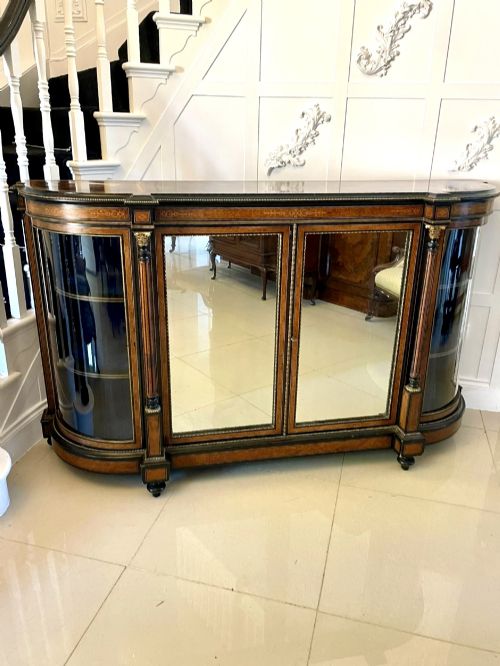


Burr Amboyna Cabinet
A burr amboyna cabinet brings a striking mottled grain and warm honey tones to any room, offering both display space and refined storage.
Burr Amboyna Cabinet
When you search for a burr amboyna cabinet, you encounter a selection of visually rich timber furniture spanning from the seventeenth century through to the art deco period. These pieces encompass varied forms, including credenzas, display cabinets, miniature chests, and writing bureaux.
The pieces on this page lean heavily towards nineteenth-century Victorian designs alongside occasional seventeenth-century examples and twentieth-century cocktail bar carts. Such variety ensures that buyers find both substantial room focal points and smaller specialised items.
Makers and craftsmen historically utilised amboyna veneer to cover primary carcases, creating intricate patterns across doors and drawer fronts. This approach highlights the natural growths of the tree, resulting in distinctive swirling figures.
Materials and Construction Methods
Cabinet makers applied thin slices of amboyna veneer over stable wood carcases, often combining the exotic burl timber with contrasting ebonised wood or burr walnut. This technique allowed workshops to display expensive and difficult-to-work grain patterns across large flat surfaces without warping.
Metal mounts in brass and ormolu frequently accent the timber, framing glass doors and edging surfaces on credenzas and pier cabinets. These metal elements were cast and chased to complement the rich brown and golden tones of the amboyna.
Burr Amboyna Cabinet Retail Price Guide 2026
Typical asking prices for burr amboyna cabinet among the pieces listed under this phrase on Sellingantiques today, from the lower quarter to the upper quarter. They describe what is for sale here now, not the wider market.
Amboyna wood smells faintly of coconut when freshly cut, a curious sensory quirk preserved beneath centuries of french polish.
Assessing Quality and Execution
The visual impact of a burr amboyna cabinet depends largely on the selection and matching of the veneer. Superior pieces display symmetrical grain patterns across panels, whereas lesser examples show disjointed or plain timber sections.
The integration of secondary materials such as ebonised wood highlights the standard of craftsmanship. Finer cabinets feature crisp inlay work and carefully fitted brass or ormolu mounts that sit flush against the polished wood surface.
The Burr Amboyna Cabinet Glossary
- Amboyna veneer
- A thin slice of wood taken from the Pterocarpus indicus tree, prized for its swirling, mottled grain and warm colour. It serves as the primary decorative surface on fine nineteenth-century cabinets and credenzas.
- Credenza
- A low-profile display or storage piece often featuring glass doors flanked by cupboards. Victorian iterations frequently combine amboyna with burr walnut and gilt bronze mounts.
- Ormolu
- Gilded bronze used for decorative mounts and edgings on furniture. It provides a bright metallic contrast to dark woods like ebonised timber and amboyna.
- Ebonised wood
- Timber treated to imitate ebony, creating a dense black finish. Makers used this technique to frame amboyna panels and add architectural definition.
- Secretaire abattant
- A tall writing cabinet featuring a drop-down flap that conceals small drawers and pigeonholes. These pieces often showcase amboyna veneers on the fall-front.
Burr Amboyna Cabinet: Frequently Asked Questions
What is burr amboyna wood?
Burr amboyna comes from a Southeast Asian tree, harvested for its distinctive knotted growths that produce a complex, swirling grain pattern.
Cabinet makers slice this wood into thin veneers to cover furniture surfaces, creating a rich golden-brown visual texture.
How do I date an amboyna cabinet?
Dating relies on the overall form, construction methods, and associated secondary timbers like ebonised wood or walnut.
Pieces range from seventeenth-century chests to Victorian credenzas and 1930s art deco bar carts.
Where should I place a credenza?
A credenza suits dining rooms, living areas, or wide hallways where its low profile allows for surface display.
Glass-fronted versions work well for showing glassware or ceramics while keeping items protected.
How do I care for veneered furniture?
Keep veneered pieces away from direct sunlight and sudden temperature changes to prevent the timber from drying out or warping.
Dust gently with a dry cloth and avoid harsh chemical polishes that can damage the historical finish.