
Bureau Plat Writing Desk
A bureau plat writing desk is a freestanding table designed for correspondence, appearing primarily in nineteenth-century French revival styles.
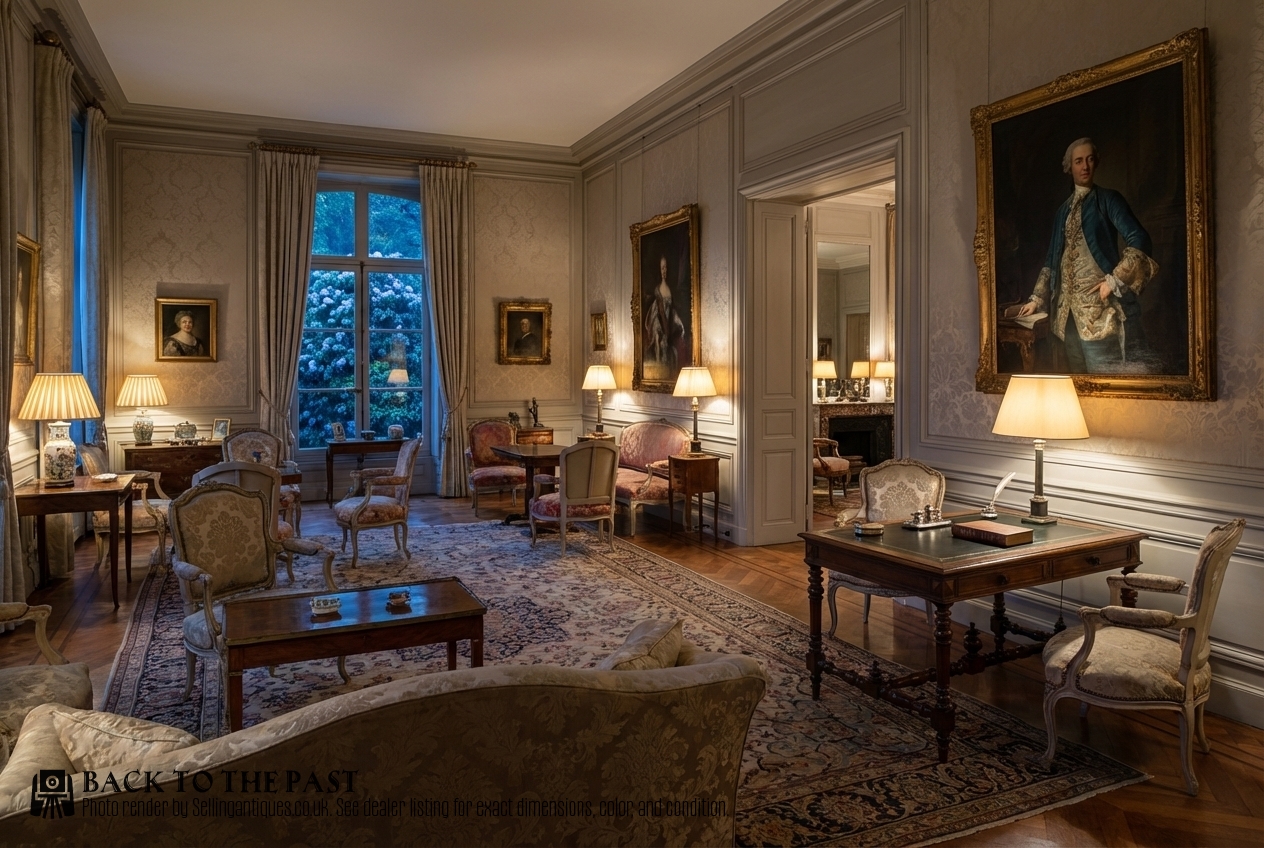
Bureau Plat Writing Desk
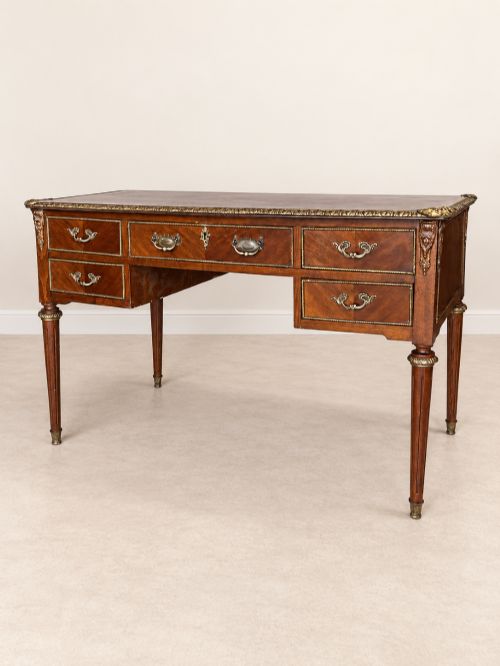
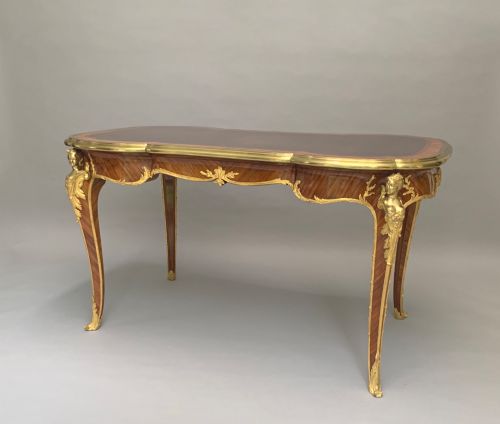
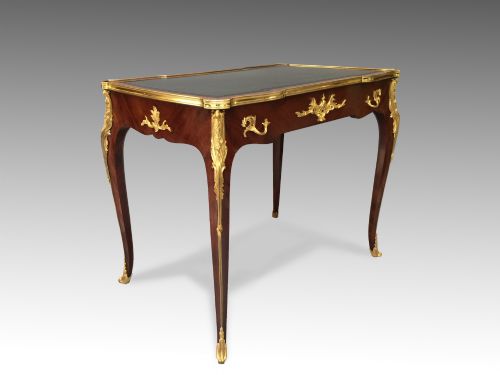
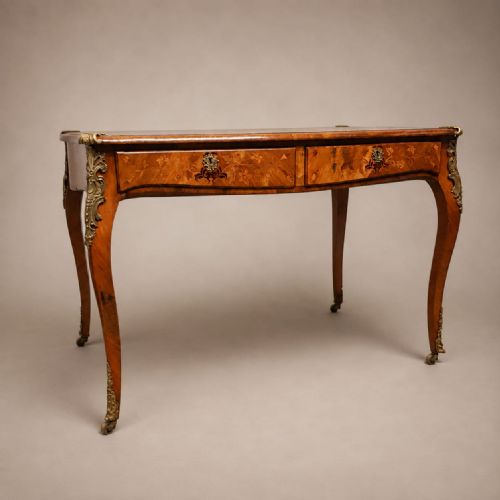
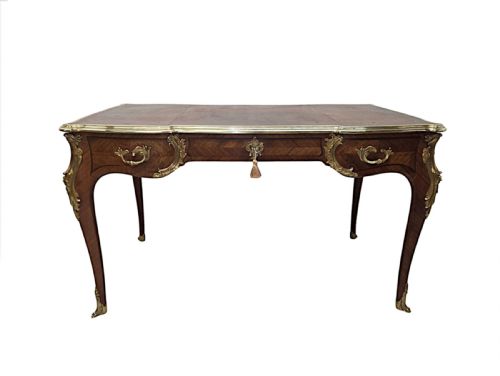
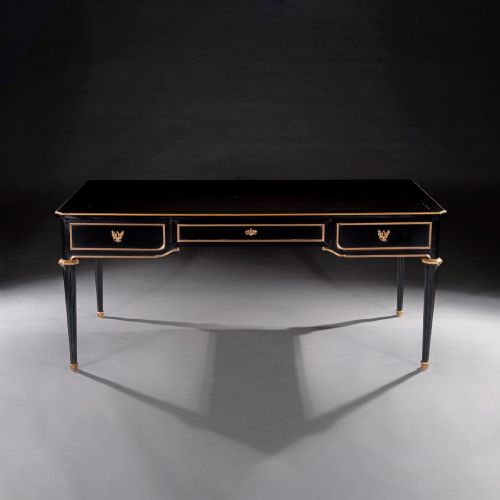
A bureau plat writing desk serves as a freestanding writing surface, distinct from desks designed to stand against a wall. The pieces found here predominantly reflect nineteenth-century French tastes, including Louis XV and Louis XVI revivals.
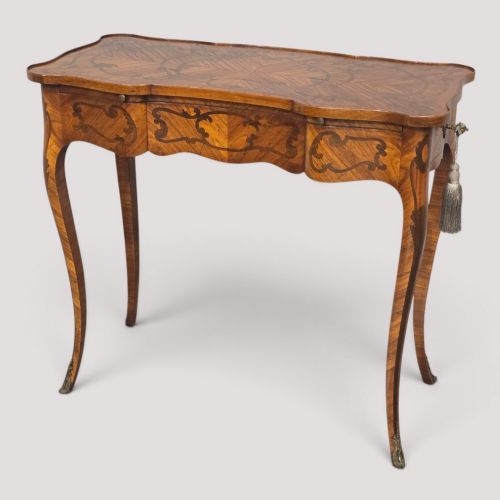
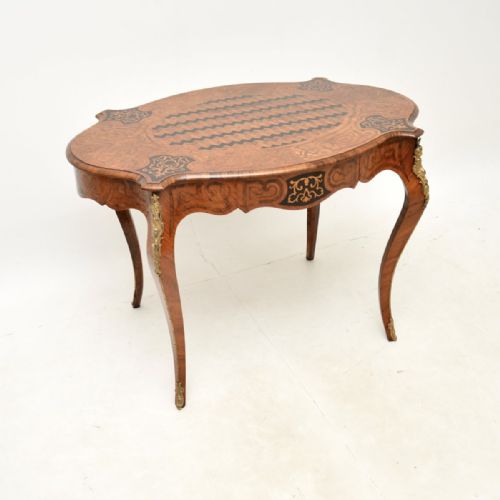
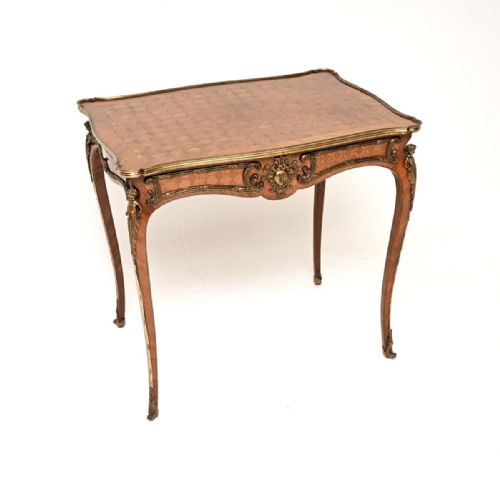
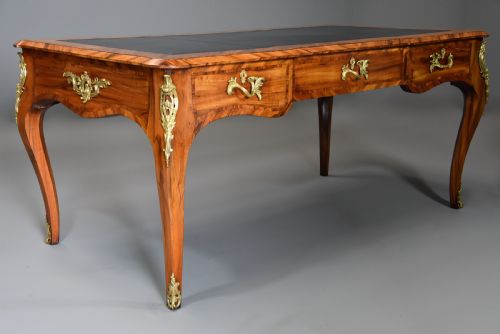
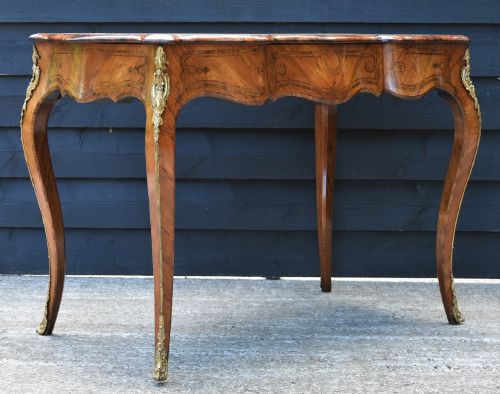
Makers and workshops constructed these desks to stand in the centre of a room, finished on all sides with decorative veneers and mounts. Forms range from kidney-shaped ladies tables to large library writing desks with fitted drawers.
How they were made
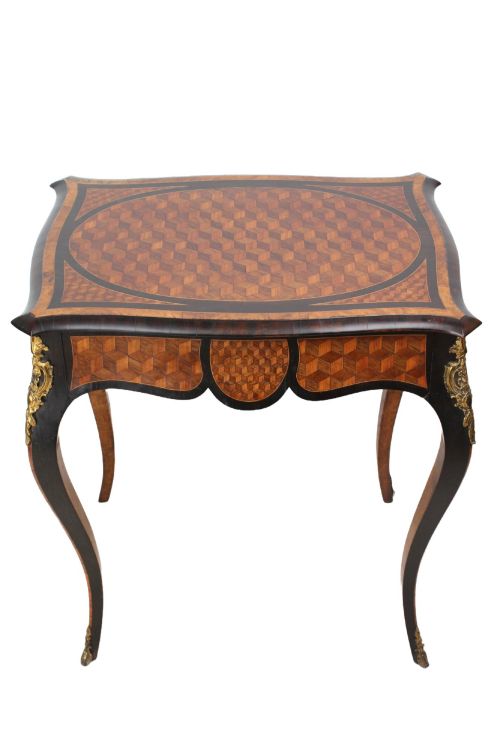
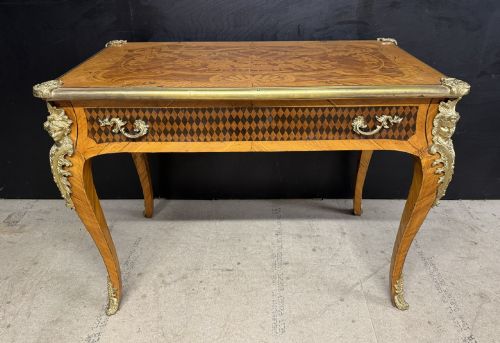
Craftsmen built carcasses from hardwoods such as mahogany, walnut, and oak, applying decorative veneers including kingwood, rosewood, and satinwood in marquetry and parquetry patterns. Leather inserts frequently form the writing surface, often decorated with tooled gilt borders.
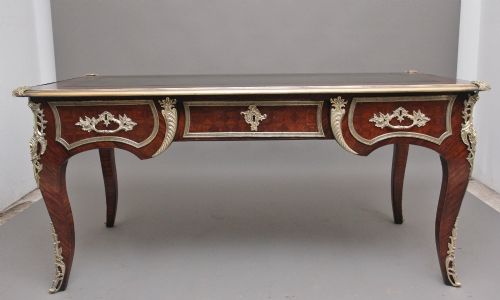
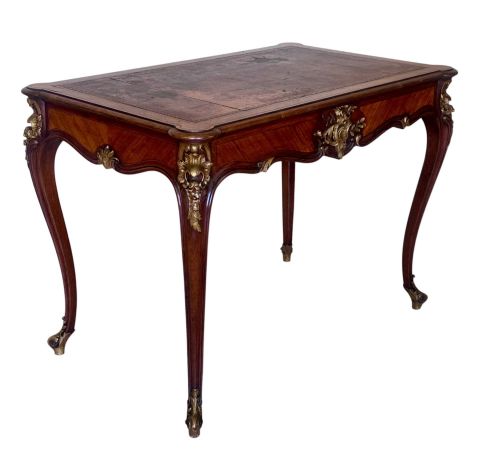
Ormolu and gilt bronze mounts decorate the corners, legs, and drawer edges, complemented by cast brass sabots on the feet. Joinery involves traditional drawer construction and shaped framing to achieve serpentine and kidney contours.
Listings feature nineteenth-century French styles, utilising kingwood, mahogany, and walnut with ormolu mounts.
What varies in quality
Quality rests upon the precision of the veneer work and the crispness of the cast ormolu mounts. Finer examples display intricate parquetry or floral marquetry combined with heavy, detailed bronze casting rather than stamped brass.
The choice of secondary woods and the refinement of the leg curvature distinguish workshop standards. Signed pieces by established makers demonstrate superior joinery and finishing across every visible surface.
JAS Shoolbred·Francois Linke·Edwards and Roberts·Durand·CH Jeanselme and Co·Alphonse Tahan·Hobbs and Co·Gillows
The Bureau Plat Writing Desk Glossary
- Bureau plat
- A freestanding writing table or desk, typically fitted with drawers in the frieze. These tables were designed to stand in the middle of a room rather than against a wall.
- Ormolu
- Gilt bronze mounts applied to furniture for decoration. The technique involves applying a mercury-gilding process to cast bronze.
- Marquetry
- Veneering technique where pieces of different coloured wood are assembled into pictorial or geometric patterns. Craftsmen apply these designs to top surfaces and drawer fronts.
- Parquetry
- Geometric wood veneer patterns such as cubes or chequers. This technique decorates many French revival writing tables.
- Sabot
- A metal mount fitted to the foot of a furniture leg. They protect the wood and echo the design of the ormolu mounts above.
Bureau Plat Writing Desk: Frequently Asked Questions
Can I use a bureau plat as a modern computer desk?
These desks accommodate laptop use and writing, though interior drawer dimensions reflect nineteenth-century storage needs rather than modern office equipment.
Freestanding placement allows the desk to sit centrally in a room, displaying finished backs and decorative mounts from every angle.
How do I identify a Louis XV style bureau plat?
Louis XV style pieces feature curved cabriole legs, serpentine outlines, and asymmetrical ormolu mounts. Marquetry often incorporates floral designs.
Later Victorian and 1900s revivals adapt these French eighteenth-century forms using rich veneers like kingwood and walnut.
What is the difference between a bureau plat and a pedestal desk?
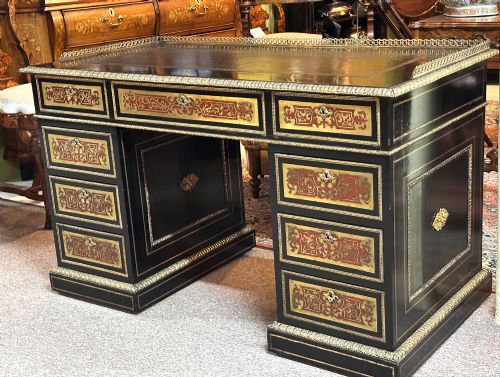
A bureau plat is an open table with frieze drawers supported on legs, designed to be freestanding. Pedestal desks feature banks of drawers reaching down to the floor on both sides.
Both types frequently feature leather writing surfaces inset into the top.
How do I care for the leather top?
Leather writing surfaces benefit from occasional cleaning with a damp cloth and mild soap, avoiding harsh chemicals. Conditioning wax preserves the suppleness of older leather.
Protecting the surface from direct sunlight prevents the gilt tooling and leather dye from fading.