




Buff Stoneware Pitcher
A buff stoneware pitcher brings robust utility and tactile relief moulding straight to the table from the nineteenth century.
Buff Stoneware Pitcher
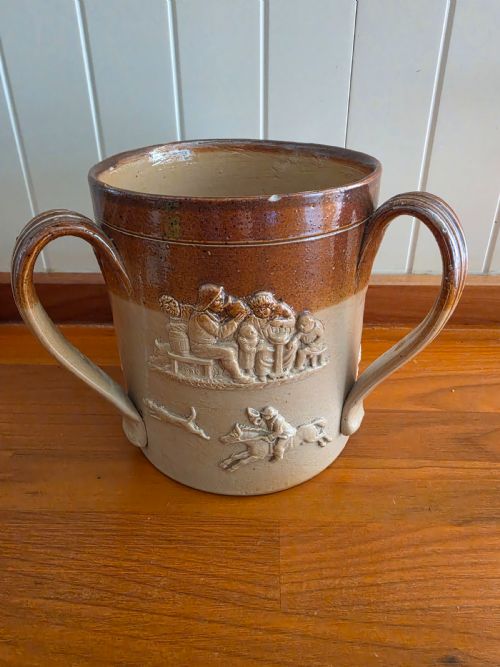
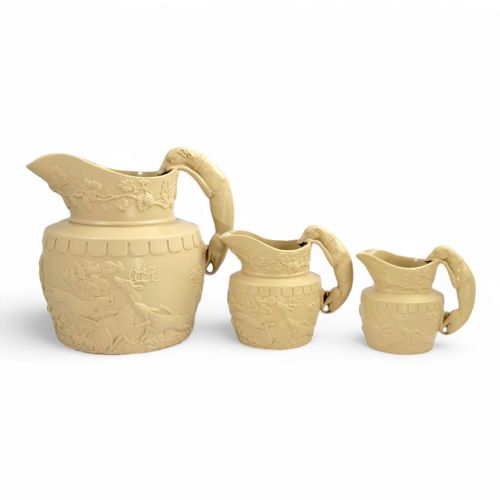
The selections available here range from early nineteenth-century three-handled tygs and yellow ware stag hunt pitchers to later Victorian Doulton Lambeth pieces and Art Nouveau sporting designs. English country pottery traditions sit alongside refined classical revival and exhibition-quality salt-glazed vessels. Most items belong to the broader categories of jugs, pitchers, and pottery vessels.
Buyers examining this page encounter forms shaped by potters working in salt glaze, earthenware, and glazed ceramic mediums. The typical pitcher serves as both a functional table accessory and an expression of nineteenth-century ceramic skill. Their enduring appeal lies in the varied textures and reliefs applied to the buff-coloured clay bodies.
What varies in quality
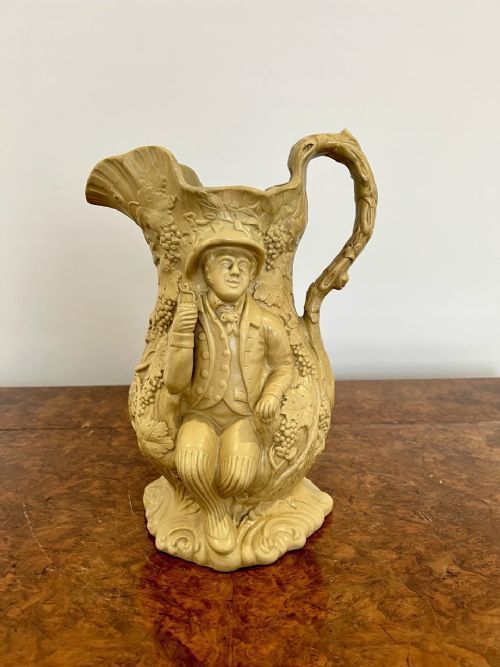
Quality in a buff stoneware pitcher rests on the crispness and depth of the relief moulding across the body. Superior examples exhibit sharp botanical, sporting, or classical figures that remain distinct beneath the glaze, whereas inferior pieces display softened details from worn moulds. The complexity of the form, such as multiple handles or specialised hound motifs, also elevates the standard of the piece.
The success of the salt glaze or surface finish contributes significantly to the visual merit of the vessel. Even colouration across the buff clay body without accidental firing blemishes separates standard utilitarian wares from exhibition-grade pieces. The balance and stability of the pitcher when resting on a flat surface complete the assessment of its manufacture.
Some nineteenth-century drinkers required three handles on a single vessel just to manage the weight of the ale.
Charles Meigh·Emma Shute·Doulton Lambeth·Phillips & Bagster·Copeland Spode
The Buff Stoneware Pitcher Glossary
- Stoneware
- A dense, hard pottery fired at high temperatures until vitrified and non-porous. It resists liquids naturally without requiring an interior glaze.
- Salt glaze
- A glossy, slightly pitted texture created by throwing common salt into the kiln during high-temperature firing. The sodium reacts with the silica in the clay body.
- Relief moulding
- A technique where decorative motifs are raised above the flat background surface of the vessel. Potters achieved this using pre-formed clay sprigs or press moulds.
- Tyg
- A large drinking vessel featuring three or more handles designed for communal passing around a table. They are frequently found in early nineteenth-century contexts.
- Sprigging
- The process of applying separately moulded clay details onto the unfired body of a pitcher. These applied elements add tactile ornamentation to the exterior.
Buff Stoneware Pitcher: Frequently Asked Questions
What is a buff stoneware pitcher?
A buff stoneware pitcher is a nineteenth-century pouring vessel made from pale, dense clay and often decorated with moulded reliefs. They were produced across various British potteries for daily use and display.
These pieces showcase methods like salt glazing and cream sprigging. Their robust material made them suitable for serving liquids at the table.
How were these pitchers used?
Historically, these vessels served for pouring ale, water, or other liquids during meals and gatherings. Multi-handled tygs were specifically designed to be passed between guests.
Over time, many of these pitchers transitioned from active kitchen implements to decorative parlour items. Their sculptural relief scenes made them ideal for display on sideboards.
How do I clean a stoneware pitcher?
Cleaning requires gentle washing with warm water and mild soap to protect the historic glaze and clay body. A soft cloth helps remove dust from the intricate relief moulding without causing abrasion.
Strong detergents and soaking should be avoided to preserve the integrity of nineteenth-century surfaces. Careful handling prevents chips to applied handles and rims.
How can I tell the period?
Dating relies on stylistic clues such as the transition from early nineteenth-century shapes to later Victorian Arts and Crafts or Art Nouveau motifs. Maker marks, where present, provide direct attribution to specific potteries.
The manufacturing technique also indicates age, with distinct differences between early salt-glazed wares and later exhibition pieces. Examining the sharpness of the relief moulding helps separate eras.