
Brown Wooden Tub
A brown wooden tub or sturdy captain chair brings solid country craftsmanship and time-worn timber into daily use.
Brown Wooden Tub
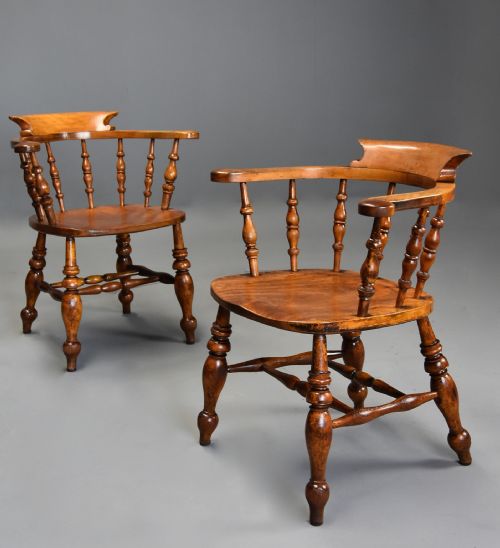
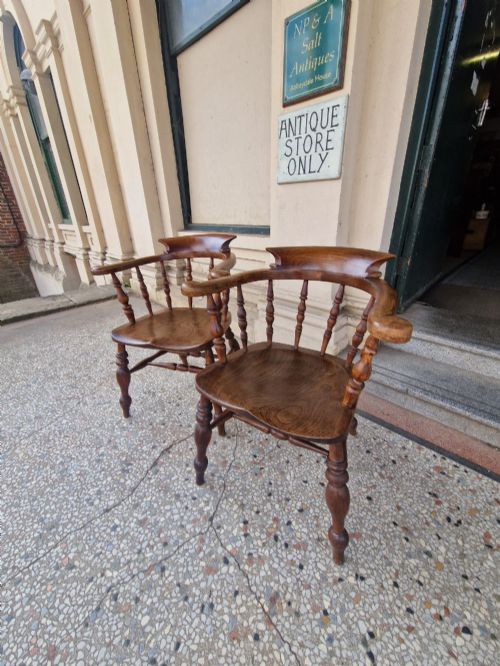
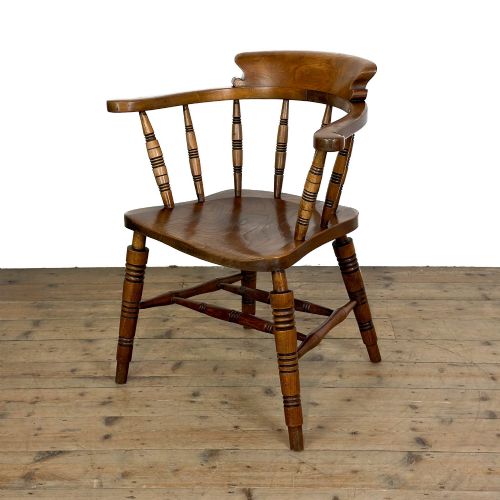
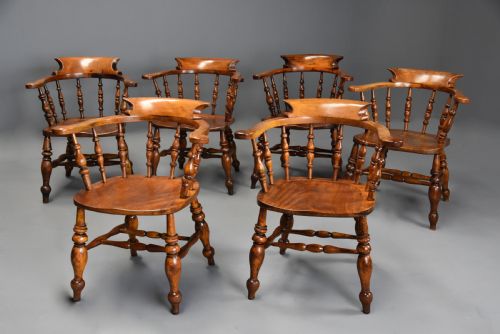
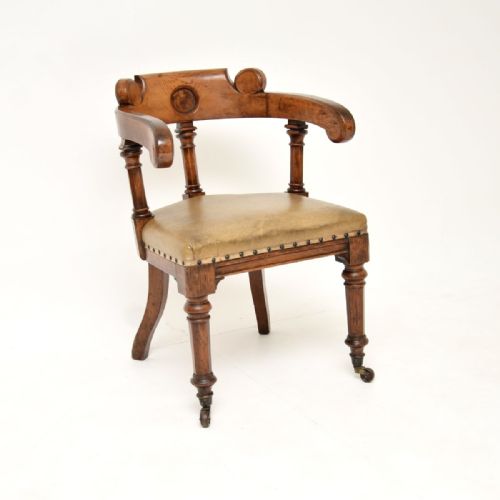
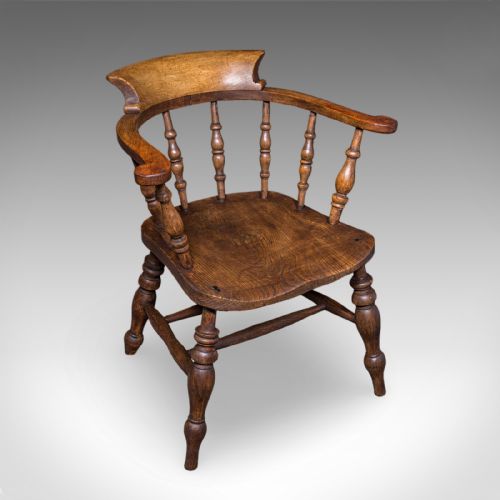
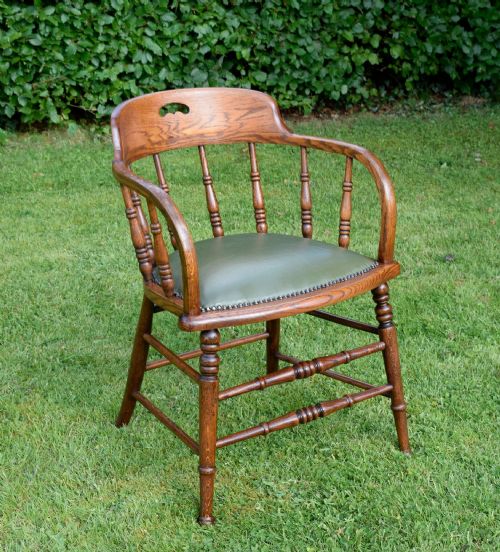
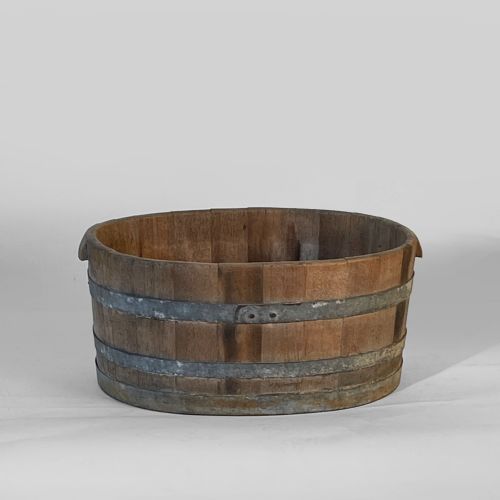
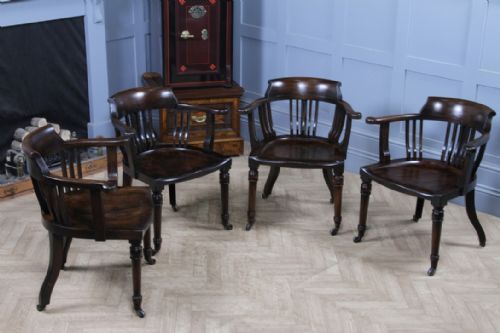
When you search for a brown wooden tub, you encounter a practical mix of coopered vessels, washing buckets, butter barrels, and robust seating like smokers bow and captain chairs. These domestic and utilitarian forms originate predominantly from the nineteenth and early twentieth centuries, spanning Victorian and Edwardian periods.
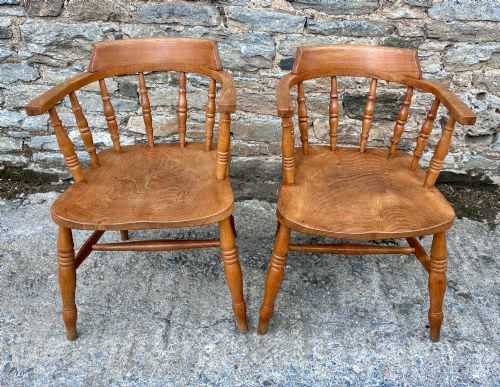
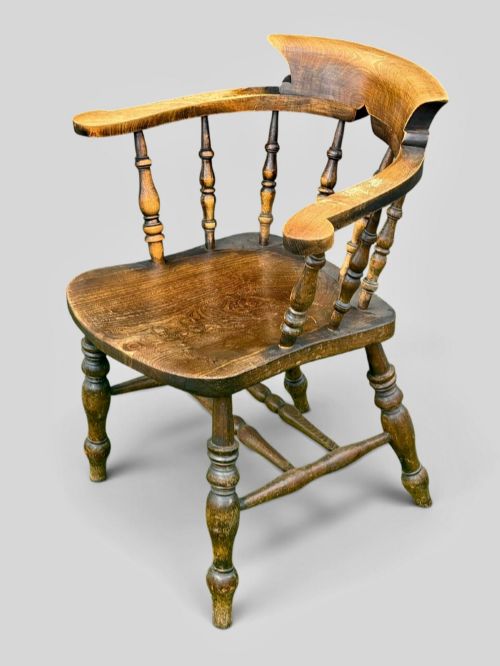
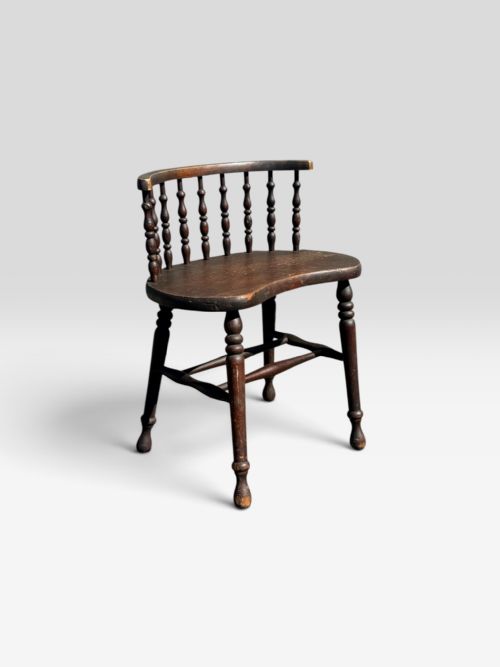
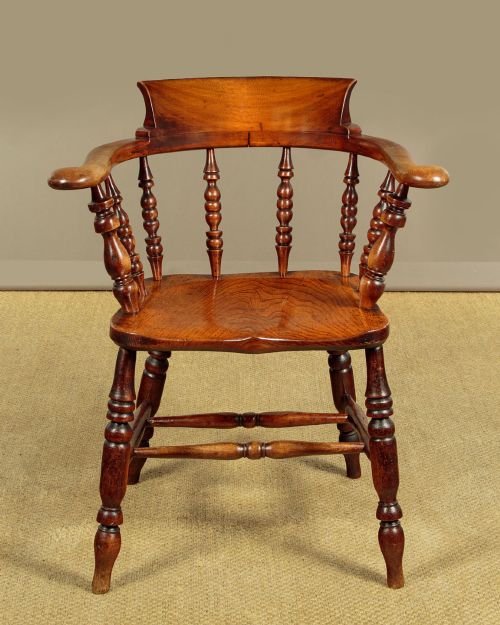
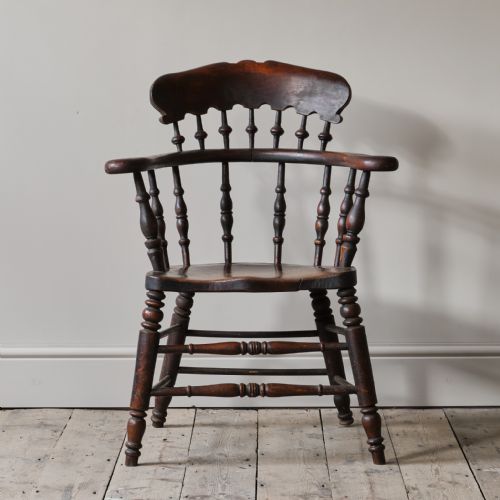
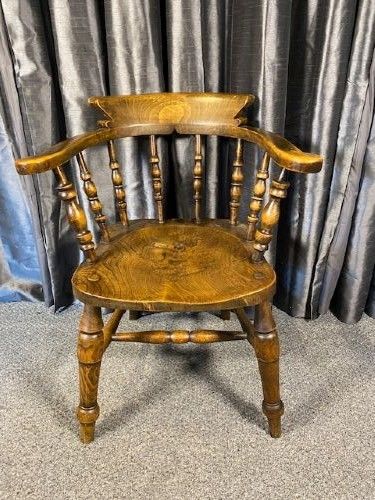
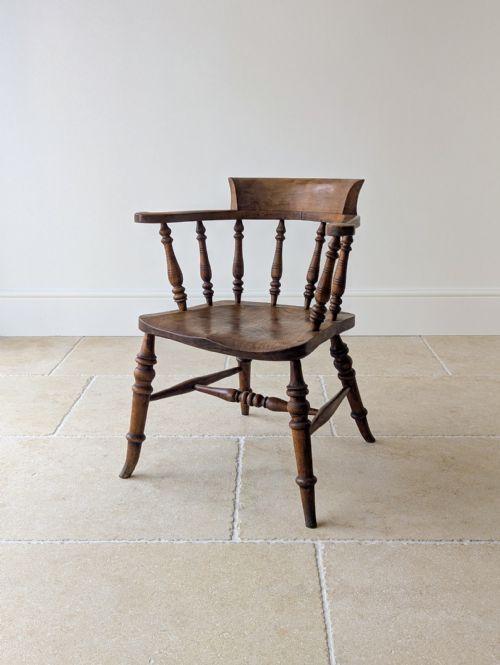
The seating variations on this page include elm-seated armchairs with low backs and turned spindles, alongside coopered oak or hardwood staved buckets banded in brass. Such items reflect utilitarian English country house and farmhouse traditions where durability governed design.
Makers utilised dense native timbers to construct seating and storage objects capable of enduring heavy daily domestic or office service. The resulting forms range from simple round-seated desk chairs to coopered oyster buckets and utility barrels.
Materials and construction
Makers relied heavily on native hardwoods, combining solid elm seats with beech, ash, oak, or birch for the spindles, bent rails, and legs. Coopered vessels employed staves of tight-grained timber secured tightly by heavy brass bands or hoops.
Chairwrights used steam-bending techniques to curve thick lengths of wood into continuous arm rails, joining them securely to carved seats through traditional peg and wedged mortise joints.
Current listings feature nineteenth-century coopered butter barrels alongside Victorian elm and beech captain chairs.
Judging quality in timber furniture and vessels
Quality rests in the depth of the timber grain and the integrity of the original joints, with top-tier examples showing a rich surface patina developed through decades of honest use. Lesser specimens often suffer from replaced spindles or poorly matched replacement timber in the seat bases.
Coopered tubs and barrels depend on the tightness of the stave fit and the original condition of the brass binding bands, whereas chairs are judged by the crispness of the turned components and the absence of excessive timber shrinkage.
The Brown Wooden Tub Glossary
- Smoker's bow
- A low-backed Windsor armchair with a continuous curved arm rail, frequently paired with a solid elm saddle seat.
- Coopered
- Made by a craftsman joining curved wooden staves together with metal or wooden bands to form a watertight vessel or tub.
- Spindle
- A slender, rounded vertical wooden rod turned on a lathe to support the back rail of a country chair.
- Saddle seat
- A thick wooden chair base carved into a concave shape to provide ergonomic comfort during long periods at a desk.
- Stave
- One of the narrow tapered wooden blocks placed edge to edge to make the sides of a barrel, bucket, or tub.
Brown Wooden Tub: Frequently Asked Questions
What is a smoker's bow chair?
A smoker's bow is a sturdy vernacular armchair with a low, continuous back rail and turned spindles above a solid wooden seat.
These chairs served primarily as desk or smoking chairs in country houses, pubs, and offices throughout the nineteenth century.
How are coopered tubs constructed?
Coopered tubs are built from shaped wooden staves fitted tightly together and bound securely with metal hoops without using glue.
This traditional method creates strong vessels suitable for holding liquids, butter, oysters, or laundry.
What woods are most common?
Elm appears frequently for solid seats because of its resistance to splitting, while beech, ash, and oak provide strong turned parts.
Mahogany and walnut emerge more often in later Edwardian desk chairs and formal occasional seating.
How do I date these pieces?
Dating relies on observing construction methods, timber choice, tool marks, and specific Victorian or Edwardian stylistic cues.
Earlier nineteenth-century examples often display hand-turned components and deeper surface patination compared to later mass-produced variants.