
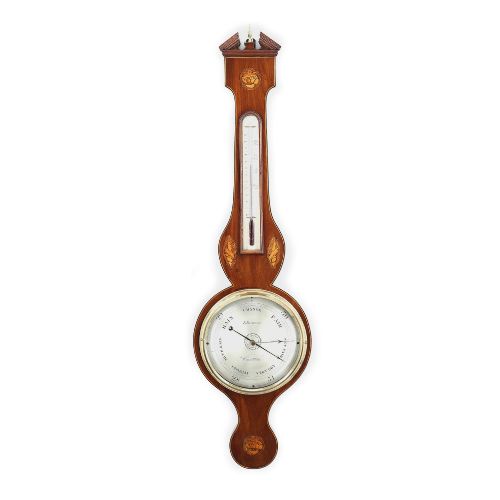

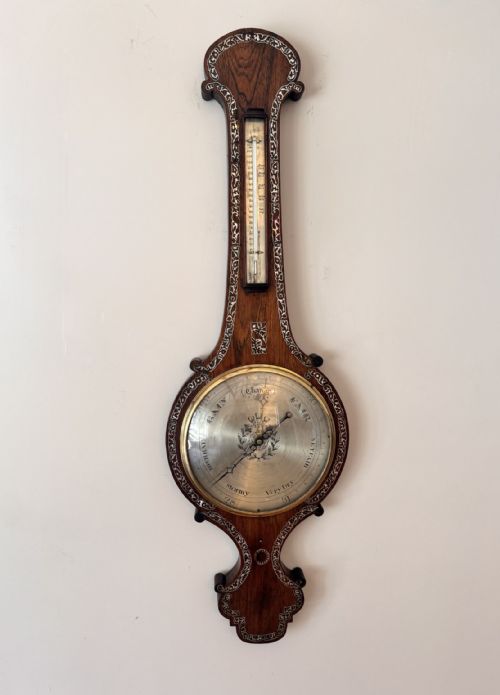


Brown Wooden Thermometer
These brown wooden thermometer pieces combine practical weather recording with period craftsmanship, offering a functional antique for any wall.
Brown Wooden Thermometer
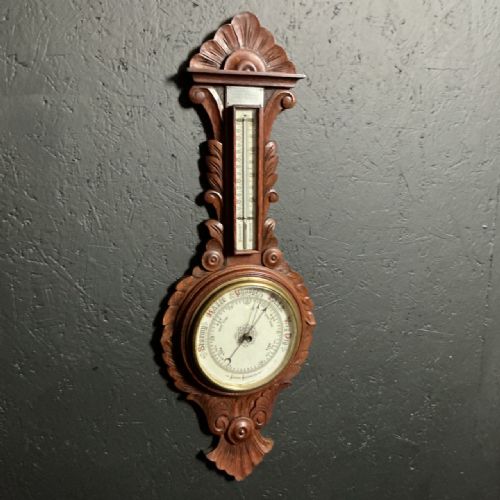
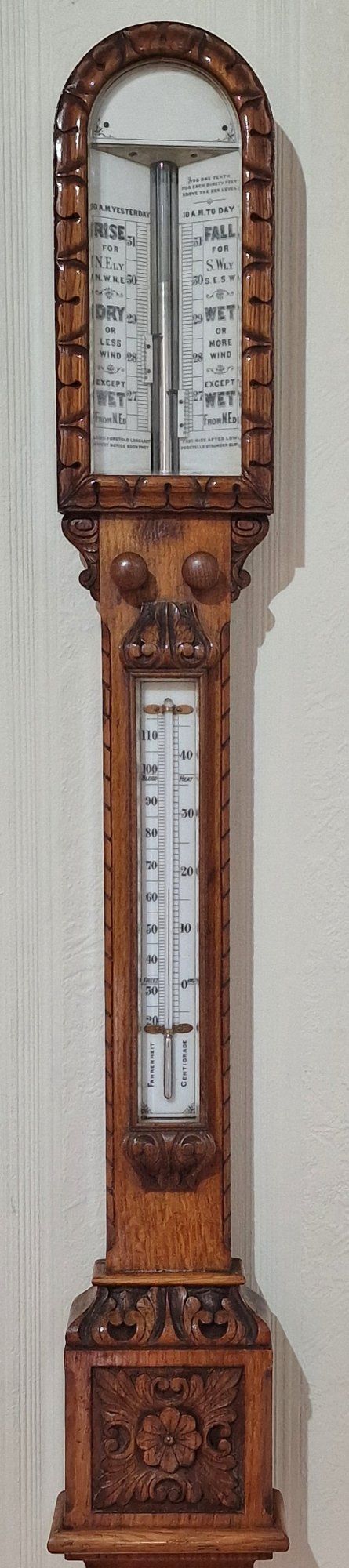
A brown wooden thermometer typically appears housed within larger meteorological instruments such as stick barometers, wheel barometers, and wall clocks spanning the nineteenth and early twentieth centuries. These instruments combine timber housings in mahogany, oak, walnut, or inlaid wood with glass tubes, brass fittings, and occasionally ceramic or metal dials.
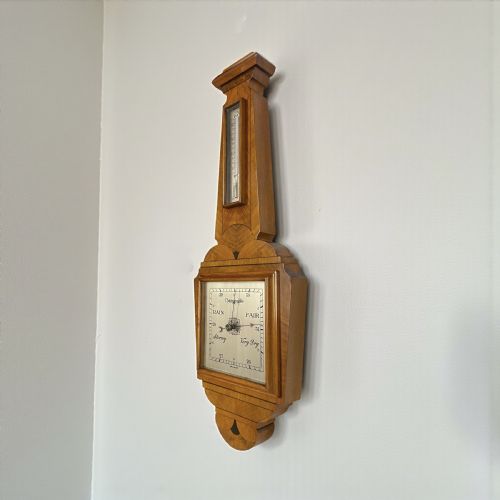
Buyers browsing this selection encounter pieces originating from Victorian, Edwardian, Regency, and Art Deco periods, alongside 19th Century American examples. Many items integrate multiple functions, uniting a thermometer with a barometer or clock in a single wall-hanging case.
The dominant forms on this page are wheel barometers and stick barometers featuring mounted mercury or aneroid thermometers. Mahogany and oak cases predominate, often demonstrating period styles ranging from Georgian Revival and Arts and Crafts to carved Victorian designs.
Materials and Construction
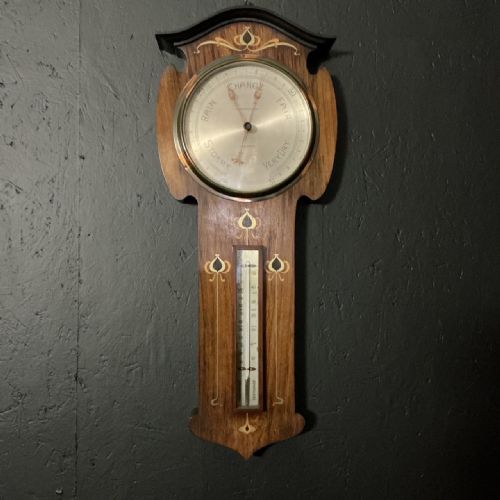
Cabinetmakers constructed these instrument cases using solid or veneered hardwoods including mahogany, oak, and walnut, frequently selecting wood inlay to ornament the surfaces. These timber frames house delicate glass thermometer tubes, responsive mercury or aneroid mechanisms, and engraved brass scales.
Craftsmen shaped the wood through turning, carving, and joining techniques suited to wall-hanging domestic apparatus. Specialised makers then integrated the meteorological elements into the wooden backplates and onion-top or banjo-shaped cases.
The selection includes multi-functional wall pieces uniting thermometers with barometers and clocks across Georgian, Victorian, and Art Deco design styles.
Assessing Quality and Execution
The standard of a brown wooden thermometer rests upon the crispness of the timber carving, the choice of cabinet wood, and the refinement of the dial engraving. Finely figured mahogany or detailed oak carving distinguish superior examples from plain utility pieces.
Makers' signatures inscribed upon the brass scales or dials elevate the standing of an instrument, pointing to workshop heritage. The preservation of the original glass tubes, mercury columns, and brass bezels preserves the historical integrity of the piece.
B Besozzi of Weymouth·Molton of Norwich·Jenkins Of Old Swindon·Cox of Plymouth Dock·W E Pain of Cambridge·J Groce York
The Brown Wooden Thermometer Glossary
- Barometer
- An instrument that measures atmospheric pressure to forecast weather changes. These are frequently combined with thermometers in wooden wall cases.
- Mercury
- A heavy liquid metal traditionally used inside glass barometer and thermometer tubes to respond to temperature and pressure shifts.
- Aneroid
- A type of barometer operating without liquid, utilising a flexible metal box that expands or contracts with atmospheric pressure changes.
- Banjo barometer
- A household weather instrument shaped like a banjo, typically featuring a circular dial at the base and a long wooden stem holding the thermometer above.
- Wood inlay
- A decorative technique inserting contrasting pieces of wood into the timber surface of the instrument case to form geometric or floral patterns.
Brown Wooden Thermometer: Frequently Asked Questions
How do I date a wooden barometer?
Dating relies upon examining the timber species, case style, dial typography, and any maker signatures recorded on the brass plate. Regency and early Victorian models often display distinctive banjo shapes and mahogany veneers.
Later Victorian and Edwardian examples frequently shift towards carved oak housings or combined clock and thermometer configurations. Comparing these physical characteristics against known maker activity helps narrow the production era.
Are these thermometers still accurate?
Most antique instruments serve primarily as decorative wall pieces rather than precise scientific tools today. The mercury or glass components inside nineteenth-century housings may drift or lose calibration over decades.
While some mechanisms can be professionally adjusted, collectors generally value them for their historical craftsmanship and timber patination. Placing them away from direct heat sources helps preserve the fragile internal glass tubes.
What is a wheel barometer?
A wheel barometer uses a pulley and weight system connected to a siphon tube to drive a pointer around a circular dial face. These instruments are usually mounted within decorative wooden frames made of mahogany or oak.
They frequently incorporate a spirit or mercury thermometer affixed to the vertical trunk above the main dial. This layout became a popular fixture in nineteenth-century domestic interiors.
How should I clean the wood?
Maintenance requires only a soft, dry cloth to remove dust from the timber surface and glass bezels. Avoid using modern chemical sprays, water, or furniture polishes that can damage aged veneer and original finishes.
Keeping the wood conditioned depends on maintaining stable indoor humidity levels away from direct sunlight. Gentle dusting preserves the natural patination built up over centuries.