
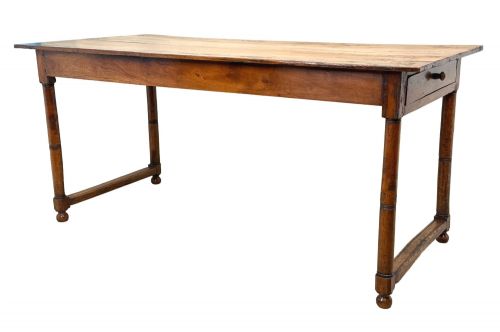

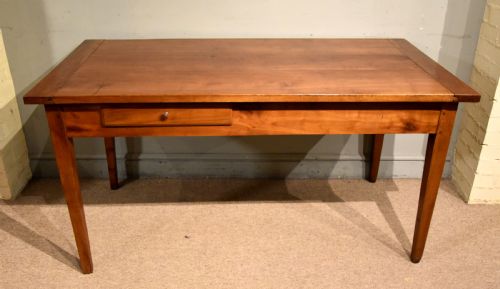


Brown Wooden Prep Table
These brown wooden prep table pieces are honest, hard-working utilitarian surfaces built for kitchen labour and daily domestic service.
Brown Wooden Prep Table
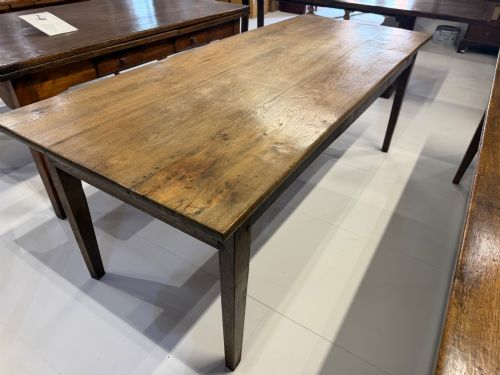
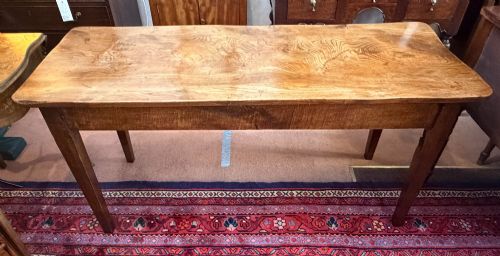
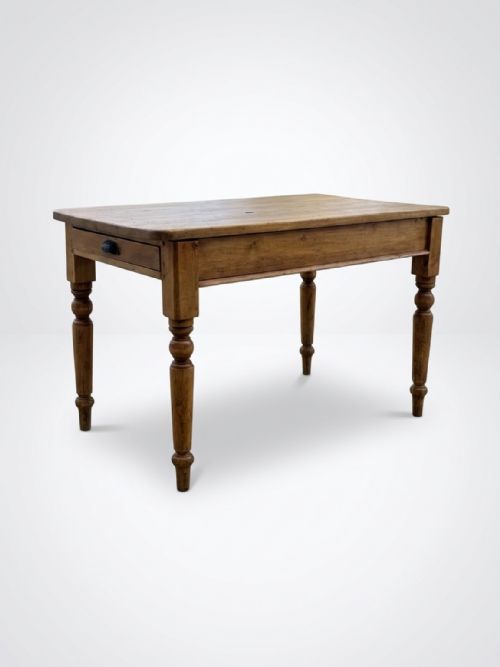
A brown wooden prep table serves as a sturdy domestic workspace, appearing across this page in various regional forms such as French provincial boards, Welsh kitchen tables, and English farmhouse designs. Buyers hunting for a brown wooden prep table typically encounter pieces originating from the nineteenth century, alongside a smaller number from the early twentieth century.
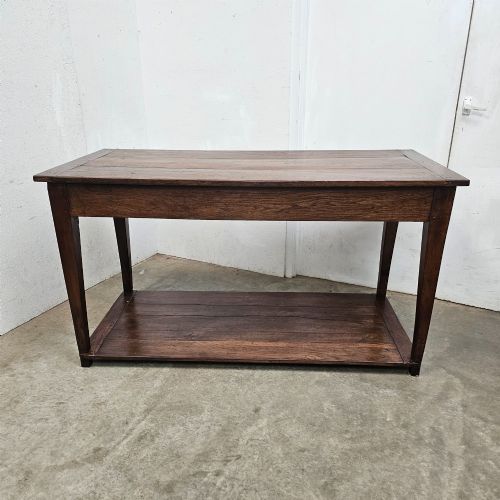
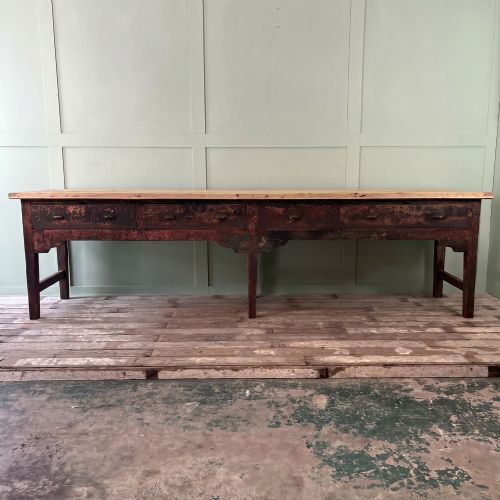
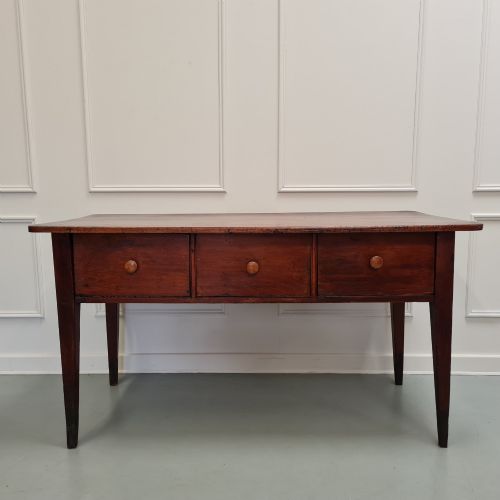
The selection encompasses dedicated bread preparation benches, serving tables, and general kitchen work tables equipped with single drawers, two-tier shelving, or cleated plank tops. These items bridge the gap between heavy-duty culinary use and practical everyday dining within country interiors.
How they were made
Carpenters built these tables using domestic timbers suited to heavy labour, predominantly selecting oak, pine, and fruitwoods like cherry and beech, occasionally reinforced with brass and iron hardware. Tops were constructed from solid planks, sometimes secured with cleated ends to manage natural wood movement over decades of daily kitchen moisture and heat.
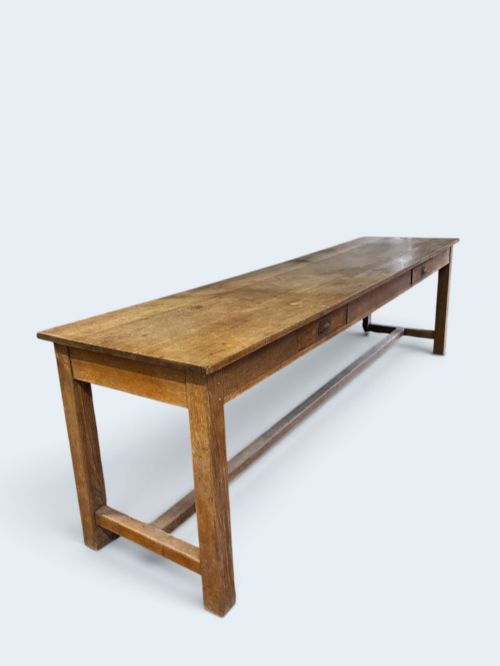
Frames rely on straightforward joinery, featuring tapered legs, trestle supports, or X-framed bases to maintain stability under pressure. Drawers incorporated within the aprons provided immediate storage for utensils, while lower tiers offered additional space for heavy pots and provisions.
The listings show wooden prep tables spanning the nineteenth century through to the nineteen-twenties, incorporating oak, pine, fruitwood, and beech.
What varies in quality
Quality in these utility surfaces rests upon the proportion of the timber and the integrity of the original construction rather than decorative flourishes. Tables possessing substantial two-inch plank tops, deep aprons, and uncompromised structural frames stand apart from lighter, more altered examples.
The choice of harder woods like oak and fruitwood compared to standard pine introduces a distinct grade of durability and weight. Original surface patination accumulated through generations of actual domestic use separates superior examples from those stripped down or heavily restored.
The Brown Wooden Prep Table Glossary
- Cleated ends
- Wooden battens fixed across the short ends of a table top to prevent warping and keep the boards flat. This method was essential for heavy kitchen furniture exposed to variable temperatures.
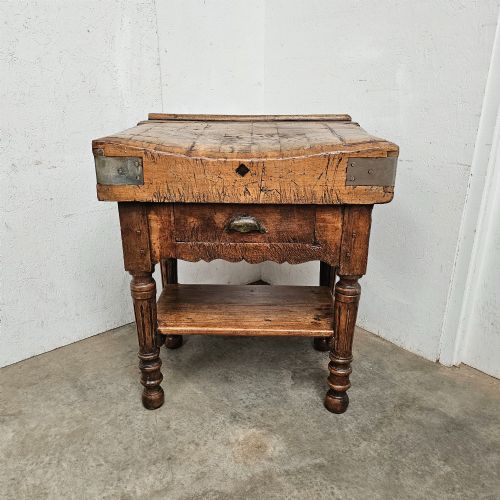
- Butchers block
- A thick, heavy wooden block designed specifically for meat preparation and chopping. These blocks often sat upon dedicated decorative bases.
- Refectory table
- A long, narrow dining table traditionally used in communal dining halls. The examples found here utilise tall oak construction adapted for domestic kitchen use.
- Apron
- The horizontal timber framework situated directly beneath the table top that supports the surface and frequently houses drawers.
- Harvest table
- A long, narrow table traditionally used during seasonal gathering periods. These pieces often feature lightweight frames designed for easier movement around the farmhouse.
Brown Wooden Prep Table: Frequently Asked Questions
What is a prep table?
A prep table is a utilitarian wooden work surface historically used for domestic food preparation, baking, and serving within the kitchen. They feature sturdy timber tops and robust frames built to withstand daily labour.
Unlike formal dining furniture, these tables prioritize function over ornament, often including drawers for utensils and lower shelves for storage.
How do I clean a wooden table?
Cleaning requires a soft, damp cloth followed immediately by dry wiping to remove moisture from the aged wood surface. Avoid harsh chemical cleaners that strip the historical patination and wax.
Applying natural beeswax periodically helps nourish the dry timber and maintains the soft sheen accumulated over centuries.
Are these tables good for kitchens?
These tables function exceptionally well as central kitchen islands, providing genuine workspace and storage drawers. Their solid construction handles daily culinary tasks with ease.
Placing them in modern kitchens introduces historical character and practical surface area for food preparation and casual dining.
How old is a Victorian table?
Victorian tables date from the reign of Queen Victoria, spanning the mid-nineteenth century through to the opening years of the twentieth century. Dating relies on timber selection, structural joinery, and wear patterns consistent with the period.
Earlier nineteenth-century examples often display heavier pine or oak construction with hand-cut joinery details.
What wood are they made from?
The listings show tables constructed from oak, pine, fruitwood, cherry, beech, elm, and ash. Harder timbers like oak and cherry provided superior strength for heavy work.
Pine and fruitwoods appeared frequently in regional provincial workshops, offering durable surfaces for everyday domestic chores.