




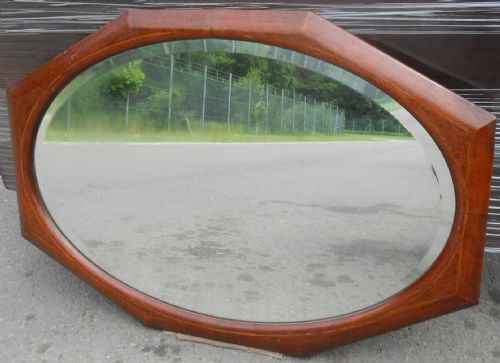


Brown Wooden Oval Mirror
A brown wooden oval mirror brings warmth and reflection to a room, ranging from simple Edwardian frames to Georgian dressing glass.
Brown Wooden Oval Mirror
A brown wooden oval mirror combines the soft curve of an oval frame with the rich tones of mahogany, oak, and walnut. When searching for a brown wooden oval mirror, buyers encounter everything from compact dressing table glass to large wall-hanging pieces.
The selection on this page spans several distinct eras, including Georgian, Victorian, Edwardian, and the early twentieth century. Most examples serve as wall mirrors or adjustable dressing mirrors designed for tabletop use.
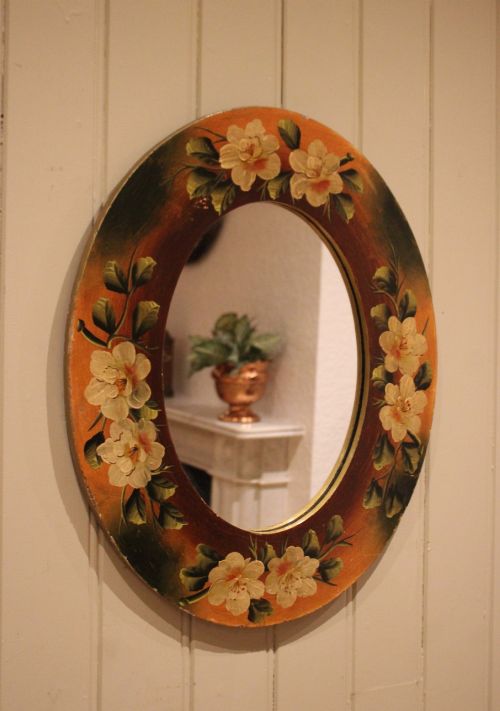
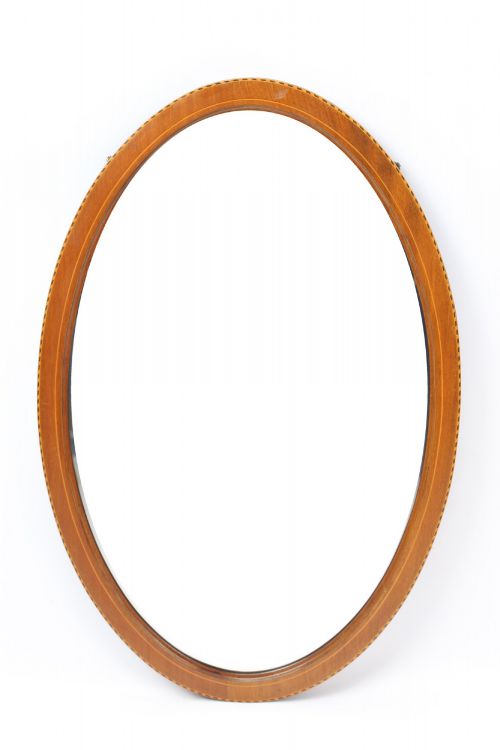
Makers across different decades utilised various timbers, sometimes adding paint, brass fittings, or delicate wood inlay. These pieces reflect the prevailing aesthetic of their period, from restrained Georgian proportions to ornate Victorian carvings.
Materials and construction
Makers selected solid timbers like mahogany and oak to construct the sturdy frames required to hold heavy mirror glass. Many pieces feature hand-cut wood inlay, brass hardware, or painted floral details applied directly to the wood.
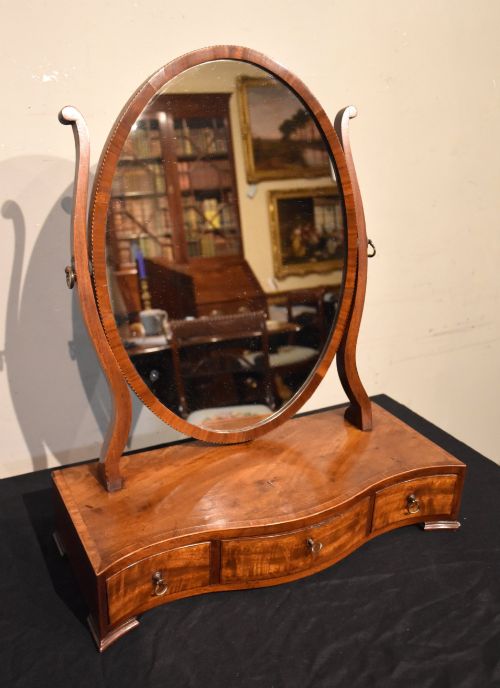
Carpenters employed traditional joinery techniques to shape the curved frames, securing the glass within a rebated edge. Swing mirrors incorporate pivoting brass arms supported by wooden uprights and stable bases.
Some Edwardian mirrors hide secret compartments behind the glass, perfect for stashing love letters or spare collar studs.
Assessing craftsmanship
Quality rests in the selection of timber grain, the precision of the frame's curved joints, and the clarity of the original mirror glass. Superior examples display carefully matched veneers, clean carving, and substantial brass fittings.
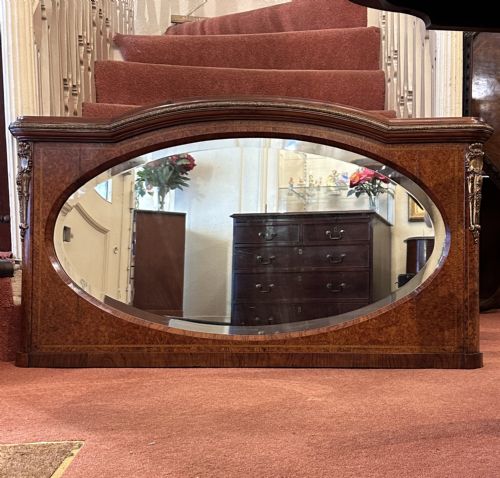
Simpler pieces rely on plain timber frames with minimal ornamentation, while finer items incorporate fretwork, burr woods, or ormolu mounts that elevate the overall presence of the object.
The Brown Wooden Oval Mirror Glossary
- Serpentine front
- A horizontally curving front edge found on the base of dressing mirrors and chests. This graceful shape requires skilled woodworking to achieve.
- Toilet mirror
- A smaller mirror designed to sit on a dressing table or chest of drawers. These often feature a pivoting swing mechanism.
- Fretwork
- Ornamental design created by cutting patterns through thin wood using a fret saw. It appears on the crests and frames of certain wall mirrors.
- Ormolu
- Gilded bronze or brass mounts applied to furniture and mirror frames for decoration. It adds metallic contrast to the surrounding dark wood.
- Cheval mirror
- A full-length mirror suspended in a standing frame that tilts on vertical pivots. These larger pieces allow a person to view their entire outfit.
Brown Wooden Oval Mirror: Frequently Asked Questions
What is the difference between a toilet mirror and a wall mirror?
Toilet mirrors include a supporting frame and base designed to rest on top of a dressing table or chest. They usually feature pivot pins so the glass angle can be adjusted.
Wall mirrors are built with integrated hanging loops or brackets meant to attach directly to a vertical surface.
How do I care for antique wood and glass?
Clean the wooden frame with a soft, dry cloth to remove dust, avoiding modern silicone polishes that can build up over time. Natural wax feeds older timber.
Use a minimal amount of glass cleaner applied to a cloth rather than the mirror itself, preventing moisture from seeping behind the silvered backing.
How can I tell the period of a mirror?
Examine the timber species, the style of the frame carving, and the construction methods used on the reverse. Georgian pieces often show hand-planed surfaces and simpler joinery.
Later Victorian and Edwardian examples may feature machine-cut elements, distinctive inlay patterns, or bevelled mirror glass edges typical of those decades.