

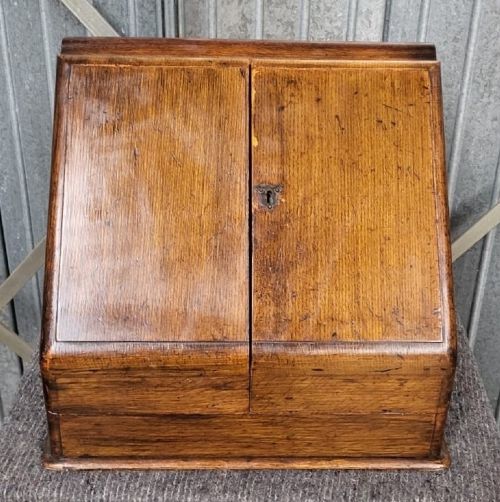
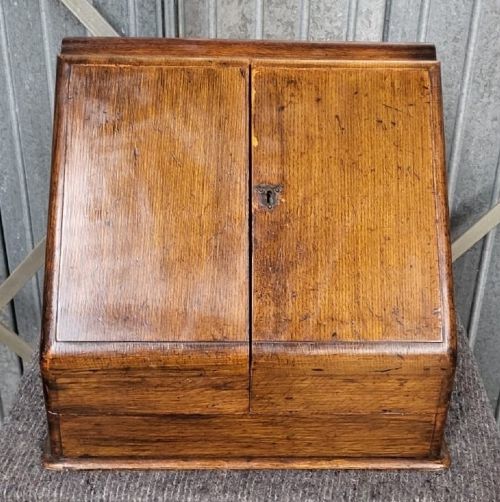
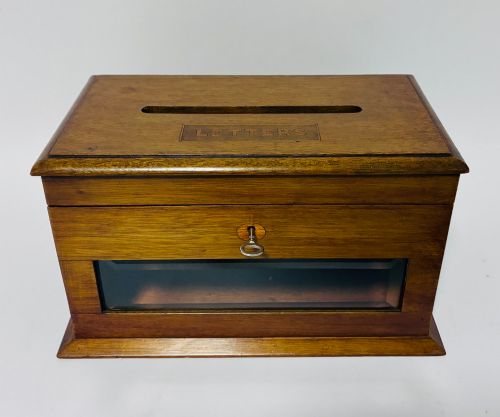

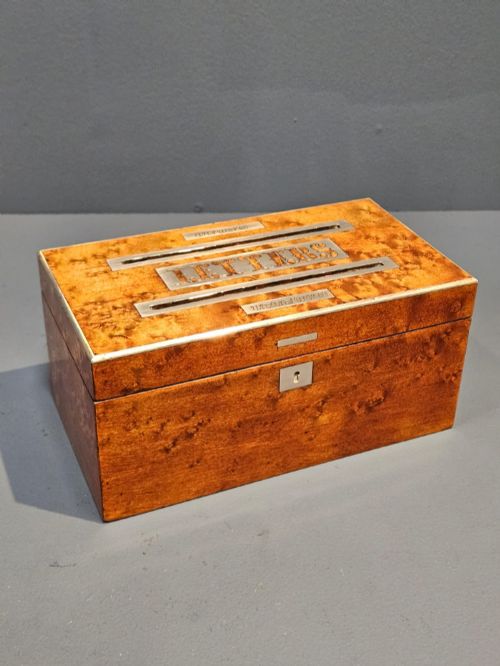
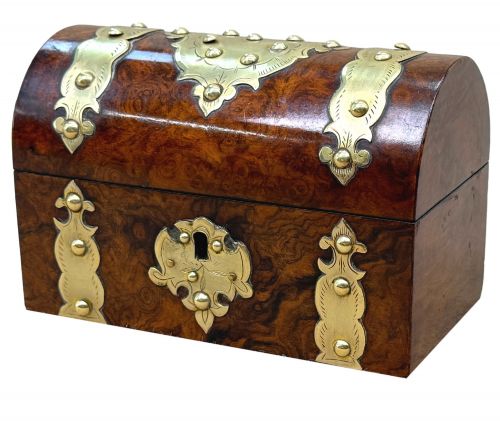


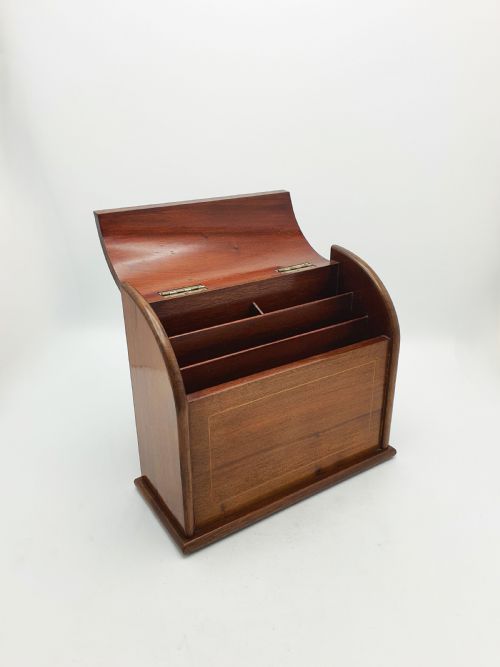


Brown Wooden Letter Box
A brown wooden letter box organises correspondence upon a desk with period craftsmanship and practical purpose.
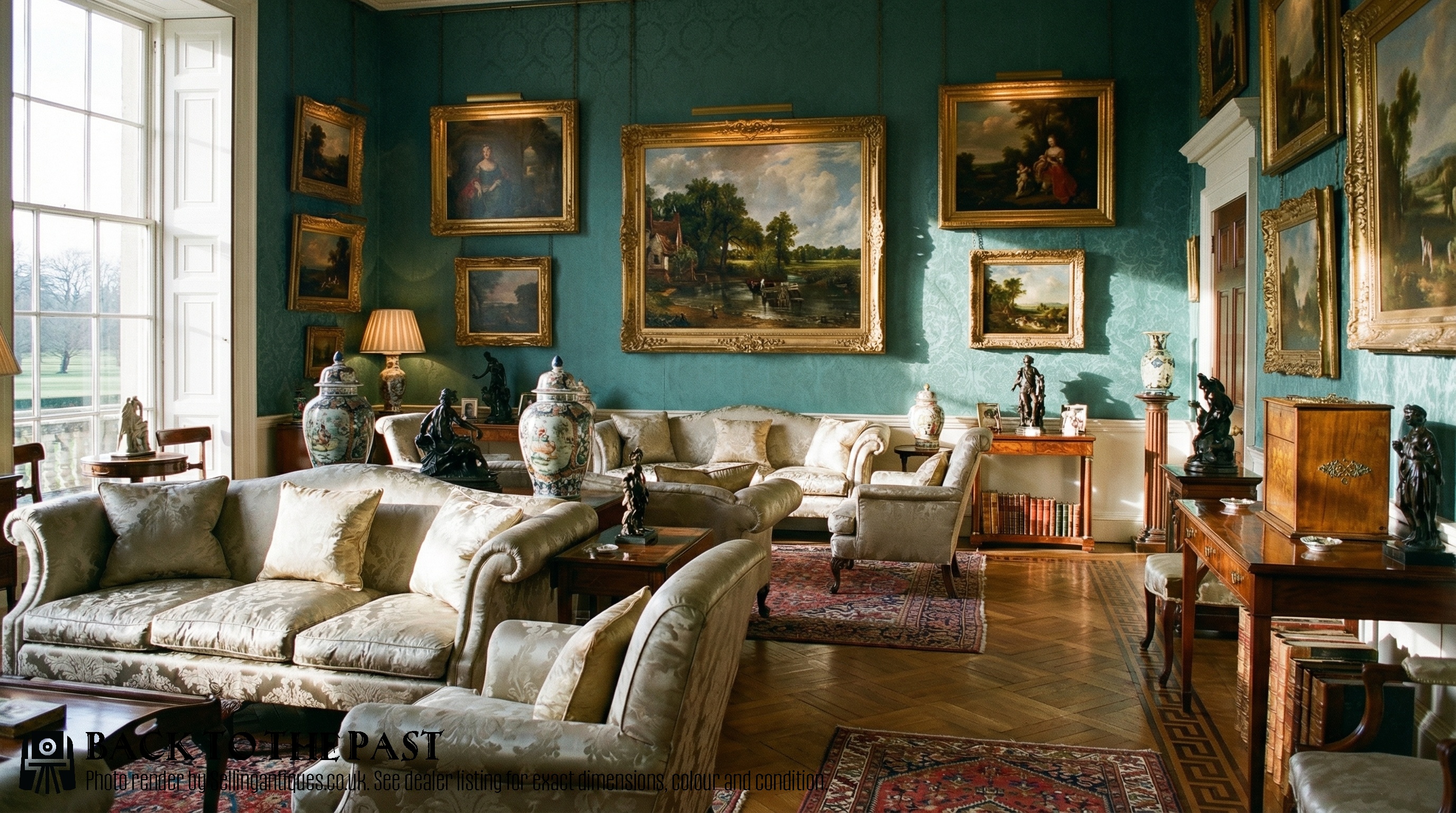
Brown Wooden Letter Box
A brown wooden letter box serves to corral daily correspondence, stationery and desk accessories within domestic and professional interiors. Pieces matching this search phrase range from compact Victorian desktop containers to substantial Edwardian cabinets and country house postal boxes.
Mahogany, oak and walnut form the predominant timbers encountered across these items. Examples span the Georgian era through to the early twentieth century, incorporating styles from Arts and Crafts to Late Victorian.
The domestic desk tidy and stationery cabinet sit alongside wall-mounted postal boxes and sloped writing chests within this category. Makers utilised various woods to construct hinged-lid boxes, drop-front cabinets and compartmented containers intended for desk organisation.
Materials and construction methods
Cabinet makers constructed these boxes using solid timbers and decorative veneers such as burr walnut, burr satinwood and figured mahogany. Selected hardwoods provided structural stability while displaying natural grain patterns across sloping lids and vertical panels.
Brass mounts, strapwork, hinges and handles reinforce corners and secure door frames on larger stationery cabinets and wall-mounted postal boxes. Glass panels, marquetry inlay and Tunbridge ware mosaic ornamentation frequently decorate the exterior surfaces of finer Victorian and Edwardian examples.
Brown Wooden Letter Box Retail Price Guide 2026
Typical asking prices for brown wooden letter box among the pieces listed under this phrase on Sellingantiques today, from the lower quarter to the upper quarter. They describe what is for sale here now, not the wider market.
Several oak desk boxes incorporate secret drawers designed to hide private correspondence and valuables from inquisitive visitors.
Evaluating quality and execution
Cabinetwork precision separates standard utility boxes from exceptional pieces produced by skilled workshops. Tight joinery, carefully fitted internal dividers and smoothly operating drop-fronts or hinged lids indicate superior initial manufacture.
The choice of decorative surface treatments dictates visual distinction. Figured timber veneers, intricate marquetry, Tunbridge ware decoration and substantial brass hardware distinguish high-status library and desk accessories from plain utilitarian containers.
Edmund Nye·F Waller·Amberg
The Brown Wooden Letter Box Glossary
- Stationery box
- A desk accessory designed to hold writing paper, envelopes and correspondence upright in internal partitions. These containers typically feature hinged lids or drop-front doors.
- Tunbridge ware
- A form of decorative woodwork characterised by tiny mosaic tiles formed from naturally coloured British timbers to create geometric or pictorial scenes. It appears on nineteenth-century boxes.
- Marquetry
- The art of applying decorative veneer pieces to a structure to form intricate patterns or pictures. Craftsmen utilised this technique on Edwardian and late Victorian cabinet doors.
- Desk tidy
- A compartmented wooden tray or box intended to hold writing instruments, stamps and miscellaneous desk items. These pieces keep working surfaces organised.
- Sloped writing box
- A desk box featuring an inclined lid designed to provide a comfortable writing surface when placed upon a table. Interiors often conceal secret drawers and inkwell compartments.
Brown Wooden Letter Box: Frequently Asked Questions
How were these letter boxes used?
These boxes held incoming and outgoing post, writing paper and envelopes upon nineteenth and early twentieth-century desks. Larger cabinets incorporated internal slots for sorting correspondence.
Wall-mounted versions received daily mail deliveries in country houses and offices. Smaller desk tidies kept stamps and writing implements close at hand.
What woods were used for these boxes?
Cabinet makers built these items using native and imported hardwoods including oak, mahogany, walnut and rosewood. Decorative veneers such as burr walnut and burr satinwood provided striking visual textures.
Inlaid details and contrasting timber banding frequently ornamented the exterior surfaces of Victorian and Edwardian examples.
How do I date a wooden letter box?
Stylistic clues and construction methods indicate the period of manufacture, ranging from Georgian sloped chests to Arts and Crafts oak letter boxes. Hardware styles and brass mounts also shift across the nineteenth century.
Maker labels or patent stamps found inside provide definitive chronological markers when present.
Where should I place a stationery box?
These boxes function effectively on modern desks, sideboards and console tables to store letters, notebooks and modern correspondence. Wall-mounted variants hang securely in hallways or studies.
Keeping timber boxes away from direct heat sources protects the polished wood and decorative veneers from drying out.