

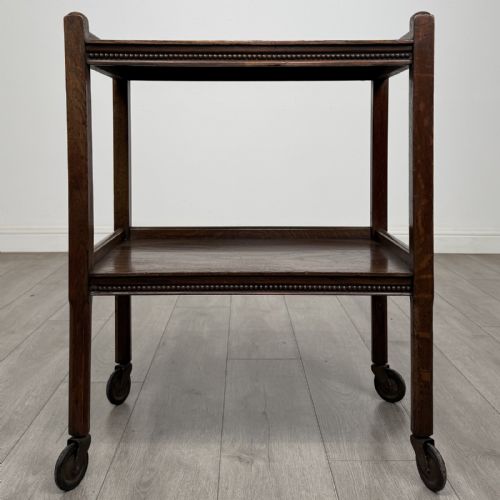
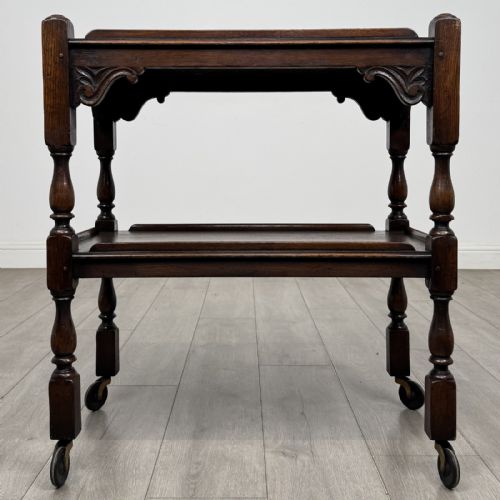
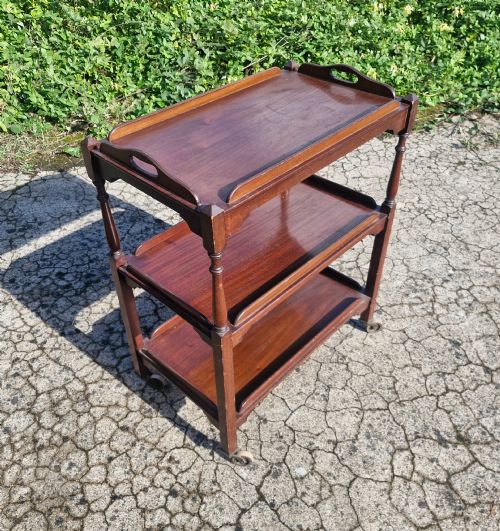
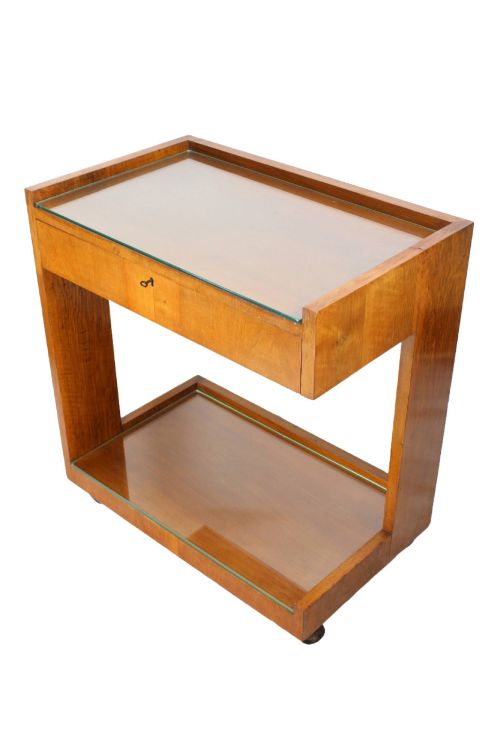
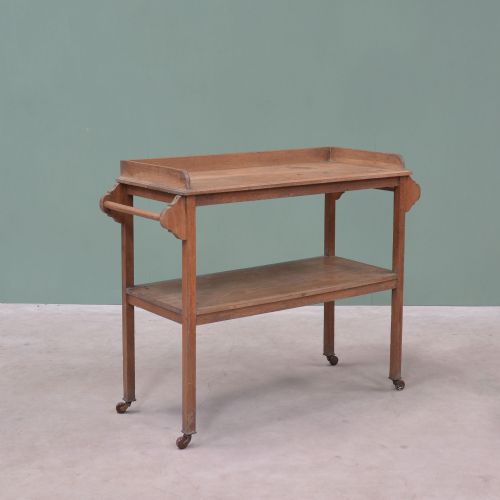
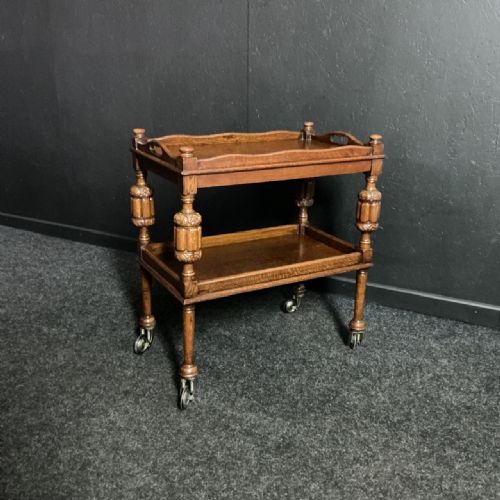
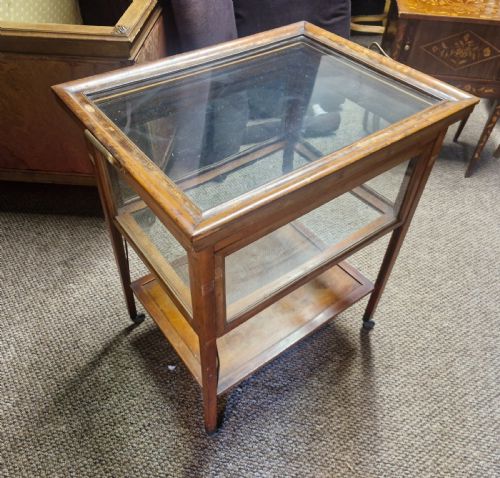


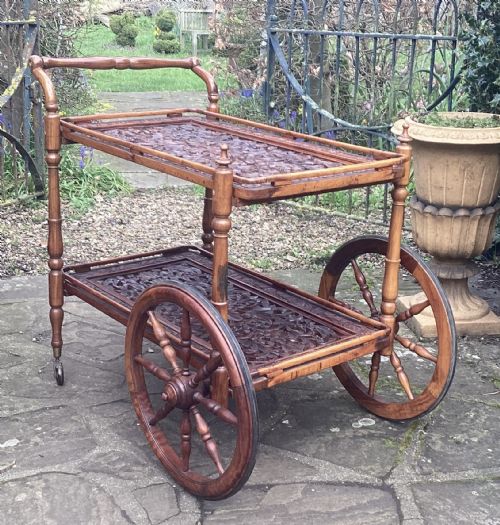

Brown Wooden Drinks Cart
A brown wooden drinks cart brings instant hospitality to a room, offering a mobile surface for glasses, bottles and afternoon tea.
Brown Wooden Drinks Cart
When you search for a brown wooden drinks cart, you encounter practical serving furniture designed to move refreshment around a home. These pieces span tea trolleys, bar carts and serving trolleys equipped with wheels or castors.
The selections on this page range from early nineteenth-century George III pieces through Victorian dumb waiters and Edwardian designs up to Art Deco and mid-century British examples. You meet mahogany, oak and walnut framing, frequently paired with removable trays or drop sides.
Forms vary from two-tier and three-tier shelving units to circular bar carts and folding tea trolleys. Many incorporate clever mechanisms such as drop leaves, lift-off trays or integrated card tables.
How they were made
Cabinet makers utilised solid timbers alongside veneers, shaping mahogany, oak and walnut into sturdy frames and display levels. Woodwork often featured inlay, carving, or barley twist supports, reflecting the prevailing style of the period.
Makers integrated functional hardware including brass castors for mobility, glass inserts for shelf surfaces, and silver-plated mounts. Caning and plywood also appear in specific twentieth-century iterations.
Joints and folding mechanisms were engineered to bear weight while remaining agile enough to wheel across carpets and floorboards during service.
Brown Wooden Drinks Cart Retail Price Guide 2026
Typical asking prices for brown wooden drinks cart among the pieces listed under this phrase on Sellingantiques today, from the lower quarter to the upper quarter. They describe what is for sale here now, not the wider market.
Listings span periods from 1800 up to the mid-twentieth century, featuring oak, mahogany, walnut, brass and glass.
What varies in quality
The grade of timber and the crispness of the joinery set examples apart, with figured veneers and detailed inlay demonstrating superior craftsmanship. Finer pieces show careful attention to the balance and smooth rolling action of the castors.
The integrity of the structural tiers and the quality of secondary materials, such as heavy brass fittings or bevelled glass, distinguish standard utility items from higher-status entertaining furniture.
Lusty of Leicester
The Brown Wooden Drinks Cart Glossary
- Dropleaf
- A table or trolley top with hinged flaps that fold down to save space when not in service. These extensions are supported by swinging brackets.
- Castor
- A small wheel mounted on a swivel assembly attached to the legs of the cart. This allows the furniture to glide across the floor in any direction.
- Dumb waiter
- A multi-tiered piece of freestanding furniture used for holding food, drink and tableware during a meal. Victorian and earlier examples often feature heavy circular shelves.
- Etagere
- A set of open shelves for displaying small objects or serving refreshments. The term applies to tiered stands with distinct levels.
- Baize
- A coarse woollen fabric resembling felt, traditionally used to line serving surfaces or card tables built into the top of a trolley.
Brown Wooden Drinks Cart: Frequently Asked Questions
What is the difference between a tea trolley and a drinks cart?
Tea trolleys historically focused on afternoon service with drop sides and removable trays for cakes and porcelain. Drinks carts evolved later towards cocktail culture, often featuring circular designs, bottle holders and open shelving for glassware.
Despite the terminology shifts between eras, both serve the fundamental purpose of mobile hospitality and share similar timber construction.
How do I care for a wooden drinks cart?
Protect wooden surfaces from moisture and alcohol rings by using coasters and trays on the tiers. Regular dusting with a soft cloth preserves the polish of mahogany, oak or walnut.
Keep castors free from dust and hair to ensure smooth rolling across your floors without straining the joints.
How do I identify an Edwardian tea trolley?
Edwardian pieces often display lighter Edwardian or Sheraton-inspired mahogany framing with delicate inlay and subtle brass castors. They frequently feature folding top levels and two tiers designed for domestic hospitality.
Compare them against heavier Victorian dumb waiters or streamlined Art Deco carts to spot the distinct decorative restraint of the early twentieth century.
Were these carts originally used for alcohol?
Many Edwardian and Victorian versions were built primarily for afternoon tea, serving porcelain pots, cakes and sandwiches. Later twentieth-century iterations adapted directly to cocktail service, incorporating racks and circular trays specifically for bottles and barware.
Owners across different decades readily repurposed these mobile tiers to suit whatever beverages were currently in fashion.