


Brown Wooden Dog Sculpture
A brown wooden dog sculpture brings character and texture to a room, ranging from folk carvings to desk accessories.
Brown Wooden Dog Sculpture
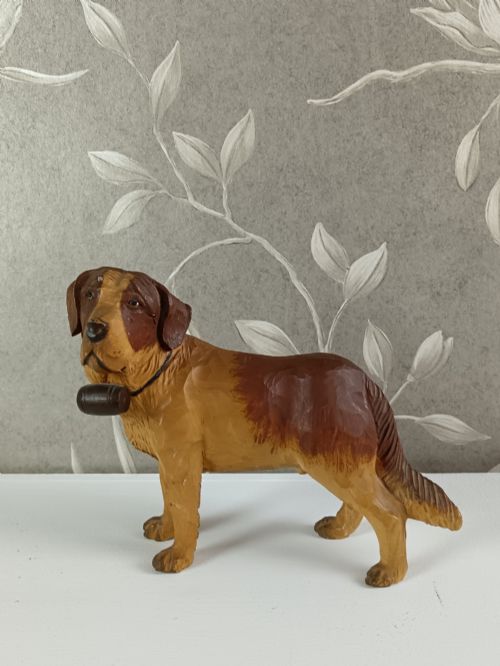
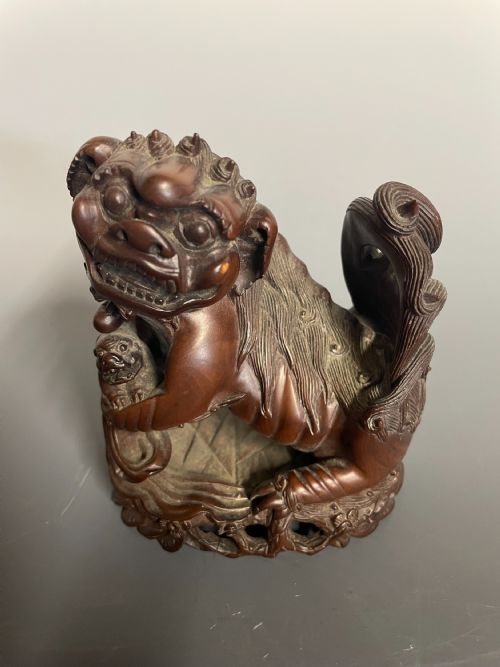
A brown wooden dog sculpture encompasses carved figures, lidded boxes, and functional desk items produced across the nineteenth and twentieth centuries. These pieces cross European and Asian traditions, including Black Forest carvings, Alpine folk art, and Chinese root wood or boxwood figures of foo dogs and lions.
The version most commonly met on this page is the Black Forest carving, typically rendered in dark timber depicting hounds, rescue dogs, or foxes. Alongside these European examples appear traditional Chinese carvings in boxwood and root wood, often representing mythical guardian dogs.
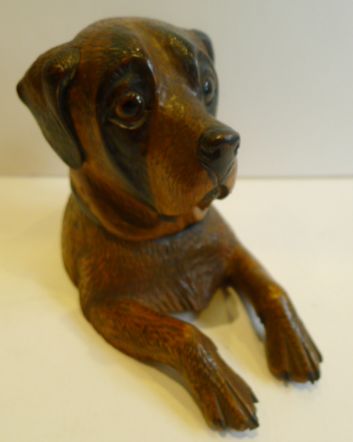
Forms vary from freestanding sculptures and centrepieces to novelty inkwells and tobacco boxes. Makers combined animal observation with practical utility, creating objects meant for desks, tables, and cabinets.
How they were made
Carvers shaped these objects from various timbers including boxwood, lindenwood, and root wood, using hand chisels and gouges to define the fur and musculature. Some European pieces incorporate glass inserts for eyes, adding realism to the wooden forms.
Surface treatments range from natural polished timber to applied paint and dark stains. Traditional Chinese pieces rely on the natural grain and gnarled knots of root wood, while European workshops utilised smooth boxwood and lindenwood for detailed facial expressions.
Materials recorded across the inventory include boxwood, lindenwood, root wood, glass, and paint.
What varies in quality
The success of a brown wooden dog sculpture depends on the anatomical precision and expression captured by the carver. Finer examples show careful attention to the texture of the coat and the alert posture of the animal, rather than rigid or generic shaping.
Utility pieces balance their sculptural form with practical function, where the lid of a tobacco box or the housing of an inkwell integrates smoothly into the animal design. Material selection also distinguishes the range, from dense boxwood to expressive root wood knots.
Maison F. Mack
The Brown Wooden Dog Sculpture Glossary
- Black Forest
- A style of wood carving originating in the Brienz region of Switzerland during the nineteenth century. These pieces frequently depict local wildlife and domestic animals with naturalistic detail.
- Foo Dog
- A traditional Chinese guardian lion sculpture often depicted in pairs outside temples. In smaller carvings, these mythical beasts appear in boxwood and root wood.
- Root wood
- Timber sourced from the root system of a tree, valued for its twisted grain and irregular shapes. Carvers incorporate these natural formations into the final composition.
- Boxwood
- A dense, pale hardwood used for intricate miniature carving and detailed figures. The fine grain allows for sharp lines and smooth surfaces.
- Inkwell
- A small container for holding ink, often fitted with a hinged lid. In novelty pieces, the container is concealed within a carved animal figure.
Brown Wooden Dog Sculpture: Frequently Asked Questions
What animals are carved in these styles?
The selection includes Saint Bernards, foxes, hounds, and mythical Chinese foo dogs or lion dogs. Each tradition interprets the canine form through local wildlife and cultural motifs.
European workshops focused heavily on working dogs and forest animals, while Asian carvers concentrated on stylized guardian figures.
How were these wooden items used?
Many pieces served a dual purpose on nineteenth-century desks and smoking tables. Tobacco boxes held pipe tobacco, while inkwells provided a reservoir for writing ink.
Other objects functioned purely as decorative sculptures, centrepieces, or wall carvings designed to display craftsmanship in a domestic interior.
How do I identify Black Forest carvings?
Black Forest pieces are typically carved from European timbers like lindenwood and walnut, depicting animals in realistic poses. They often feature glass eyes and dark staining.
These sculptures originated in Swiss and German mountain regions during the Victorian era and frequently take the form of boxes, inkstands, or freestanding figures.
What is Chinese root wood?
Chinese root wood carvings utilise the gnarled and twisted subterranean growth of trees. Artisans work with the natural contours of the wood to shape mythical creatures and guardian dogs.
This technique highlights the organic grain and unusual knots of the material rather than standard geometric timber blocks.
Where should I place a wooden dog sculpture?
These sculptures suit tabletops, mantelpieces, and desks where their carved details can be appreciated at close range. Novelty inkwells and tobacco boxes fit well in studies or libraries.
Keep wooden carvings away from direct heat sources and strong sunlight to protect the timber and surface finish.