


Brown Wooden Child Chair
A brown wooden child chair brings miniature scale to domestic history, offering centuries of regional seating crafted for the smallest members of the household.
Brown Wooden Child Chair
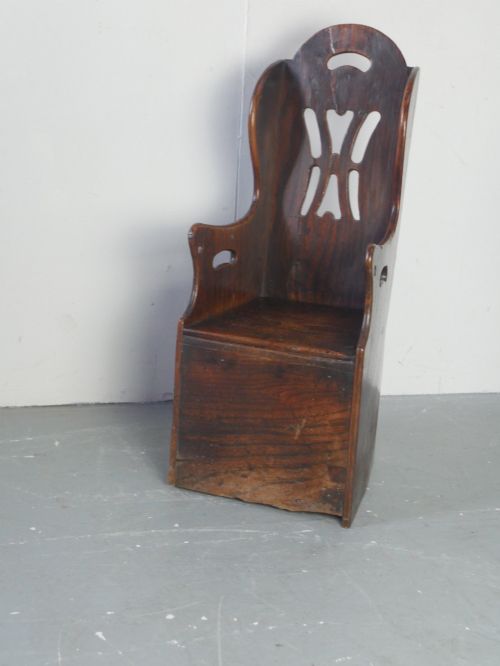
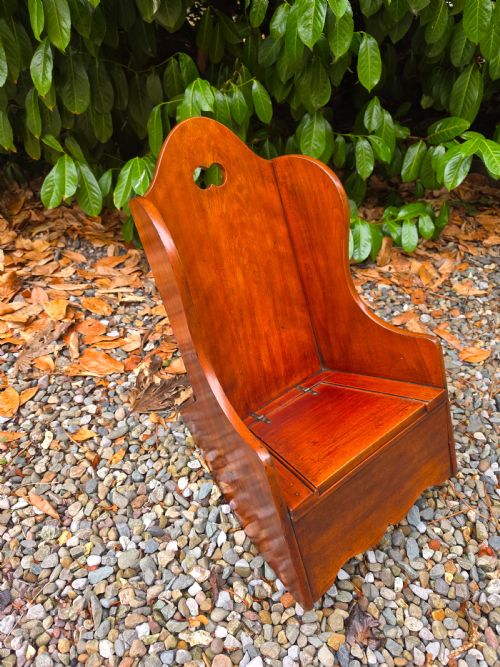
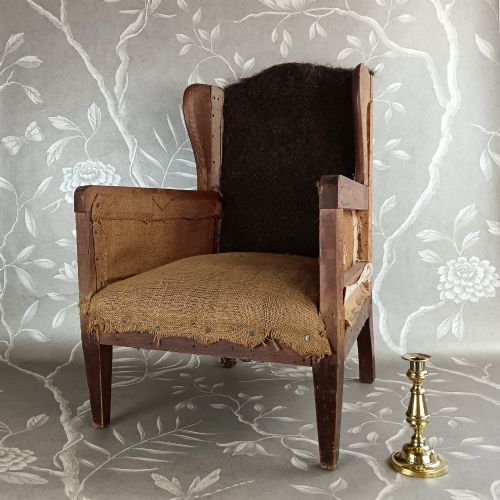
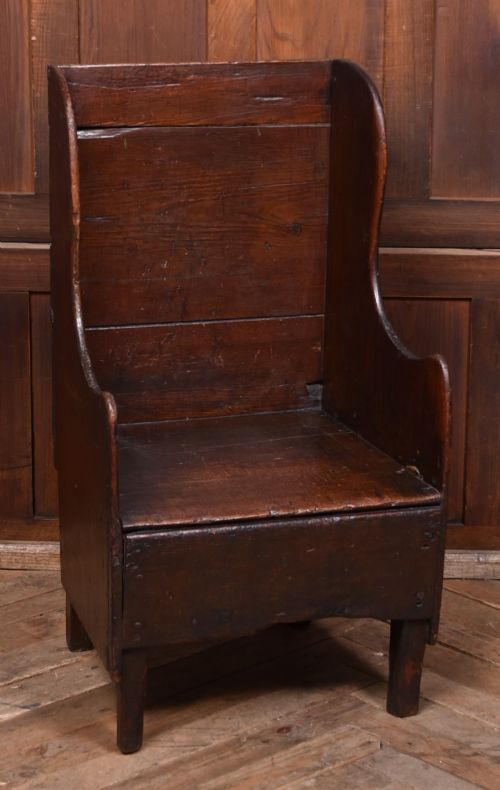
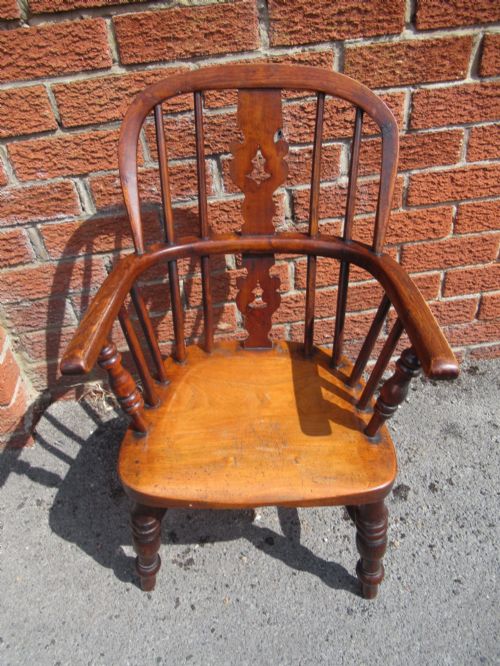
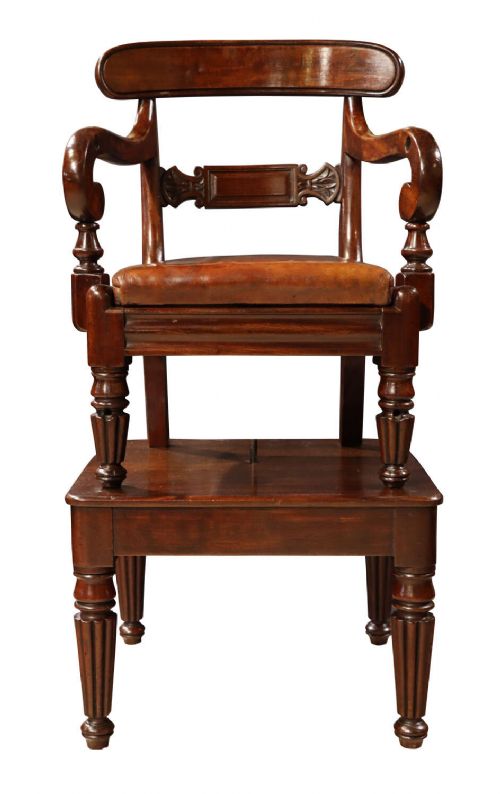
When you search for a brown wooden child chair, you encounter a remarkably diverse group of miniature seating spanning the eighteenth, nineteenth, and early twentieth centuries. These pieces include low armchairs, high chairs, potty rockers, and windsor forms built to domestic proportions.
The most common examples you meet on this page belong to the nineteenth century and the Georgian period, often constructed in regional English country styles. They range from humble elm and ash spindle backs to sophisticated mahogany and yew wood metamorphic designs.
Makers adapted full-sized furniture types for children, producing scaled-down ladderbacks, lambing chairs, and wingbacks. Some incorporate rocking runners, while others stand elevated on high frames or detachable stands for dining and nursery use.
How they were made
Cabinetmakers and country joiners built these chairs using native hardwoods such as elm, ash, oak, yew, beech, and mahogany, frequently combining two timbers within a single frame. Elm and ash provided tough, resilient seats and bentwood bow parts, while yew and mahogany were chosen for figured grain and cabinet construction.
Construction techniques mirror full-sized vernacular and formal furniture of the period, employing Windsor turning, steam-bending for hoop backs, and mortise and tenon joinery. High chairs and metamorphic designs required clever engineering, utilising hinges and tiered stands to convert dining seats into low chairs or play desks.
Brown Wooden Child Chair Retail Price Guide 2026
Typical asking prices for brown wooden child chair among the pieces listed under this phrase on Sellingantiques today, from the lower quarter to the upper quarter. They describe what is for sale here now, not the wider market.
A tiny wingback or miniature lambing chair proves that generations of adults have adored the idea of miniature architecture.
What varies in quality
Quality in a child's chair rests upon the fidelity of its proportion and the integrity of its timber selection. The finest examples display the same careful turning and wood choice found in adult seating, rather than crude or hasty construction.
The degree of original survival distinguishes everyday utility pieces from finer vernacular items. Intact mechanisms on metamorphic chairs and retained surface patination across native woods elevate certain chairs far above standard workshop production.
The Brown Wooden Child Chair Glossary
- Windsor chair
- A chair built with a solid wooden seat into which the legs and back sticks are raked directly. This form accounts for many of the robust country examples seen in these listings.
- Metamorphic chair
- A dual-purpose piece of furniture designed to transform from a high chair into a low chair or desk. These clever items used hinged or sliding components.
- Potty rocker
- A low rocking chair fitted with a aperture or enclosed base designed for toilet training infants. They combine nursery utility with comforting motion.
- Lambing chair
- An enclosed wooden armchair featuring high panelled sides and a hooded top to shield the occupant from drafts. Scaled-down versions appear in nineteenth-century country forms.
- Ladderback
- A chair back constructed with horizontal slats between two upright posts. This traditional vernacular design frequently appears with rush seating in high chair formats.
Brown Wooden Child Chair: Frequently Asked Questions
How were child high chairs used?
High chairs elevated infants to table height for family meals or nursery feeding. Many featured built-in footrests and wooden safety bars to keep young children secure.
More complex metamorphic versions allowed parents to separate the chair from its tall base, converting the tall feeding seat into a low floor chair or play desk as the child grew.
Are these chairs safe for children today?
Antique child chairs were built to historical safety standards and lack modern restraints or tip-resistance measures. While sturdy, their small footprints and open high-chair bases require constant supervision if used by toddlers.
Most buyers today acquire these pieces for decorative display, collection, or gentle use by older children under careful observation.
What is a potty rocker?
A potty rocker is a low nineteenth-century child armchair mounted on rocking runners with a concealed compartment or cut-out in the seat for a chamber pot. They combined the soothing motion of a rocking chair with necessary nursery training functions.
Craftsmen frequently made them in ash and elm, often retaining their original compact proportions and enclosed lower frames.