
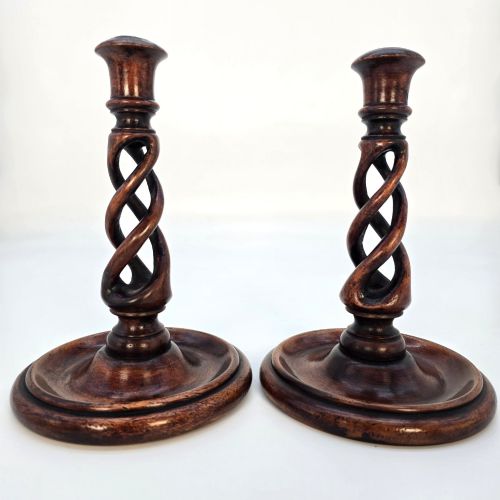


Brown Wooden Candlesticks
Brown wooden candlesticks are tactile items of functional lighting, ranging from turned fruitwood to carved figures.
Brown Wooden Candlesticks
When you search for brown wooden candlesticks, you encounter a selection spanning the eighteenth, nineteenth, and early twentieth centuries. These pieces encompass utilitarian treen, carved figures, and turned table lights made from various timbers.
The version you are most likely to meet on this page is a turned wood pair dating from the nineteenth century or the nineteen-twenties. These examples demonstrate the enduring appeal of timber in domestic lighting.
The category extends beyond simple turned columns to include travelling designs, chamber sticks, and carved figural forms. Each type reflects the interior aesthetic and lighting needs of its specific period.
How they were made
Makers utilised timber such as mahogany, walnut, oak, fruitwood, and olive wood to construct these items. Wood was turned on a lathe or carved by hand into columns, figures, and bases.
Many examples incorporate brass components, including sockets and fittings, to secure the candle and protect the timber. Surface finishes range from polished hardwoods to carved details on figural and architectural pieces.
The listings span from the eighteenth century to the nineteen-twenties, incorporating oak, walnut, mahogany, fruitwood, and olive wood.
What varies in quality
Quality in brown wooden candlesticks depends on the crispness of the turning and the depth of the carving. Hand-carved figures and intricate open twists demonstrate greater artisan skill than plain production pieces.
The choice of material influences the character of the object, with dense fruitwoods, figured walnut, and rich mahogany showing superior grain and colour. The integration of brass fittings and structural stability also determine the standard of the piece.
The Brown Wooden Candlesticks Glossary
- Treen
- Small handmade wooden household objects. These items were turned or carved for daily domestic use.
- Chamber stick
- A short candlestick fitted with a pan and handle. They were carried around the house to light the way before electricity.
- Socle base
- A short plinth supporting a figure or vessel. It provides stability and elevation to carved wooden pieces.
- Fruitwood
- Timber sourced from fruit-bearing trees such as pear or apple. It is dense and favoured for fine turning.
- Brighton bun
- A small pocket travelling candlestick formed of two screwed halves. They were popular for packing during journeys.
Brown Wooden Candlesticks: Frequently Asked Questions
How do I date brown wooden candlesticks?
Dating relies on timber choice, turning style, and construction methods. Eighteenth-century examples often utilise fruitwood with open twists, while nineteenth-century pieces frequently feature walnut or mahogany.
Hardware components like brass sockets and the wear patterns on the base offer further clues to the age of the item.
Are these candlesticks safe to use?
Most antique wooden candlesticks function well with standard taper candles, though caution is necessary with older timber near open flames. Many pieces feature metal drip pans or brass sockets to keep the wax away from the wood.
Using fitted candles prevents them from leaning and ensures stability during use.
What is a Brighton bun?
A Brighton bun is a compact travelling candlestick that unscrews into two halves. The candle and snuffer pack inside the wooden shell for safe transport.
Edwardian travellers utilised these clever designs on journeys where portable lighting was essential.
How should I clean wooden candlesticks?
Maintenance involves gentle dusting with a dry cloth to protect the surface finish and patina. Avoid using water or harsh chemical polishes on antique timber.
Occasional application of appropriate wax helps preserve the grain and colour of the wood.