
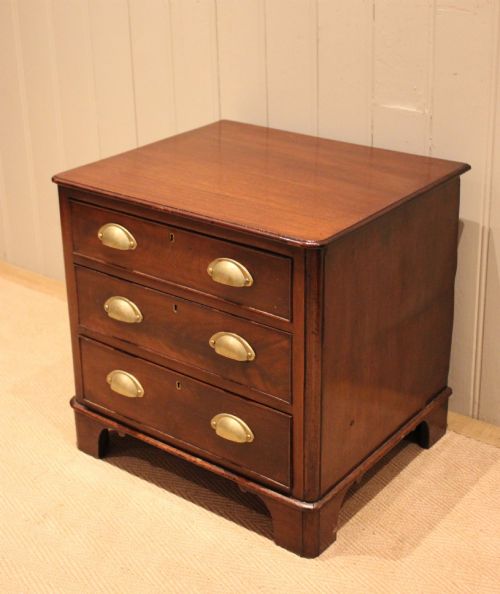

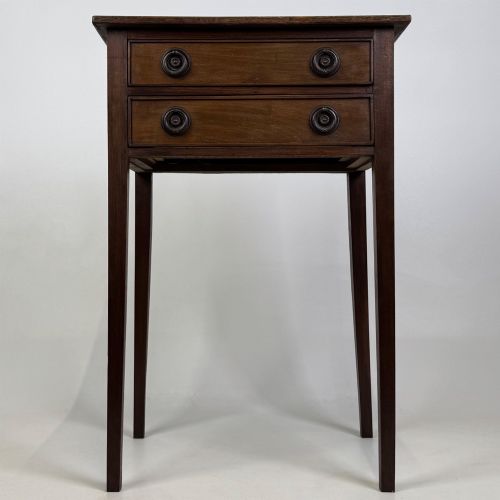
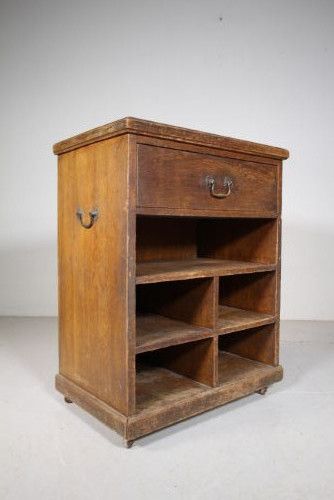
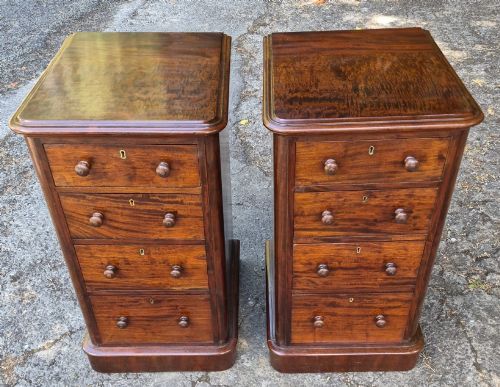
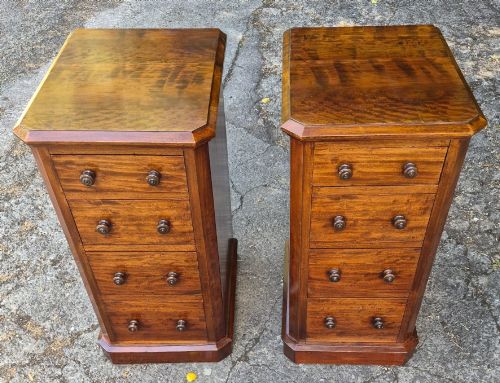
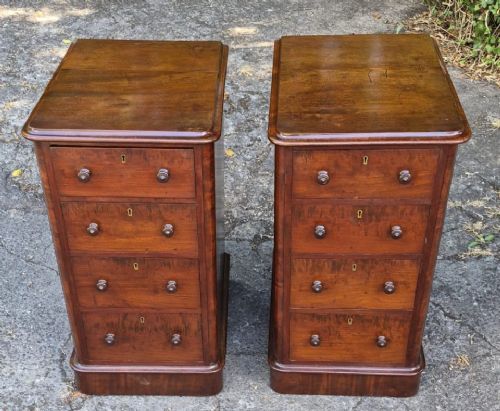
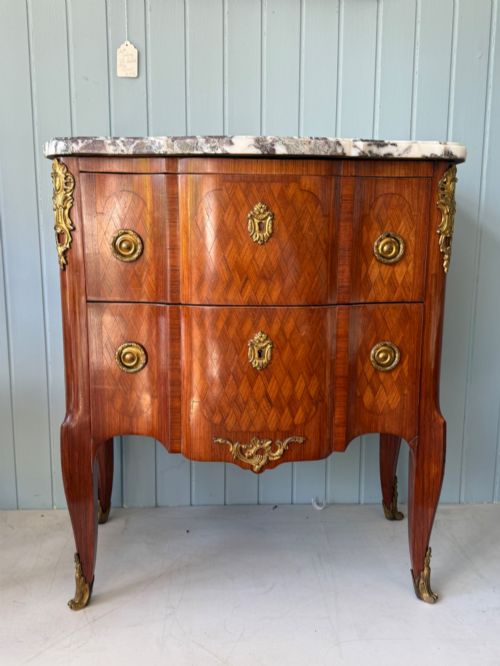
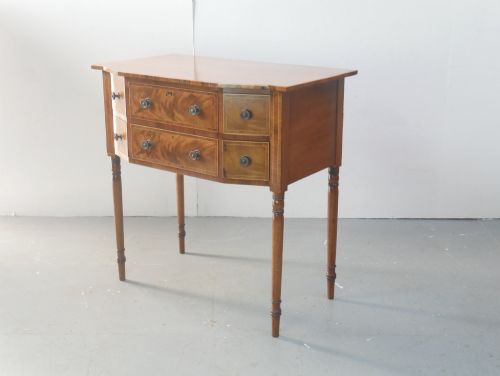
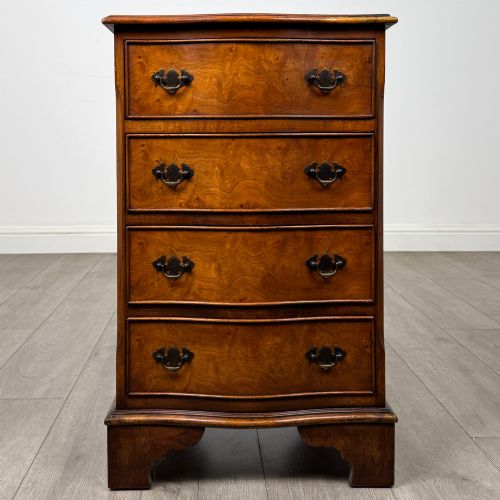
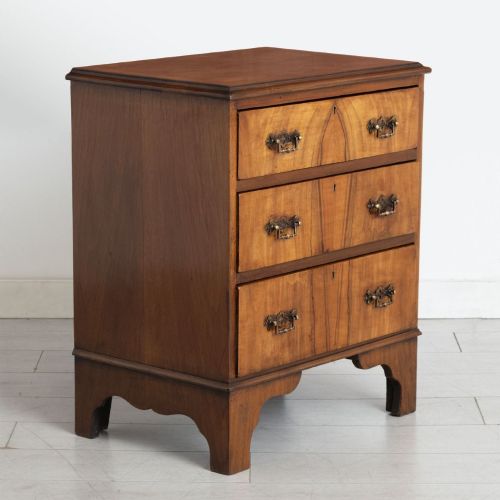
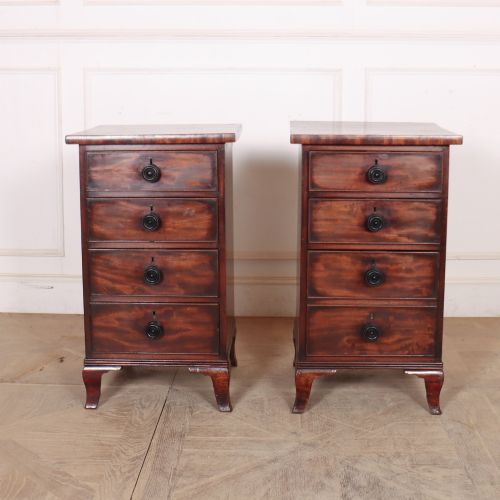
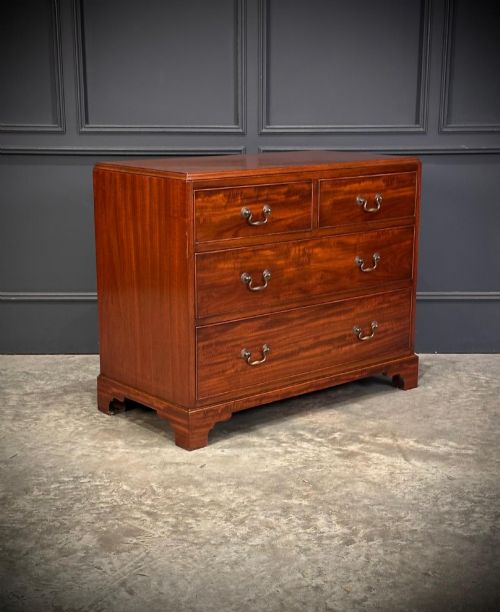
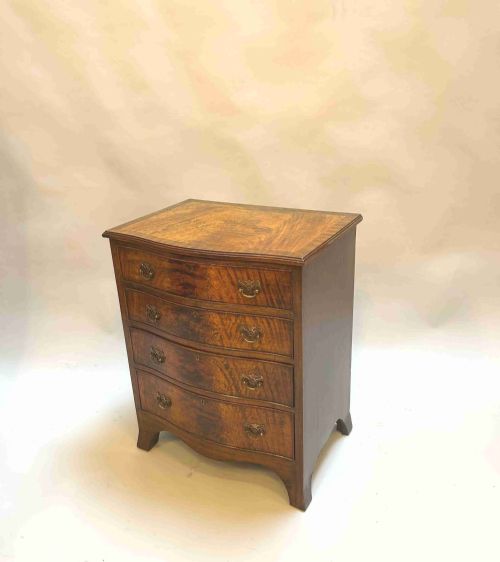
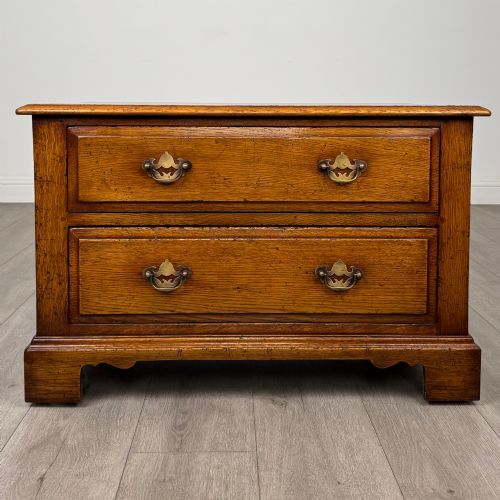
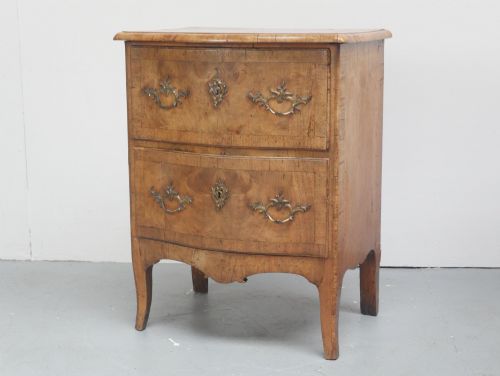
Brown Wooden Bedside Chests
Brown wooden bedside chests bring compact storage to the bedroom, spanning periods from the Georgian era through to the Art Deco decades.
Brown Wooden Bedside Chests
When you search for brown wooden bedside chests, you find a variety of small storage forms including bedside cabinets, commodes, small chests of drawers and side tables. These pieces emerge from periods spanning the eighteenth century, the Victorian era, and into the twentieth century including the Edwardian and Art Deco decades.
The version you are most likely to meet on this page is a mahogany or oak bedside chest or cabinet from the nineteenth or early twentieth century. Many examples appear as pairs, alongside single pieces ranging from primitive oak items to walnut or burr walnut designs.
Makers and designers worked in diverse styles such as Victorian, Georgian, Regency, Louis XV Revival, Sheraton Revival, and Gothic revival. Forms also encompass close stools shaped like small bedside chests, campaign pieces, and serpentine commodes.
Materials and Construction
Cabinet makers utilised solid timbers and veneers including mahogany, oak, walnut, burr walnut, elm, plumwood, and occasionally pine beneath decorative surfaces. These woods were shaped into drawers, cupboards, and table structures using traditional joinery appropriate to each period.
Detailing often involved brass hardware, such as campaign handles or escutcheons, alongside marble tops, ormolu mounts, and inlaid flame mahogany or Sheraton revival patterns. Surface finishes relied on polished wood grains to highlight the natural figures of mahogany, walnut, and oak.
Evaluating Quality and Craftsmanship
Quality in these pieces rests upon the selection of timber figures, such as flame mahogany or burr walnut, and the precision of the cabinet work in drawers and joints. Superior examples display careful timber matching and crisp carving or inlay work rather than plain secondary woods.
The integrity of the original hardware, brass fittings, and structural proportions distinguishes standard items from finer workshop productions. Proportion and scale matter significantly in smaller bedside furniture, where balanced drawer arrangements and clean lines indicate higher skill.
Gomme
The Brown Wooden Bedside Chests Glossary
- Commode
- A low cabinet or chest of drawers, often French in origin or styling, designed with multiple drawers or doors.
- Close Stool
- A piece of furniture enclosing a chamber pot, historically disguised as a small chest or cabinet.
- Serpentine
- A curved furniture front curving outward at the centre and inward at the sides, or vice versa.
- Wellington Chest
- A tall, narrow chest of drawers secured by a locking hinged side pilaster bar.
- Brushing Slide
- A pull-out wooden shelf integrated into the upper section of a chest for folding clothes.
Brown Wooden Bedside Chests: Frequently Asked Questions
What periods do these bedside chests come from?
The listings include pieces originating from the eighteenth century, the Georgian period, the Victorian era, and early twentieth-century decades like the 1920s and 1930s.
Styles range from traditional Georgian and Regency designs to Gothic revival, Louis XV Revival, Sheraton Revival, and Art Deco modernist creations.
Are pairs of bedside chests common?
Many of the available bedside chests and cabinets are offered as matching pairs, particularly in Victorian and early twentieth-century mahogany and walnut.
Finding a true pair provides symmetry for placement on both sides of a bed.
What wood types should I expect to find?
The primary timbers recorded are mahogany, oak, and walnut, frequently enhanced by burr walnut veneers, elm, and plumwood.
Additional materials include brass handles, marble tops, and ormolu mounts.
How were close stools used?
Historical close stools were constructed in the form of small bedside chests or cupboards to enclose a chamber pot discreetly.
Over time, many of these wooden pieces have been adapted for general bedside storage use.