


Brown Wooden Bear Sculpture
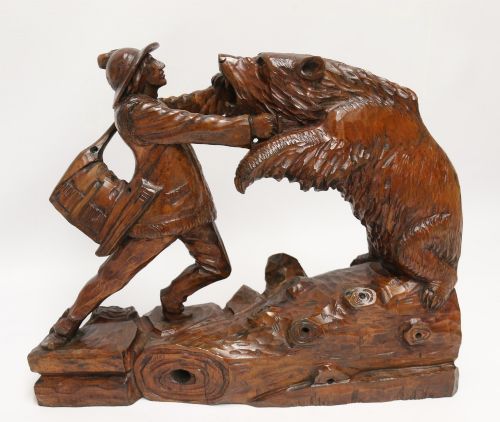
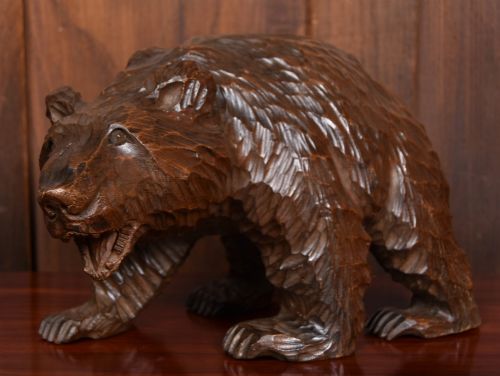
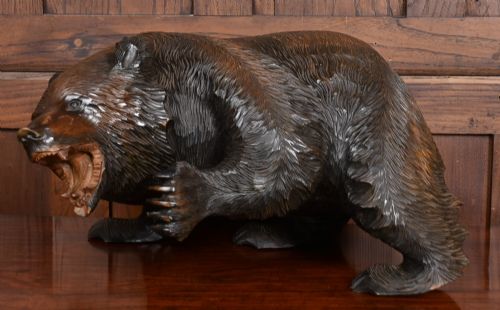
A brown wooden bear sculpture brings character to a room, carved from linden wood, walnut, or hardwood with regional regional folk art detail.
Brown Wooden Bear Sculpture
A brown wooden bear sculpture spans decorative objects, figures, and functional items like stick stands, humidor boxes, and inkstands. These carvings originate from distinct regional traditions, primarily European Black Forest work and Japanese folk art.
The most likely version to meet on this page is a nineteenth-century Black Forest carving rendered in linden wood or walnut. Such pieces capture bears in lifelike or whimsical poses, occasionally incorporating glass or stud eyes.
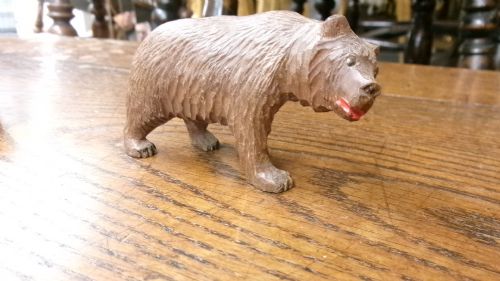
Beyond standalone sculptures, the selection includes larger hall stands and umbrella stands where the bear acts as a functional support. Miniature sets and linden wood pairs also appear alongside occasional Japanese Kibori Kuma carvings.
How they were made
Makers shaped these sculptures primarily from linden wood, walnut, and various hardwoods using hand-carving chisels and gouges. Linden wood offered a soft, even grain ideal for rendering detailed fur texture and facial expressions.
Surface finishes typically involved wax to protect the timber while preserving the natural grain of the wood. Details such as eyes were sometimes formed from separate insets, metal studs, or glass.
Materials across the inventory include linden wood, walnut, hardwood, wax, and metal.
What varies in quality
Anatomy, proportion, and the depth of carving define the upper tiers of these sculptures. Master carvers captured realistic muscle structure and fur movement rather than relying on stiff, uniform blocking.
Complexity and scale further distinguish the work, ranging from miniature groups to large functional hall stands and humidor boxes. Retaining original wax finishes and undamaged extremities elevates the standing of an individual piece.
The Brown Wooden Bear Sculpture Glossary
- Black Forest
- A nineteenth-century carving style originating in the mountainous regions of Central Europe, renowned for realistic depictions of wildlife and rustic furniture. These pieces frequently utilise linden wood or walnut.
- Kibori Kuma
- A traditional style of Japanese wooden bear sculpture originating from Hokkaido folk art. These carvings are typically hand-carved with distinct textural marks representing fur.
- Linden Wood
- A pale, fine-grained timber favored by nineteenth-century carvers for its cooperative texture and lack of prominent grain patterns. It allowed intricate detailing on sculptures without splitting.
- Humidor
- A specialised box designed to store cigars at a controlled humidity, occasionally carved in the sculptural form of an animal. In these listings, they appear as bears holding or forming the receptacle.
- Inkstand
- A desk accessory fitted with inkwells and pen recesses, sometimes fashioned as a carved animal figure. These functional pieces combine utility with decorative folk art.
Brown Wooden Bear Sculpture: Frequently Asked Questions
What wood are these bears carved from?
These sculptures are carved from various timbers, with linden wood and walnut appearing most frequently in the listings. Hardwoods also feature across different regional traditions.
The choice of wood influenced the depth of detail a carver could achieve, particularly when rendering fur texture.
How do I tell Black Forest from Japanese bears?
Black Forest carvings typically originate from nineteenth-century Europe and often feature deep, naturalistic texturing with expressive glass or stud eyes. They frequently take functional forms like umbrella stands or humidors.
Japanese bears, known as Kibori Kuma, stem from Hokkaido folk art traditions and display distinct chisel marks and different stylistic proportions.
How should I clean a wooden bear sculpture?
Maintain these carvings by dusting gently with a soft, dry cloth. Avoid using liquid cleaners or modern polishes that can damage historic wax finishes.
Keeping the wood away from direct heat sources prevents the timber from drying out and splitting over time.