

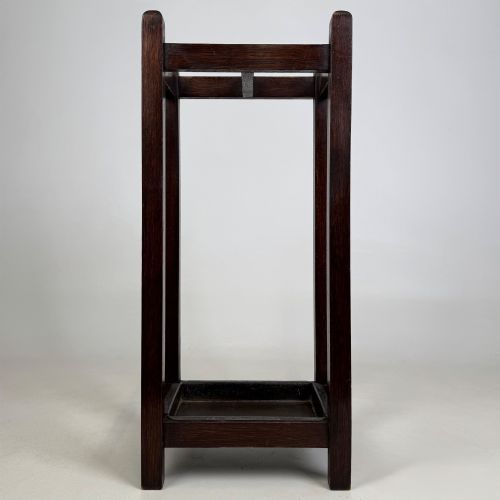
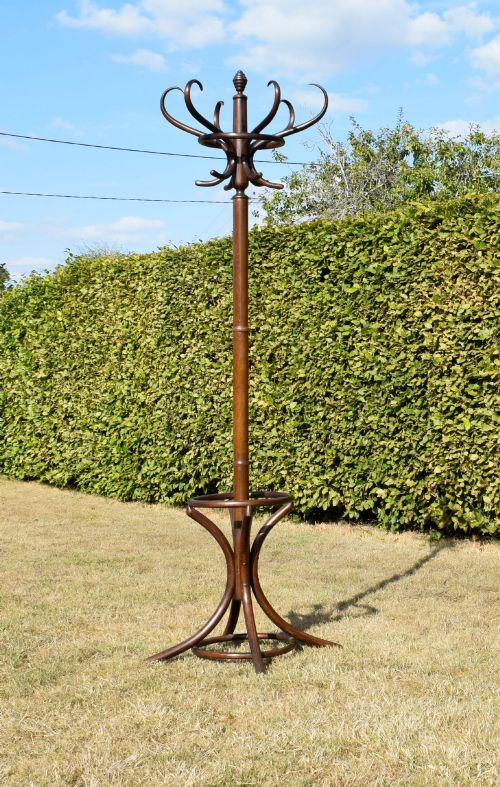
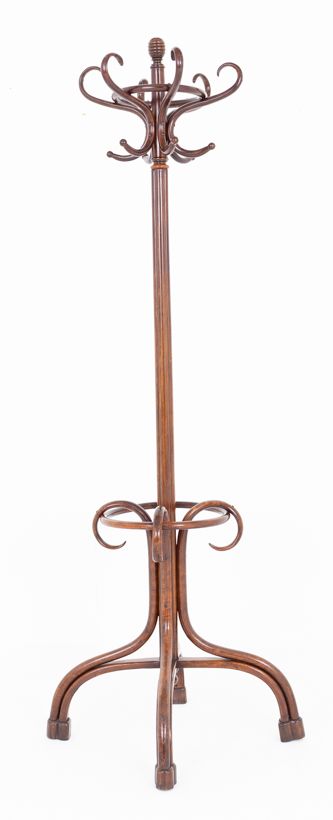
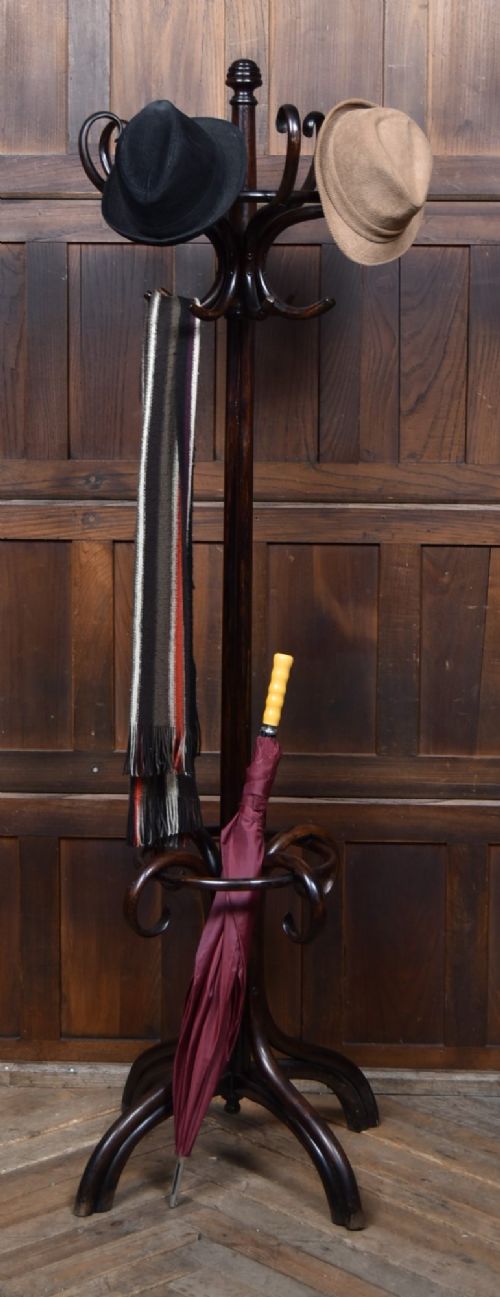


Brown Wood Umbrella Rack
A brown wood umbrella rack brings order to an entrance hall while showing the natural grain and warmth of timber.
Brown Wood Umbrella Rack
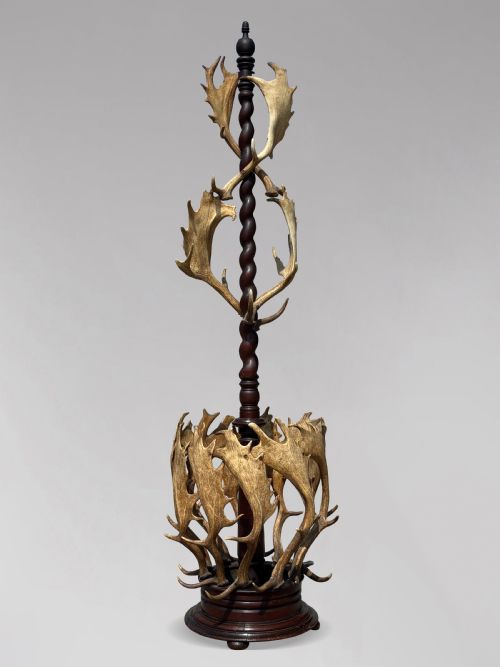
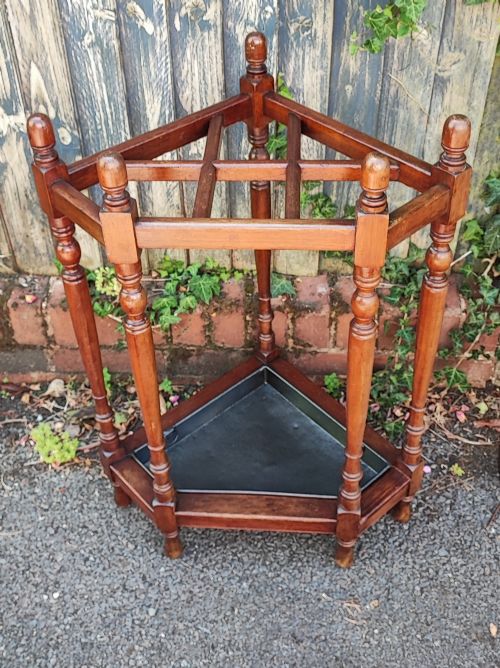
A brown wood umbrella rack encompasses sturdy oak hall stands, carved walnut stick holders, and practical hallway storage pieces designed for daily use. These items serve to hold walking sticks, canes, and umbrellas near the front door.
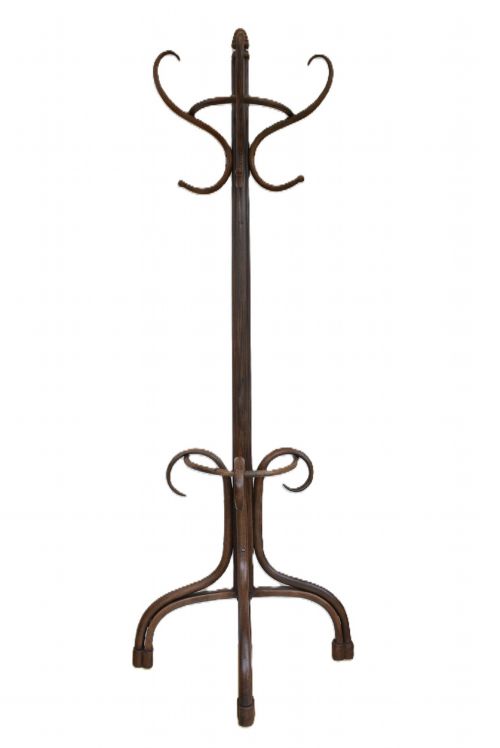
The versions most commonly met on this page span the Victorian and Edwardian eras, alongside pieces from the early twentieth century. Many take the form of combined hall stands that feature hooks for coats and hats alongside a lower tray for wet umbrellas.
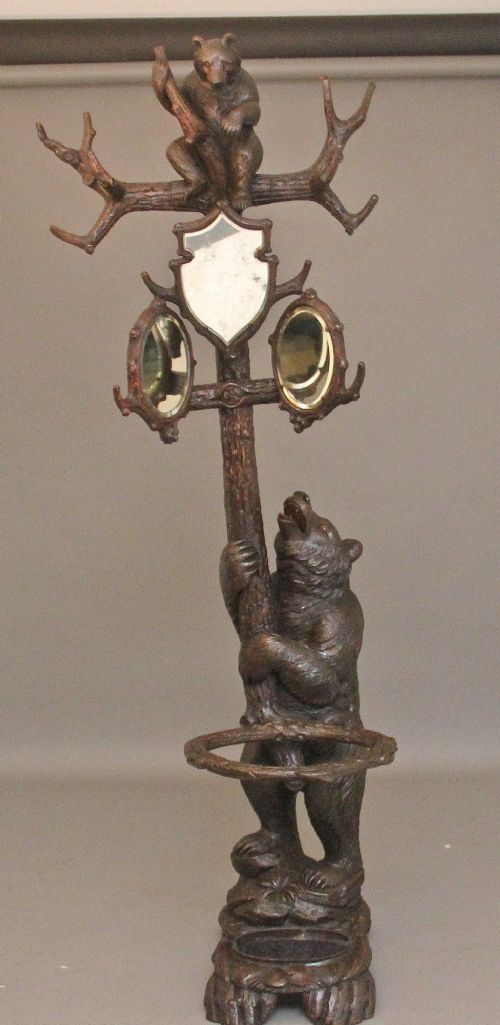
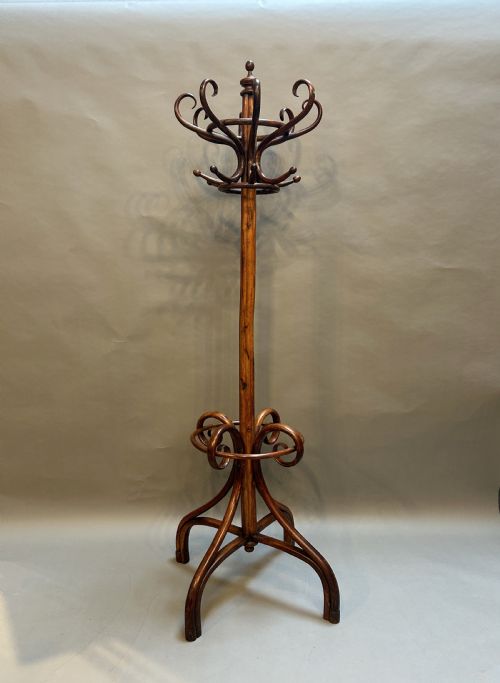
Makers and workshops across Europe utilised native timbers like beech and walnut to build these functional items. Buyers often find bentwood designs alongside heavily carved Black Forest animal figures holding receptacles for walking sticks.
Materials and construction methods
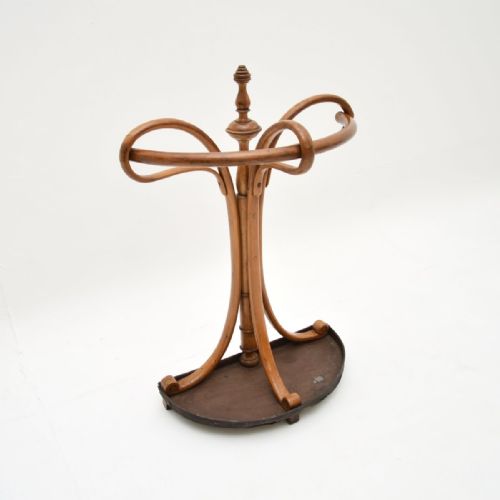
Makers shaped solid woods such as oak, mahogany, and walnut using traditional joinery techniques to ensure stability under heavy use. Steam bending allowed craftsmen to curve beech into smooth, rounded frames for lightweight bentwood stands.
Carved pieces display detailed handiwork, particularly in the animal motifs and foliate designs typical of Black Forest workshops. Metal drip pans were frequently incorporated into the base to catch water from wet umbrellas and protect the timber below.
Carved wooden bears keep a watchful eye over wet umbrellas, standing ready to guard your walking sticks.
Judging quality in timber hall stands
Quality rests on the selection of timber and the crispness of any carved details, with finer pieces showing deep, expressive work rather than shallow mechanical shaping. The choice of solid walnut or figured oak denotes a higher grade of production than standard utility items.
Structural integrity dictates longevity, particularly where vertical posts meet the base and where metal drip trays insert into the wood. Intact original drip trays and sturdy joints separate well-preserved examples from those requiring significant restoration.
Thonet·J Parker of Woodstock
The Brown Wood Umbrella Rack Glossary
- Bentwood
- Wood that has been heated with steam to make it pliable, allowing craftsmen to bend it into curved shapes. This technique defines many lightweight nineteenth-century hall stands.
- Black Forest
- A regional style of wood carving originating in Central Europe, famous for lifelike animal figures such as bears. These carvings often form the structural support for stick and umbrella stands.
- Hall Stand
- A multi-functional piece of furniture placed in an entrance hallway. It typically combines coat hooks, a mirror, and a base compartment for umbrellas and walking sticks.
- Drip Pan
- A removable metal tray fitted into the base of a stick stand. It catches water dripping from wet umbrellas to prevent damage to the wooden floorboards.
- Greenman
- A decorative architectural carving depicting a face surrounded by leaves and foliage. This motif frequently appears on Victorian carved oak hall furniture.
Brown Wood Umbrella Rack: Frequently Asked Questions
Where should I place a wooden umbrella stand?
Position your stand in the entrance hall or porch where wet items can be deposited immediately upon entering the house. Ensure the timber remains away from direct heat sources to prevent the wood from drying out and splitting over time.
Adequate clearance around the piece allows wet umbrellas to air properly without pressing against damp interior walls. Placing a protective mat beneath older stands provides extra security for delicate flooring.
How do I clean an antique wood hall stand?
Dust the timber regularly with a soft, dry cloth to remove surface particles without scratching the polished finish. Avoid using silicone-based sprays or modern chemical polishes that can build up a sticky residue and harm the aged surface.
Periodically nourish the wood with a quality beeswax applied sparingly and buffed gently with a clean cloth. Inspect the metal drip tray inside the base, ensuring it remains clean and dry to prevent rust transfer.
How do I identify a Victorian umbrella stand?
Victorian examples frequently display darker timbers like walnut and oak, often decorated with heavy carvings, turned spindles, or panelled backs. Look for integrated brass or zinc drip pans nestled within the lower wooden framework.
Construction details such as hand-cut joints and patinated hardware point toward nineteenth-century origins. Many of these pieces combine umbrella storage with coat hooks and central mirrors for hallway convenience.