
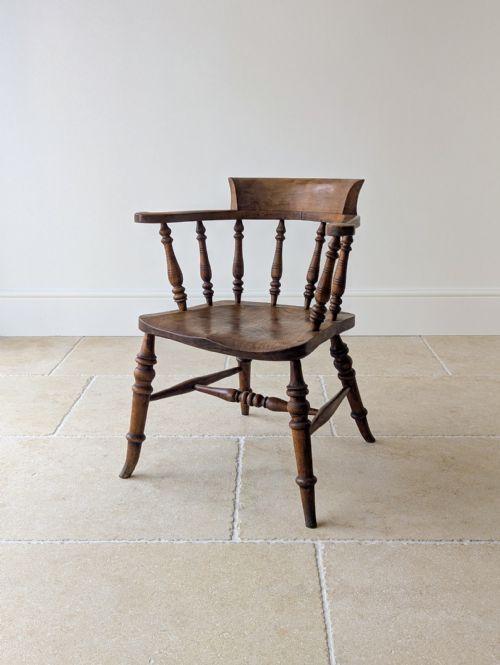
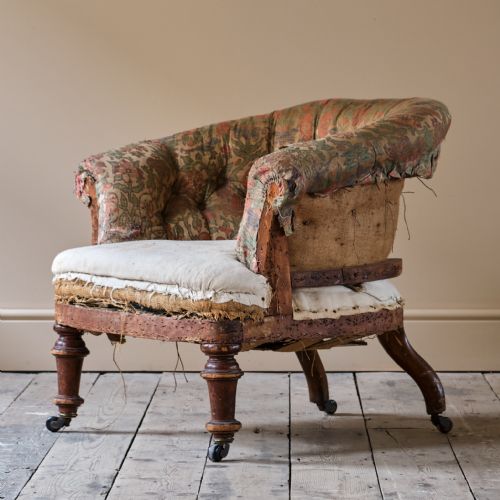


Brown Wood Tub Armchair
A brown wood tub armchair is a curved seat designed for comfort at a desk or in a library, spanning periods from the nineteenth century to the Edwardian era.
Brown Wood Tub Armchair
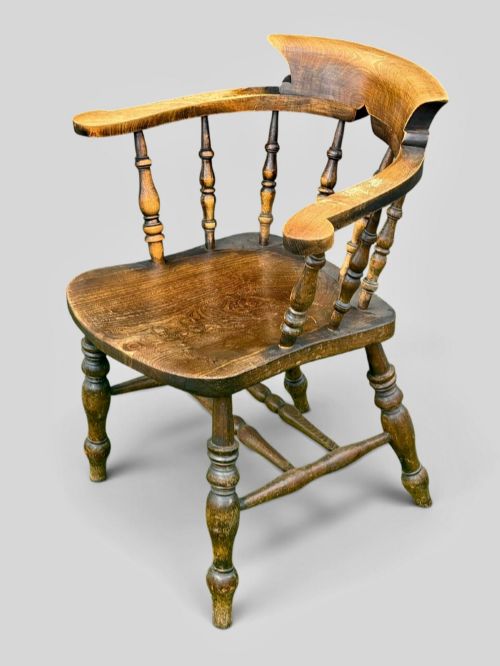
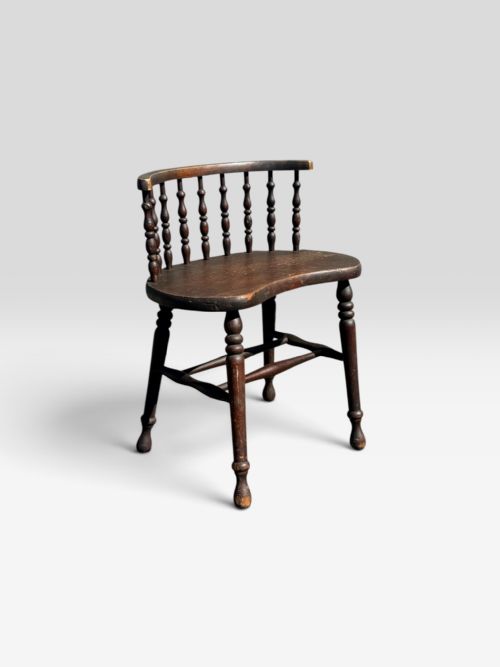
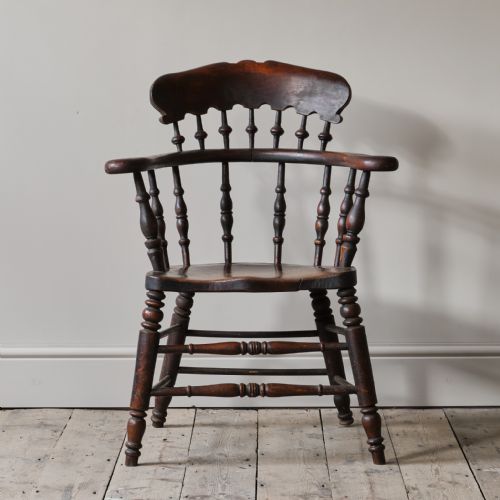
A brown wood tub armchair combines a rounded backrest with sturdy timber framing, creating a supportive seat for study and office use. These chairs emerge frequently in forms such as Captains chairs, smokers bows, and library armchairs dating from the nineteenth century onward.
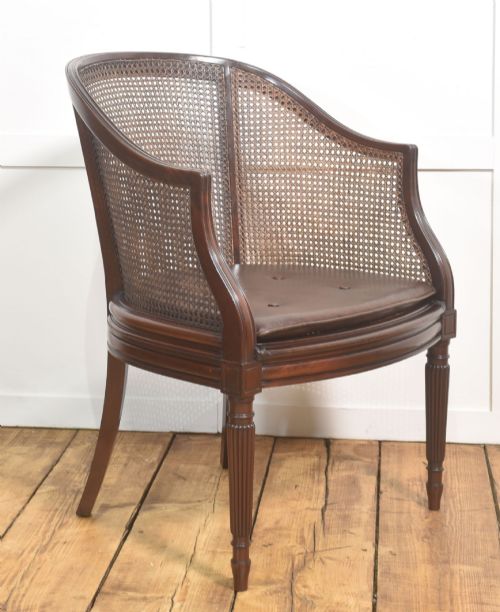
Makers utilised various native and exotic timbers to construct these seats, aligning them with periods like the Victorian and Edwardian eras. Buyers encounter options ranging from simple country elm and beech vernacular seating to polished mahogany and inlaid salon models.
The curved profile envelopes the sitter, a design that developed to keep occupants warm and supported in draughty rooms. Variations span from low parlor chairs to swivelling desk chairs fitted with brass hardware.
Materials and Construction
Carpenters built the framework using solid hardwoods such as mahogany, elm, beech, and oak, often combining timber types within a single chair. Seats frequently feature solid shaped elm or upholstered pads set into bentwood or steam-bent wooden rails.
Details include cane panels, brass inlays, and delicate wood marquetry seen on Edwardian examples. Joinery relies on traditional techniques to secure the curved back rails and spindles that define the tub shape.
Listings feature timbers including mahogany, elm, beech, oak, and yew across Victorian and Edwardian periods.
Evaluating Quality
Quality rests upon the selection of timber figures, such as burr elm or rich mahogany grains, and the crispness of any inlay work. Finer examples display harmonious proportions between the curved backrest and the turned or tapering legs.
The integrity of the structural joinery on the curved arm supports determines durability and daily usability. Original hardware, such as brass swivels or castors, adds distinct character compared to later replacements.
Jenks & Wood·Thonet
The Brown Wood Tub Armchair Glossary
- Tub armchair
- A seat with a continuous curved back and armrests forming a rounded enclosure. This shape provides enclosed comfort for reading and writing.
- Smokers bow
- A sturdy wooden armchair with a low curved back, popular in offices and country settings. It shares lineage with Windsor chair construction.
- Captains chair
- A sturdy timber armchair designed for office or desk use, often featuring a rounded spindle back. They frequently combine elm seats with beech or ash framing.
- Bentwood
- Wood softened by steam and bent into curved structural forms. Thonet and other makers utilised this technique for fluid framing.
- Inlay
- Decorative pieces of contrasting wood or brass fitted flush into the timber surface. Edwardian and Regency pieces often display this ornamentation.
Brown Wood Tub Armchair: Frequently Asked Questions
What is a tub armchair?
A tub armchair is a seat featuring a continuous curved backrest that wraps around to form the armrests.
These pieces provide supportive seating for desks, libraries, and parlours.
How do I date these chairs?
Dating relies on examining the timber species, construction methods, and decorative styles like Victorian turnings or Edwardian inlays.
Period markers include brass hardware, cane panels, and specific regional woodworking traditions.
Where were they used?
These chairs served primarily in studies, offices, libraries, and smoking rooms for writing and reading.
Lower salon models also appeared in domestic reception rooms and bedrooms.
Are elm and beech common?
Elm and beech frequently appear in nineteenth century country chairs and Captains seating.
Elm provided durable shaped seats while beech formed strong bent frames and spindles.