


Brown Wood Tea Chest
A brown wood tea chest is a fitted timber receptacle for dry leaf, pairing domestic utility with fine cabinet-making.
Brown Wood Tea Chest
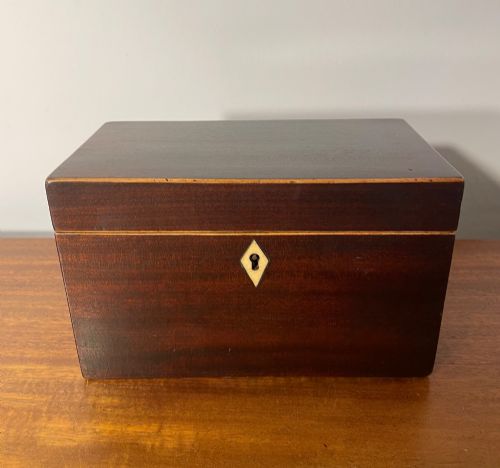
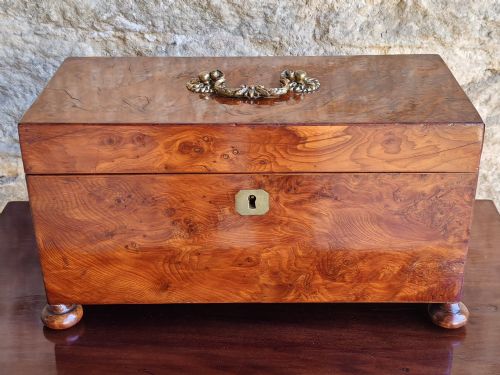
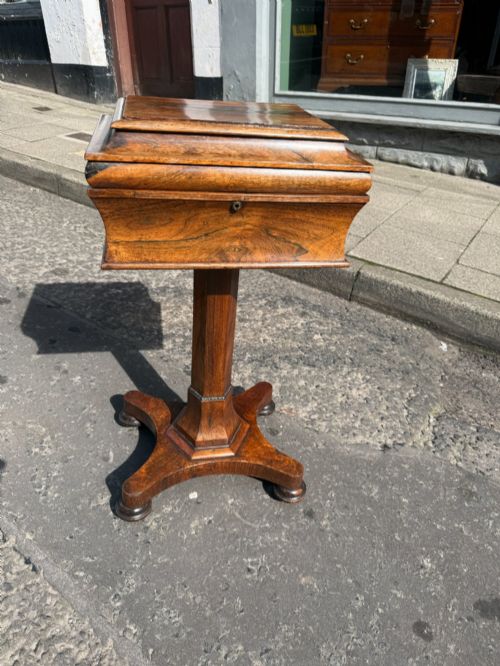
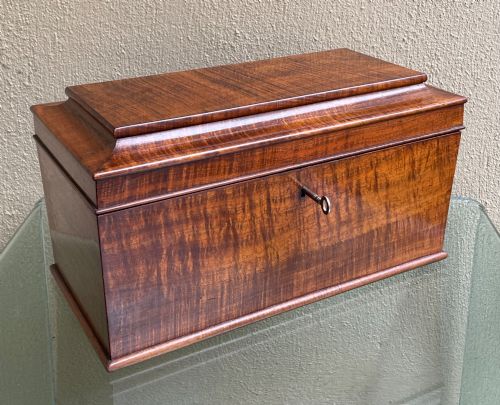
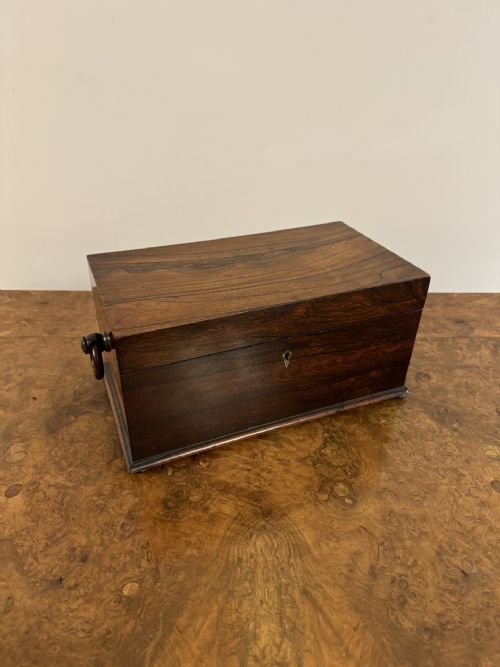
A brown wood tea chest takes the form of a lidded box or freestanding teapoy designed to hold loose leaves safely away from damp air. When exploring this selection, a buyer encounters caddies and cases fashioned during the Georgian, Regency, and Victorian eras.
The dominant formats span compact cuboid boxes, octagonal caddies, and larger dual-compartment beverage cases. Examples emerge in varied timbers, frequently taking shapes intended to sit on a sideboard or parlour table.
Makers of these chests applied figured veneers and precise joinery to satisfy the social demands of tea drinking. Surviving specimens range from simple eighteenth-century receptacles to elaborate nineteenth-century examples fitted with glass bowls.
Materials and construction methods
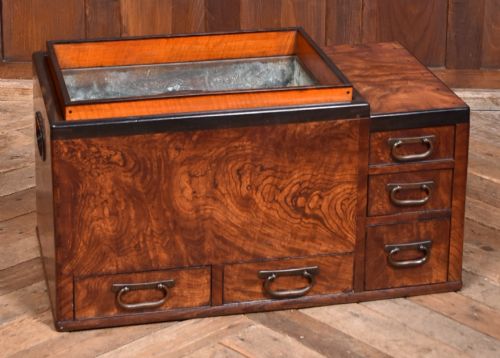
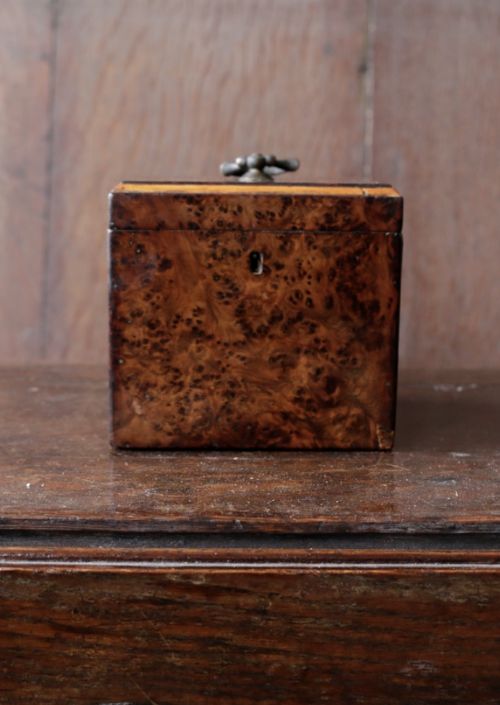
Cabinet-makers constructed these chests using dense hardwoods such as mahogany, rosewood, and harewood, frequently applying decorative veneers. Exotic timbers including burr yew, burr elm, partridge wood, and amboyna provided striking grain patterns across the exterior surfaces.
Craftsmen enhanced the timber bodies with contrasting stringing and geometric wood inlay, utilising boxwood and other pale materials for linear detail. Internal compartments often featured bone fittings or secondary wood linings to keep the dry leaf protected.
Listings feature mahogany, rosewood, burr yew, and partridge wood across Georgian, Regency, and Victorian periods.
Distinctions in quality and execution
The superiority of a brown wood tea chest rests upon the choice of timber and the dexterity of the veneer work. Cabinets displaying highly figured burr yew or carefully matched rosewood demonstrate a greater ambition on the part of the maker.
Construction standards appear in the tightness of the mitred joints, the crispness of any inlaid stringing, and the survival of original interior lids. Finer examples retain their internal glass mixing bowls and functional brass hardware.
Henry Hollamby
The Brown Wood Tea Chest Glossary
- Teapoy
- A freestanding table with a lidded box on top, designed for holding and serving tea in the drawing room.
- Stringing
- A narrow inlay of contrasting wood used to create decorative borders and linear patterns on cabinet surfaces.
- Veneer
- A thin layer of figured wood applied over a secondary timber base to create an ornamental exterior.
- Dual compartment
- A chest interior divided into two distinct sections, typically used to separate green and black teas.
- Tunbridge ware
- A type of woodworking featuring minute mosaic patterns assembled from coloured woods to form geometric or pictorial designs.
Brown Wood Tea Chest: Frequently Asked Questions
What is a brown wood tea chest?
A brown wood tea chest is a timber box or cabinet built to store and preserve loose tea leaves in domestic settings.
These pieces range from small portable caddies to larger standing teapoys produced across the eighteenth and nineteenth centuries.
How were these chests used?
Households used these chests to keep expensive tea leaves secure and fresh, often locking the main lid to protect the contents.
Inside, divided compartments held different varieties of tea, while a central recess frequently housed a glass bowl for blending infusions.
How do I date a tea chest?
Dating relies on observing the timber species, the profile of the box, and the decorative techniques applied to the exterior.
Georgian examples often favour mahogany and simple geometric forms, whereas Regency and Victorian pieces frequently showcase elaborate rosewood veneers and intricate inlay.
Are these chests suitable for modern homes?
These chests integrate easily into contemporary interiors as decorative storage boxes for small personal items or collection pieces.
Their rich timber grains and compact proportions allow them to sit comfortably on sideboards, desks, or living room tables.