

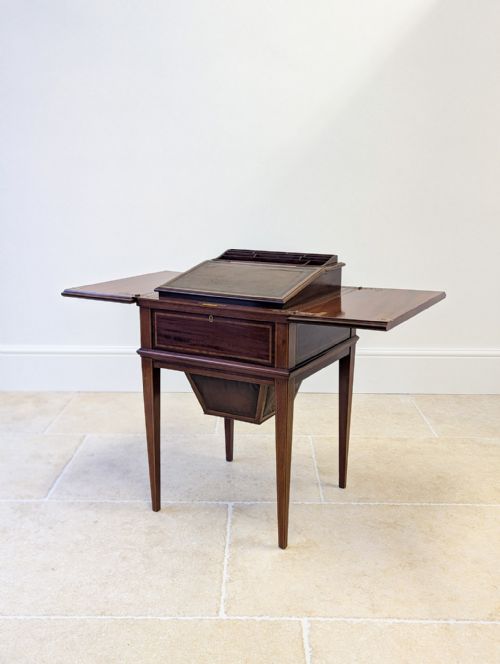
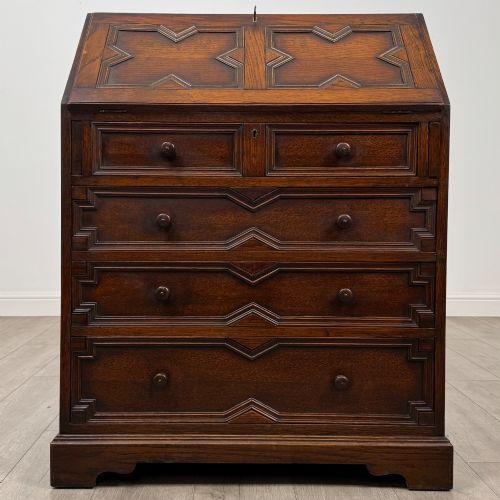
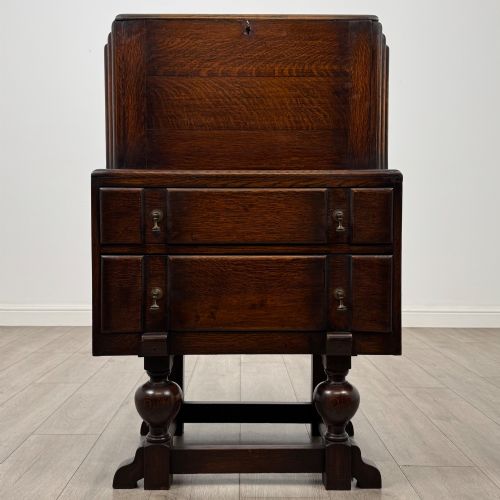
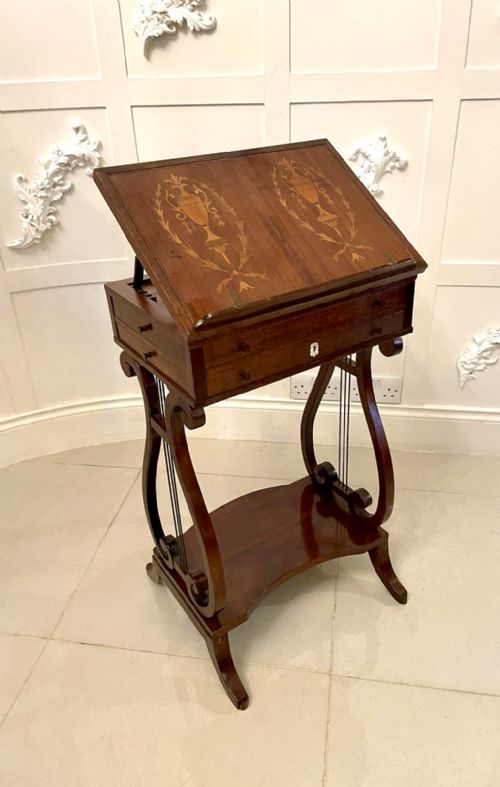

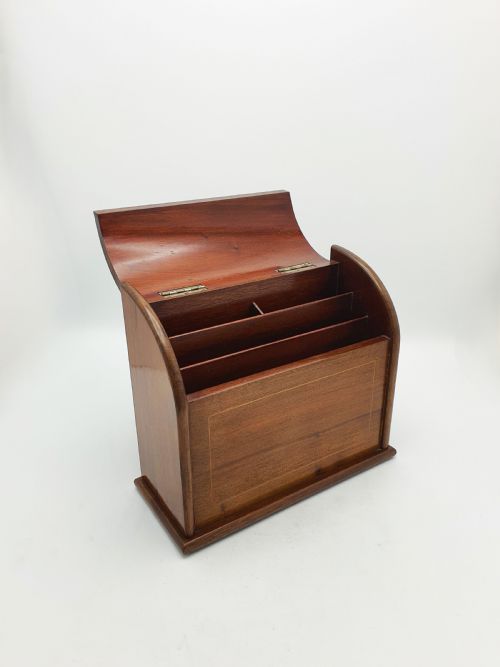


Brown Wood Slope Desk
These brown wood slope desk pieces are practical writing furniture designed to hold correspondence and documents securely.
Brown Wood Slope Desk
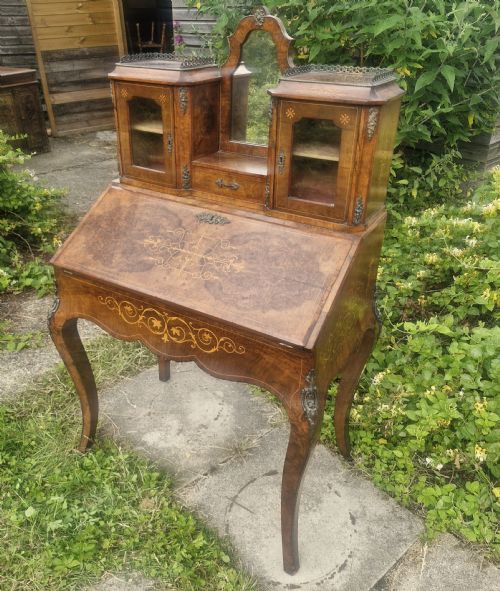
A brown wood slope desk encompasses various forms of writing furniture, from compact table-top boxes to large cabinet pieces with fall fronts. Buyers searching this phrase commonly encounter mahogany and walnut specimens spanning the Georgian, Victorian, and Edwardian periods.
The selection ranges from fitted Davenport desks and bureau cabinets to simple campaign writing slopes and stationery boxes. Many pieces incorporate storage compartments, drawers, and hinged lids designed for daily correspondence.
Origins vary across English, Dutch, and Chinese workshops, utilising timbers such as oak, rosewood, camphor wood, and yew. These pieces reflect shifting domestic writing habits from the eighteenth century through the early twentieth century.
Materials and construction
Cabinetmakers constructed these writing surfaces primarily using solid and veneered hardwoods like mahogany, walnut, and oak, often accented with burr walnut or exotic woods. Brass handles, hinges, and lock plates provided durable functional hardware.
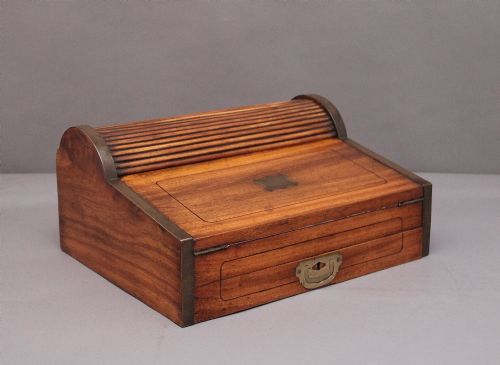
Inlaid details incorporated boxwood and various decorative veneers to outline panels and borders on bureau falls and table tops. Table-top writing slopes and larger campaign pieces utilised solid camphor wood or rosewood for resilience during travel.
Internal partitions, pigeonholes, and small secret drawers required precise carpentry skills to fit within restricted sloped spaces. Hinged mechanisms and pull-out slides utilised dovetailed drawer construction and secure brass fittings.
Some Victorian writing slopes still contain forgotten nibs hidden deep within secret compartments.
Evaluating the standard of execution
Quality reveals itself in the selection of timber figures, particularly where burr walnut or flame mahogany veneers are matched symmetrically across a fall front or lid. Finer examples display meticulous attention to internal stationery compartments and secondary drawer linings.
The sophistication of the joinery, such as tightly cut dovetails and neatly integrated brass hardware, separates utilitarian pieces from master cabinetwork. Superior execution also appears in crisp inlaid borders and the smooth operation of sliding mechanisms or pop-up desks.
Proportion and structural integrity dictate the standing of a piece within its period, with balanced proportions and original fittings holding greater appeal. The preservation of fitted writing interiors and working locks further distinguishes higher-grade examples.
The Brown Wood Slope Desk Glossary
- Bureau
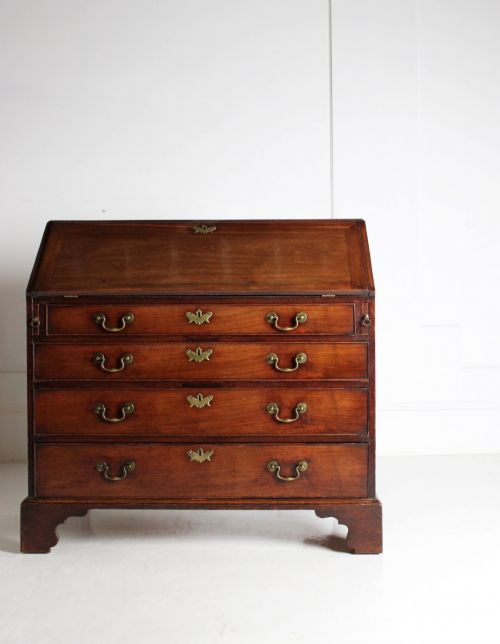
- A writing cabinet featuring a sloping lid that opens to form a desk surface above a set of drawers. This form became central to domestic study spaces during the eighteenth century.
- Davenport desk
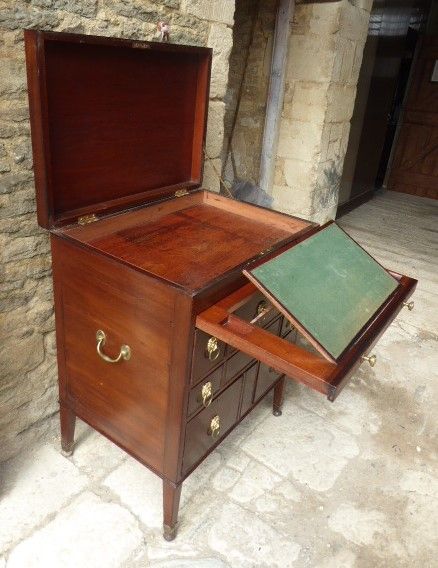
- A compact pedestal desk with a sloping writing surface on top, usually fitted with side drawers and internal compartments. Victorian versions frequently incorporated pop-up mechanisms and sliding tops.
- Writing slope
- A portable box with a hinged, slanted lid designed to hold writing materials and provide an inclined surface for correspondence. Campaign variations often utilised camphor wood with brass mounts for travel durability.
- Fall front
- A hinged flap or door that drops down to create a horizontal writing platform. It conceals pigeonholes and small drawers when closed.
- Stationery box
- A desk accessory or small cabinet designed to organise paper, envelopes, and writing implements. These often feature hinged lids and fitted internal dividers.
Brown Wood Slope Desk: Frequently Asked Questions
What is a brown wood slope desk?
A brown wood slope desk refers to writing furniture featuring an angled writing surface, encompassing portable boxes, stationery cabinets, and larger bureau forms.
These pieces utilise timbers such as mahogany, walnut, and oak, providing dedicated storage for correspondence across multiple historic periods.
How were writing slopes used historically?
Writing slopes served as portable or stationary desks where individuals could store paper, ink, and pens while maintaining a slanted writing plane.
Before widespread fitted study furniture, portable boxes allowed writers to transport their correspondence materials easily between rooms or during travel.
How do I identify a Georgian bureau?
Georgian bureaux typically feature solid mahogany or oak construction with a fall-front flap enclosing pigeonholes above graduated drawers.
Cabinetmakers of this era focused on restrained proportions, brass handle hardware, and precise dovetail joinery within the internal compartments.
What distinguishes a Davenport desk?
A Davenport desk combines a compact pedestal chest of drawers with an inclined, often leather-lined writing slope on top.
Victorian makers refined this form by adding sliding tops, side drawers, and hidden stationery compartments to maximise utility in smaller rooms.
How should I care for antique wood desks?
Antique wooden desks require stable indoor humidity levels and protection from direct sunlight to prevent timber warping and veneer cracking.
Regular dusting with a dry cloth and occasional application of appropriate furniture wax preserves the finish without harming historic surfaces.