




Brown Wood Music Stand
A brown wood music stand brings together polished timber and adjustable form to hold scores or folios in steady service.
Brown Wood Music Stand
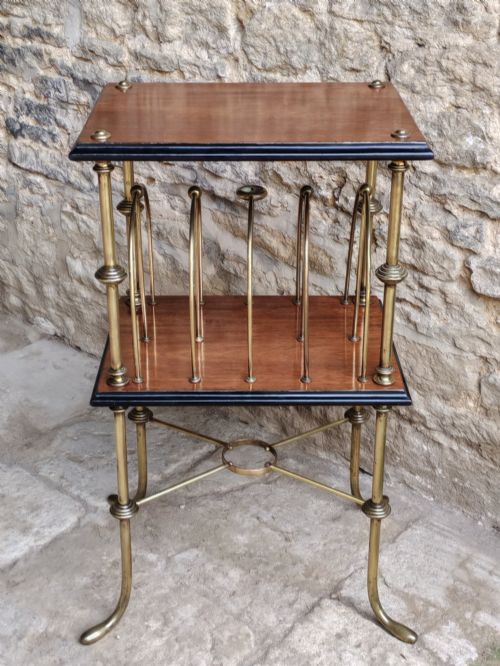
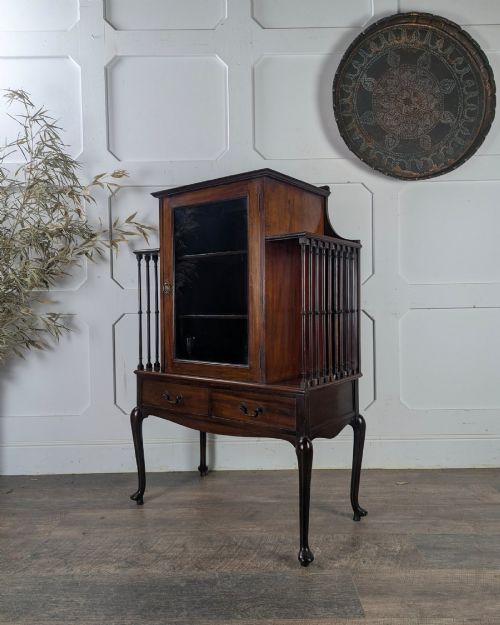
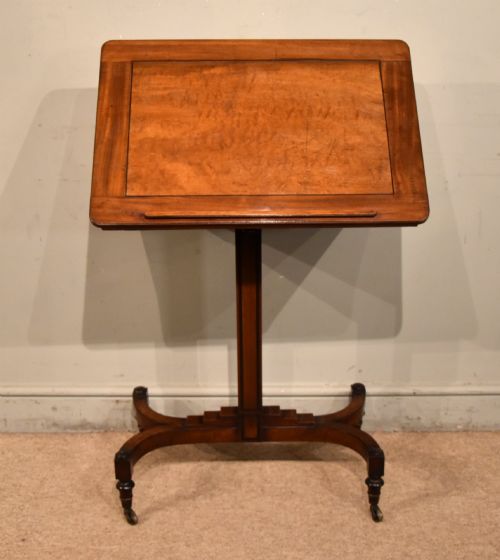
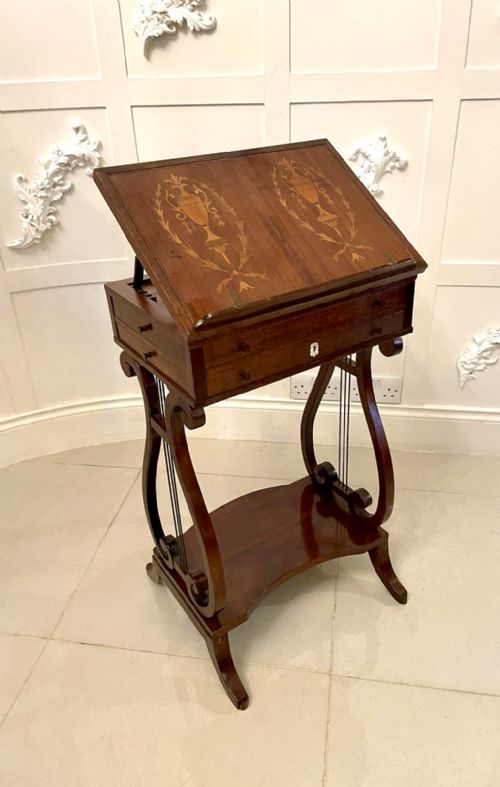
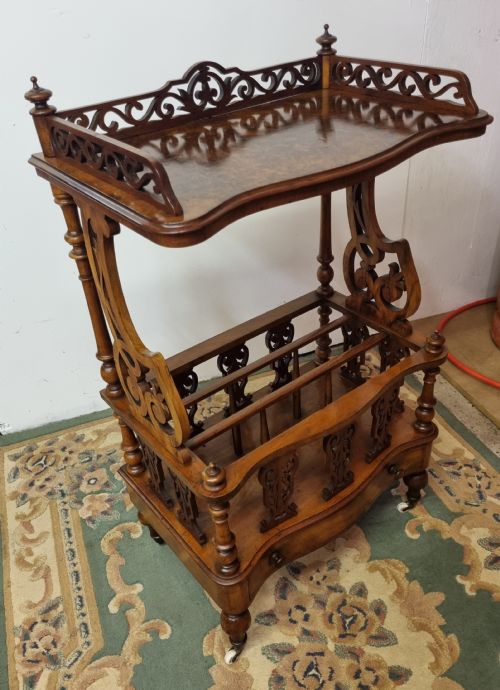
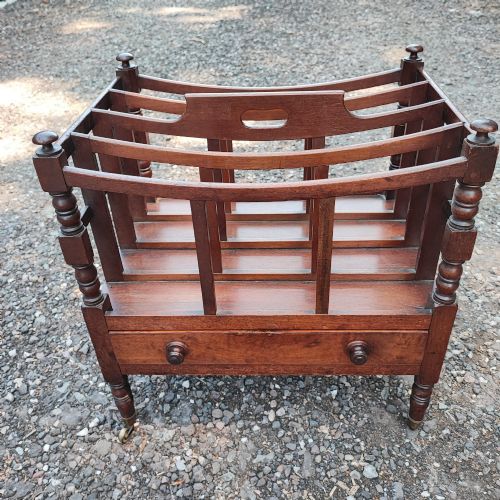
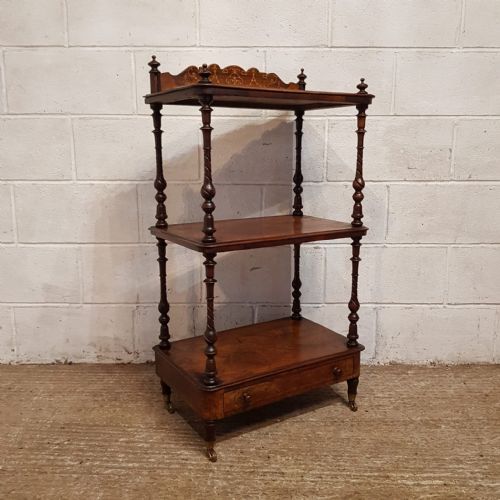
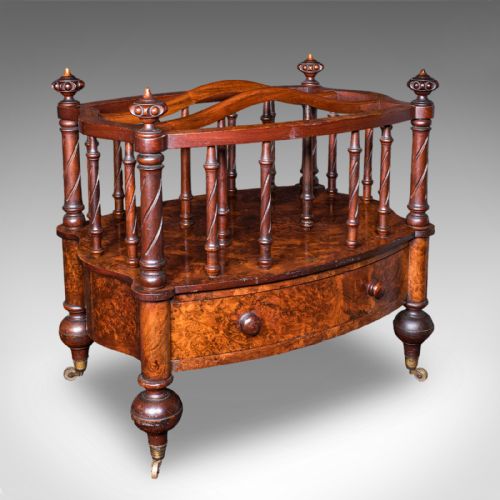
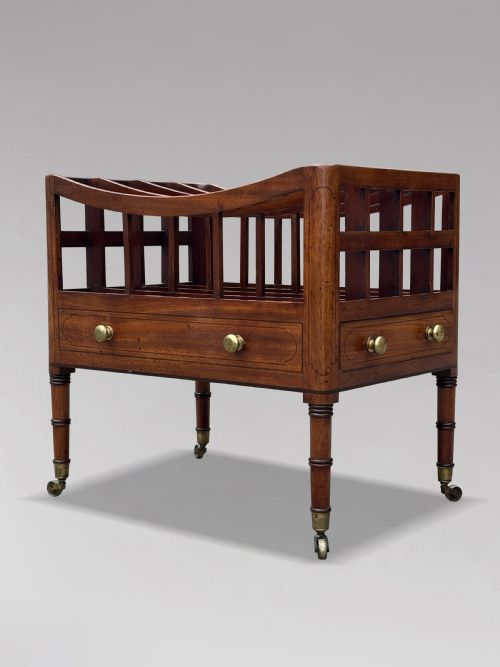
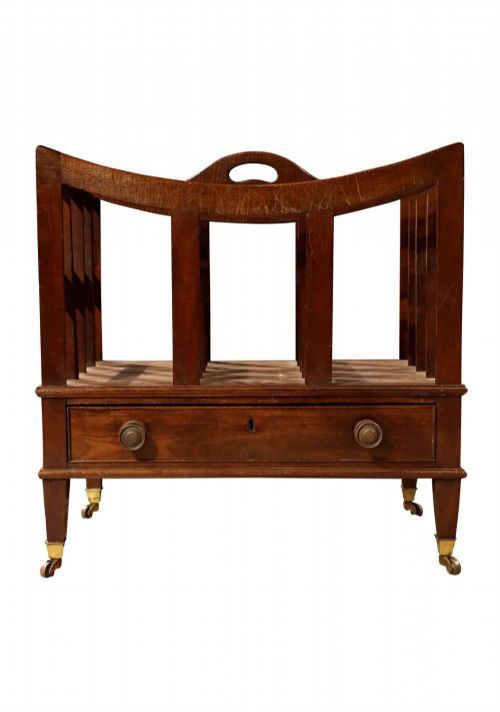
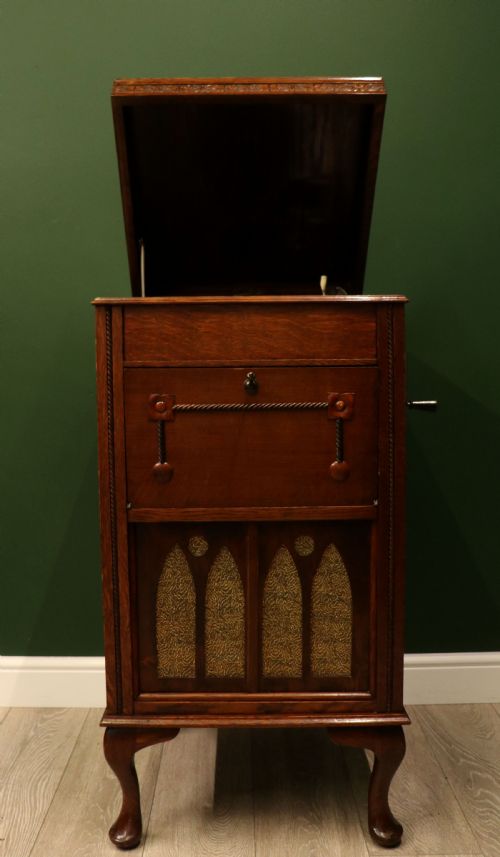
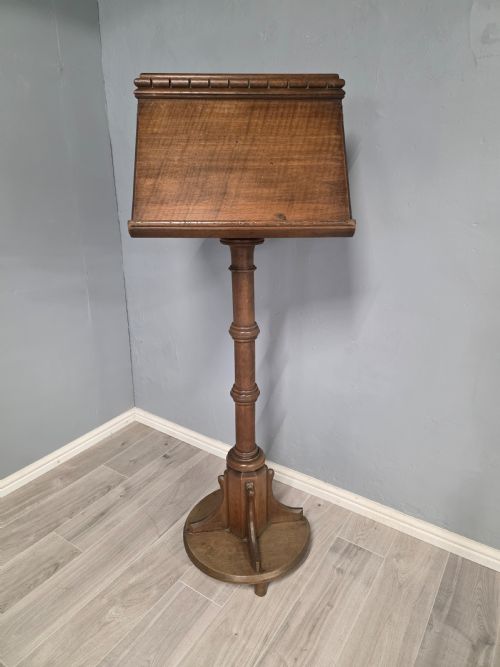
A brown wood music stand encompasses a range of functional pieces including music cabinets, reading tables, and canterburys designed to hold folios and scores. You will most frequently encounter mahogany and walnut canterburys alongside upright music cabinets spanning the Georgian, Regency, and Victorian periods.
Makers utilised these versatile items in parlours and drawing rooms for the storage of sheet music and periodicals. The designs stretch from early reading stands to late nineteenth-century shelved cabinets featuring drawers and brass castors.
Materials and Technique
Cabinet makers worked primarily with solid mahogany and burr walnut, often applying satinwood inlay or ebony banding to enrich the timber surfaces. Brass fittings such as castors, hinges, and handles appear alongside glass panels in cabinet doors.
Construction techniques include turned wooden feet, serpentine shaping, and tiered shelving supported by slender columns. Drawer construction utilises traditional joints to house sheet music and small accessories securely.
Brown Wood Music Stand Retail Price Guide 2026
Typical asking prices for brown wood music stand among the pieces listed under this phrase on Sellingantiques today, from the lower quarter to the upper quarter. They describe what is for sale here now, not the wider market.
Listings feature mahogany, walnut, and burr walnut timbers across Victorian, Regency, and Edwardian periods.
Craftsmanship and Proportion
The standard of a brown wood music stand rests upon the choice of timber figure, such as richly marked burr walnut or finely grained mahogany. Superior examples display precise inlay work and balanced proportions rather than plain utility.
Hardware quality distinguishes finer pieces, seen in original brass castors and functioning adjustable reading mechanisms. Carved details and sound structural joinery separate standard workshop output from exceptional examples.
U Phone of Leeds·Shoolbred
The Brown Wood Music Stand Glossary
- Canterbury
- A low freestanding rack with vertical divisions, originally designed for holding sheet music or newspapers. These pieces often incorporate a single drawer beneath the partitions.
- Reading table
- A specialised table featuring a top that tilts or adjusts in height for reading books or scores. They frequently appear on turned feet with castors.
- Music cabinet
- An upright enclosed piece of furniture fitted with internal shelves or drop-down drawers for filing sheet music. Doors may incorporate glass panels or inlaid wood decoration.
- Folio stand
- A substantial stand intended for holding large bound volumes or artist portfolios. These items utilise sturdy wooden frames to support heavy paper collections.
- Inlay
- A decorative technique where contrasting woods like satinwood or darker bands are fitted flush into the primary timber surface. This ornamentation defines Edwardian and Regency pieces.
Brown Wood Music Stand: Frequently Asked Questions
What is a canterbury used for?
A canterbury serves to organise and store sheet music, folios, or periodicals within easy reach of an instrument or seating area.
The vertical partitions keep soft-bound papers upright and separated, while integrated drawers hold smaller accessories.
How do I identify a Regency music stand?
Regency stands typically display classical proportions, dark mahogany timber, and restrained brass mounts characteristic of the early nineteenth century.
They often feature turned columns and brass castors designed for mobility in a formal parlour.
Can these stands hold modern books?
Most reading tables and music stands accommodate standard book sizes and heavy folios securely upon their adjustable ledges.
Heavier items should be placed centrally to maintain balance on the supporting wooden frame.
What distinguishes an Edwardian music cabinet?
Edwardian cabinets lean towards lighter inlaid mahogany construction, frequently featuring glass doors or decorative stringing lines.
These pieces reflect a transition into the twentieth century with refined proportions and tidy internal shelving.