
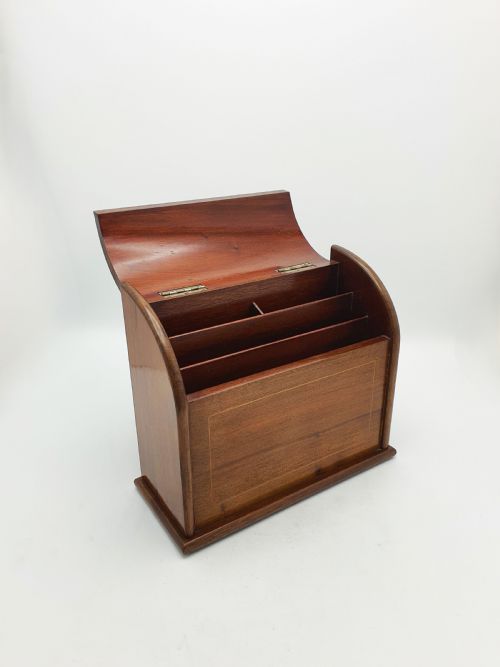


Brown Wood Desk Accessory
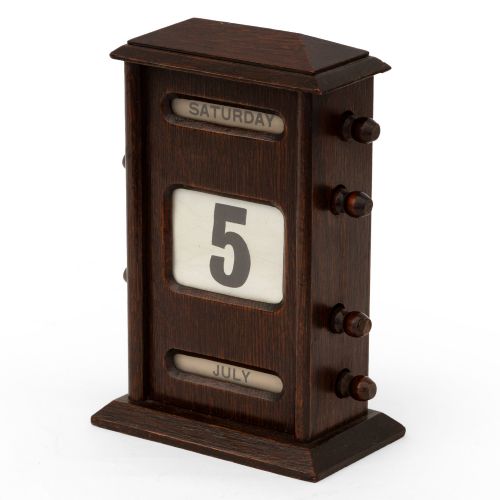
These brown wood desk accessories bring practicality and carved character to a study, spanning Victorian animal figures to Edwardian tidies.
Brown Wood Desk Accessory
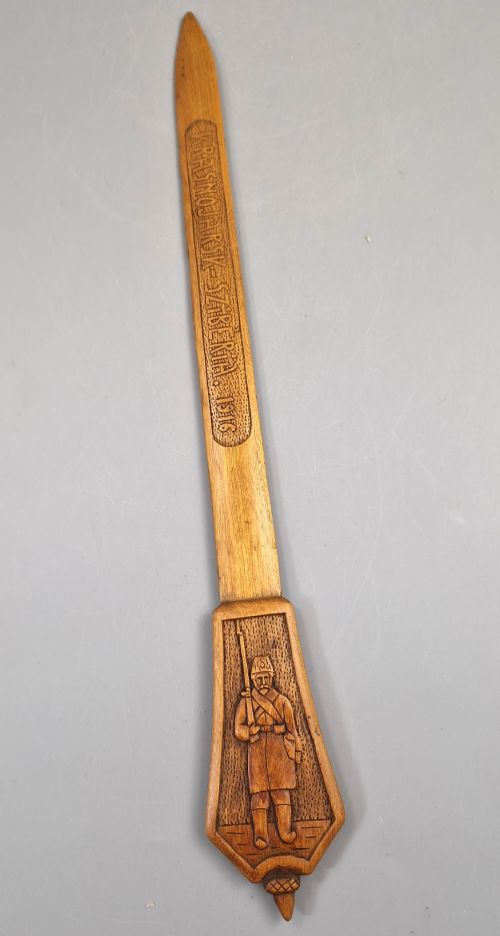
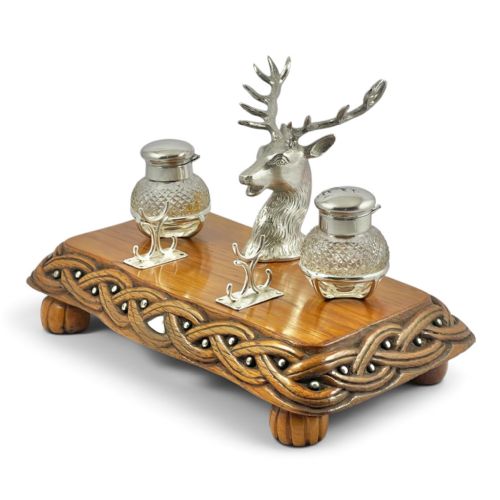
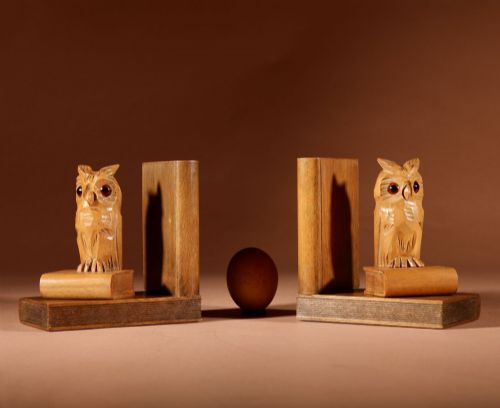
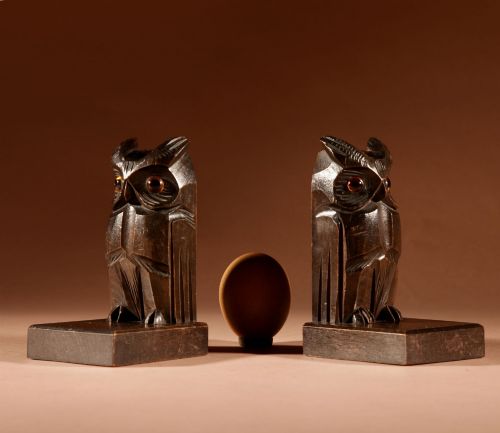
A brown wood desk accessory encompasses functional items for the writing table, such as inkwells, inkstands, bookends, stationery boxes, and letter openers. These pieces originate from periods including the Victorian era, the nineteenth century, and the early twentieth century.
How They Were Made
Artisans shaped these items from various timbers such as oak, mahogany, walnut, teak, maple, yew, and linden wood. Carved wood and moulded hardwoods form the structural body of most pieces.
Makers incorporated functional elements of brass, glass inserts for inkwells, and silver mounts. Surface decoration often involves detailed hand carving, hinged lids, inlaid details, and occasional signed or dated inscriptions.
Listings span the Victorian era, Edwardian period, and the early twentieth century, utilising mahogany, oak, and carved linden wood.
What Varies in Quality
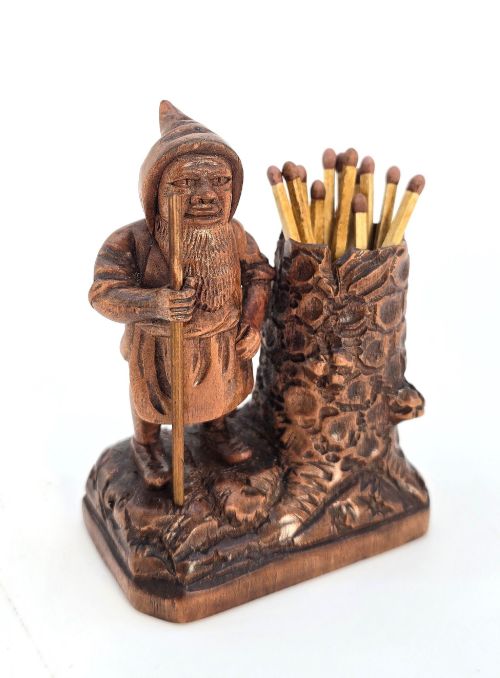
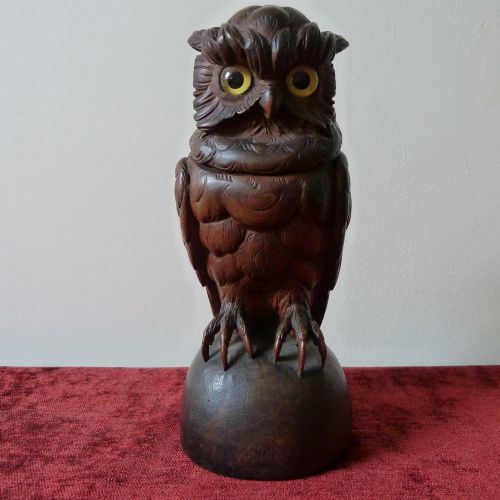
The standard of carving distinguishes exceptional figural pieces, particularly in Black Forest and Chinese scholar's studio items where anatomical precision and depth of relief define the work. Naturalistic details like glass eyes and expressive animal poses elevate individual examples.
Material selection and decorative complexity also determine quality, ranging from plain solid oak stands to intricate Tunbridge ware inlay, specialised timber choice, and signed pieces by known makers.
Maison F Mack
The Brown Wood Desk Accessory Glossary
- Black Forest
- A style of wood carving originating from the Brienz region of Switzerland, known for realistic representations of animals and foliage. These items often take the form of inkwells, bookends, and desk tidies.
- Inkstand
- A fitted tray or stand holding one or more inkwells, alongside compartments for pens, stamps, and sealing wax. They appear in materials like oak and silver-mounted hardwoods.
- Tunbridge Ware
- A type of woodworking characterised by intricate mosaic designs formed from thousands of tiny pieces of coloured wood. This technique decorates nineteenth-century stationery boxes and folders.
- Desk Tidy
- A compartmented wooden tray or box designed to organise correspondence, writing instruments, and small desk accessories. Examples often incorporate hinged lids and bookshelf sections.
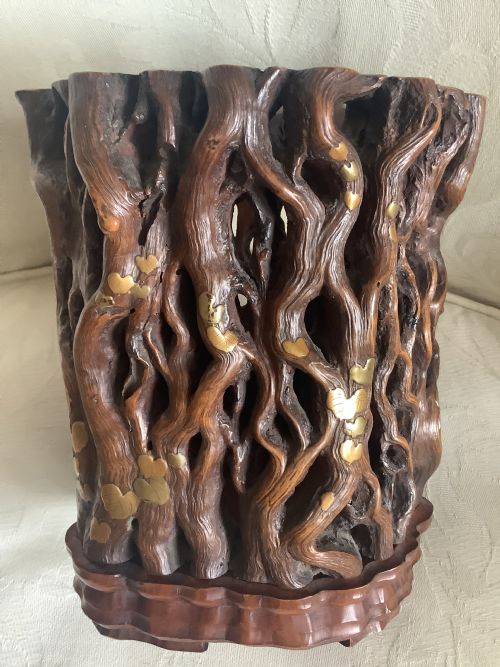
- Brush Pot
- A cylindrical vessel used in traditional studies for holding writing brushes. These are carved from dense hardwoods such as bamboo and hardwood.
Brown Wood Desk Accessory: Frequently Asked Questions
What is a Black Forest desk accessory?
Black Forest desk accessories are carved wooden items originating primarily from Switzerland and Germany during the nineteenth and early twentieth centuries. They frequently depict bears, dogs, owls, and cats integrated into inkwells, bookends, and letter stands.
These pieces combine decorative figural sculpture with practical desktop utility, showcasing detailed hand carving and glass eyes.
What are Tunbridge ware boxes used for?
Tunbridge ware boxes function as stationery boxes and folders for organising letters and paper on a desk. They are celebrated for their mosaic woodwork depicting geometric patterns or architectural views.
Produced largely in nineteenth-century England, these boxes showcase precision woodworking techniques using naturally coloured British timbers.
How are wooden brush pots used?
Wooden brush pots serve as upright holders for calligraphy brushes and writing implements on a scholar's desk. They derive from traditional Chinese scholar's studio traditions.
Carved from dense hardwoods, these cylindrical containers display deep relief carving and natural wood grains.