
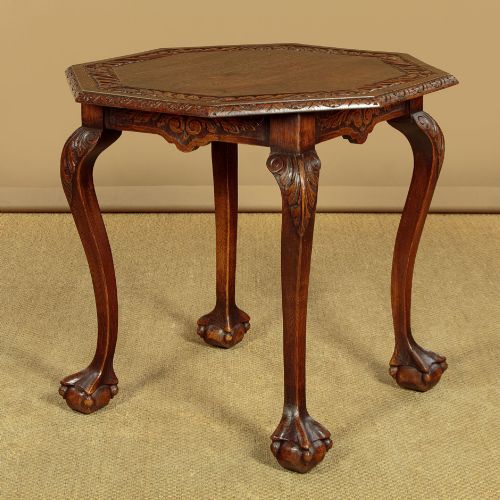
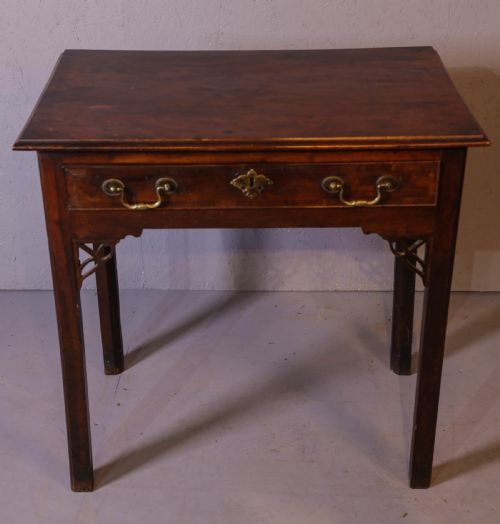
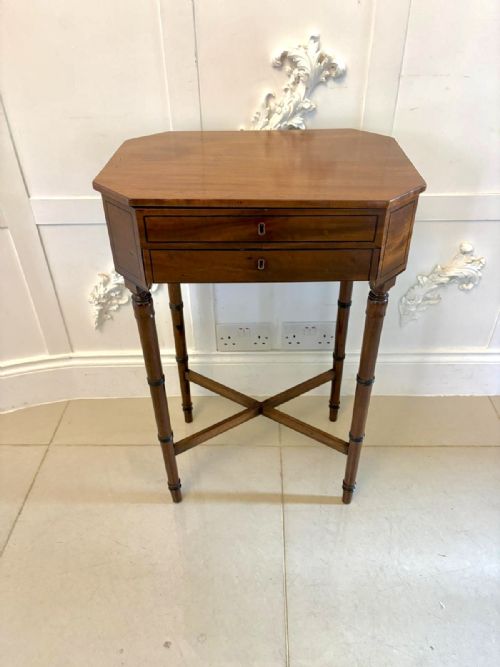


Brown Wood Corner Table
A brown wood corner table brings warmth and utility to an empty room, serving as a practical surface crafted in timber.
Brown Wood Corner Table
A brown wood corner table satisfies the search for timber surfaces designed to fit room angles, though surviving pieces span several distinct forms. Buyers encounter occasional tables, washstands, and occasional lamp plant tables rather than a single uniform design. Originating across the eighteenth, nineteenth, and early twentieth centuries, these items utilise woods such as mahogany, walnut, oak, and yew.
The selection ranges from George III period mahogany washstands to Edwardian occasional tables and Edwardian inlaid walnut centre tables. Makers worked within styles including Georgian, Victorian, Edwardian, Arts and Crafts, and Sheraton Revival. Each piece demonstrates how historical craftsmen adapted timber furniture for specific domestic corners and angles.
Materials and construction
Makers constructed these tables from dense timbers such as mahogany, walnut, oak, hardwood, satinwood, camphor wood, and yew. Workshops frequently combined these woods with brass fittings, particularly in campaign or travelling items. Surfaces often display marquetry inlay or carved details depending on the period and style.
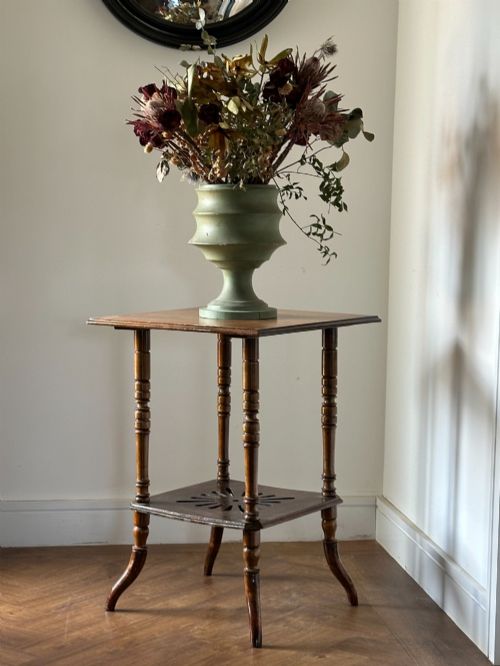
Joinery techniques matched the demands of each era, from eighteenth-century tripod supports to Edwardian turned legs and multi-tieredetagere structures. Craftsmen selected timber grains like burr walnut and burr yew to enhance visual depth on table tops and panels.
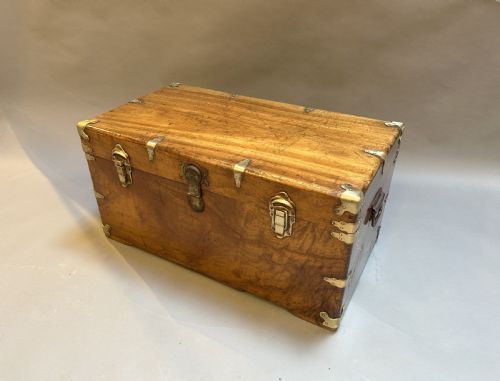
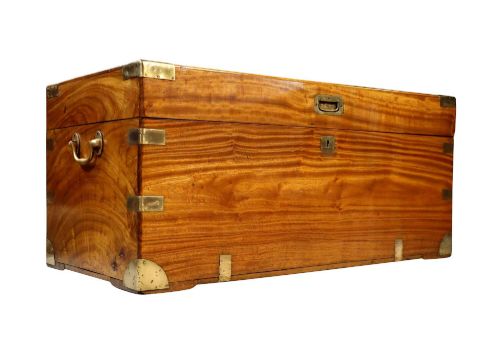
Camphor wood steamer trunks brought the scent of distant ports straight into Victorian bedrooms.
Assessing craftsmanship
Quality separates examples through the selection of timber veneers and the precision of inlaid marquetry work. Finer items exhibit carefully matched grain patterns, such as burr yew or burr walnut, alongside robust structural framing. Simpler utilitarian items rely on plain oak, mahogany, or hardwood with minimal ornamentation.
The integration of brass hardware and the crispness of carved wooden elements further distinguish workshop standards. Pieces featuring complex multi-tiered designs or specialised corner configurations demonstrate higher ambition than standard utility tables.
E.W Godwin
The Brown Wood Corner Table Glossary
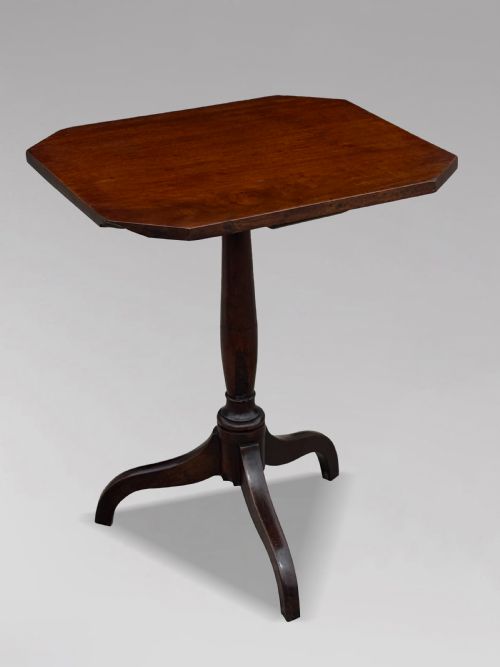
- Tripod table
- A small round table supported by a central pillar resting on three legs. This form gained popularity during the eighteenth century.
- Whatnot
- An open shelving unit of three or more tiers used for displaying ornaments and small objects. These appeared during the Victorian period and earlier.
- Washstand
- A piece of furniture designed to hold a basin and jug for washing. Georgian examples frequently fit neatly into room corners.
- Marquetry
- Decorative veneer work formed by fitting together small pieces of wood or other materials to create pictorial or geometric patterns. It appears frequently on walnut and mahogany surfaces.
- Campaign trunk
- A portable storage chest made in sections with brass corners and recessed handles for military transport. Camphor wood and hardwood served as common materials.
Brown Wood Corner Table: Frequently Asked Questions
What is a brown wood corner table used for?
These pieces function as practical surfaces for lamps, plants, or wash basins while utilising awkward or empty room angles.
Their compact triangular or corner-fitting footprints make them adaptable additions to sitting rooms and hallways.
How do I identify a Georgian corner table?
Georgian pieces display characteristic timber choices such as solid mahogany and incorporate period details like tripod bases or corner washstand designs.
Examine the construction methods and wood ageing to determine if the piece originates from the eighteenth or early nineteenth century.
What woods were used for these tables?
Cabinetmakers utilised a range of timbers including mahogany, walnut, oak, yew, satinwood, camphor wood, and general hardwood.
Finer examples frequently feature decorative veneers such as burr walnut or burr yew across the table tops.
Are Edwardian tables different from Victorian ones?
Edwardian items often showcase lighter inlaid mahogany or satinwood designs alongside Sheraton Revival influences.
Victorian pieces tend toward heavier burr walnut constructions, occasional multitiered shelving units, and darker, denser timbers.