

Brown Wood Corner Stand
A brown wood corner stand brings useful display space into an unused angle of a room, taking many forms from Georgian cupboards to Victorian whatnots.
Brown Wood Corner Stand
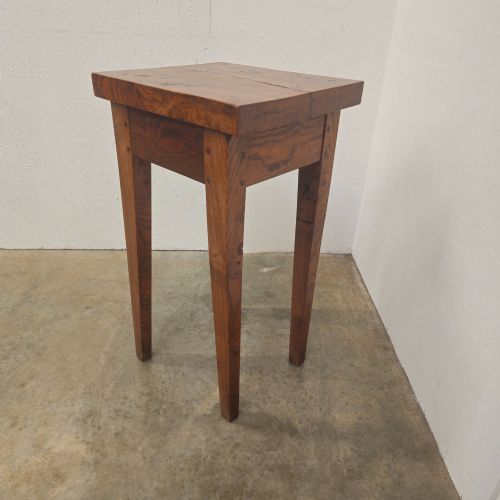
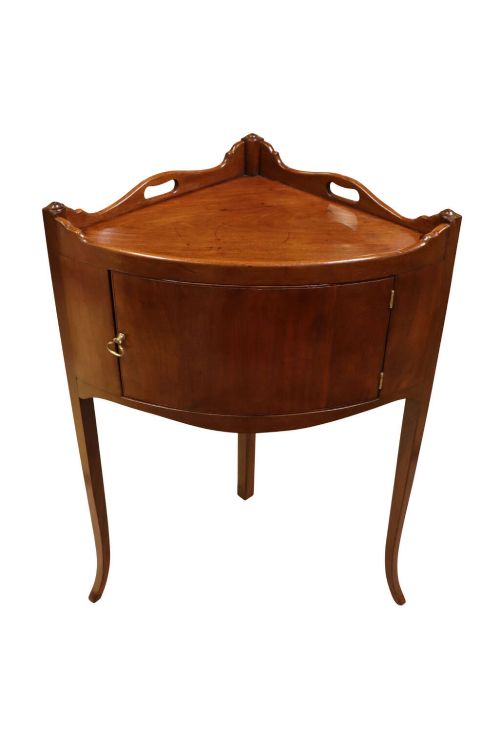
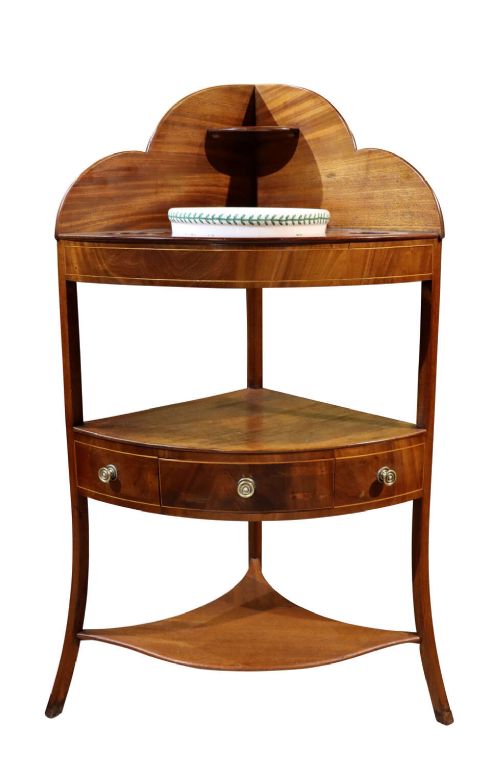
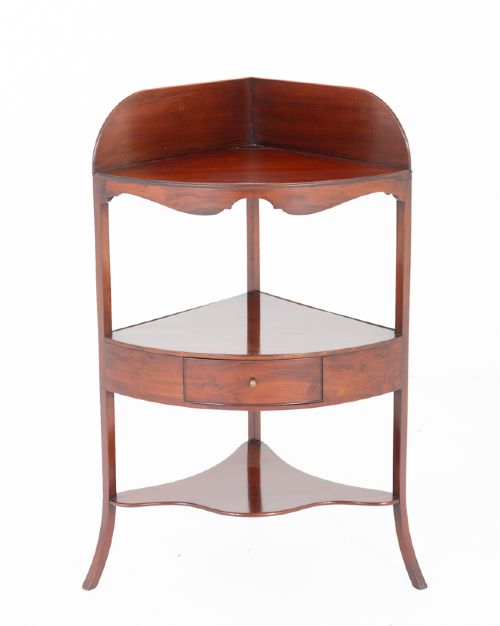
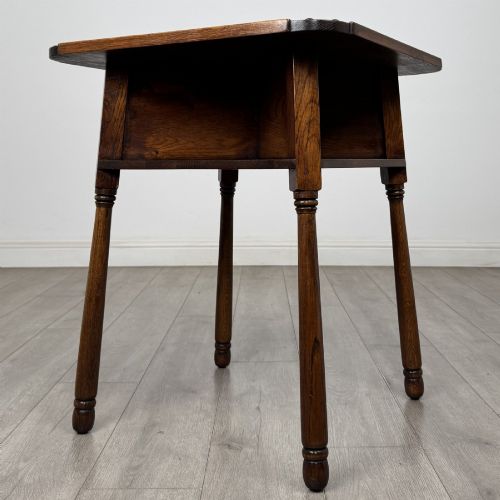
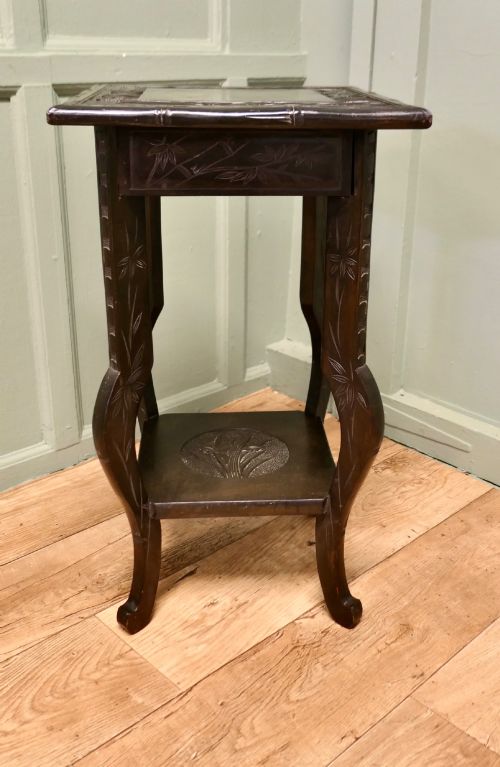
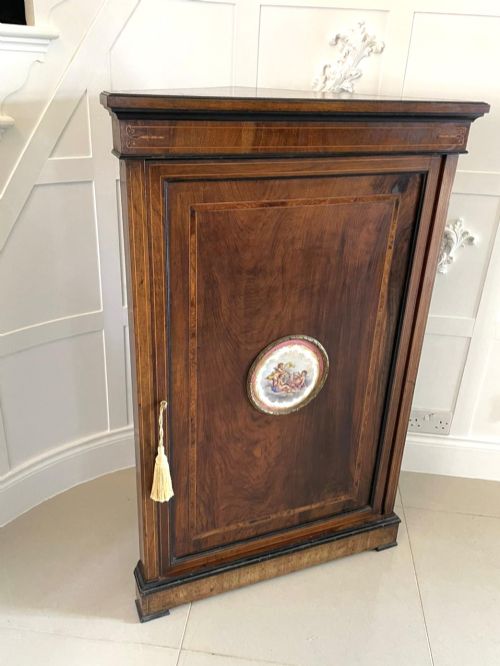
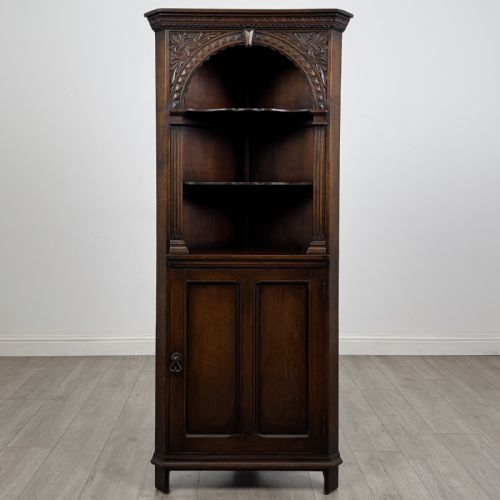
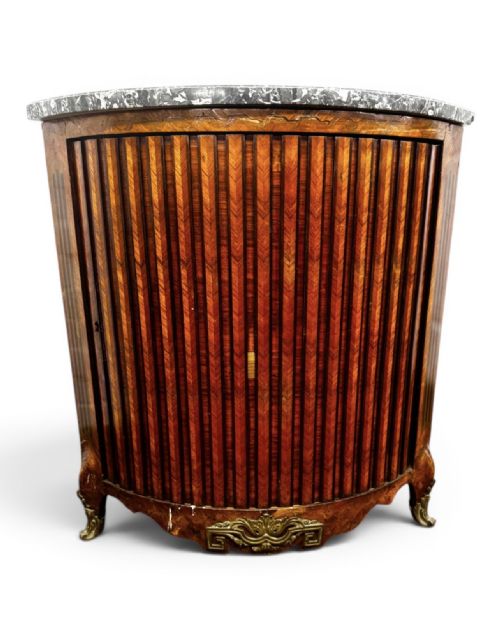
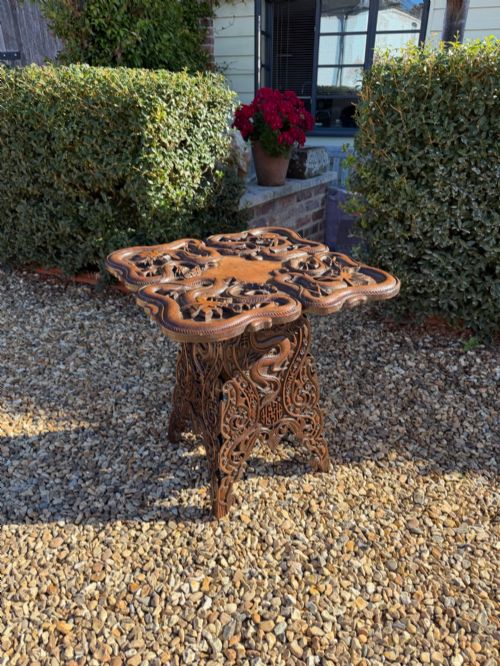
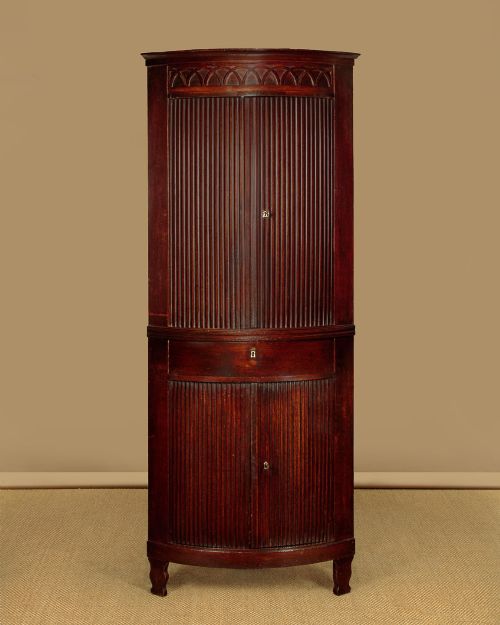
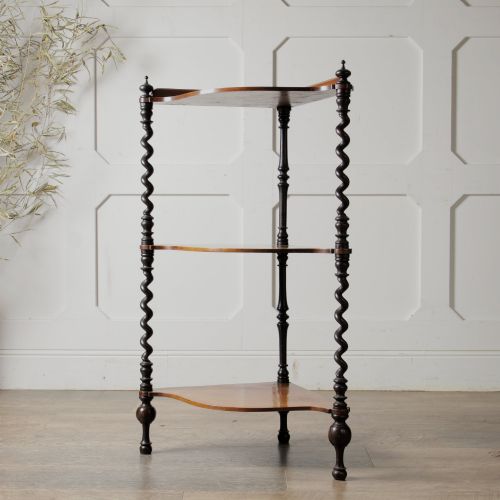
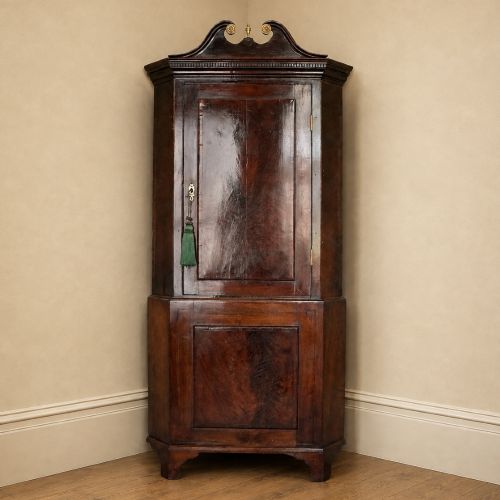
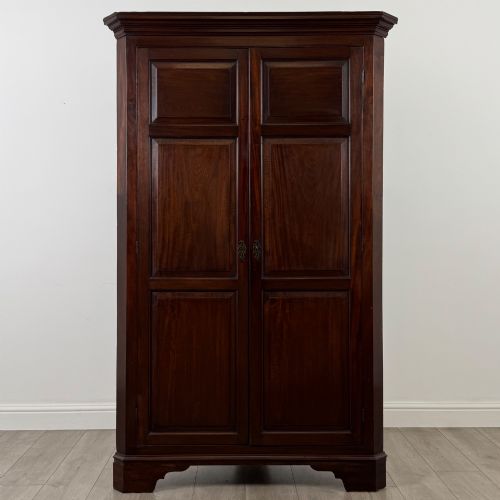
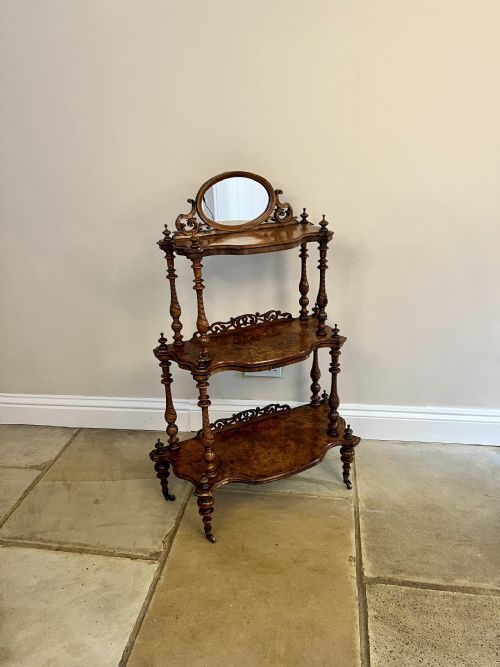
A brown wood corner stand encompasses architectural floor-standing corner cupboards, multi-tiered whatnots, and occasional tables designed to fit room angles. The selections span the eighteenth, nineteenth, and early twentieth centuries, reflecting changing domestic needs for storage and display.
Cabinets and cupboards with panelled or glazed doors appear frequently alongside open tiered shelves and tripod tables. These pieces utilise domestic angles efficiently, turning dead space into a focal point for ceramics, books, or decorative objects.
Materials and construction
Cabinet makers relied primarily on mahogany, walnut, and oak, often selecting burr walnut veneers or incorporating boxwood inlay for decorative contrast. Structural stability in upright corner pieces required precise jointing to fit right-angled walls securely.
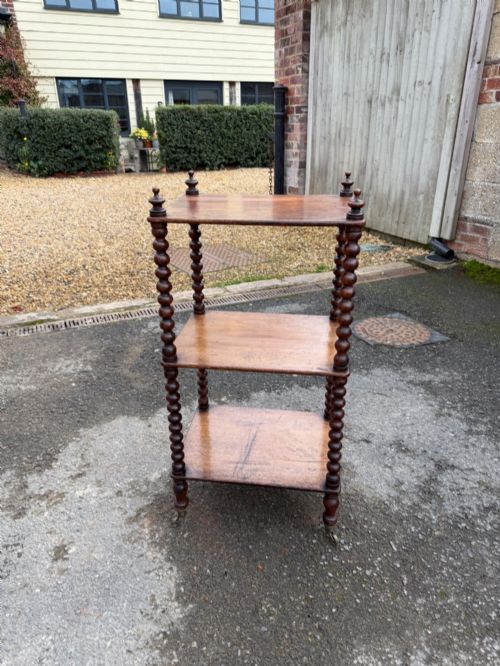
Surface embellishments include marquetry, carved details, and brass hardware, while specific pieces employ turned barley twist supports or delicate astragal glazing bars on cupboard doors.
Brown Wood Corner Stand Retail Price Guide 2026
Typical asking prices for brown wood corner stand among the pieces listed under this phrase on Sellingantiques today, from the lower quarter to the upper quarter. They describe what is for sale here now, not the wider market.
One Victorian example includes a dedicated compartment for walking sticks and umbrellas tucked neatly into the corner.
Assessing craftsmanship
Quality rests in the choice of timber figure, such as richly grained burr walnut or dense mahogany, and the precision of decorative inlays like boxwood. Superior examples show careful attention to internal shelving, door alignment, and the crispness of carved mouldings.
Construction methods distinguish standard utility pieces from finer items, seen in the thickness of secondary timbers, dovetail joints on drawers, and the integration of specialised elements like barley twist columns or brass fittings.
The Brown Wood Corner Stand Glossary
- Whatnot
- A set of open shelves for displaying ornaments, typically constructed with multiple tiers supported by turned columns or uprights.
- Marquetry
- Decorative veneer work forming geometric patterns or pictures using various coloured woods applied to a carcase.
- Astragal
- A small moulding profile used to divide panes of glass within cabinet doors, characteristic of Georgian and revival designs.
- Tripod base
- A three-legged support structure commonly found on small occasional tables and stands, providing stability on uneven floors.
Brown Wood Corner Stand: Frequently Asked Questions
Where should I place a corner cabinet?
These units fit directly into ninety-degree room junctions, making them ideal for dining rooms or hallways where floor space is at a premium.
They utilise neglected angles while keeping walkways clear and displaying decorative contents securely.
How do I distinguish Georgian from Victorian pieces?
Georgian examples often feature restrained classical proportions, fine mahogany grains, and architectural cornices.
Victorian pieces frequently display heavier ornamentation, including burr walnut veneers, barley twist supports, and more elaborate tiered structures.
What is the difference between a whatnot and a cupboard?
A whatnot consists of open tiered shelving intended for the display of ornaments and books.
Conversely, a corner cupboard provides enclosed storage behind panelled or glazed doors to keep items out of sight.
Can these stands support heavy items?
Floor-standing cupboards and solid oak or mahogany frames handle substantial weight on their lower fixed shelves.
Multi-tiered whatnots with slender turned supports suit lighter decorative objects rather than heavy porcelain collections.