





Brown Walnut Sewing Box
These brown walnut sewing box pieces are practical nineteenth-century containers and tables designed to hold needlework and small treasures.
Brown Walnut Sewing Box
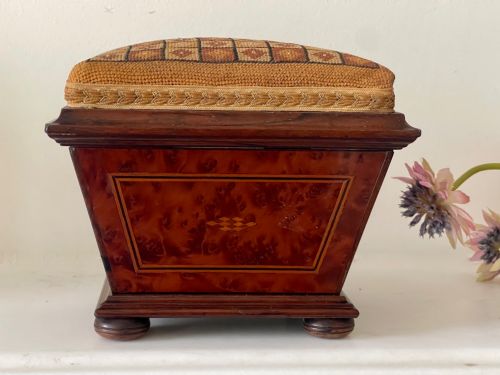
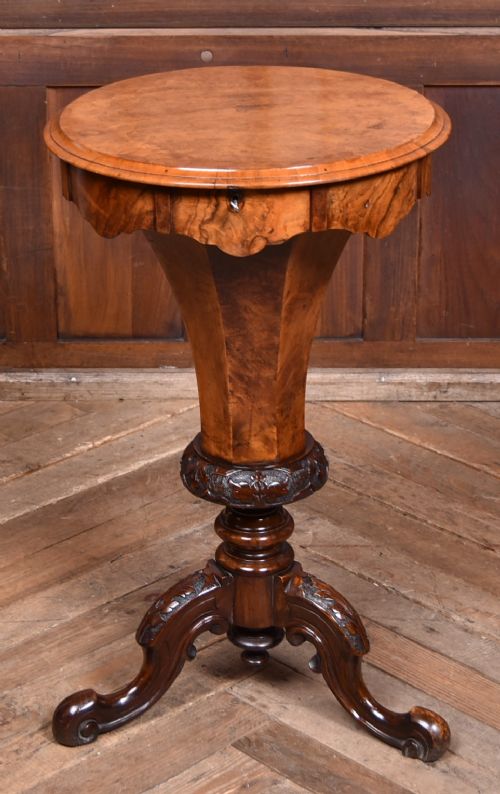
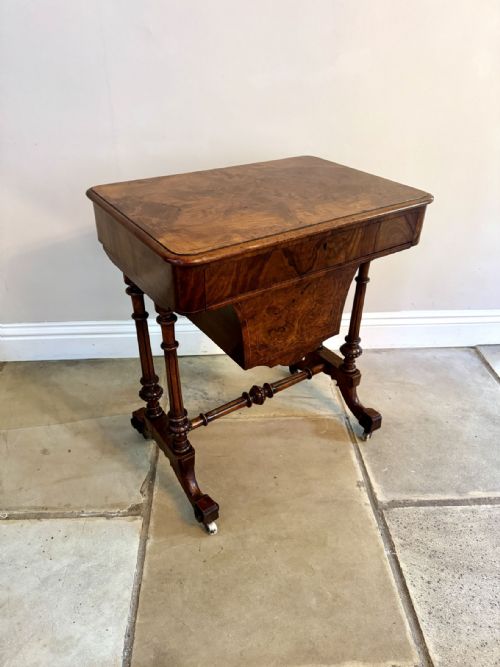
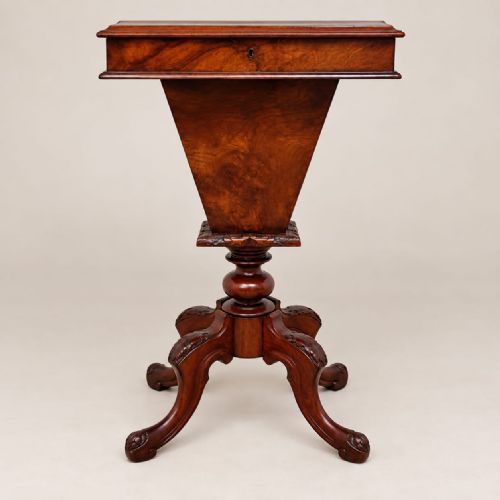
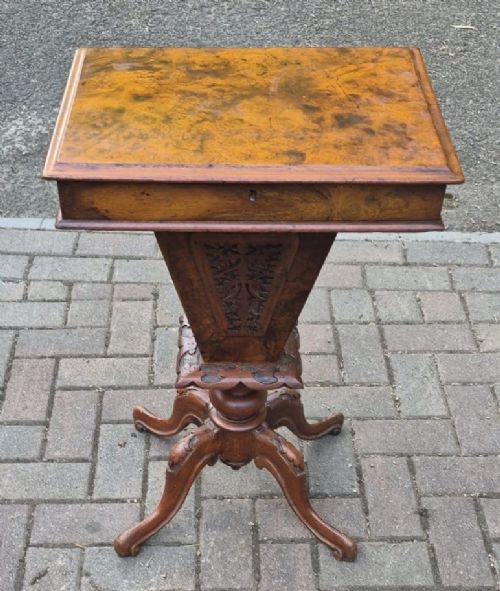
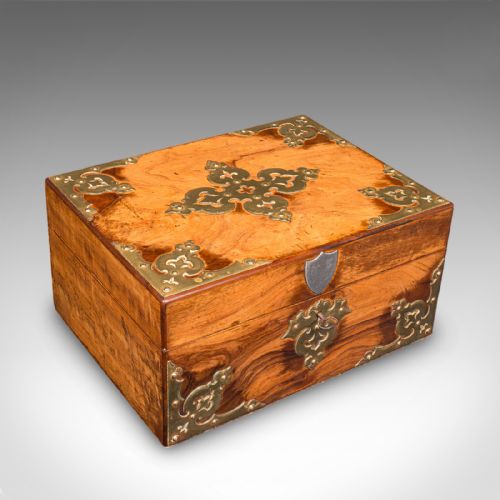
When you search for a brown walnut sewing box, you encounter a variety of nineteenth-century and early twentieth-century containers and multi-purpose tables. These items include tabletop workboxes, freestanding trumpet tables, and occasional furniture designed for domestic needlework.
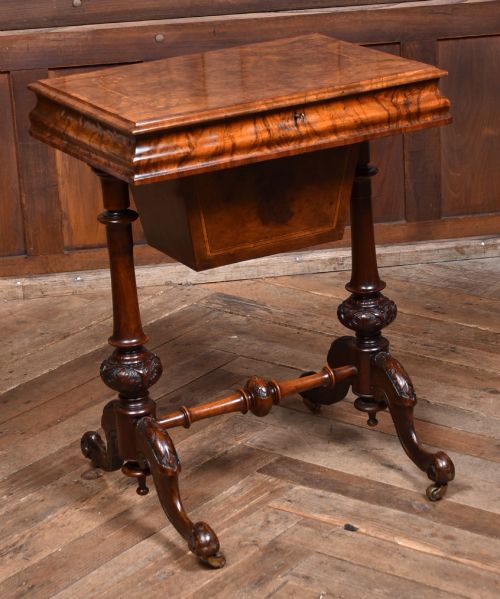
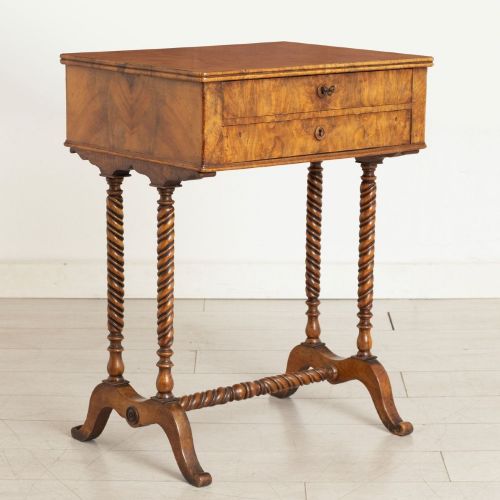
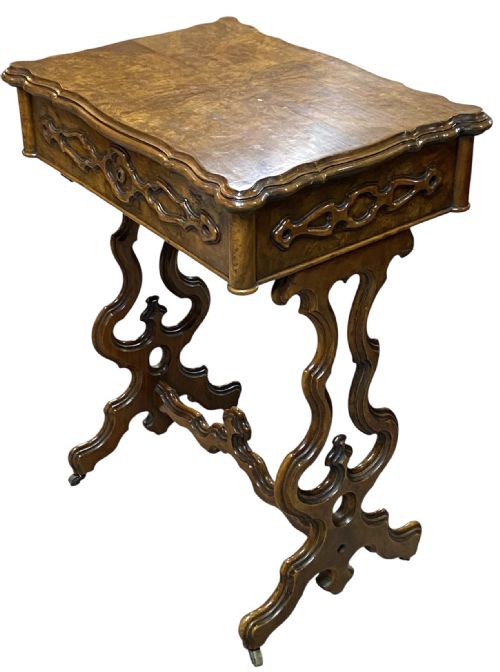
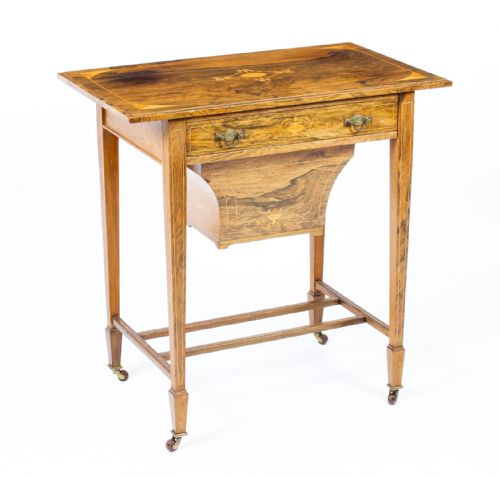
The version you are most likely to meet on this page is the Victorian burr walnut work table, often featuring fitted interior compartments for threads and accessories. These pieces span periods from the mid-nineteenth century through the Edwardian era, incorporating styles such as Gothic Revival and Art Deco alongside standard Victorian designs.
How they were made
Cabinet makers utilised solid walnut and figured burr walnut veneers applied to secondary woods to create rich surface patterns. Marquetry inlay, wood inlay, and Tunbridge ware embellishments provide decorative detail across lids and surfaces.
Structural elements frequently include carved and turned wooden supports, sometimes paired with brass hardware and fabric-lined interior compartments. Individual pieces combine box-making techniques with furniture construction to form stable stands and portable cases.
Brown Walnut Sewing Box Retail Price Guide 2026
Typical asking prices for brown walnut sewing box among the pieces listed under this phrase on Sellingantiques today, from the lower quarter to the upper quarter. They describe what is for sale here now, not the wider market.
Some sewing tables feature secretive little compartments designed precisely for stray thimbles and secret notes.
What varies in quality
The degree of sophistication in the wood veneer selection and the complexity of the inlay work distinguish finer examples from simpler utilitarian items. Burr walnut figures with deep natural patterning command attention alongside meticulous Tunbridge ware and marquetry details.
The integrity of the internal fittings, including complete lift-out trays and original fabric linings, alters the character of each piece. Carved supports and stable pedestal bases also indicate the relative ambition of the original workshop.
Waring & Gillow
The Brown Walnut Sewing Box Glossary
- Burr walnut
- A veneer taken from the wart-like growths on walnut trees, prized for its swirling, highly figured grain patterns. This material forms the primary visual draw on many nineteenth-century boxes and tables.
- Tunbridge Ware
- Small wooden objects decorated with intricate mosaic patterns made from many tiny pieces of naturally coloured woods. These geometric designs often depict local buildings or floral motifs.
- Trumpet workbox
- A freestanding sewing table featuring an octagonal or conical body that flares outward toward the top, resembling the bell of a musical instrument. They typically rest on carved tripod legs.
- Marquetry inlay
- The art of applying pieces of veneer to a structure to form decorative pictorial or geometric patterns. Makers used various contrasting timbers to achieve tonal depth.
Brown Walnut Sewing Box: Frequently Asked Questions
What is a brown walnut sewing box used for?
These boxes and tables served as dedicated storage spaces for sewing equipment, threads, needles, and small personal valuables. Inside, fitted compartments kept various implements organised during domestic handcraft sessions.
Many designs doubled as small writing desks or games tables, offering versatile functionality for Victorian sitting rooms and drawing rooms.
How do I identify a Victorian sewing table?
Victorian examples typically display rich burr walnut veneers, turned wooden supports, and hinged lids opening to reveal compartmentalised interiors. They often incorporate decorative wood inlay or Tunbridge ware motifs typical of the mid to late nineteenth century.
Freestanding versions commonly take the form of trumpet tables or four-legged work tables, occasionally featuring wool bags suspended beneath the main body.
Are these boxes portable?
Smaller variations function as tabletop workboxes or trinket boxes equipped with carrying handles or compact dimensions designed for movement between rooms. These portable cases allowed users to carry their needlework conveniently.
Larger variations function as freestanding occasional tables and remain stationary pieces of furniture within a room's layout.
How do I care for walnut furniture?
Keep wooden surfaces away from direct sunlight and extreme temperature fluctuations to prevent the walnut veneer from drying or cracking. Regular dusting with a soft, dry cloth preserves the polished finish.
Avoid using harsh chemical polishes or excessive moisture, which can damage historic wood finishes and delicate inlay work.