
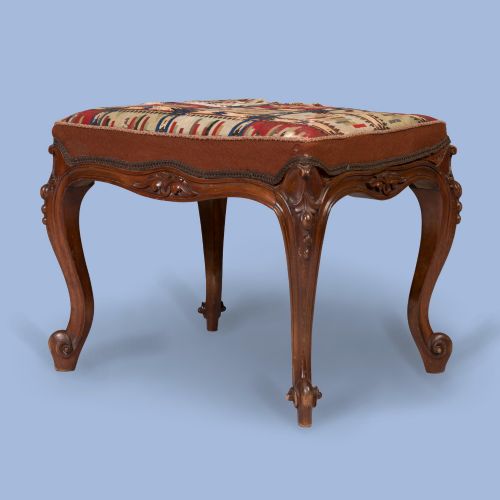


Brown Walnut Dressing Stool
A brown walnut dressing stool brings warmth and character to a bedroom, combining practical seating with period elegance.
Brown Walnut Dressing Stool
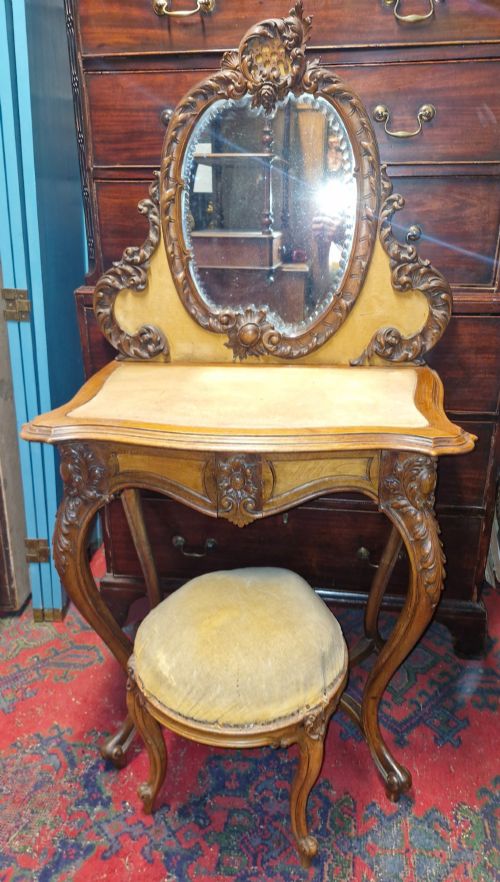
When you search for a brown walnut dressing stool, you encounter a variety of forms designed to sit beneath a vanity or dressing table. These pieces range from compact Victorian examples to twentieth-century revivals.
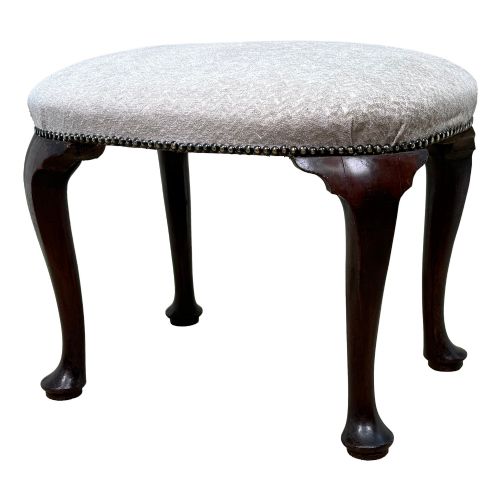
The version you are most likely to meet on this page dates from the nineteenth century or the early twentieth century, frequently adopting the curved lines of the Queen Anne style or the clean geometries of Art Deco.
Makers shaped these walnut frames to match existing bedroom suites, often pairing the dark timber with upholstered drop-in seats or hinged compartments for storage.
How They Were Made
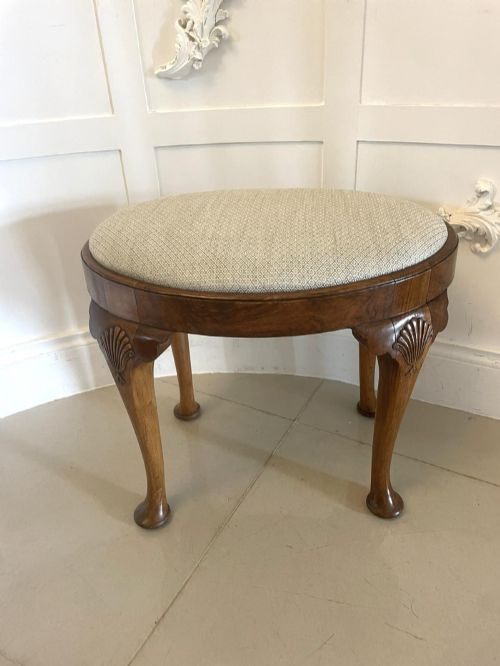
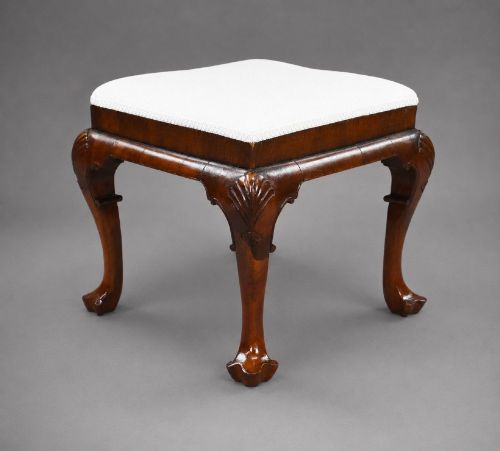
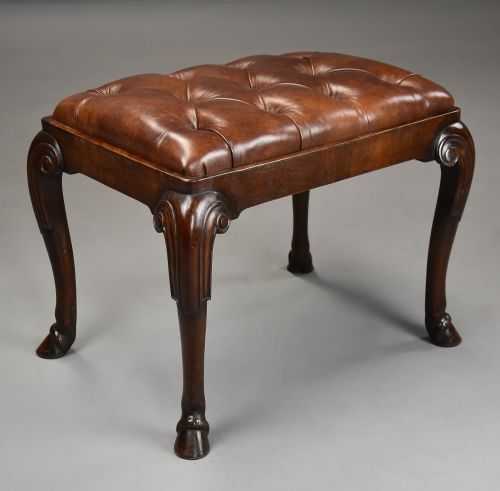
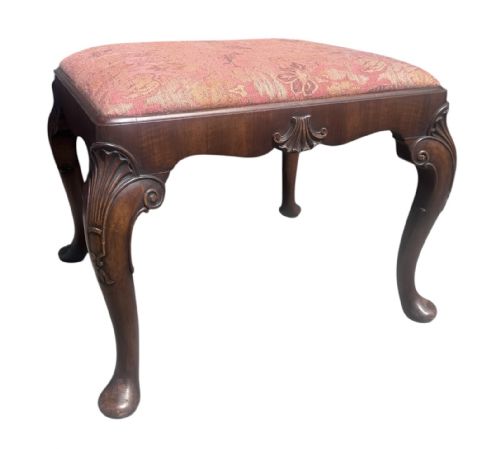
Cabinet makers utilised solid walnut and figured veneers over secondary timbers, shaping cabriole legs with carved knees and scrolling toes. Joinery relied on traditional mortise and tenon construction to withstand daily weight.
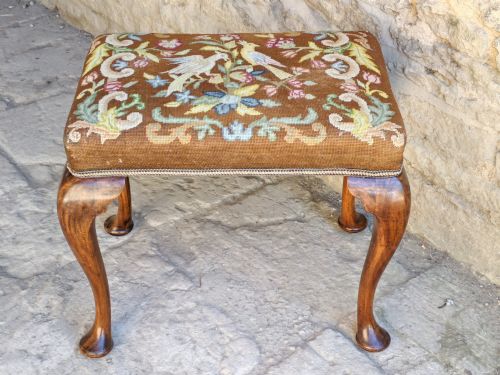
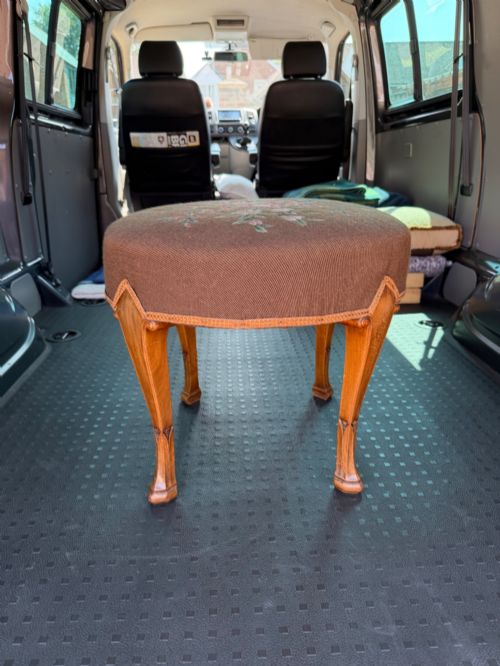
Upholstery techniques varied from simple drop-in pads to complex sprung seats covered in needlepoint tapestry, silk velvet, or brown leather secured with brass upholstery tacks.
What Varies in Quality
The distinction between a standard production stool and a finer piece rests in the crispness of the wood carving and the depth of figure in the walnut veneer. Superior examples display carefully selected grain patterns and hand-carved details rather than cast or applied ornament.
The integrity of the frame and the quality of the textile cover also dictate the standing of the piece. Well-proportioned cabriole legs and substantial timber scantlings separate robust seating from lighter, decorative alternatives.
The Brown Walnut Dressing Stool Glossary
- Cabriole leg
- A furniture leg that curves outward at the knee and tapers inward to an ankle, mimicking an animal's limb. This form became a defining characteristic of Queen Anne and Georgian design.
- Figured walnut
- Timber cut to reveal intricate, swirling grain patterns such as burr or feather. Cabinet makers reserved these choice veneers for the most prominent surfaces.
- Needlepoint
- Embroidery stitched onto a stiff, open-weave canvas ground to create durable decorative covers for seats and footstools. These covers often feature floral or geometric motifs.
- X-frame
- A structural base formed by two intersecting diagonal members that create an X shape when viewed from the side. This ancient form provides robust support for ceremonial and domestic stools.
Brown Walnut Dressing Stool: Frequently Asked Questions
How do I date a walnut stool?
Dating relies on examining the timber preparation, tool marks, and stylistic revival cues. Victorian and Edwardian makers often copied earlier Georgian designs, so joinery methods provide the clearest clue to age.
Changes in upholstery stuffing, from horsehair to modern synthetics, also help narrow down the period of manufacture or subsequent restoration.
Were these stools used only for dressing tables?
While many served at vanities, these versatile pieces doubled as piano benches, salon seats, or window stools. Some surviving examples incorporate hinged seats for storing sheet music or small accessories.
Their compact proportions allowed them to move easily between rooms depending on household needs.
How should I care for the walnut frame?
Maintain the timber by keeping the stool away from direct sunlight and heat sources that dry out the wood. Regular dusting with a soft, dry cloth preserves the patina.
Applying a traditional beeswax polish occasionally feeds the grain without building up heavy chemical layers.
What styles are most common?
Queen Anne revival styles dominate the selection, featuring curved cabriole legs and dark polished finishes. Art Deco variations also appear, showcasing cleaner lines and figured veneers.
Victorian interpretations often include heavy carved details and decorative needlepoint textiles.