

Brown Walnut Display Shelves
Brown walnut display shelves bring warmth and practical storage to a room, spanning periods from the Victorian era to Art Deco.
Brown Walnut Display Shelves
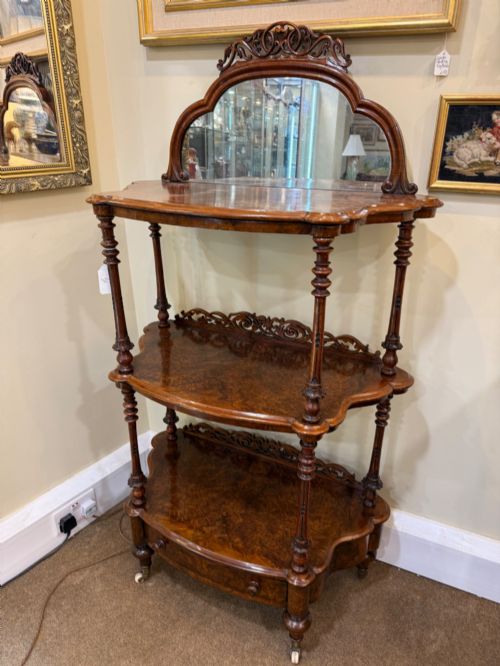
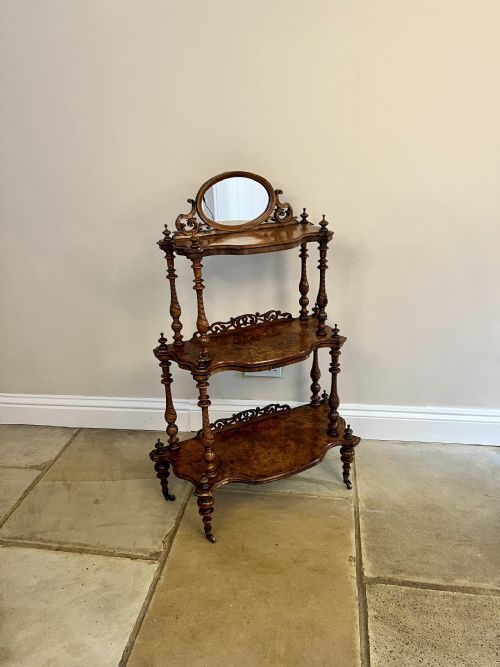
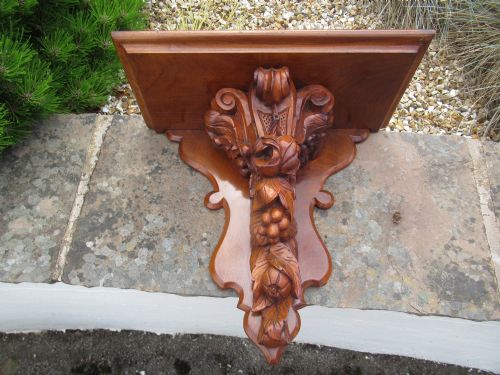
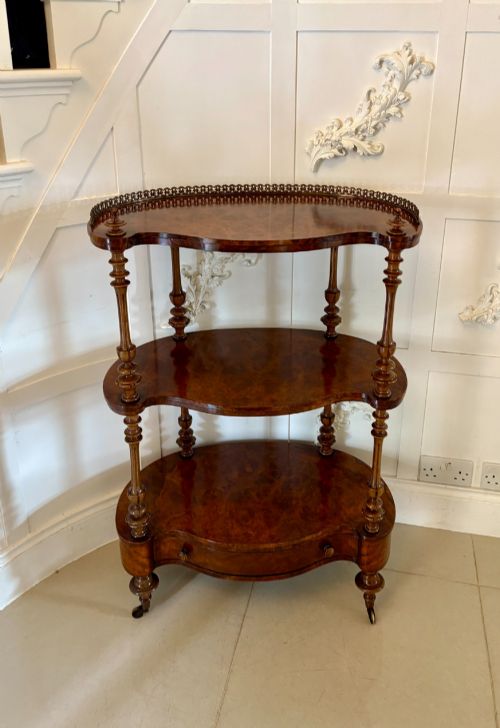
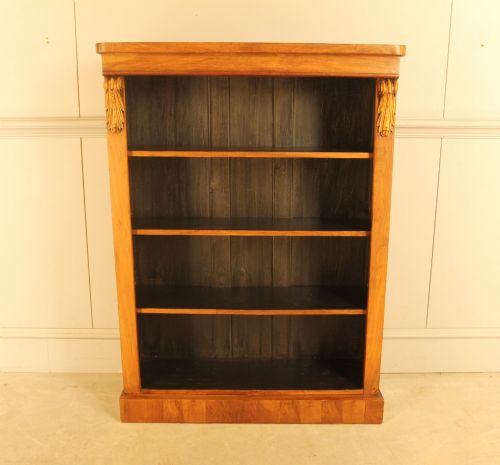
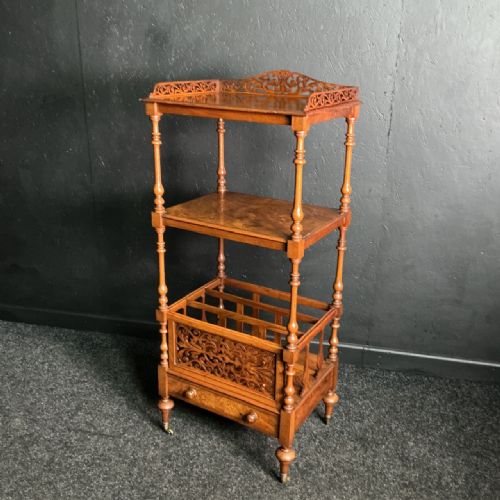
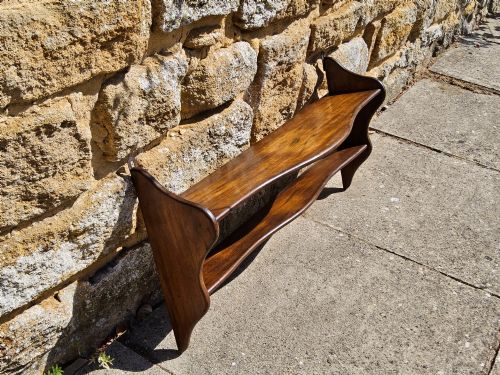
When you search for brown walnut display shelves, you encounter an array of open bookcases, whatnots, wall brackets, and étagères designed for practical storage and display. These items originate across the nineteenth and twentieth centuries, encompassing Victorian, Edwardian, and Art Deco design movements.
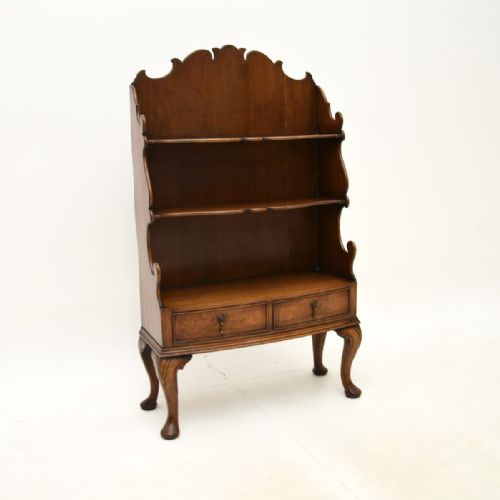
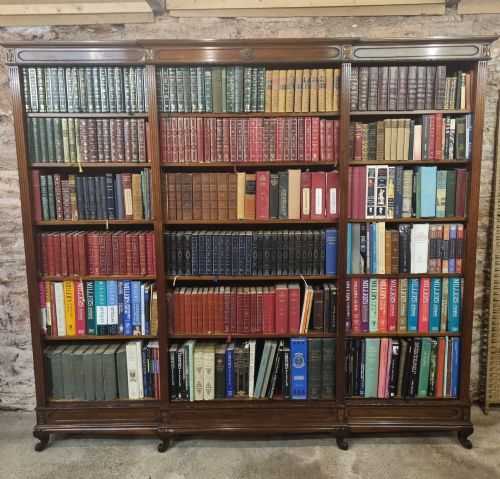
The most common forms on this page are open bookcases with adjustable shelves and multi-tiered whatnots. They serve to organise books and ornaments while introducing rich timber tones to domestic spaces.
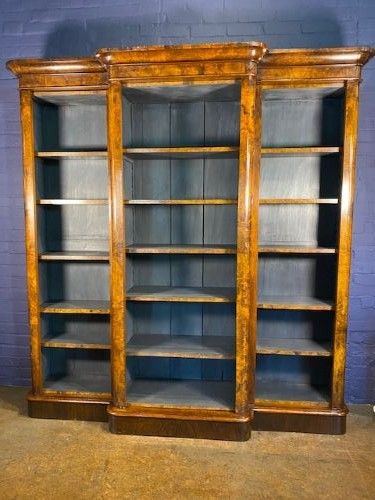
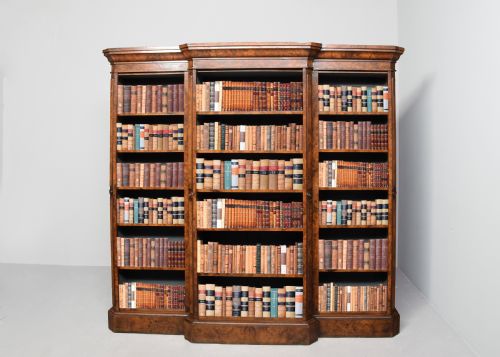
Originating from British and continental workshops, these pieces utilise domestic and imported timber varieties. They range from compact wall-mounted shelves to large breakfront library bookcases.
How they were made
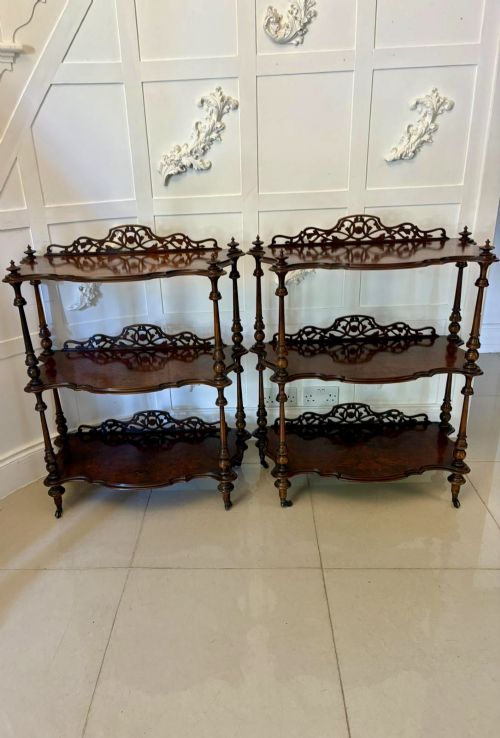
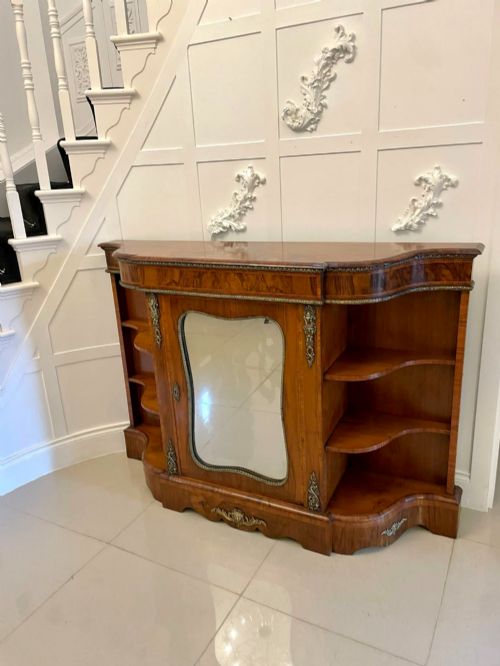
Cabinet makers utilised solid walnut and decorative walnut veneer, often selecting burr veneers for prominent surfaces to highlight complex grain patterns. Carved solid wood and turned supports formed the structural framework of these pieces.
Construction frequently incorporated secondary woods like pine for internal carcases and backing boards. Brass fittings, gilt metal mounts, and glass elements appeared on select cabinets and wall displays.
Surfaces received traditional polish finishes that deepened the natural colour of the walnut. Adjustable shelving mechanisms employed timber peg supports or early metal tracks.
Brown Walnut Display Shelves Retail Price Guide 2026
Typical asking prices for brown walnut display shelves among the pieces listed under this phrase on Sellingantiques today, from the lower quarter to the upper quarter. They describe what is for sale here now, not the wider market.
What varies in quality
Quality rests in the selection of timber veneers and the precision of the cabinet work. Pieces featuring book-matched burr walnut across broad expanses demonstrate superior material choice by the maker.
Structural refinement distinguishes standard items from exceptional examples. Fine joinery, robust shelf support systems, and well-executed decorative carvings or ormolu mounts elevate the status of a bookcase or whatnot.
The Brown Walnut Display Shelves Glossary
- Burr Walnut
- Timber taken from the abnormal growth of a walnut tree where grain patterns swirl in complex, highly decorative configurations. Cabinet makers prized this wood for veneering prominent surfaces.
- Breakfront
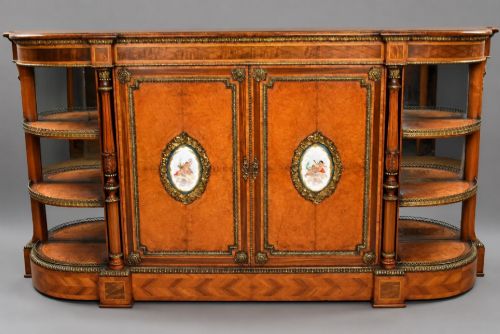
- A piece of furniture whose central section projects forward from the flanking outer sections. This architectural arrangement creates depth and visual interest on large bookcases and sideboards.
- Étagère
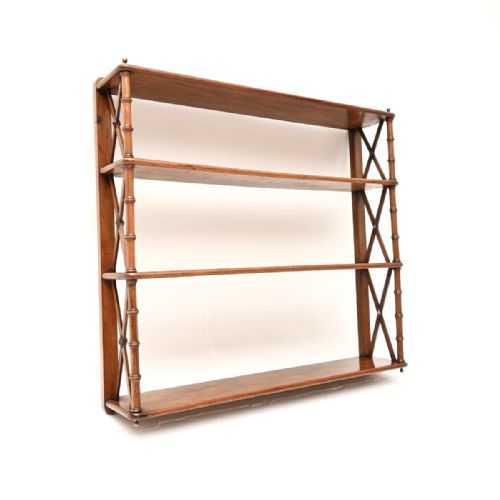
- A French term for a display stand or set of open shelves intended for ornaments. These items often feature slender uprights and delicate proportions.
- Ormolu
- Gilt bronze ornamentation applied to furniture and decorative objects. Makers mounted these metal pieces onto cabinets and whatnots to provide ornamental contrast.
Brown Walnut Display Shelves: Frequently Asked Questions
How do I style open walnut shelves?
Balance books with decorative objects, ceramics, and framed photographs across the tiers. Vary the heights and depths of items to create visual rhythm.
Keep surrounding wall colours neutral to let the rich brown tones of the walnut timber stand out as the primary focal point.
Are the shelves adjustable?
Many of the open bookcases feature adjustable shelving systems supported by wooden pegs or traditional tracks. This allows you to alter shelf heights for varying book sizes.
Some smaller wall brackets and étagères possess fixed tiers dictated by their permanent structural columns.
Where should I place a whatnot?
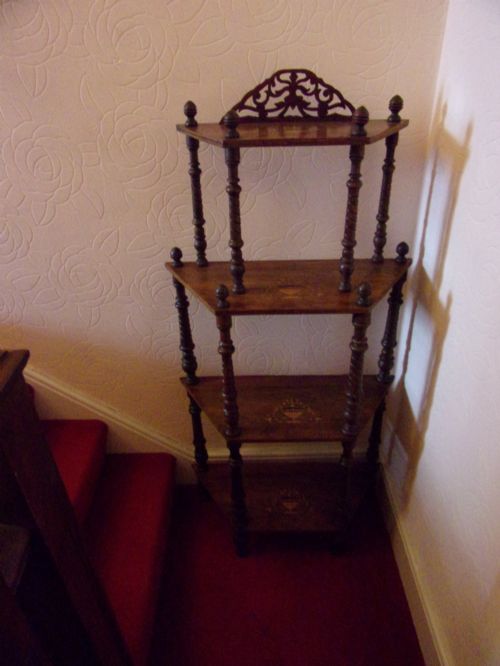
Whatnots suit empty corners, hallway landings, or spaces beside seating furniture where small decorative items need a home. Their open sides ensure they do not block light or crowd smaller rooms.
Avoid positioning them in direct sunlight to protect the walnut veneer from fading over time.
How do I distinguish Victorian from Art Deco pieces?
Victorian examples display traditional revival styles, turned columns, carved details, and rich burr walnut finishes. They lean towards ornamentation and classical proportions.
Art Deco pieces, dating from the twentieth century, favour geometric lines, stepped silhouettes, and minimalist surfaces with clean walnut grain.