


Antique Walnut Library Furniture
Antique walnut library furniture brings warmth and architectural presence to a room through dark timber, burr veneers, and brass fittings.

Antique Walnut Library Furniture
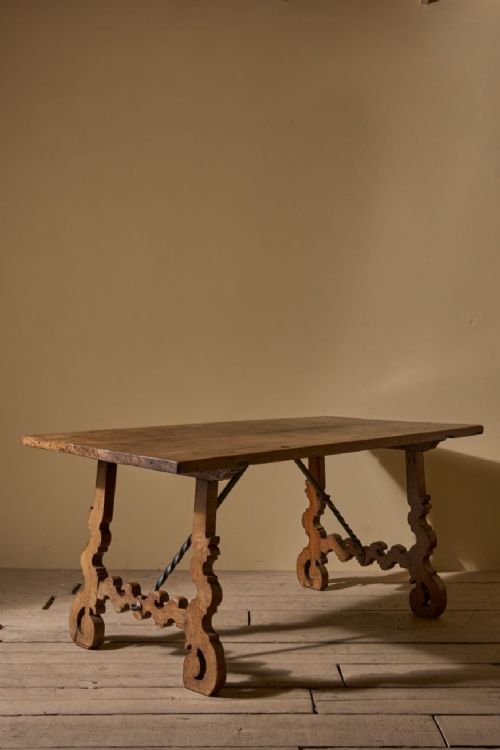
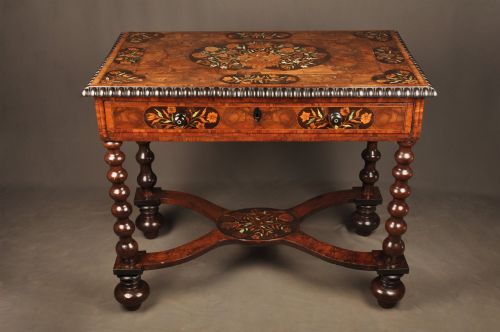
When buyers search for antique walnut library furniture, they find pieces designed for reading spaces across several centuries, from seventeenth-century Spanish tables to twentieth-century oak and walnut hybrid pieces.
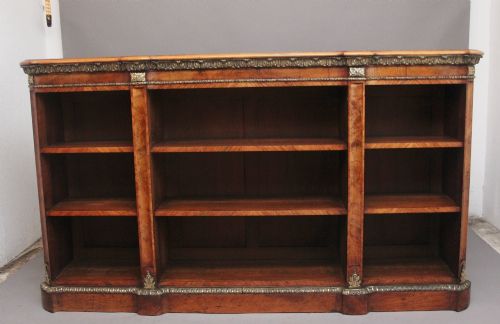
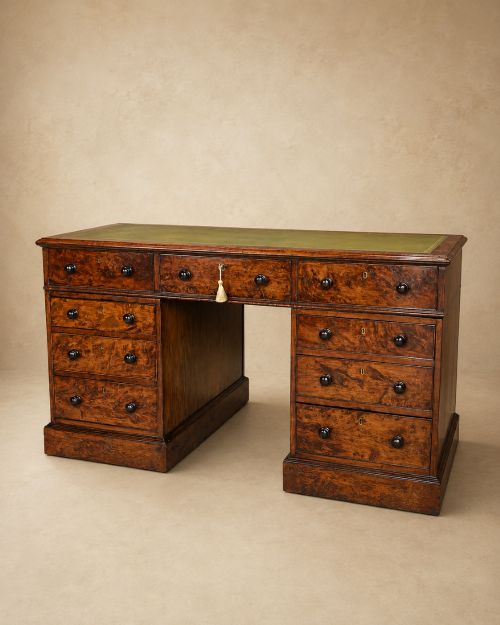
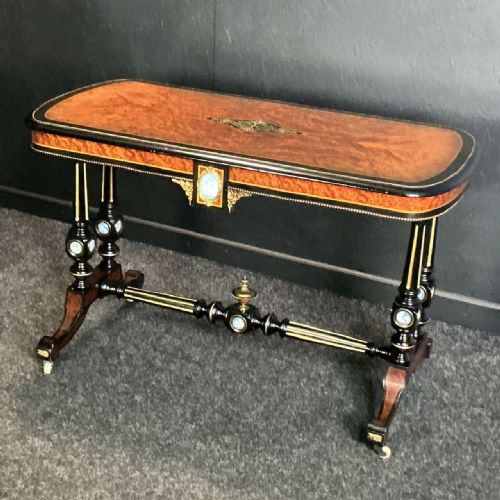
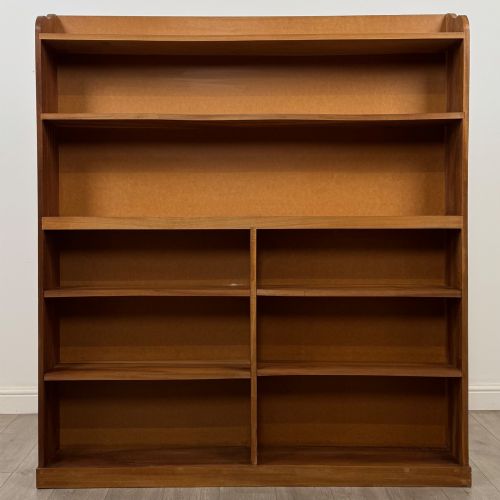
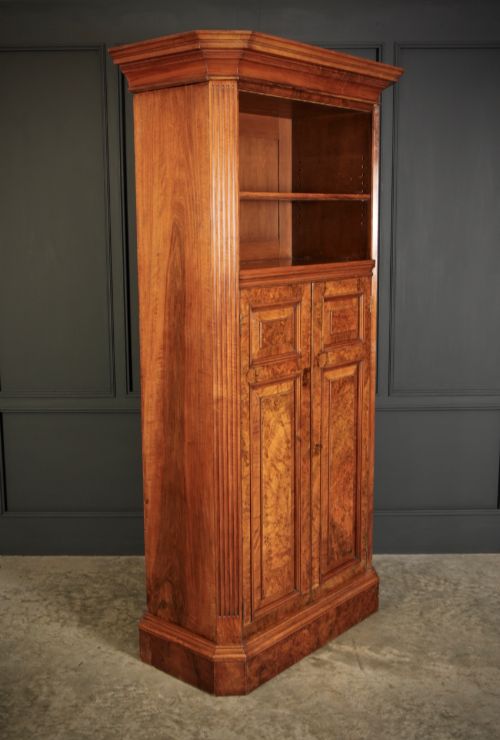
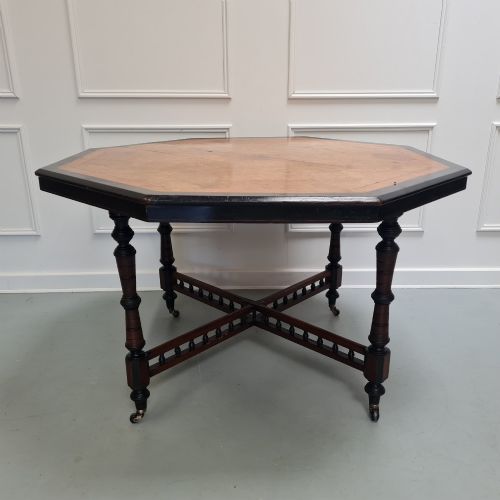
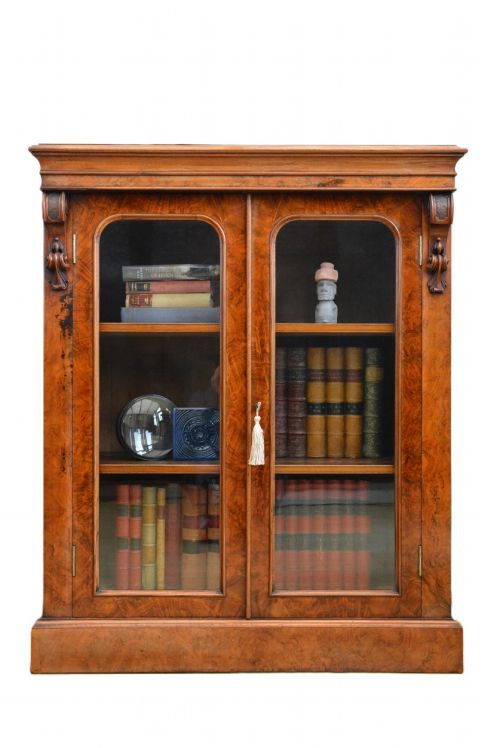
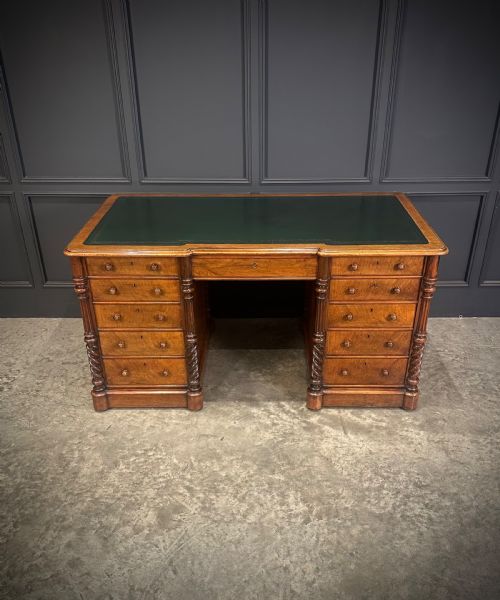
The selection on this page most commonly includes nineteenth-century Victorian bookcases, partners desks, and centre tables constructed from figured and burr timber.
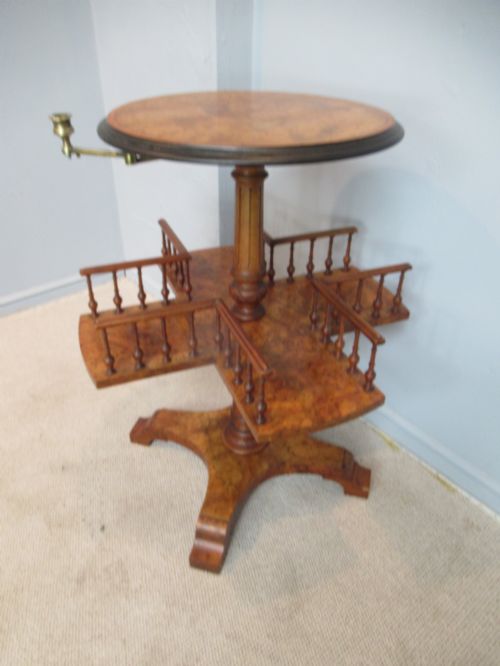
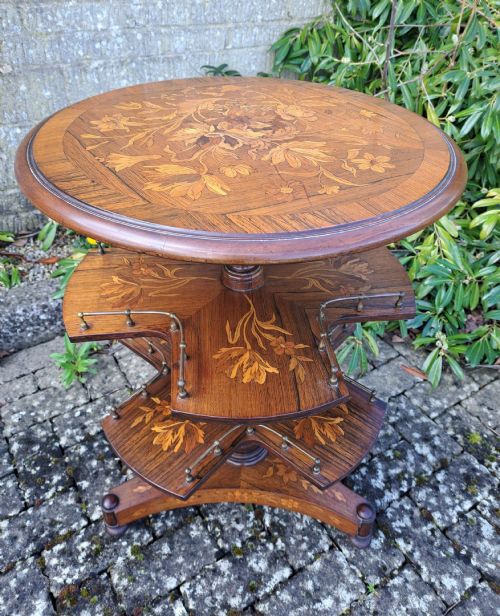
Alongside large architectural bookcases, smaller items such as revolving bookstands, canterbutries, and writing tables appear frequently in Edwardian and Victorian variants.
Materials and construction methods
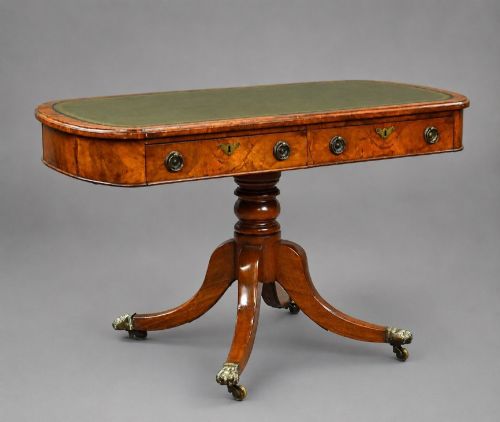
Cabinet makers utilised solid walnut for structural frames and applied highly figured burr veneers to drawer fronts and tabletops to create striking visual depth.
Secondary woods provide internal stability for large bookcases and desks, while brass handles, locks, and ormolu mounts add functional contrast to the dark timber.
Glazed doors protect private book collections, and leather inserts provide durable writing surfaces on partners desks and library tables.
Materials appearing across the inventory include solid walnut, burr walnut, figured walnut, glass, brass, leather, and wrought iron.
Distinctions in craftsmanship and finish
Quality rests upon the selection of timber veneers, where symmetrical grain matching on burr walnut surfaces separates standard cabinet work from exceptional pieces.
The integration of secondary elements such as original brass hardware, working locks, and adjustable shelving defines the integrity of surviving bookcases and cabinets.
Joinery execution in drawer construction and the crispness of carved details reveal the workshop origin and the skill applied during manufacturing.
JOHNSTONE AND JEANES·Edwards & Roberts·Hindley & Sons·GILLOWS Lancaster·Heal's·J. & T. Scott·Holland & Sons
The Antique Walnut Library Furniture Glossary
- Burr Walnut
- A timber harvested from walnut tree growths that produces swirling, highly decorative grain patterns used for premium veneer work.
- Partners Desk
- A large double-sided writing table designed with drawers and cupboards facing both directions so two people can work opposite each other.
- Canterbury
- A low multi-tiered stand originally built for holding sheet music or books, typically fitted with vertical divisions.
- Marquetry
- An art form utilising fitted pieces of wood veneer to create decorative pictorial designs on tabletops and cabinet doors.
- Ormolu
- Gilded bronze ornamentation applied to furniture mounts and corners during the nineteenth century.
Antique Walnut Library Furniture: Frequently Asked Questions
What is a partners desk?
A partners desk provides workspace on both sides through opposing banks of drawers and cupboards.
Cabinet makers designed these large tables for offices and libraries where two individuals needed to sit and write simultaneously.
How do I identify burr walnut?
Burr walnut displays dense, swirling grain patterns created by irregular tree growths rather than straight timber lines.
Craftsmen sliced these burls into thin sheets to veneer prominent surfaces like tabletops and cabinet doors.
Are shelves adjustable in antique bookcases?
Many Victorian and Edwardian bookcases feature adjustable wooden shelves supported by brass ratchets or wooden pegs.
This system allowed readers to alter shelf heights to accommodate volumes of varying sizes.
Where were these pieces made?
The listings include pieces manufactured across Britain, Spain, Scandinavia, and the Netherlands over multiple centuries.
Regional workshops and prominent London cabinet makers contributed distinct styles ranging from Spanish Baroque to English Victorian.