



Small Walnut Open Shelves
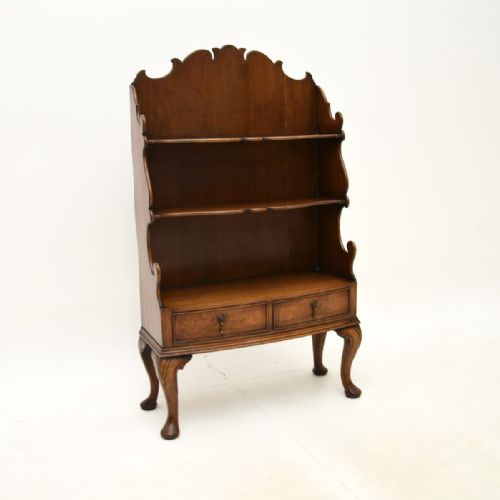
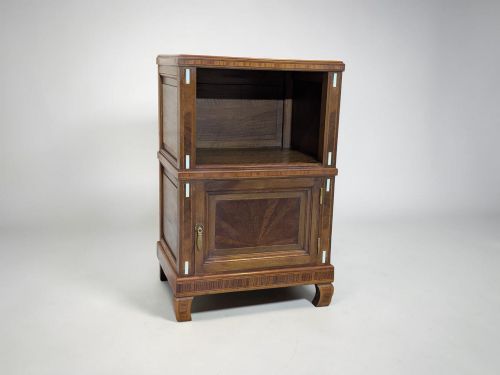
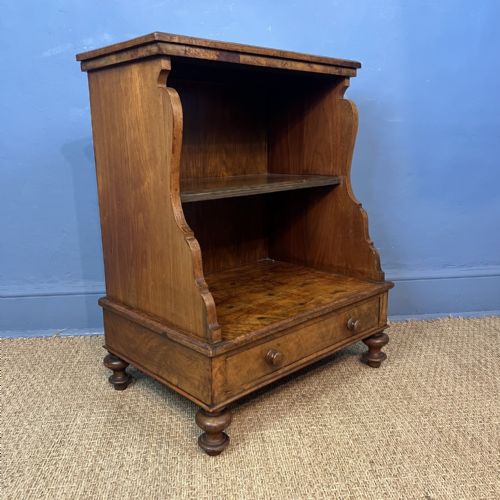
These small walnut open shelves combine compact proportion with rich timber grain, offering an accessible route into period storage.
Small Walnut Open Shelves
Small walnut open shelves encompass compact bookcases, bedside cabinets, low bookcases, and wall-mounted display units designed for versatile placement. When searching for small walnut open shelves, you will encounter pieces spanning the Victorian era through the 1930s, including Queen Anne Revival, Edwardian, and Art Deco interpretations. The forms vary from cascading open bookcases and break-fronted designs with drawers to free-standing ladies davenports and mounted whatnot cabinets.
The materials recorded across these pieces centre predominantly on walnut, burr walnut, and figured walnut, occasionally accented with brass, bone inlay, or ebonised wood. Many examples incorporate adjustable shelves, hand carving, or inlaid details that enhance their utility and decorative presence. French Provincial and English workshop influences appear throughout the selection, showing how different makers adapted the timber to changing domestic tastes.
Materials and construction
Makers utilised solid walnut and figured or burr walnut veneers applied to secondary woods to create rich grain patterns across flat surfaces and fronts. The selection demonstrates traditional joinery techniques combined with decorative elements such as bone inlay, brass mounts, and ebonised wood details.
Surface finishing relied on hand polishing to highlight the natural figure of the walnut, while structural additions like adjustable shelving mechanisms provided practical adaptability. Hand carving appears on specific regional pieces, such as French examples, adding texture alongside smooth veneered panels.
Small Walnut Open Shelves Retail Price Guide 2026
Typical asking prices for small walnut open shelves among the pieces listed under this phrase on Sellingantiques today, from the lower quarter to the upper quarter. They describe what is for sale here now, not the wider market.
Listings feature walnut, burr walnut, and figured walnut across Victorian, Edwardian, and Art Deco periods, spanning bookcase and cabinet forms.
Assessing quality and craftsmanship
Quality in these pieces rests upon the selection of timber, particularly the choice and matching of burr or figured walnut veneers across prominent surfaces. Finer examples display meticulous attention to detail in bone inlay, brass hardware, and hand-carved elements rather than purely utilitarian construction.
The Small Walnut Open Shelves Glossary
- Burr walnut
- A prized timber harvested from walnut tree growths, featuring swirling, complex grain patterns used extensively for decorative veneering. It adds considerable visual depth to cabinet fronts and top surfaces.
- Figured walnut
- Timber exhibiting natural, highly decorative grain variations that catch the light differently depending on the angle. Makers selected these boards for prominent display areas.
- Ebonised wood
- Timber treated with a chemical or dark finish to imitate expensive ebony. This technique provided stark, dark contrast against lighter walnut veneers on Victorian and later pieces.
- Davenport
- A compact form of small desk featuring a sloping writing surface above a pedestal of drawers or shelving. Victorian examples combine writing utility with integrated storage.
- Break-fronted
- A furniture facade where the central section projects forward from the flanking wings. This architectural arrangement creates depth and breaks up the linear profile of bookcases.
Small Walnut Open Shelves: Frequently Asked Questions
What periods do these pieces date from?
The available pieces span from the mid-nineteenth century through the Victorian and Edwardian eras up to the 1930s. Styles range from formal Victorian and Queen Anne Revival to streamlined Art Deco and French Provincial designs.
This broad chronological spread means you encounter both heavily figured traditional cabinets and more geometric, modern-influenced open shelving from the interwar period.
How were these cabinets used originally?
They served multiple domestic functions as bedside storage, compact book repositories, writing desks, and display cabinets for ornaments or books. Their modest proportions made them suitable for smaller rooms where full-sized furniture would overwhelm the space.
Many incorporated adjustable shelves or small drawers to accommodate varying collections of books and personal papers.
What is burr walnut?
Burr walnut is derived from a tree growth or excrescence that produces highly convoluted, swirling grain patterns. It is sliced into thin veneers and applied to the primary surfaces of finer cabinets.
Because of its complex figure and decorative impact, it was reserved for the most prominent parts of Victorian and later furniture.
How do I care for walnut furniture?
Walnut benefits from stable room temperatures and protection from direct sunlight to prevent the timber and veneers from drying out or fading. Regular dusting with a soft, dry cloth maintains the finish without needing heavy polishes.
Occasional application of appropriate wax preserves the lustre of the polished wood surface.