




Brown Walnut Davenport
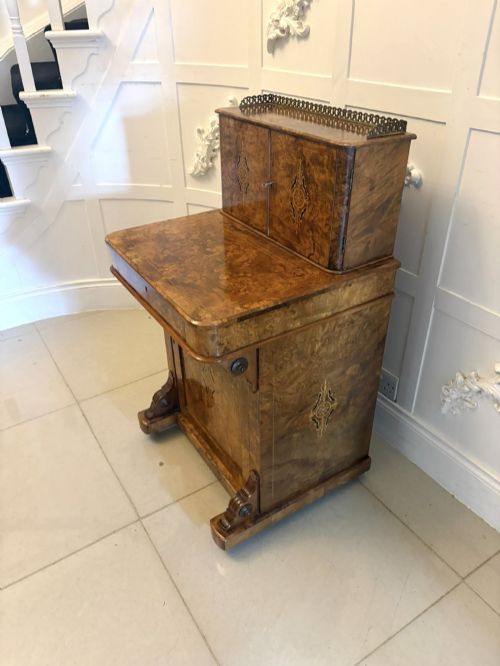
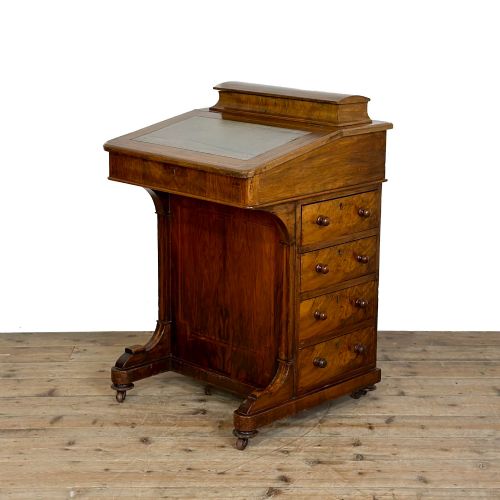
A brown walnut davenport provides a compact writing desk with hidden stationery drawers and a sloping lid, offering practical workspace without dominating a room.
Brown Walnut Davenport
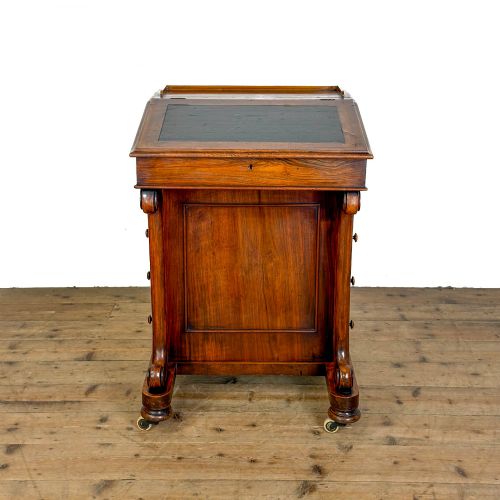
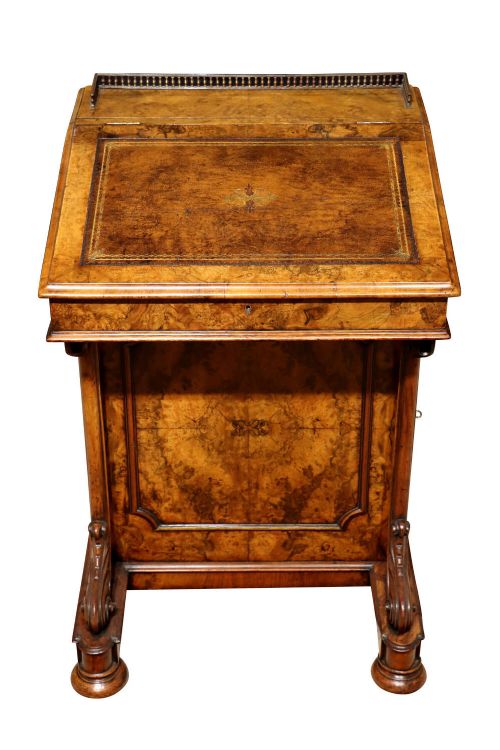
A brown walnut davenport is a form of small writing desk that gained significant popularity during the Victorian period. These pieces combine a sloping writing surface above a pedestal base, which traditionally houses a set of drawers accessed from the side.
The selections available here span the nineteenth century, including specific dates across the decades from eighteen-fifty to eighteen-eighty. Alongside standard pedestal writing desks, variations such as piano top, pop-up, and tall bureau cabinet forms appear.
Makers of the era utilised the compact footprint of the davenport to incorporate clever internal mechanics and storage. Buyers searching for a brown walnut davenport encounter English examples reflecting Victorian, mid-Victorian, Aesthetic Movement, and Italian Renaissance Revival styles.
Materials and construction methods
Cabinet makers utilised solid walnut and figured burr walnut veneers to cover the primary carcass of each davenport. Burr walnut provided a rich, highly decorative grain pattern that defined the visual character of the best examples.
Interiors and secondary elements frequently incorporated lighter timbers such as satinwood for contrast within pigeonholes and small drawers. Brass hardware, leather writing inserts, and occasional mirror glass elements completed the fitted desks.
Inlaid marquetry and boxwood inlay decorate the surfaces of many pieces, often featuring floral motifs. Advanced mechanisms were integrated into piano top and pop-up versions to conceal stationery compartments and retractable lids.
Listings feature Victorian period pieces produced across the mid and late nineteenth century, predominantly in walnut and burr walnut.
Distinctions in quality
Quality in a brown walnut davenport rests primarily on the choice of timber and the intricacy of the cabinet work. Exhibition pieces display superior burr walnut veneers with matched grain patterns across the entire writing slope and pedestal.
The complexity of the interior mechanism dictates another tier of craftsmanship. Pop-up and piano top configurations require precise joinery to function smoothly, separating standard writing desks from elaborate mechanical variants.
Decorative detailing such as fine boxwood inlay, floral marquetry, and fitted satinwood interiors elevate certain desks. Freestanding examples finished on all sides demonstrate a higher grade of manufacture than pieces intended solely to face a wall.
The Brown Walnut Davenport Glossary
- Davenport
- A small pedestal writing desk featuring a sloping lid and side drawers. The form became a staple of Victorian study and drawing room furniture.
- Burr walnut
- A prized timber veneer taken from the warted growths on walnut trees. It yields complex, swirling grain patterns highly valued by nineteenth-century cabinet makers.
- Piano top
- A desk design where the writing lid rolls back in a curve resembling a piano fall. This mechanism conceals the internal stationery fittings when closed.
- Marquetry
- The art of applying decorative veneer pieces in various woods to form pictorial or geometric patterns. Floral designs are frequently found on Victorian desks.
- Satinwood
- A pale, lustrous exotic timber used for secondary woods and interior drawer linings. It provides a sharp visual contrast against dark walnut exteriors.
Brown Walnut Davenport: Frequently Asked Questions
What is a brown walnut davenport?
A brown walnut davenport is a compact nineteenth-century writing desk featuring a sloping top and a pedestal of side drawers.
Cabinet makers designed these pieces to offer a functional workspace and storage within a minimal footprint.
How were davenport desks used?
Victorian writers and correspondents used the sloping desk surface for letter writing and daily administrative tasks.
Internal compartments and side drawers stored stationery, inkwells, and correspondence out of sight.
Are davenports freestanding?
Many standard davenports feature finished drawer access on one side with a panelled back intended to sit against a wall.
Freestanding examples finished on all sides also exist for placement in the centre of a room.
How do I care for walnut veneer?
Walnut furniture requires protection from direct sunlight and excessive humidity to preserve the delicate veneers.
Regular dusting with a dry cloth and occasional light waxing maintain the polished timber surface.