
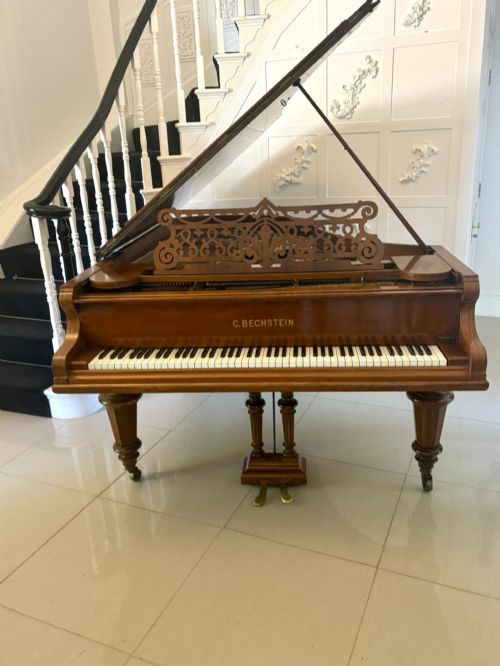


Victorian Piano Desk
A victorian piano desk is a clever hybrid writing cabinet housing a pop-up stationery compartment beneath a curved fall.
Victorian Piano Desk
When you search for a victorian piano desk, you encounter elaborate writing furniture designed with a curving roll-top lid that mimics the front of a upright piano. The most common iteration on this page is the pop-up davenport desk in burr walnut, featuring internal compartments that rise automatically when the lid is lifted.
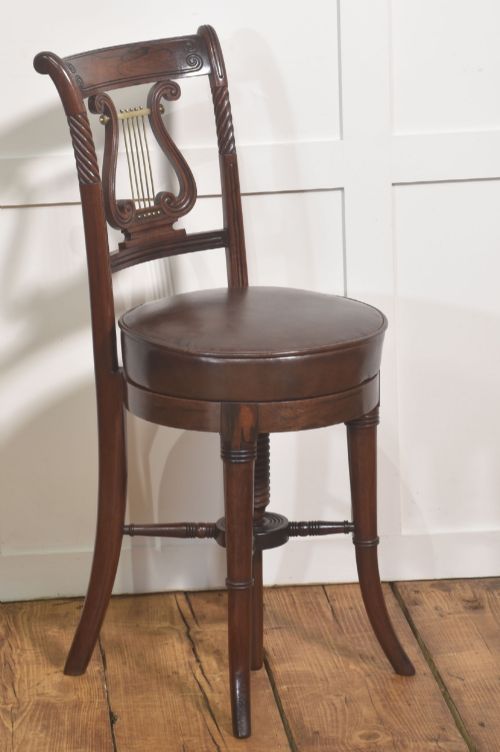
These pieces emerge principally from the mid-nineteenth century, spanning the eighteen-fifties through to the eighteen-seventies under Victorian and Edwardian periods. Alongside walnut variants, examples surface in rosewood and mahogany, often accompanied by related seating such as adjustable piano stools or revolving desk chairs.
The form marries the compact writing slope of a traditional davenport with a cylinder-front cabinet mechanism. Makers incorporated small drawers, pigeonholes and stationery boxes that responded to sophisticated mechanical linkages operated by opening the main writing flap.
How they were made
Cabinetmakers constructed the carcase primarily from solid timbers like mahogany or walnut, applying highly figured burr walnut veneers to the exterior surfaces. Marquetry inlay and contrasting brass details frequently decorated the stationery boxes and writing slopes.
The defining mechanism relies on internal counterweights, springs and wooden tracks that lift the stationery compartment upward as the cylinder lid slides back. Leather inserts formed the writing surfaces, whilst cast iron and brass provided durable internal hardware for the revolving chairs and rise-and-fall mechanisms.
Some desks hide secret compartments designed specifically for holding postage stamps and quills.
What varies in quality
The sophistication of the internal pop-up action dictates much of the distinction between standard production and exceptional examples. Smooth, silent rising of the stationery box without manual assistance denotes superior mechanical execution by the cabinetmaker.
The choice and matching of timber veneers heavily influence the visual hierarchy. Heavily figured burr walnut with symmetrical grain patterns and precise floral marquetry inlay separates finer pieces from plain walnut or mahogany alternatives.
C Bechstein
The Victorian Piano Desk Glossary
- Pop-Up Davenport
- A compact writing desk with a sloped writing surface that conceals a spring-loaded or mechanical rising stationery compartment beneath a curved lid.
- Burr Walnut
- Timber taken from the wart-like growths on walnut trees, prized for its highly twisted, decorative grain pattern used extensively as veneer.
- Marquetry
- The art of applying decorative pieces of veneer to a structure to form intricate floral or geometric designs.
- Cylinder Front
- A rounded, quarter-circle wooden lid that rolls back into the body of a desk or cabinet to reveal the interior workspace.
Victorian Piano Desk: Frequently Asked Questions
What is a victorian piano desk?
A victorian piano desk is a specialised nineteenth-century writing cabinet featuring a curved piano-style roll top. When opened, internal mechanisms cause a stationery box to pop up automatically.
These pieces combine the compact storage of a davenport with clever mechanical engineering. They were popular in Victorian drawing rooms for managing correspondence.
How does the pop up mechanism work?
The internal pop-up mechanism relies on a system of wooden tracks, springs or counterweights connected to the main rolling lid. Sliding the cylinder back triggers the linkage to raise the stationery compartments.
Finer examples operate smoothly and silently without manual assistance. The engineering concealed inside the carcase represents high Victorian cabinetmaking skill.
What woods were used for these desks?
Makers predominantly used burr walnut for its highly decorative and swirling grain patterns. Solid mahogany and rosewood also appear across the surviving pieces on this page.
Inlays of lighter woods formed floral marquetry details on the exterior panels. Brass and cast iron were utilised for internal hardware and structural fittings.
How do I style a piano desk at home?
Place the desk against a wall in a study or living room where the curved top and figured wood can be fully appreciated. Pairing it with a period revolving stool or adjustable chair maintains historical context.
Keep the writing slope clear to showcase the burr walnut veneer. Utilise the internal compartments for letters and stationery just as Victorian writers once did.