



Brown Walnut Corner Cupboard
A brown walnut corner cupboard brings warmth and efficient geometry to a neglected room.
Brown Walnut Corner Cupboard
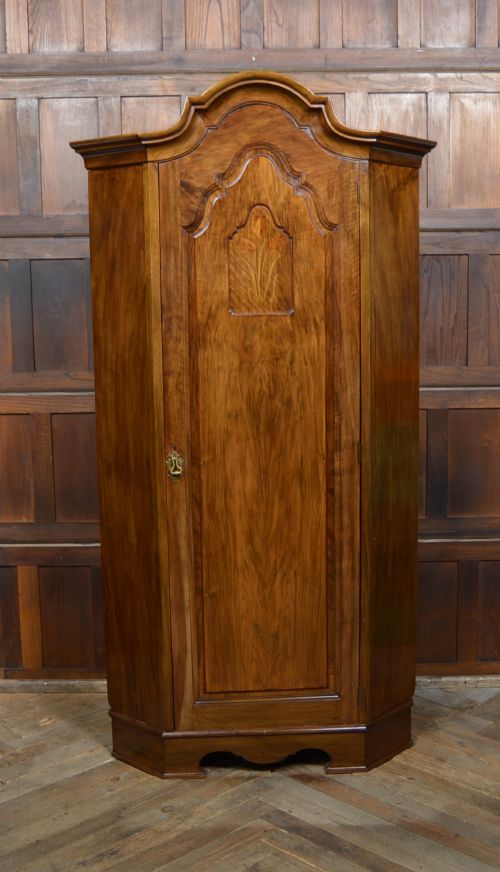
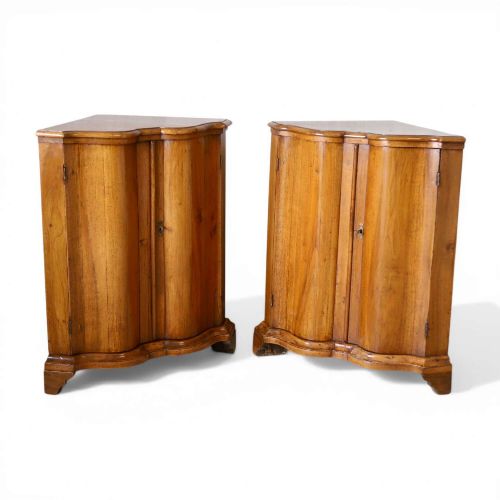
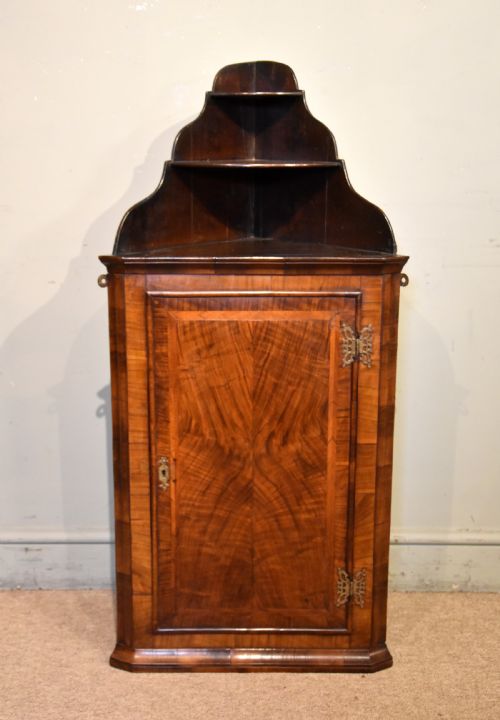
A brown walnut corner cupboard is a fitted or freestanding storage piece designed to occupy the dead space of a room junction. The selection spans several centuries, touching periods from the 18th Century through the Victorian era and into 1930 art deco designs. You will encounter hanging versions alongside floor-standing and two-part models.
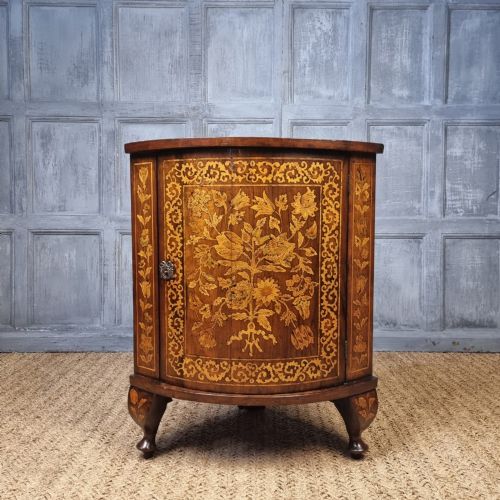
The aesthetic repertoire includes Georgian red walnut, Queen Anne burr walnut, and Dutch marquetry examples. Some feature glazed doors for display, while others provide solid timber doors for discreet storage. Styles range from restrained early pieces to elaborate Victorian inlays and Art Nouveau curves.
Materials and construction methods
Makers utilised solid walnut and decorative burr walnut veneers over secondary timbers such as oak, elm, or fruitwood. Marquetry inlays add complex floral or geometric patterns to the surface. Brass hardware, including hinges and escutcheons, provides functional contrast to the dark timber.
Glazing bars create geometric patterns on display doors, whilst specialist techniques like tambour fronts appear on specific Dutch and Georgian examples. Ormolu mounts occasionally accent late pieces.
Several examples incorporate glazed doors with diamond interlaced patterns, designed to showcase prized ceramics while keeping dust at bay.
Distinguishing quality in walnut cabinets
The choice of timber grain defines the visual success of the piece, with richly figured burr walnut commanding attention over plain timber. The crispness of the marquetry inlay and the depth of the hand-polished finish reveal the maker's hand.
Proportion and structural integrity matter greatly, particularly in hanging models where original brass fixings and sound corner joints ensure the piece hangs true against the walls.
Waring and Gillow·Liberty and Co.
The Brown Walnut Corner Cupboard Glossary
- Burr walnut
- A prized veneer taken from the growth excrescences of the walnut tree, showing highly swirled, organic patterns. It transforms a simple door panel into a decorative centrepiece.
- Marquetry
- The art of applying small pieces of veneer to form intricate pictorial or geometric designs. Craftsmen combine different woods to achieve tonal contrast.
- Ormolu
- Gilded bronze mounts applied to furniture for decorative effect. It appears more frequently on continental European pieces.
- Tambour
- Slats of timber glued to a canvas backing to form a flexible sliding shutter. This mechanism allows curved doors to open in tight spaces.
Brown Walnut Corner Cupboard: Frequently Asked Questions
How do I hang a wall corner cupboard safely?
Wall-mounted versions require secure fixing into solid masonry or direct attachment to internal wall studs. The weight of the timber and stored contents demands robust brackets.
Professional installation prevents the cabinet from pulling away from the corner junctions over time.
What is the difference between hanging and floor-standing models?
Hanging models mount directly to the wall to save floor space, often featuring shaped bottoms. Floor-standing examples rest on plinths or bracket feet, sometimes built in two separate stacked sections.
Both variants serve to utilise awkward room angles effectively.
How do I care for walnut veneer?
Keep walnut furniture away from direct sunlight and sudden temperature shifts to prevent the timber from drying out. Regular dusting with a dry cloth maintains the surface.
Applying appropriate wax polish occasionally helps nourish the grain and preserve the sheen.
Are these cabinets suitable for modern homes?
Their compact triangular footprint allows them to fit neatly into contemporary hallways, dining rooms, or living spaces. They turn unused angles into practical storage or display areas.
The rich brown tones of the walnut blend well with both traditional and modern interiors.