

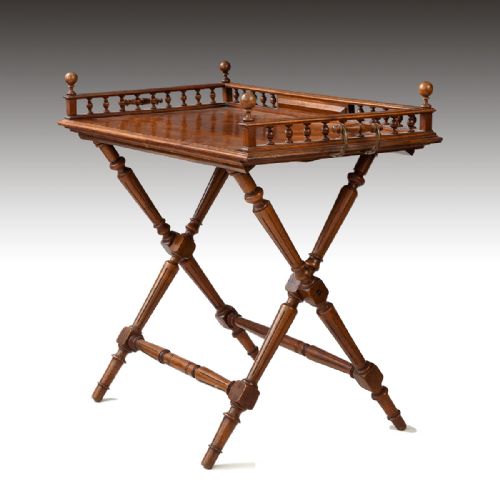
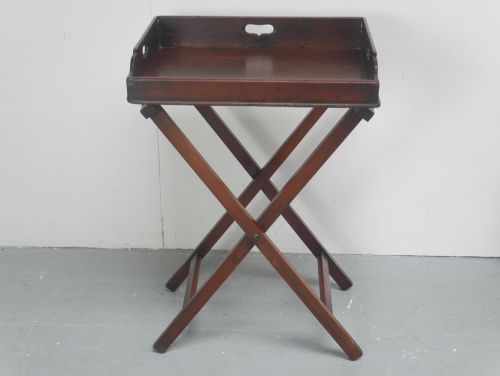
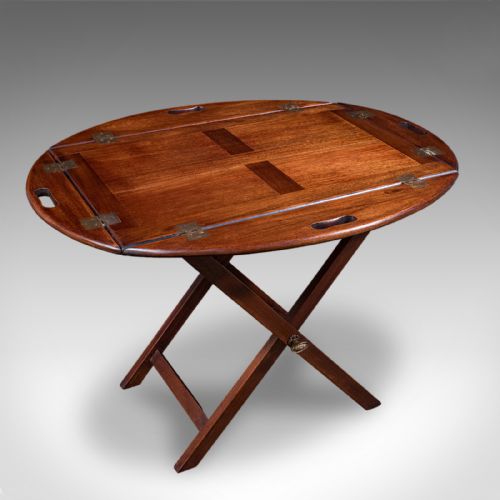
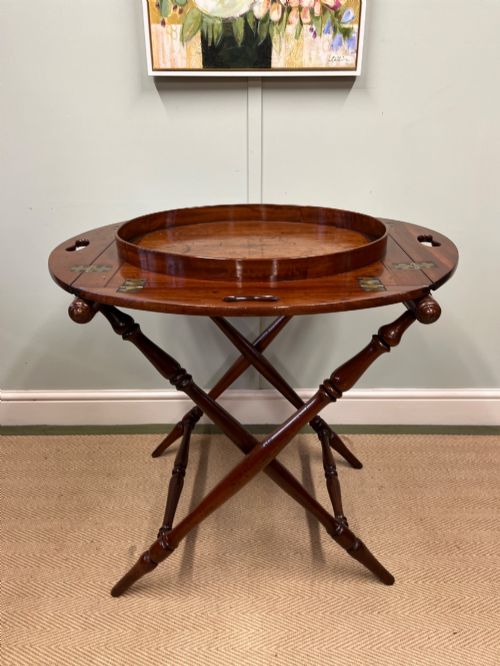
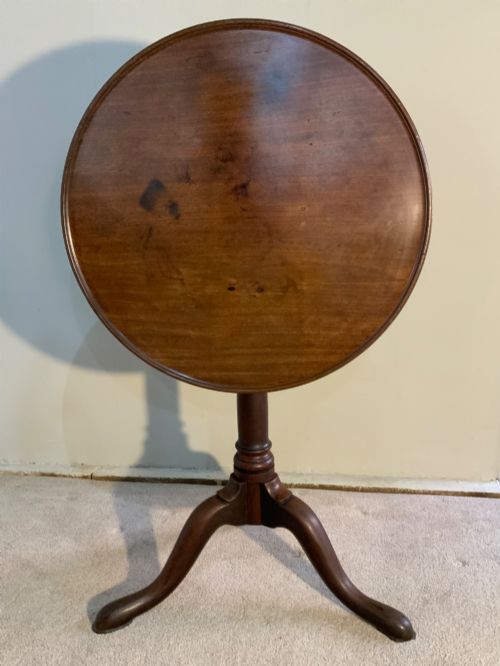
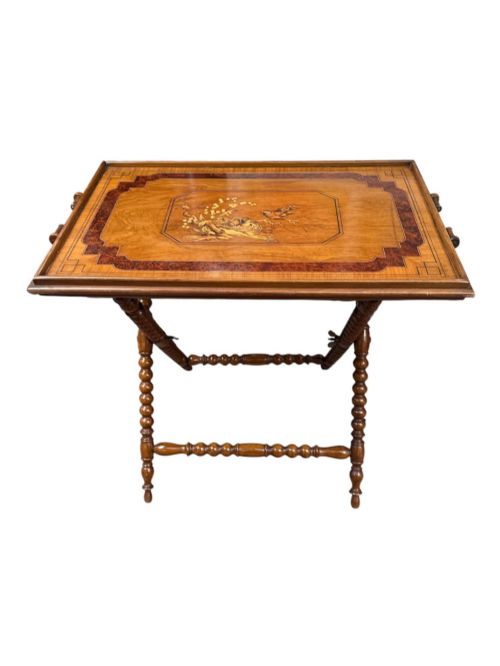
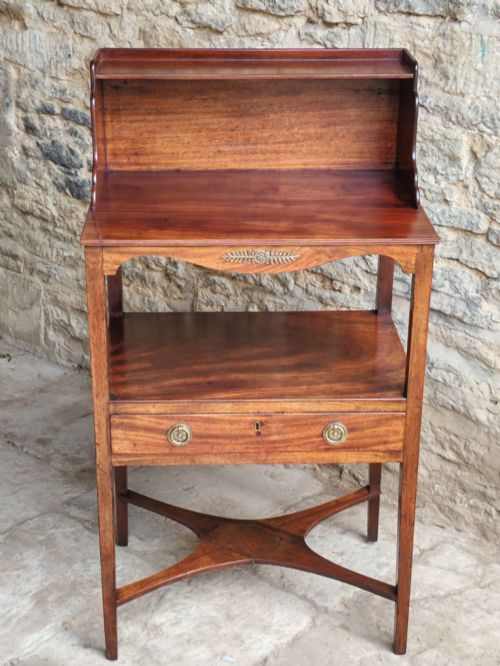
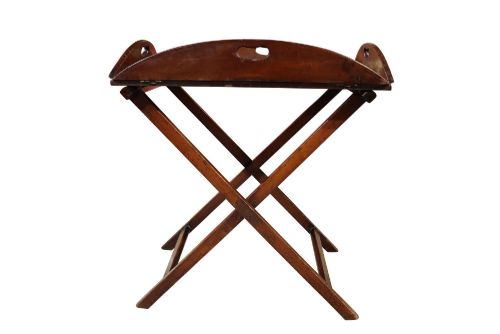
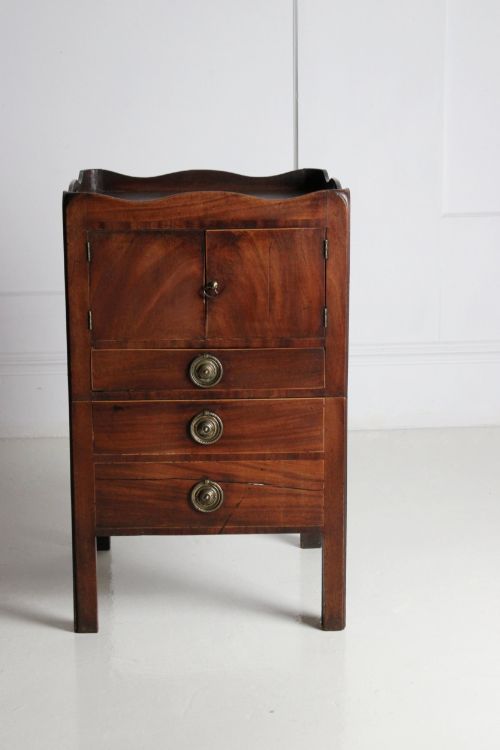
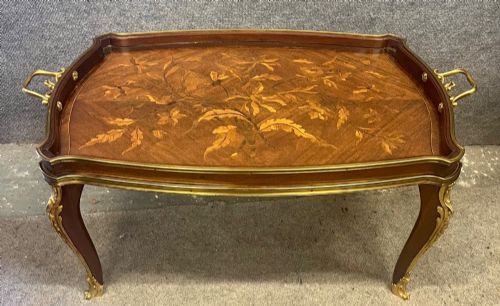
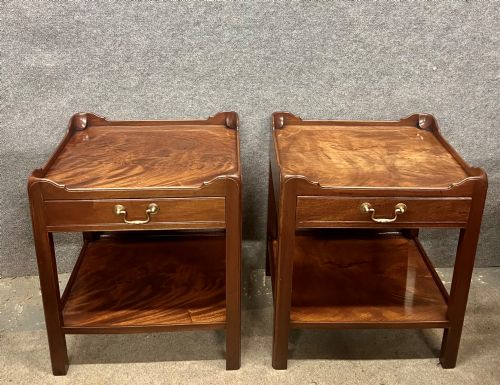
Brown Tray Table
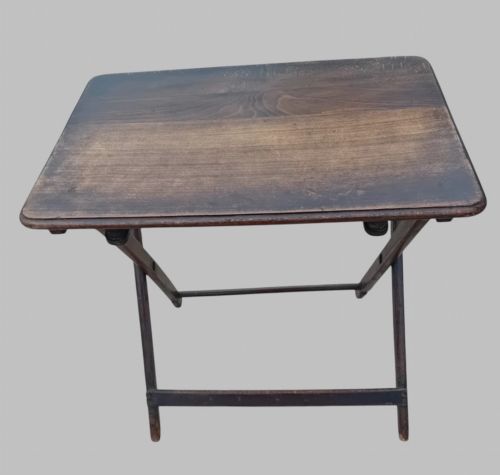
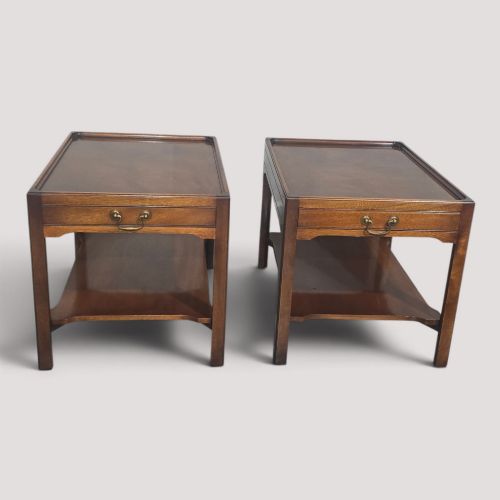
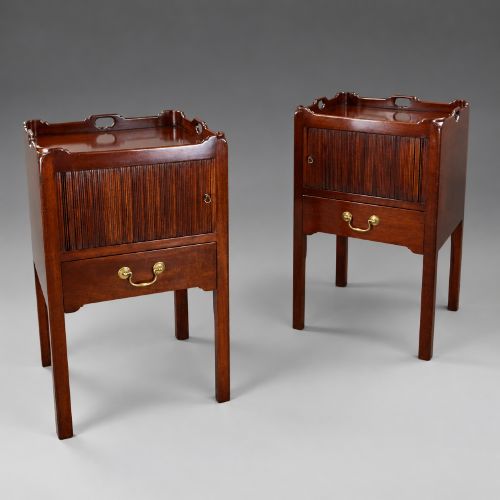
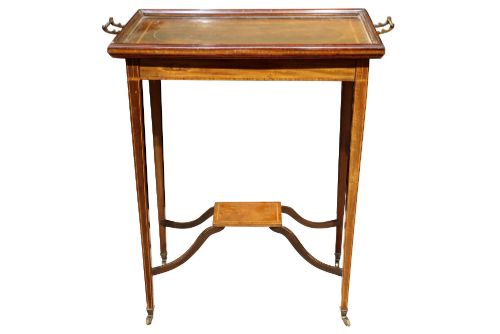
A brown tray table offers practical surface space with raised edges, combining portable serving utility with traditional cabinetwork.
Brown Tray Table
A brown tray table provides a removable or fixed serving surface supported by a dedicated stand, appearing frequently across eighteenth, nineteenth, and early twentieth century periods. These pieces serve multiple domestic functions as bedside furniture, occasional stands, or portable tea servers.
The selections span distinct historical iterations, from eighteenth-century George III mahogany trays on folding stands to Edwardian inlaid occasional examples and later walnut coffee tables. Mahogany dominates the corpus, accompanied by walnut, burr walnut, and oak structures.
Makers produced these items in various styles including Georgian, Victorian, Edwardian, and Queen Anne, reflecting changing interior tastes for practical yet decorative wooden furnishings.
Materials and construction methods
Cabinetmakers utilised dense timbers such as mahogany, walnut, and oak to construct durable tray tops and supporting stands, often incorporating secondary woods for internal framework. Surface decoration frequently involved contrasting veneers, boxwood stringing, or intricate marquetry depictions.
Joinery techniques included dovetailed corners for tray galleries and hinged or folding mechanisms on stands to allow simple storage and transport. Hand-turned legs, brass carrying handles, and delicate inlay work demonstrate traditional workshop practices.
Some nineteenth-century examples hide ingenious folding mechanisms designed so British officers could pack their drinks tray flat inside a campaign chest.
Judging quality in brown tray tables
The calibre of a brown tray table rests on the selection of timber figure, such as well-matched mahogany grains or complex burr walnut veneers, paired with crispness in any inlaid decoration. Superior examples display precise joinery at the corners of the tray gallery and solid timber integrity in the folding stand.
Proportion and originality dictate the standing of a piece, where untouched surfaces, authentic period hardware like brass handles, and harmonious stand pairings elevate the construction above later adaptations or heavily restored items.
The Brown Tray Table Glossary
- Tray top
- A furniture surface finished with a raised moulded border or gallery designed to prevent items from sliding off. This feature defines the primary utility of serving tables and chests.
- Butlers tray
- A portable wooden tray, often featuring hinged flaps, made to sit upon a separate folding X-frame stand. Originating for domestic service, these allowed staff to clear dining items efficiently.
- Marquetry
- Decorative veneer work arranged in pictorial or geometric patterns using various coloured woods, brass, or shell. Sorrento examples often utilise this technique for floral or landscape motifs.
- Campaign style
- Portable furniture engineered with folding stands, removable legs, or recessed hardware for travel. Nineteenth-century officers utilised these practical designs during military postings.
- Gallery
- A low decorative border surrounding the edge of a table or tray top, constructed in pierced brass or carved timber. It secures porcelain or glassware during movement.
Brown Tray Table: Frequently Asked Questions
What is a brown tray table used for?
These tables function primarily as portable serving surfaces or versatile occasional furniture in living spaces and bedrooms. The raised edges make them suitable for holding drinks, books, or decorative objects securely.
Historically, the removable tray version allowed household staff to carry items from kitchens to dining areas before mounting the tray onto a folding stand for display.
How do I identify a Georgian tray table?
Georgian examples typically feature rich mahogany timbers, hand-cut dovetail joints on the tray corners, and understated brass carrying handles. The associated stands often utilise straight or chamfered legs connected by stretchers.
Earlier pieces from the eighteenth century display denser timber patination and simpler lines compared to later nineteenth-century revival interpretations.
Are the trays removable from the stands?
Many traditional butler tray tables feature loose trays that lift off their folding X-frame stands entirely. Other variations secure the top permanently to a fixed base, functioning as standard occasional or coffee tables.
Checking the underside reveals whether the structure relies on a loose resting fit or structural fixings attaching the top to the legs.
How should I care for a antique wooden tray table?
Maintain the timber surface by applying natural beeswax periodically and avoiding direct placement near heat sources or strong sunlight. Use coasters or felt pads beneath heavy objects to protect the polish from rings and scratches.
Gentle dusting with a soft, dry cloth preserves the historic patination without stripping the wax finish built up over decades.