
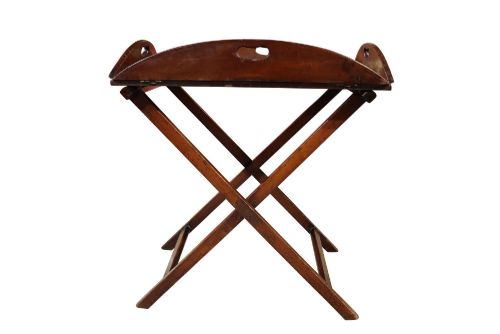


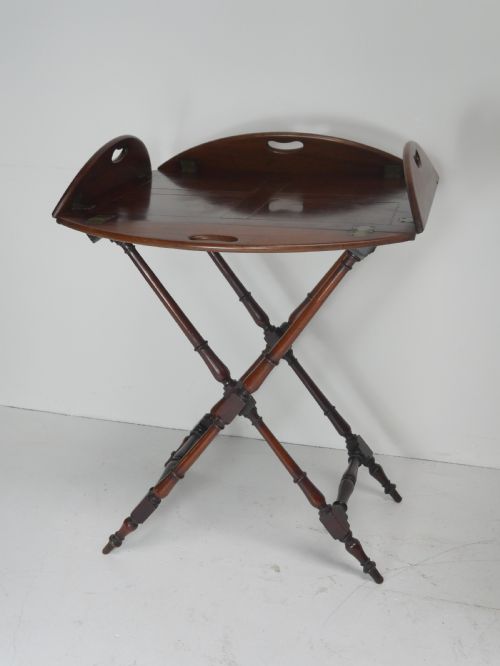


Regency Butler Tray Table
A regency butler tray table brings portable British utility and refined timber craft into a modern home.
Regency Butler Tray Table
A regency butler tray table combines a removable serving tray with a folding or fixed stand, designed originally for portable domestic service. You will encounter genuine early nineteenth-century examples alongside later nineteenth-century pieces and twentieth-century revivals.
The form appears in various configurations across this selection, including rectangular mahogany trays with galleried edges and papier-mâché surfaces resting on collapsible X-frame stands. Occasional tables and coaching tables share this heritage of portable hospitality.
Most pieces date from the nineteenth century, utilising dense timbers like Cuban mahogany alongside decorative papier-mâché. Later revivals from the early twentieth century continue the traditional aesthetic of the Regency and William IV periods.
How they were made
Cabinet makers constructed these trays primarily from solid mahogany and figured Cuban mahogany, often incorporating raised galleries to secure glassware during service. Stands utilise clever folding mechanisms joined with brass hinges and pivots.
Listings feature mahogany, papier-mâché, and brass across nineteenth-century and revival periods.
What varies in quality
The density and grain figure of the timber define the upper tier of execution, with dense Cuban mahogany outperforming plain timber. Crispness in the joinery of the folding stand and the stability of the tray frame indicate superior workshop practice.
Decorative finish separates standard production from exceptional work, particularly in the depth of hand-painted Chinoiserie on papier-mâché trays. Original stands paired with their corresponding trays command greater interest than assembled later marriages.
Gillows
The Regency Butler Tray Table Glossary
- Gallery
- A raised wooden border surrounding the perimeter of a tray to prevent items from sliding off during transit. It is typically shaped with pierced handgrips.
- Coaching Table
- A portable folding stand designed to support a removable tray, historically used for travel or flexible dining arrangements.
- Cuban Mahogany
- A dense, richly figured hardwood imported from the Caribbean during the eighteenth and nineteenth centuries, prized for cabinet work.
- Papier-mâché
- A composite material made from paper pulp mixed with glue and resin, pressed into moulds and finished with heavy lacquer.
- Chinoiserie
- European artistic interpretation of Chinese and East Asian decorative motifs, rendered here in gilt paint on dark lacquer.
Regency Butler Tray Table: Frequently Asked Questions
What is a regency butler tray table?
A regency butler tray table consists of a removable serving tray resting on a collapsible or fixed wooden stand. These pieces were originally utilised for serving food and drink before being folded and stored away.
Today, they function well as versatile side tables or coffee tables in sitting rooms. Their portable design allows for easy movement around the home.
How were butler trays used historically?
Households utilised these trays to transport silver, china, and glassware from kitchens to entertaining spaces. The raised gallery edges kept items secure while servants carried the tray across rooms.
Once the meal concluded, the tray lifted off its folding stand, and the wooden base collapsed flat. This space-saving engineering suited the domestic routines of the nineteenth century.
Are these tables sturdy enough for daily use?
Solid timber examples built from mahogany offer robust construction suitable for everyday living. The X-frame folding stands distribute weight evenly when locked into position.
Papier-mâché versions require a more delicate touch due to their lacquer and gilt finishes. Placing heavy or wet items on these decorative surfaces needs careful consideration.
How can I tell the period of a tray table?
Early nineteenth-century pieces exhibit dense Cuban mahogany and hand-cut joinery specific to the Regency and William IV eras. Brass hardware and patination on the timber develop naturally over decades of handling.
Twentieth-century revivals often display different interior timber framing and machine-cut components. Examining the underside and the method of hinge attachment reveals the manufacturing era.